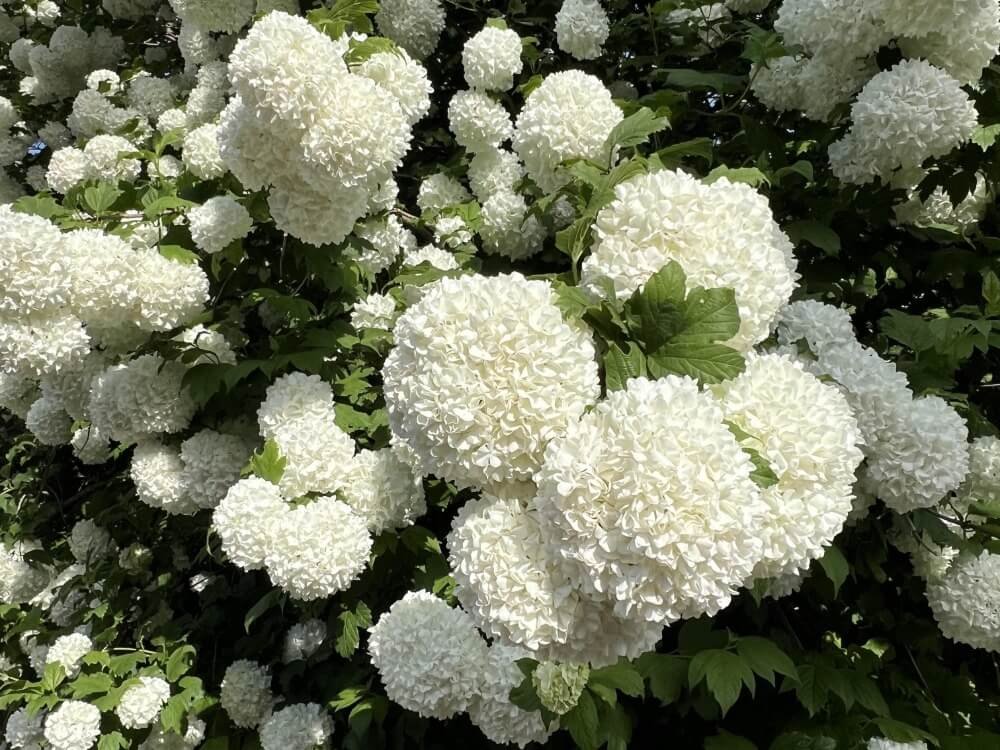
Few sights in the garden rival the classic beauty of white hydrangeas. Their billowing globes and snowy cones bring effortless elegance to summer borders, patio pots, and floral arrangements.
Yet as lovely as they are, true hydrangeas can be finicky. They frequently wilt under hot midday sun, demand consistent moisture, and may refuse to flower after a harsh winter freeze.
Fortunately, nature offers several spectacular look-alikes. If you want that lush, cloud-like floral aesthetic with earlier bloom dates, greater drought tolerance, intoxicating scents, or cold hardiness, these eight white flowering plants deliver all the beauty of hydrangeas with their own unique garden benefits.
1. Chinese Snowball Bush (Viburnum macrocephalum)
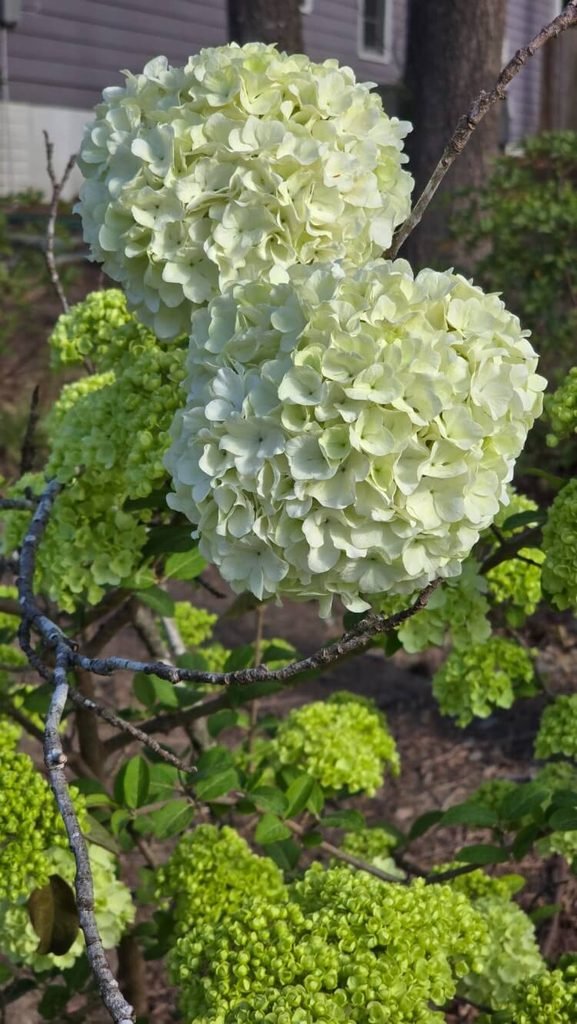
Chinese Snowball Viburnum is the ultimate double for a classic white mophead hydrangea. It produces massive, round flower clusters that can reach up to eight inches across. These blossoms open in a soft lime green before turning pure, bright white by late spring.
Because it flowers on old wood, this vigorous shrub bursts into full glory months ahead of summer hydrangeas. It also handles full sunshine and warm weather much better than traditional shade-loving shrubs.
- Light: Full sun to partial shade
- Water: Moderate; keep evenly moist while establishing, drought-tolerant once mature
- Mature Size: 12 to 20 feet tall, 10 to 15 feet wide
- Bloom Time: Mid-spring to early summer (April to May)
- Flower Color: Chartreuse buds opening to snowy white
2. European Snowball Bush (Viburnum opulus ‘Roseum’)
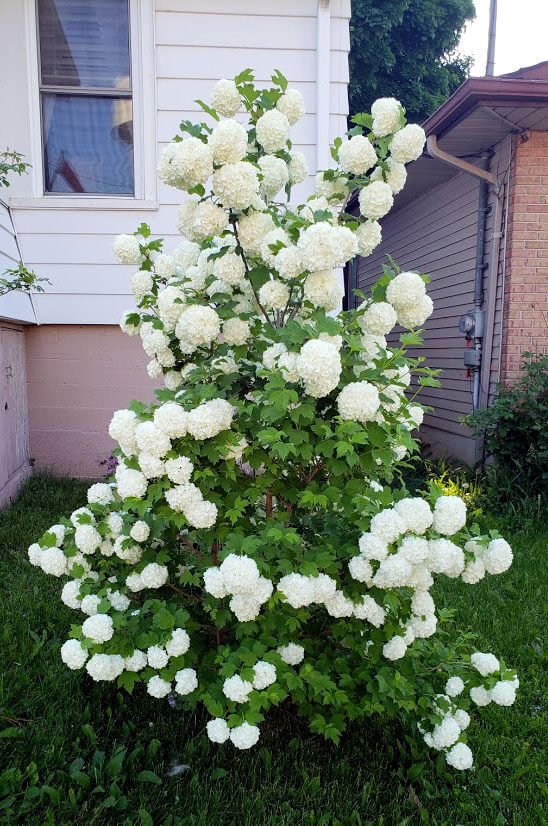
European Snowball Bush brings the charm of fluffy pom-poms to chilly northern landscapes. Its globe-shaped white flower heads look almost identical to smooth hydrangeas from afar.
You can instantly tell it apart by its distinctive leaves, which closely resemble three-lobed maple foliage. In late spring, the white blooms often fade to an antique blush pink before dropping.
The entire bush then puts on a fiery purplish-red display before shedding its foliage in autumn.
- Light: Full sun to partial shade
- Water: Regular watering; highly adaptable to damp soil and heavy clay
- Mature Size: 8 to 12 feet tall, 8 to 12 feet wide
- Bloom Time: Mid- to late spring (May)
- Flower Color: Pure white, often aging to soft pink
3. Japanese Snowball Bush (Viburnum plicatum f. plicatum)
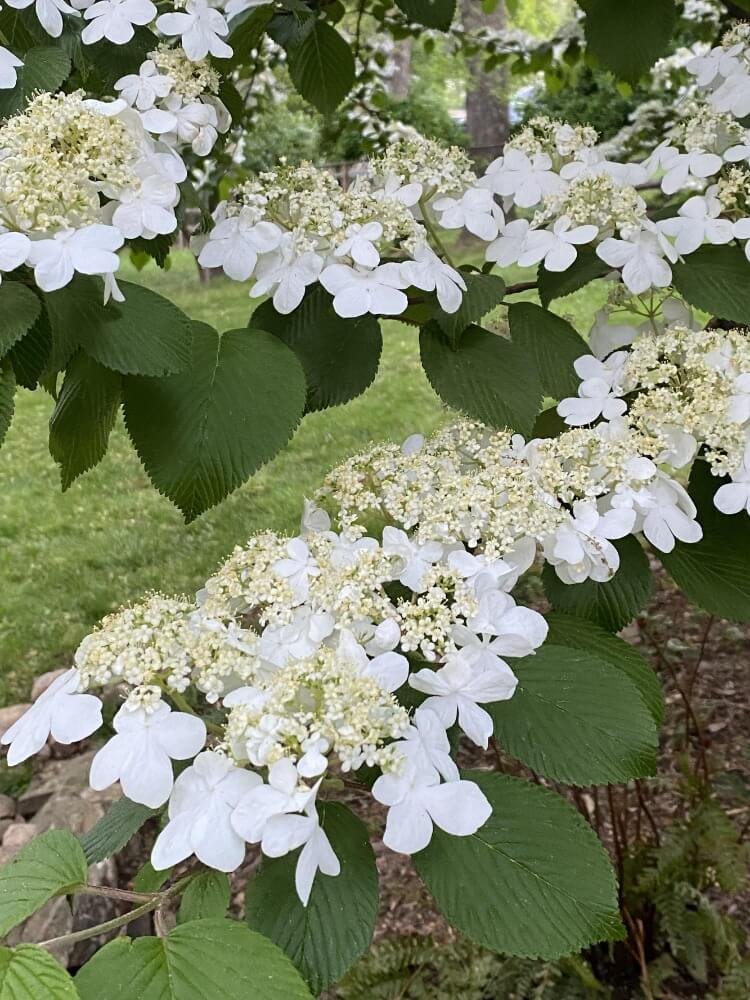
Japanese Snowball Bush delivers an architectural presence that few flowering shrubs can match. Its horizontal branches form graceful tiers completely smothered in three-inch white flower balls.
The deep green foliage features pronounced parallel veins, giving the leaves a handsome, pleated appearance.
Unlike true hydrangeas that often flop under heavy spring rains, this plant holds its upright floral globes with sturdy strength. It makes a breathtaking focal point along walkways and perimeter borders.
- Light: Full sun to partial shade
- Water: Moderate; prefers moist, well-drained, organically rich soil
- Mature Size: 8 to 10 feet tall, 8 to 12 feet wide
- Bloom Time: Late spring (May)
- Flower Color: Lime green buds maturing to crisp white
4. Reeves’ Spirea (Spiraea cantoniensis)
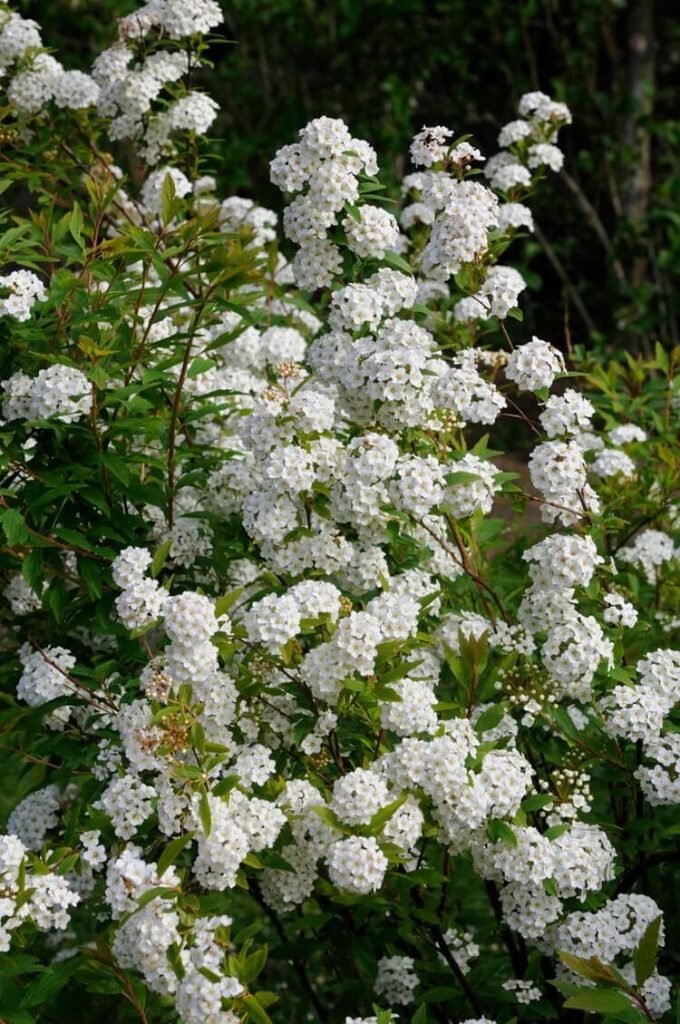
Reeves’ Spirea is an old-fashioned heirloom favorite that produces dozens of compact white floral domes.
While hydrangeas have broad, flat sepals, this spirea features fuzzy, miniature pom-poms packed with delicate stamens.
The slender branches arch toward the ground like a cascading white fountain. This heat-tolerant shrub provides an explosion of white early in the season when summer hydrangeas are barely growing leaves.
It requires little pruning and handles open, sunny borders where hydrangeas would quickly scorch.
- Light: Full sun for maximum flower production
- Water: Low to moderate; very drought-tolerant once established
- Mature Size: 4 to 6 feet tall, 5 to 8 feet wide
- Bloom Time: Mid-spring (April to May)
- Flower Color: Frothy, brilliant white
5. Cashmere Bouquet (Clerodendrum chinense)
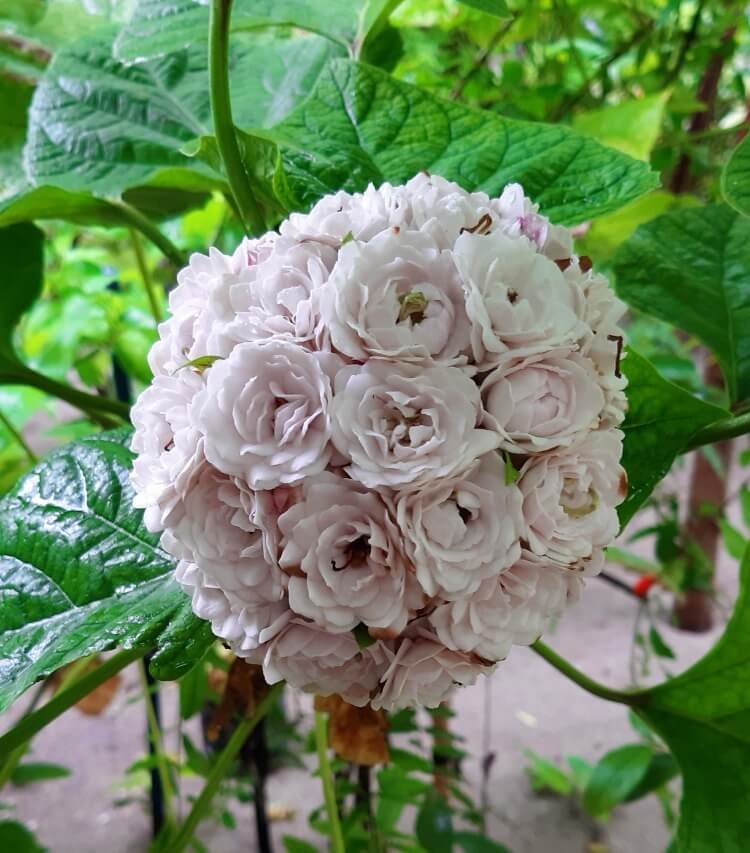
Cashmere Bouquet, often called the Mexican hydrangea, is an outstanding choice for warm, sub-tropical backyards. This vigorous sub-shrub produces dense, rounded flower clusters that measure up to six inches across.
Each individual floret looks like a tiny, double-petaled rose with faint blush accents on the exterior petals. Unlike scentless white hydrangeas, this plant fills the evening air with an intoxicating fragrance of jasmine and gardenia.
It spreads enthusiastically via underground runners, so it performs best in large containers or enclosed courtyards.
- Light: Partial shade to bright filtered sun
- Water: Regular to moist; loves humidity and rich soils
- Mature Size: 4 to 8 feet tall, 3 to 6 feet wide
- Bloom Time: Late spring through autumn
- Flower Color: Creamy white with soft pink or purple undertones
6. Japanese Tree Lilac (Syringa reticulata)
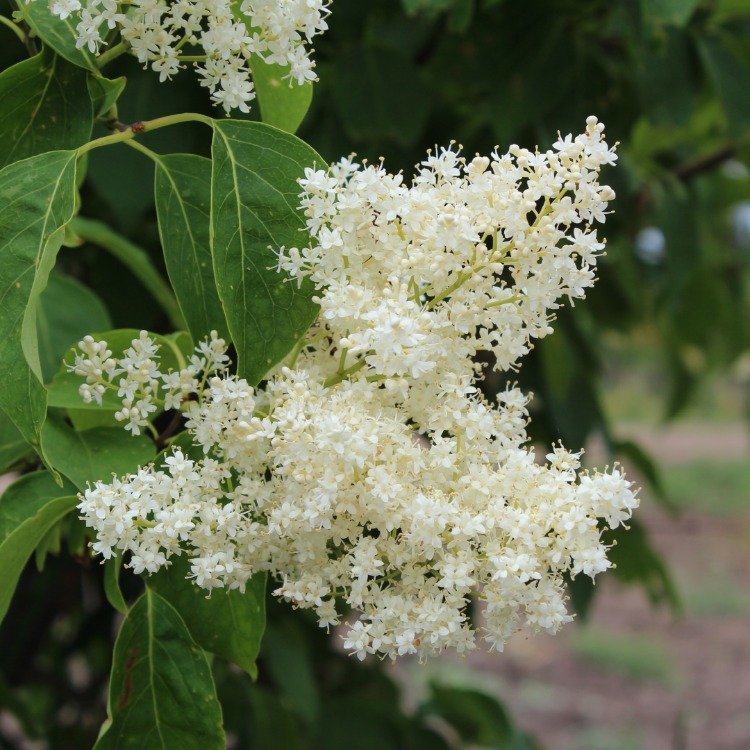
Japanese Tree Lilac creates the dramatic look of a panicle hydrangea on the scale of a true canopy tree. In early summer, it erupts with creamy-white, pyramidal flower panicles that stretch up to a foot in length.
Its smooth, cherry-like reddish bark and stout trunk offer year-round interest in suburban landscapes.
While panicle hydrangeas top out around ten feet, this tree lilac easily doubles that height. It is exceptionally cold-hardy and tolerates tough urban soils without complaint.
- Light: Full sun
- Water: Moderate; thrives in well-drained, neutral to alkaline soil
- Mature Size: 20 to 30 feet tall, 15 to 20 feet wide
- Bloom Time: Early summer (June to July)
- Flower Color: Creamy white to ivory
7. Japanese Hydrangea Vine (Schizophragma hydrangeoides)
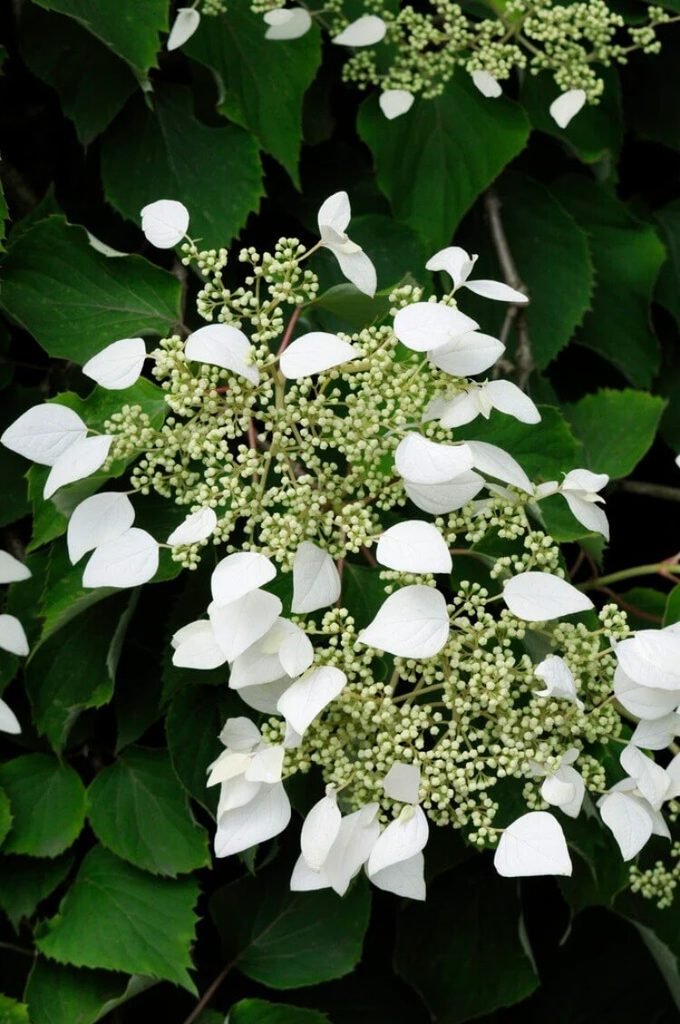
Japanese Hydrangea Vine is an enchanting climber that closely mimics the lacecap hydrangea. It scales trees, stone fences, and masonry walls using harmless aerial rootlets.
Instead of four petals per sterile flower, this vine features a single, large, heart-shaped bract that dangles gracefully around the central blossom.
The pewter-tinted leaves dance in the breeze, creating a whimsical woodland tapestry. It provides reliable, lush vertical coverage in shaded corners where flowering shrubs cannot thrive.
- Light: Partial shade to full woodland shade
- Water: Consistently moist, rich, acidic soil
- Mature Size: 30 to 50 feet tall, 6 to 9 feet wide
- Bloom Time: Early to mid-summer (June to July)
- Flower Color: White to soft creamy ivory
8. Evergreen Candytuft (Iberis sempervirens)
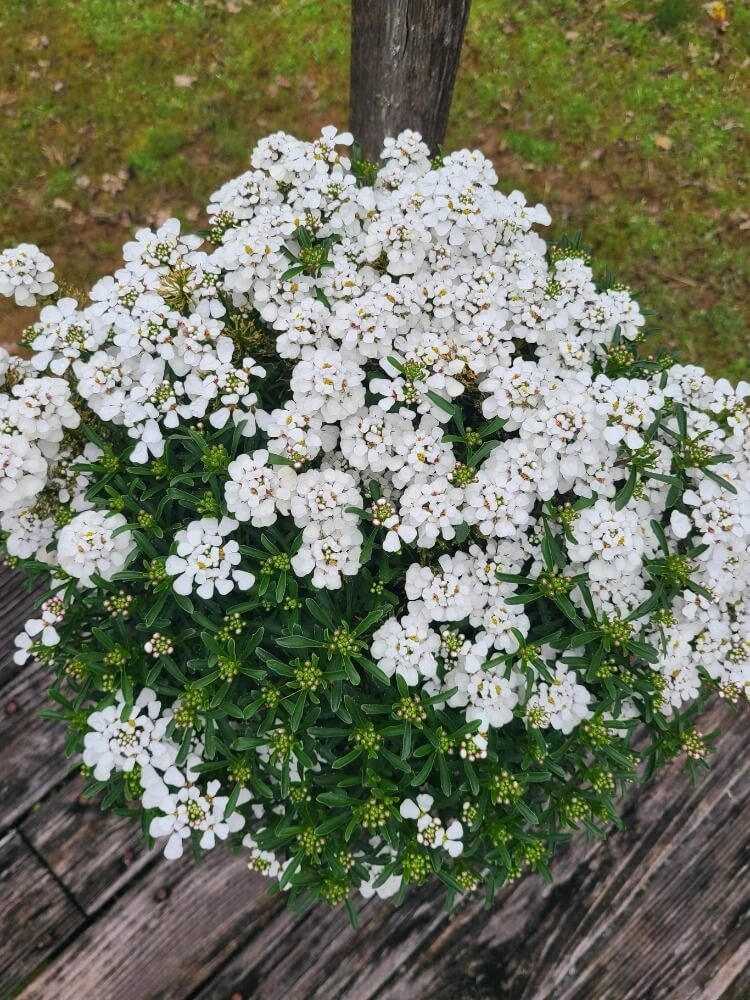
Evergreen Candytuft creates the look of miniature white hydrangea mopheads along the garden floor. This ground-hugging perennial produces dense, flat-topped flower clusters that completely blanket its dark green leaves each spring.
Because the outer petals of each tiny flower are enlarged, the clusters appear delightfully full and cloud-like.
It provides an evergreen carpet all year long, making it perfect for rock gardens, stone pathways, and border edges. Unlike thirsty hydrangeas, this resilient plant thrives in dry, sunny locations with gritty soil.
- Light: Full sun (at least 6 hours daily)
- Water: Low; allow soil to dry out between waterings
- Mature Size: 6 to 12 inches tall, 12 to 24 inches wide
- Bloom Time: Early to late spring (April to May)
- Flower Color: Dazzling pure white
Finding the Perfect Match for Your Garden
Whether you need a massive spring focal point, an aromatic tropical container plant, a climbing vine, or a low-water groundcover, you do not have to settle for the strict water and shade requirements of true hydrangeas. By choosing one of these look-alikes, you can enjoy snowy, cloud-like blossoms in almost any garden corner.