Purple flowers bring a sense of luxury, calm, and depth to any outdoor space. When you choose purple blooms that also carry unforgettable scents, your garden becomes a true multisensory retreat.
From sweet vanilla and spicy clove to refreshing citrus and ripe fruit, these ten scented purple plants will fill your yard, patio, or balcony with both rich color and captivating aroma.
Here are ten outstanding purple-flowering plants that smell incredible, complete with growing profiles to help you visualize each one.
1. English Lavender (Lavandula angustifolia)
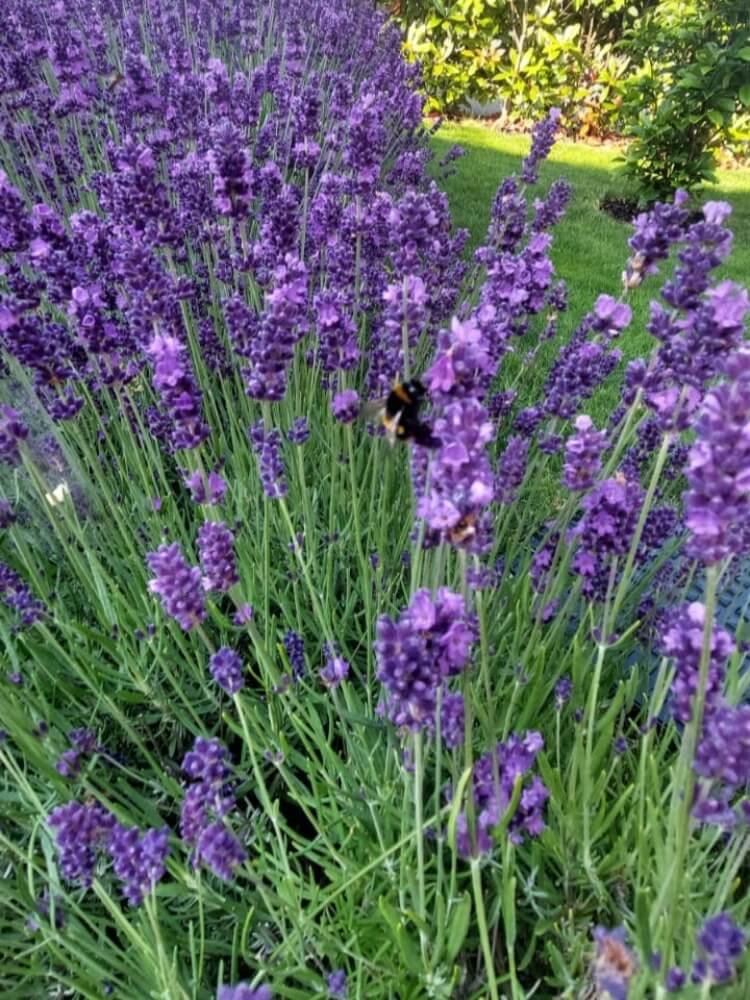
English lavender is a classic Mediterranean evergreen subshrub loved for its soothing herbal scent. Its slender flower spikes rise in dense drifts above aromatic silvery foliage, creating soft waves of violet in sunny gardens.
The essential oils within the petals release a sweet, clean perfume whenever the breeze blows or you brush against the stems.
This drought-tolerant perennial is an ideal choice for sunny walkways, herb gardens, and dry patio borders.
- Light: Full sun (at least 6 to 8 hours of direct sunlight)
- Water: Allow soil to dry out completely between waterings; avoid soggy soil
- Mature Size: 1.5 to 3 feet tall, 2 to 4 feet wide
- Bloom Time: Late spring to midsummer
- Flower Color: Violet-blue to deep purple
2. Low-Chill Lilac (Syringa vulgaris ‘Lavender Lady’)
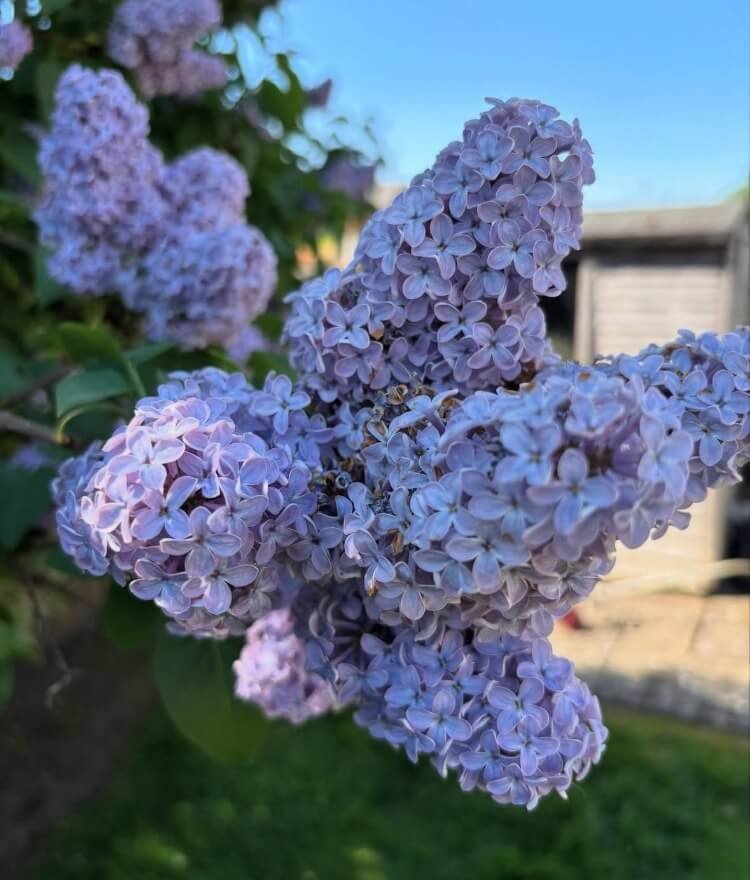
Common lilac (Syringa vulgaris ‘Lavender Lady’) is a breakthrough deciduous shrub bred specifically for warm-winter regions. It produces massive, cone-shaped flower clusters that fill the air with a nostalgic, honeyed floral perfume.
Unlike older heirloom lilacs, this cultivar flowers reliably without hundreds of winter chilling hours. Its dense green heart-shaped leaves provide lush screening and garden structure even after the spring blooms fade.
- Light: Full sun to partial sun
- Water: Water thoroughly when the top 2 inches of soil feel dry
- Mature Size: 10 to 12 feet tall, 5 to 6 feet wide
- Bloom Time: Mid to late spring
- Flower Color: Soft lavender-purple
3. Yesterday, Today, and Tomorrow (Brunfelsia pauciflora)
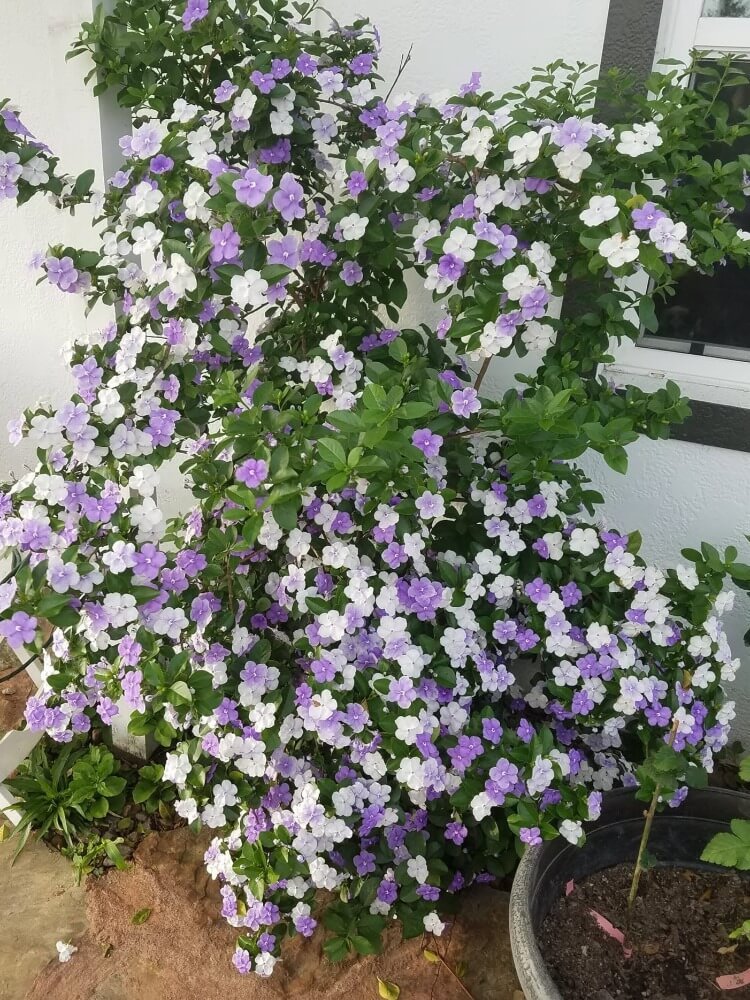
Yesterday, Today, and Tomorrow is an enchanting tropical shrub famous for its dramatic color transformations.
Each blossom opens vibrant purple, turns soft lavender on the second day, and fades to pure white on the third.
Because new buds open continuously, you can admire all three colors on the shrub at the same time. The blossoms emit an intoxicating sweet scent that grows especially rich as twilight settles across the garden.
- Light: Partial shade to bright filtered light
- Water: Keep soil consistently moist but never waterlogged
- Mature Size: 3 to 8 feet tall, 3 to 6 feet wide
- Bloom Time: Spring to early summer, with sporadic flowering year-round in warm areas
- Flower Color: Color-shifting purple, lavender, and white
4. Heliotrope (Heliotropium arborescens)
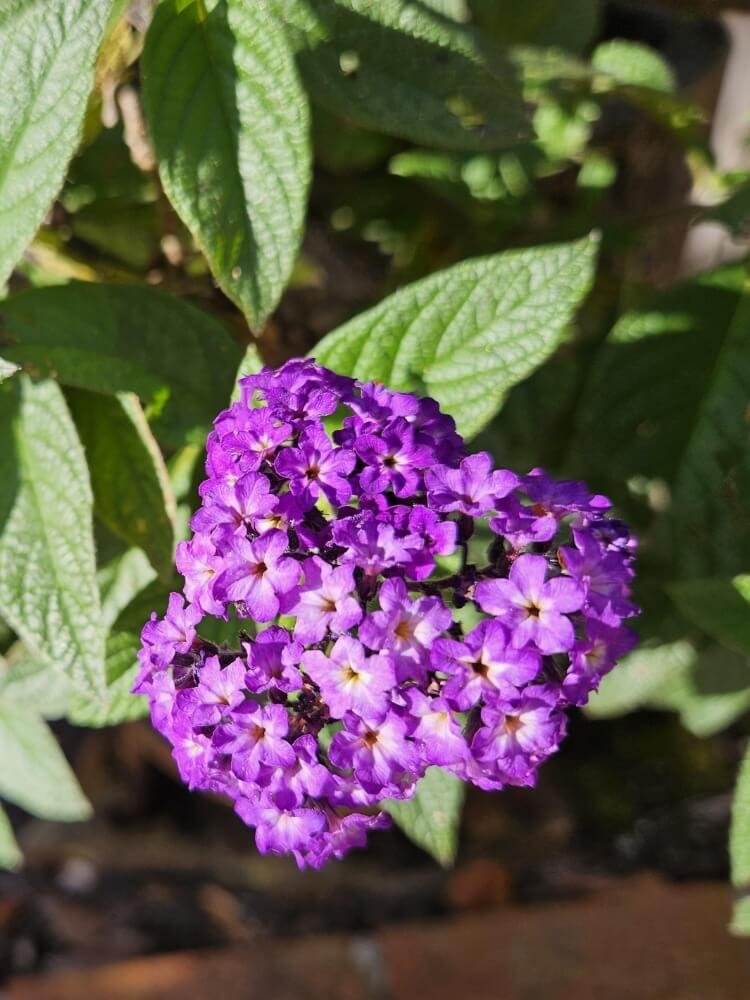
Heliotrope is a tender perennial prized across the world for its sweet, dessert-like fragrance.
Gardeners often call it the cherry pie plant because its blooms smell distinctly of warm vanilla, toasted almond, and baked cherries.
It produces broad, dense flower heads packed with tiny violet-purple florets that contrast against deeply textured green leaves. This showstopper is fantastic for raised garden beds, sunny window boxes, and front porch containers.
- Light: Full morning sun with light afternoon shade
- Water: Water regularly to keep rich soil evenly moist; do not let it dry out completely
- Mature Size: 1 to 3 feet tall, 1 to 2 feet wide
- Bloom Time: Early summer through autumn
- Flower Color: Deep royal purple to violet
5. Dutch Hyacinth (Hyacinthus orientalis)
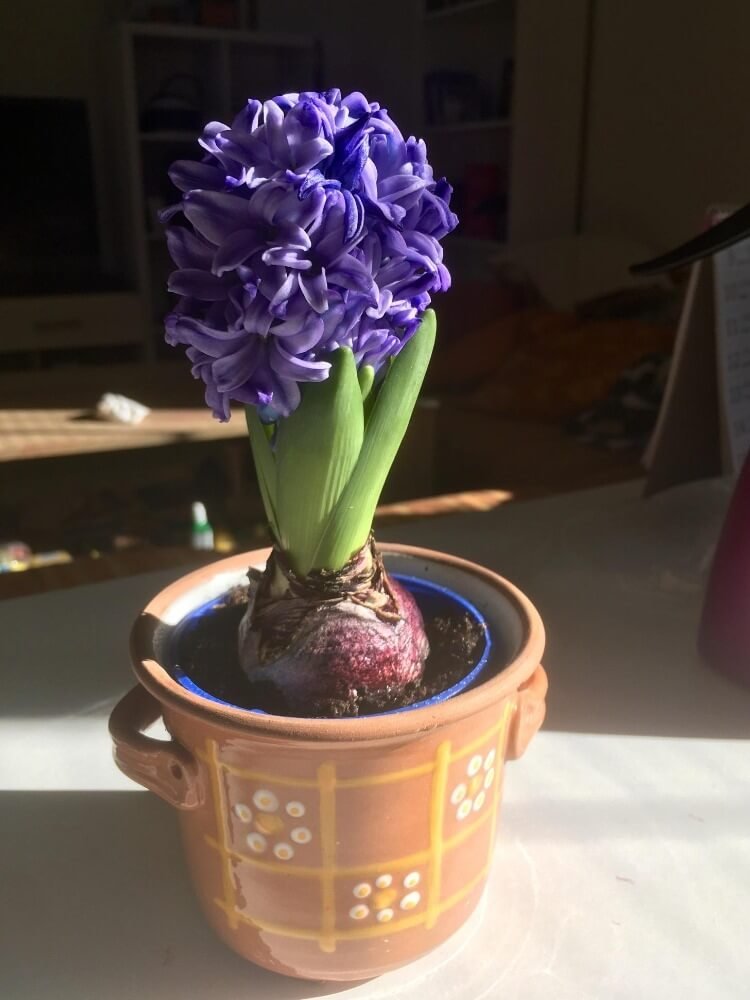
Dutch hyacinth is an iconic spring bulb that produces powerful waves of fresh, spicy-floral perfume. Its thick, upright flower stalks come tightly packed with star-shaped, reflexed purple florets that catch the eye from afar.
Just a small grouping of bulbs can easily perfume an entire garden walkway or patio seating nook.
They are easy to tuck into mixed perennial borders, rock gardens, or shallow container bowls for early spring cheer.
- Light: Full sun to partial shade
- Water: Water moderately during spring growth; keep soil on the drier side during summer dormancy
- Mature Size: 8 to 12 inches tall, 4 to 6 inches wide
- Bloom Time: Early to mid-spring
- Flower Color: Deep violet, plum, and amethyst purple
6. Twilight Zone Grandiflora Rose (Rosa ‘Twilight Zone’)
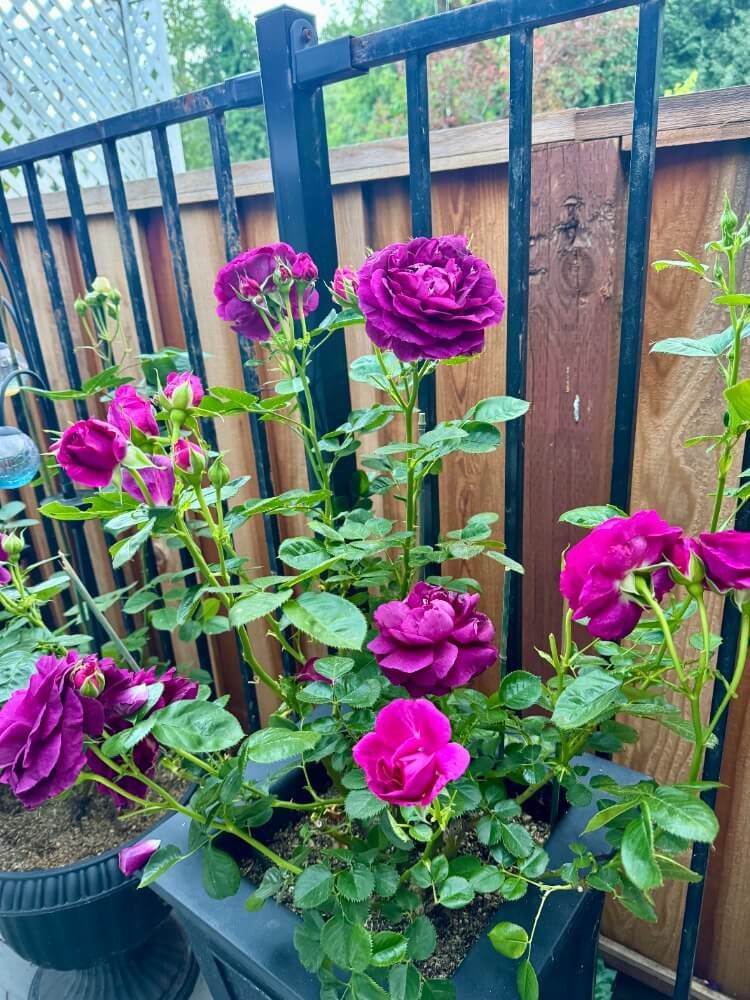
Twilight Zone rose is a modern grandiflora shrub celebrated for its dramatic velvet-purple blossoms. Its fully double, ruffled petals open in clusters and maintain their deep smoky color without fading under the summer sun.
The blooms yield an intense, unforgettable fragrance of spicy clove mixed with sweet citrus blossoms. It is a reliable repeat bloomer that brings old-fashioned romantic charm to sunny flower beds and cutting gardens.
- Light: Full sun (at least 6 hours of direct sunlight daily)
- Water: Deep, regular watering at the base; allow the top inch of soil to dry out between waterings
- Mature Size: 3 to 4 feet tall, 2 to 3 feet wide
- Bloom Time: Late spring to late autumn in repeating flushes
- Flower Color: Deep velvety plum to dark violet
7. Raspberry Jam Orchid (Dendrobium anosmum)
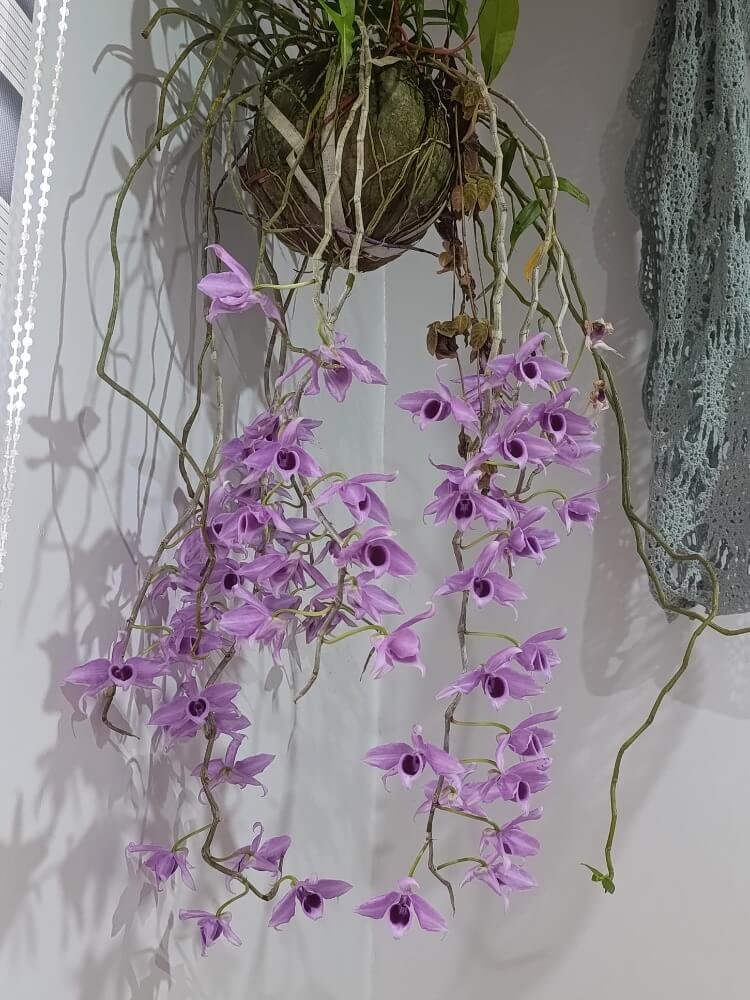
The Raspberry Jam orchid is a spectacular tropical epiphyte native to Southeast Asian rainforest canopies. In spring, its long arching canes shed their leaves and burst into dozens of large, shimmering mauve-purple flowers.
Despite its botanical name meaning unscented, this orchid gives off a strong aroma identical to ripe raspberries and warm fruit candy. It looks breathtaking when suspended in hanging wooden baskets or mounted on tree trunks in warm, humid gardens.
- Light: Bright, filtered sunlight; protect from harsh midday sun
- Water: Water generously during warm summer growth; provide a dry rest period during winter
- Mature Size: Canes reach 2 to 5 feet long
- Bloom Time: Early to mid-spring
- Flower Color: Mauve-lavender petals with deep purple throat markings
8. Purple Passionflower (Passiflora incarnata)
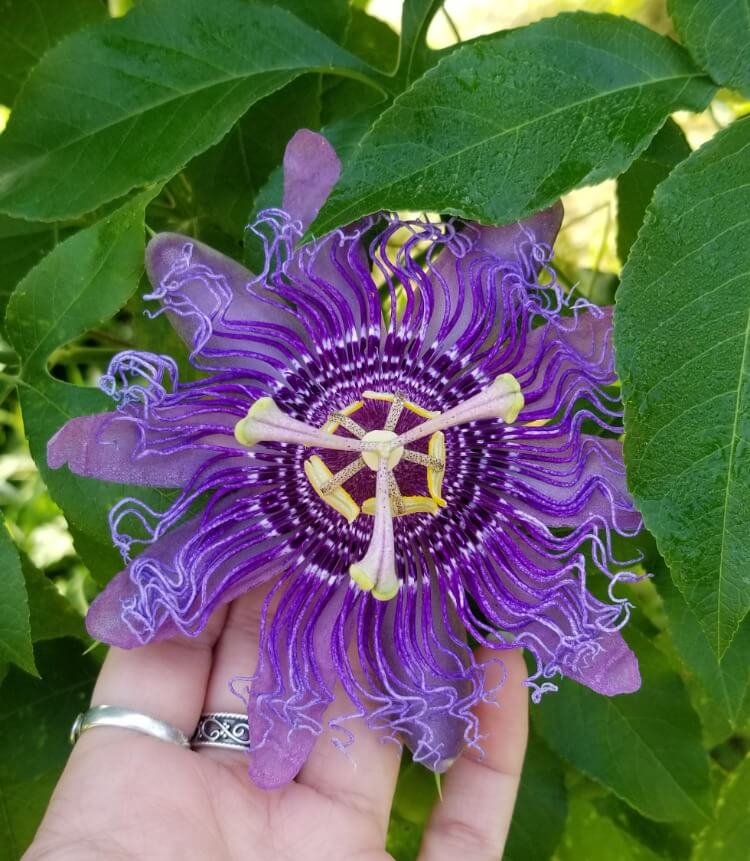
Purple passionflower, often called the Maypop, is a cold-hardy climbing vine with intricate, exotic blooms.
Each flower features pale lavender-pink petals crowned by a dense, wavy corona of rich purple filaments.
The blossoms produce a deliciously sweet, fruity, and musky fragrance that draws in native pollinators all through the morning. It is a vigorous climber that quickly covers fences, garden arches, and structural trellises with dense foliage.
- Light: Full sun for maximum flower production
- Water: Water moderately; established vines can tolerate short spells of dry weather
- Mature Size: Vines climb 15 to 25 feet long
- Bloom Time: Midsummer through early autumn
- Flower Color: Lavender petals with deep violet-purple fringe
9. Bell Clematis (Clematis ‘Betty Corning’)
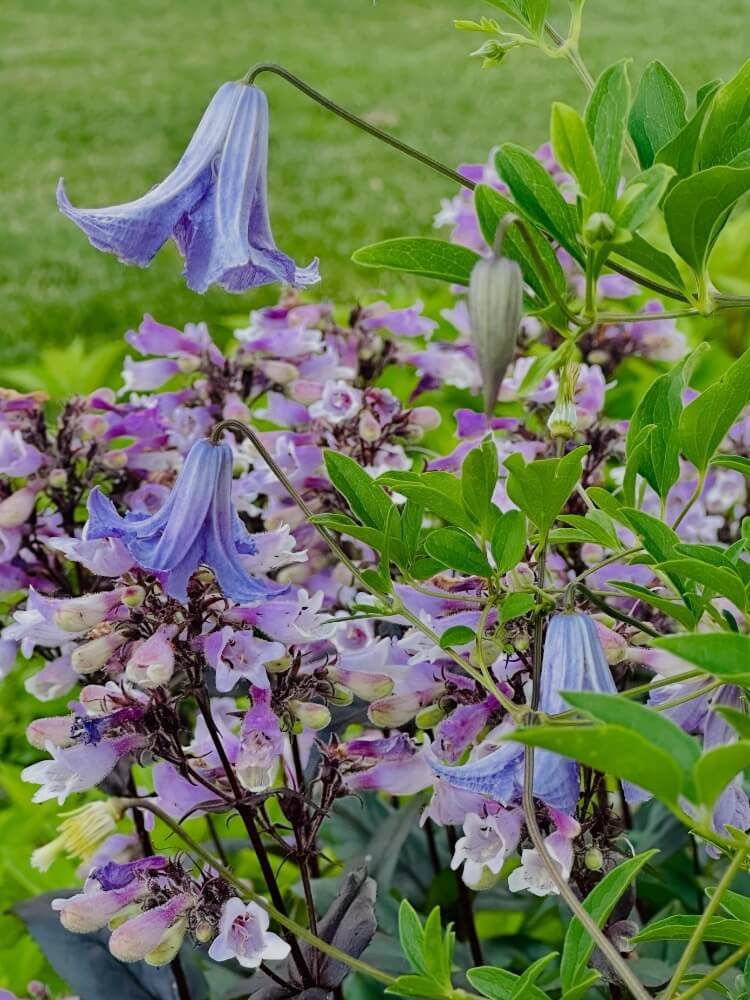
Clematis ‘Betty Corning’ (Clematis viticella hybrid) is a graceful climbing vine known for its delicate, nodding bell-shaped blooms. The flowers display soft lilac-blue petals with pointed, recurving tips that dance gently in warm summer breezes.
While many hybrid clematis vines lack scent, this vigorous selection produces a light, sweet perfume reminiscent of fresh melon and delicate jasmine tea.
It blooms generously on new vines all season long and climbs happily up obelisks, pillar posts, and large shrubs.
- Light: Full sun to partial shade; keep roots cool and shaded with mulch or groundcovers
- Water: Keep soil consistently moist and well-drained
- Mature Size: 8 to 12 feet tall, 2 to 4 feet wide
- Bloom Time: Early summer through late autumn
- Flower Color: Pale lilac-blue to soft lavender-violet
10. Night-Scented Stock (Matthiola incana)
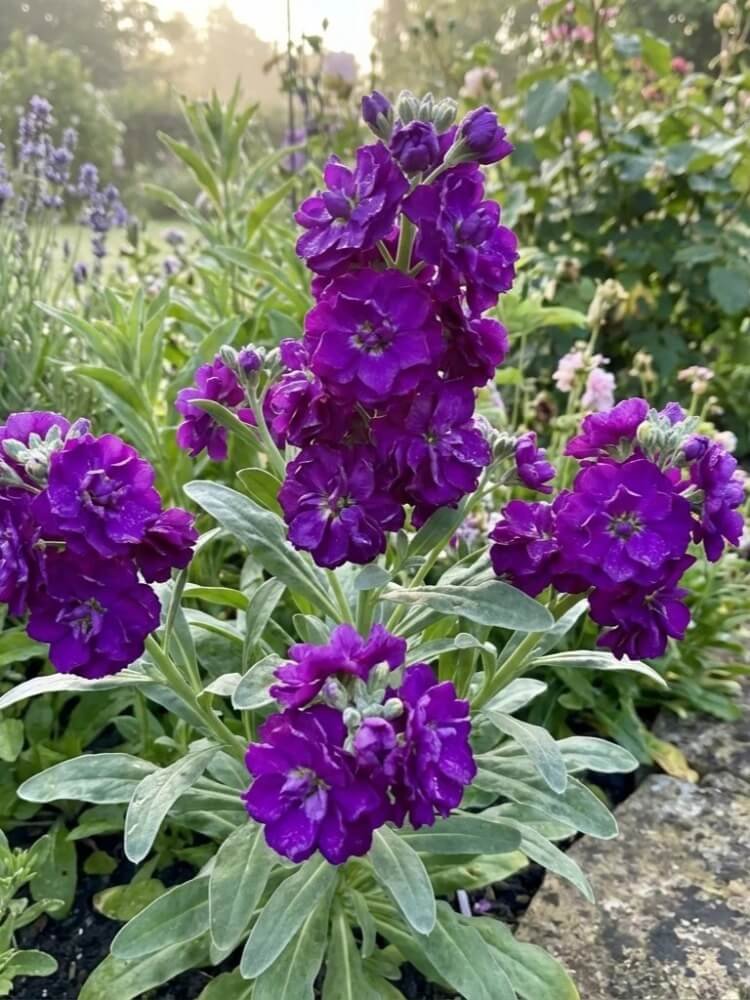
Garden stock (Matthiola incana) is a beloved cool-season flowering annual or biennial celebrated for its rich, spicy bouquet.
It sends up thick, upright flower spikes packed with ruffled blooms in saturated shades of royal violet and deep magenta.
As the sun sets, the florets release an intense perfume of spicy clove and sweet vanilla that carries across patios and pathways. It performs exceptionally well during the cooler months of spring or autumn in patio containers and cottage-style borders.
- Light: Full sun
- Water: Water regularly to keep soil moderately moist; ensure containers drain freely
- Mature Size: 1 to 2.5 feet tall, 1 foot wide
- Bloom Time: Early spring to early summer (or winter in frost-free regions)
- Flower Color: Deep royal violet, magenta, and lavender
Tips for Designing Your Fragrant Purple Garden
To get the most out of these scented purple plants, think about how air and heat move around your space:
- Layer by Height: Use low-growing sweet alyssum and lavender as path edgings where your feet brush against them. Place mid-sized shrubs like roses and lilacs at waist height, and train passionflowers or clematis overhead on arbors so the perfume wafts down.
- Shelter from Strong Winds: Enclosed courtyards, patio walls, and fence lines keep delicate scent compounds from blowing away too quickly.
- Combine Day and Night Bloomers: Mix daytime-fragrant species like heliotrope and roses with twilight-scented plants like stock and Brunfelsia to ensure your garden smells wonderful around the clock.