Boston ferns are famous for their lush, cascading fronds and vibrant green appearance. They bring an elegant woodland charm into any indoor space, whether hanging gracefully in a bright corner or sitting atop a decorative plant stand.
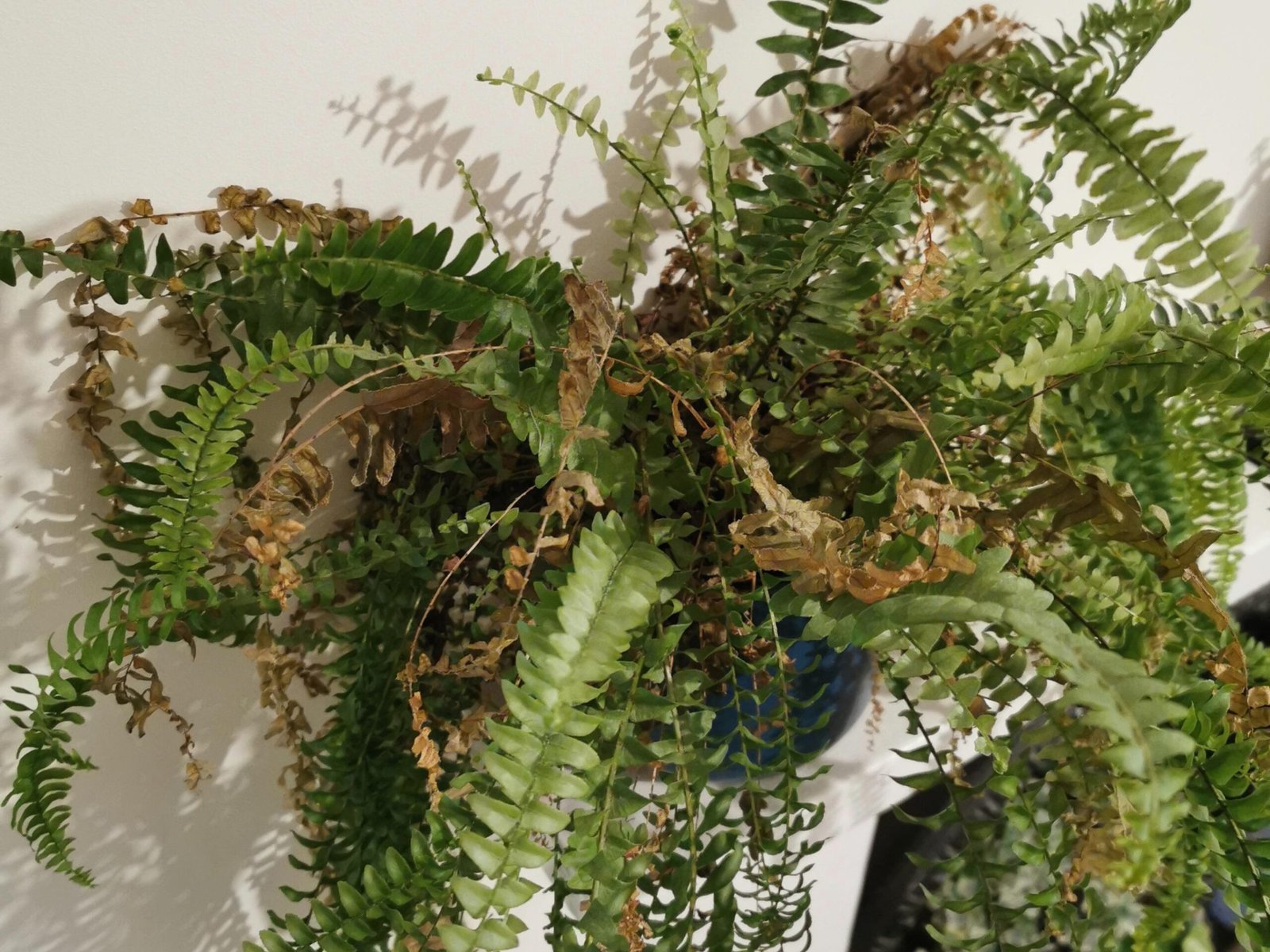
Seeing those once-plump, feathery fronds turn pale, crispy, and brittle can be disheartening. When dry leaflets begin dropping by the dozen every time someone walks past, your fern is sending an unmistakable cry for help.
Fortunately, dry leaves are a reversible symptom once you pinpoint the exact environmental stressor causing the problem.
Understanding Boston Fern Dry Leaves
In their native tropical and subtropical habitats, Boston ferns (Nephrolepis exaltata) flourish under warm, humid forest canopies. They grow in damp soil rich with organic matter and frequently receive filtered sunlight through tree branches.
Indoor environments are very different from a tropical forest floor. Modern homes often have dry air, unpredictable heating cycles, and inconsistent lighting. Because fern foliage consists of hundreds of tiny, delicate leaflets called pinnae, these plants lose moisture through transpiration much faster than thick-leaved tropical houseplants like monsteras or rubber trees.
When a Boston fern cannot pull enough moisture from its roots to match the rate of water lost through its foliage, the leaflets quickly dry out, turn brown, and drop to the floor.
Common Reasons Why Fern Fronds Turn Crispy
A dry Boston fern rarely suffers from a single isolated issue. More often, a mix of small environmental imbalances pushes the plant past its comfort zone.
To nurse your fern back to vibrant health, you must evaluate every factor influencing moisture levels inside the container and around the foliage. Let us examine the most frequent causes behind dry, crispy fern foliage and practical remedies for each.
Dry Soil and Inconsistent Watering
Underwatering is the most frequent culprit behind crispy fern foliage. Boston ferns are thirsty plants that require evenly moist potting soil at all times.
If the root ball dries out completely, the fragile root hairs responsible for absorbing water shrivel. Without functional root hairs, the fern cannot deliver hydration to the outer fronds, causing rapid browning from the tips backward.
Peat-based potting mixes can also become hydrophobic when allowed to dry out completely. When this happens, water simply runs down the inside edges of the pot and exits through the drainage holes, leaving the central root mass completely dry.
How to Water Your Fern Properly
Rather than watering on a rigid calendar schedule, monitor the moisture level of your soil every few days using your finger.
- Water your fern whenever the top inch of potting soil feels barely dry to the touch.
- Pour room-temperature water evenly across the entire soil surface until it flows freely out of the drainage holes.
- Discard any runoff sitting in the drip tray after fifteen minutes so the roots never sit in stagnant water.
If the potting soil has become bone dry and hydrophobic, give your fern a thorough bottom-watering soak. Place the entire pot in a basin filled with three inches of lukewarm water for roughly thirty minutes, allowing the root ball to absorb moisture from the bottom up until the top layer feels damp.
Extremely Low Room Humidity
Boston ferns thrive best in air with relative humidity levels between 50 and 80 percent. Unfortunately, average residential humidity levels hover between 25 and 40 percent, plunging even lower during cold winter months when indoor heaters run constantly.
When indoor air is dry, moisture evaporates from the surface of delicate fern fronds faster than the vascular system can replenish it. The edges and tips of the leaflets become papery and fragile before turning completely brown and shedding.
Practical Ways to Boost Moisture in the Air
Occasional misting with a spray bottle provides a temporary boost that lasts only a few minutes. To provide sustained humidity that truly keeps your fern green, try these proven techniques:
- Set up an evaporative humidifier: Place a small room humidifier a few feet away from your fern to maintain relative humidity above 50 percent.
- Build a pebble tray: Fill a wide, shallow tray with clean pebbles and water, then set your fern pot on top of the stones. Ensure the bottom of the pot stays above the water line to prevent root rot.
- Group your houseplants: Cluster several tropical plants together. As they naturally transpire, they create a pocket of humid air around each other.
- Relocate to a humid room: Bright bathrooms and kitchens naturally have higher ambient humidity levels, making them ideal locations for Boston ferns.
Harsh Direct Sunlight and Sunburn
Boston ferns are adapted to life beneath dense forest canopies where direct sun rarely reaches the ground. Exposing your fern to harsh, direct sunlight will scorch its fragile fronds.
Sunburn on a Boston fern appears as bleached, pale yellow patches that rapidly turn crispy, tan, or dark brown. The fronds directly facing the window will suffer the most damage, while shaded portions of the plant may remain green.
Providing the Best Light Indoors
To prevent leaf scorch while providing enough energy for healthy growth, place your Boston fern in a spot that receives plenty of bright, indirect sunlight.
An east-facing window is ideal because it provides gentle morning light without the harsh heat of afternoon rays. If you only have south-facing or west-facing windows, hang a sheer white curtain to diffuse the intense light, or position the plant four to six feet back from the window frame.
Drafts and Temperature Extremes
Boston ferns prefer consistent ambient temperatures between 65 and 75 degrees Fahrenheit. They react poorly to sudden temperature fluctuations and cold drafts.
Placing your fern near heating registers, wood stoves, air conditioners, or drafty exterior doors exposes the plant to abrupt climate shifts. Hot airflow strips moisture directly from the leaflets, while cold drafts chill the root system and interrupt normal nutrient transportation.
Overfeeding and Fertilizer Salt Buildup
Boston ferns are light feeders. Giving them too much fertilizer or feeding them too frequently leads to mineral salt accumulation in the potting soil.
Excess salts draw moisture away from delicate roots and cause chemical root burn. When roots are damaged by salt buildup, they can no longer take up water, resulting in crispy brown frond tips and yellowing inner foliage. You may also notice a white, crusty residue forming on the top of the soil or around the pot rim.
Tight Roots Inside an Outgrown Container
Healthy Boston ferns produce vigorous, dense root systems that can quickly fill a container. When a fern becomes rootbound, the thick mass of roots displaces the potting soil.
Without adequate soil to retain water and nutrients, the root ball dries out within hours of watering. No matter how frequently you water the plant, the foliage remains perpetually thirsty, leading to chronic leaf dryness and widespread shedding.
How to Repot a Bound Boston Fern
If roots are circling the base of the pot or pushing through drainage holes, repotting your fern into a slightly larger container will revive it.
- Select a new container that is one to two inches wider in diameter than the current pot, ensuring it has ample drainage holes.
- Gently slide the fern out of its old pot and use your fingers or a clean soil knife to massage and loosen outer root strands.
- Set the plant into the new pot with a rich, well-draining potting blend containing peat moss, perlite, and regular potting soil.
- Fill around the root ball with fresh soil, water thoroughly, and keep the plant in moderate humidity while it recovers.
Dealing with Pests That Drain Leaf Moisture
Tiny sap-sucking pests like spider mites, scale insects, and mealybugs love living on the undersides of dense fern foliage. As they feed on plant fluids, they deprive leaflets of essential moisture.
Pest damage often looks like fine yellow speckling on fronds, accompanied by sticky residue or faint webbing between leaflets. Over time, affected fronds turn brown, brittle, and drop off.
Treat pest infestations by gently rinsing the plant with lukewarm water in the shower to knock off bugs. Follow up with an application of insecticidal soap or neem oil spray, taking care to coat both sides of every frond.
How to Trim and Prune Dry Fronds
Once a fern frond or leaflet has turned completely brown and crispy, it cannot turn green again. Leaving dead fronds on the plant restricts air circulation and creates hiding spots for pests.
Use a pair of sharp, sanitized pruning shears to snip off entirely dead fronds right at the base of the plant near the soil crown. If only the outer tips of a frond are dry while the rest remains vibrant green, you can gently trim away the crispy tips with scissors, following the natural triangular shape of the leaflet.
Simple Daily Routine for Thriving Ferns
Preventing dry leaves on your Boston fern comes down to small, consistent habits. Taking thirty seconds every couple of days to observe your plant will help you catch moisture problems long before fronds turn brown.
Check the soil surface with your fingertip, verify that your humidifier has clean water, and occasionally rotate the pot so all sides receive balanced light. With regular moisture, gentle light, and humid air, your Boston fern will reward you with lush, arching fronds for years to come.
How Severe Is Your Boston Fern Dehydration?
Answer 4 quick questions to see your result