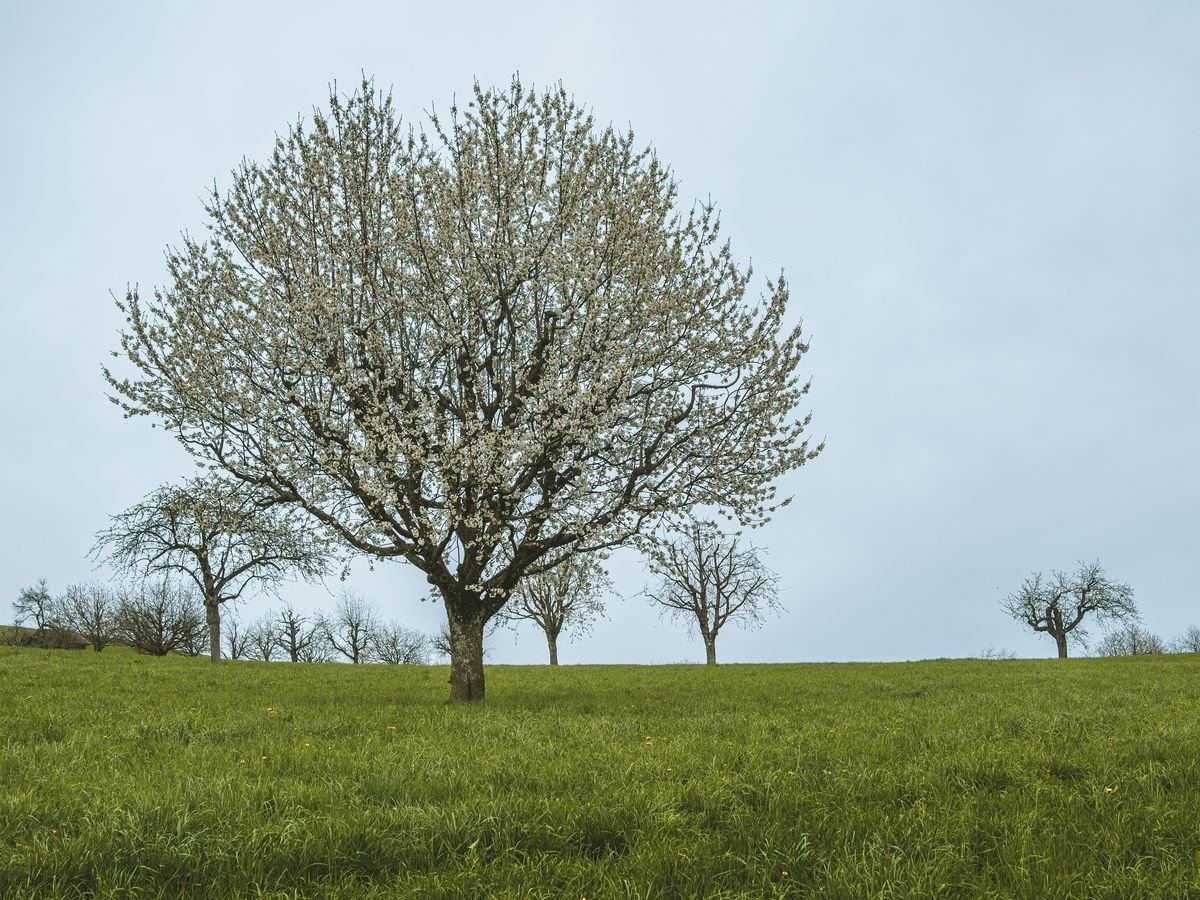
Planting an apple tree brings visions of crisp autumn harvests, fragrant spring blossoms, and a sturdy centerpiece for your home orchard. When a sapling stalls out and refuses to put on new height or healthy foliage, the excitement quickly turns into frustration.
Fruit trees require a delicate balance of space, climate conditions, and root support to establish themselves. Unlike mature forest giants, young apple trees are notoriously sensitive to their surroundings, and even small hidden stresses can bring vegetative growth to a sudden halt.
Why Your Apple Tree Stunted Its Growth
When an apple tree stops growing, it is usually responding to an invisible bottleneck in its environment. Young trees divert energy between growing upward, spreading their canopy, and anchoring their root systems below ground.
If the roots encounter poor soil, aggressive weeds, or insufficient moisture, the top portion of the tree simply shuts down new shoot development to conserve energy.
Transplant shock is another common reason a newly planted specimen looks frozen in time. When bare-root or container-grown trees enter native garden soil, they often spend an entire season repairing microscopic root hairs before producing new branch growth. Giving the tree time to adjust is part of the process, but ongoing dormancy during the active growing season points toward deeper care issues.
Clearing Ground Competition Around the Base
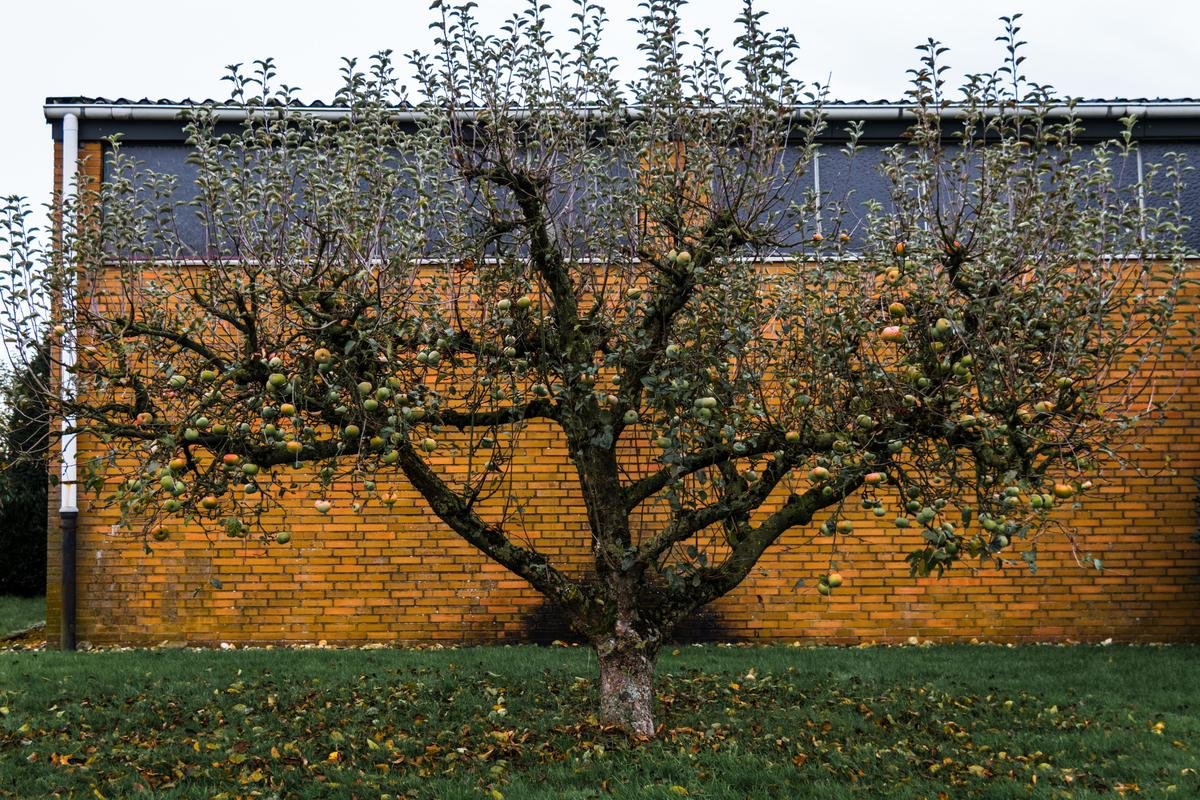
Apple trees are remarkably poor competitors when it comes to fighting for underground resources. Turfgrass and pervasive garden weeds possess fibrous, shallow root systems that intercept water, soluble nitrogen, and trace minerals before those nutrients can ever reach the tree.
When grass grows right up against the trunk, a young tree can lose more than half of its potential seasonal growth rate.
To give your tree a fair chance, establish a clear ring around the base of the trunk. A young sapling needs a bare circle at least four feet in diameter, completely free of sod, broadleaf weeds, and deep-rooted perennials.
Hand-pulling is always the safest removal method. Using mechanical weed trimmers close to the trunk poses a massive risk, as even minor string strikes can strip away the tender cambium layer and permanently girdle the tree.
Applying Mulch Correctly Without Damaging Bark
Once the area under your tree is clear of weeds, applying a layer of organic mulch keeps the ground moist and prevents unwanted seeds from taking root. Wood chips, shredded bark, or clean straw work exceptionally well for fruit trees.
Spread your mulch to an even depth of two to three inches across the cleared circle, tapering it down toward the edges.
Never pile mulch directly against the tree trunk in a steep cone or volcano shape. When moist mulch touches the bark, it traps moisture against the wood, inviting fungal pathogens, collar rot, and boring insects.
Keep the mulch pulled back at least three to four inches away from the root flare. In colder regions where small rodents seek winter shelter, pulling mulch back several inches before the ground freezes prevents mice and voles from nesting near the trunk and chewing the bark.
Understanding Pollination and Companion Trees
While lack of pollination does not stop vegetative branch growth, it does prevent your tree from setting fruit, which is often what growers notice first when assessing tree vitality. Most apple varieties are self-sterile, meaning their flowers cannot fertilize themselves with their own pollen.
Even self-fertile types will produce noticeably heavier crops and more vigorous seasonal growth cycles when planted near a compatible partner.
To achieve successful cross-pollination, you need at least two different apple varieties growing near each other. A good planting distance is between twenty and fifty feet apart.
Placing companion trees closer than twenty feet can force their root zones and canopies into direct competition for sunlight and moisture. Placing them more than one hundred feet apart reduces the likelihood that foraging bees will transfer pollen between both trees.
Selecting Compatible Bloom Times and Varieties
For two apple trees to cross-pollinate, they must open their flowers during the exact same window in spring. Cultivars are organized into bloom groups ranging from early season to late season.
An early-blooming tree will not set fruit if its companion does not start opening buds until three weeks later, because the blossoms will simply miss each other.
- Group 1 and 2: Early flowering varieties that thrive in regions with rapid spring warming.
- Group 3: Mid-season bloomers that offer great overlap with both early and late varieties.
- Group 4 and 5: Late flowering cultivars ideal for areas prone to late spring frosts.
- Crabapples: Excellent universal pollinators for almost all culinary apple trees due to long bloom periods.
Be mindful of triploid varieties like Jonagold or Gravenstein. These varieties have sterile pollen and cannot serve as the pollinator for another tree, requiring you to plant a third compatible variety in your orchard.
Climate and Necessary Winter Chill Hours
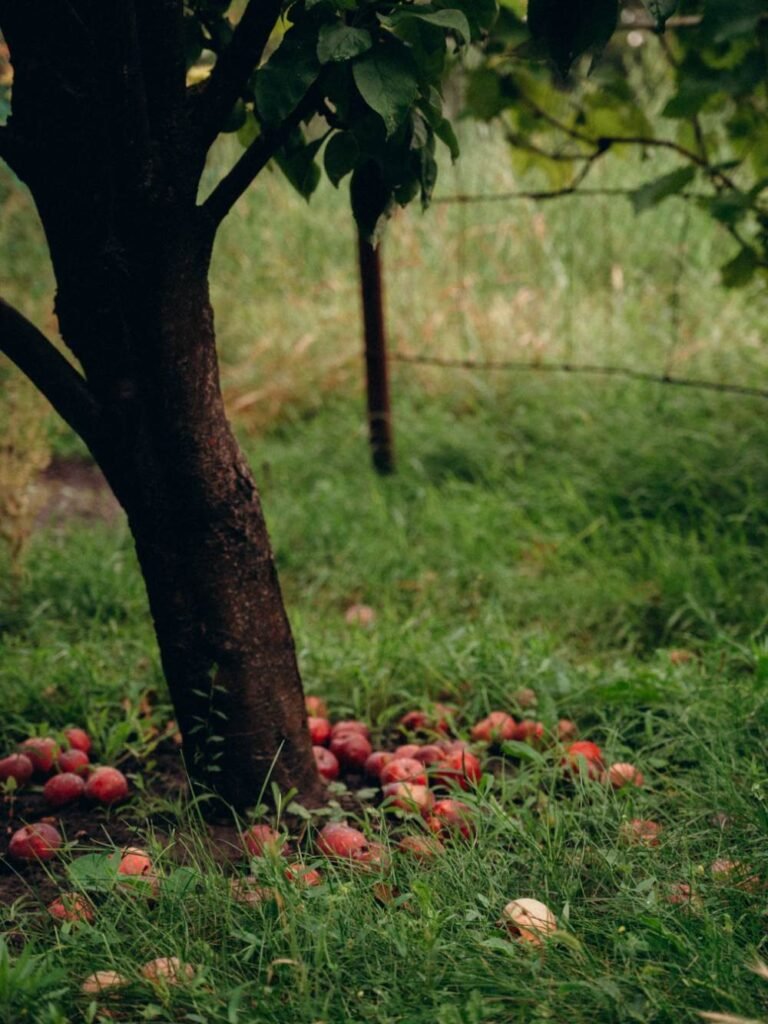
Apple trees require a specific amount of winter dormancy to regulate their growth cycles. This period of cold is measured in chill hours, which are cumulative hours spent between thirty-two and forty-five degrees Fahrenheit throughout late autumn and winter.
During this chilling period, biochemical growth inhibitors inside the buds slowly break down, signaling to the tree that winter is ending.
If you plant a high-chill variety requiring one thousand hours in a warm climate that only receives four hundred hours, the tree will experience severe confusion. In spring, the buds may remain stubbornly dormant well into summer, foliage will emerge sporadically, and branches will fail to extend.
Always verify the average chill hours of your local growing zone and choose cultivars explicitly rated for your area.
Soil Composition and Root Health
Root systems need oxygen just as much as they need water. Dense clay soils that stay waterlogged for days after rainfall will quickly suffocate fine root tips, leading to root rot and complete cessation of shoot growth.
Apple trees perform best in loose, loamy soil with high drainage capacity that still holds moderate baseline moisture.
If your planting site has heavy clay, planting the tree on a raised mound or gentle hillside slope encourages water to drain away from the primary root crown.
Avoid planting at the lowest point of a yard where cold air and runoff collect. These low-lying areas create frost pockets that damage early leaf buds and keep root systems soaked in cold water during early spring.
Getting Soil pH and Nutrients Right
Soil acidity dictates whether your apple tree can absorb nutrients that are present in the dirt. Apple trees prefer a soil pH between 6.0 and 6.8, which is slightly acidic to nearly neutral.
When soil drops below 5.5 or rises above 7.5, essential nutrients such as phosphorus, calcium, and iron become chemically locked away from the root system, causing pale foliage and stunted limbs.
When feeding your tree, balance is key. Never place granular fertilizer into the planting hole when installing a new tree, as this burns delicate young roots and halts development.
Instead, top-dress the root zone in early spring with a balanced, slow-release organic fertilizer. Too much fast-release nitrogen causes the tree to push out weak, leggy shoots that attract aphids, while too little nitrogen leaves the tree unable to produce new leafy scaffolds.
Watering Habits and Drainage Issues
Both underwatering and overwatering produce nearly identical symptoms in young apple trees, including drooping leaves, stopped growth, and premature foliage drop. The key difference lies beneath the soil surface.
Saplings need roughly one inch of water per week during their first two growing seasons, either through rainfall or deliberate irrigation.
Shallow daily sprinkling encourages roots to stay near the surface, leaving the tree vulnerable to heat stress and wind instability.
Provide slow, deep watering once or twice a week by letting a hose trickle at the drip line for thirty to forty-five minutes. This saturates the soil deeply, urging the root structure to reach downward into stable moisture reserves.
Pruning Mistakes That Delay Growth
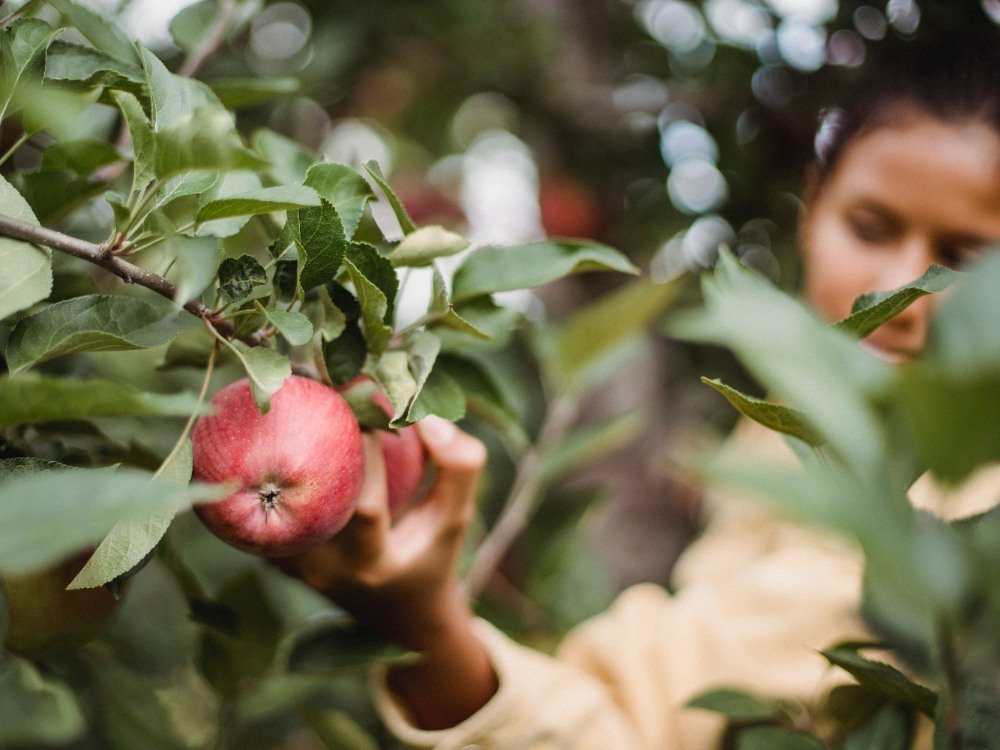
Pruning is essential for sculpting a strong framework, but aggressive or ill-timed pruning can severely delay tree maturation. Heavy pruning during the active summer growing season removes leaves that the tree relies on for photosynthesis, robbing it of the energy needed for root and wood expansion.
Limit structural shaping cuts to late winter while the tree is fully dormant.
When training young trees, avoid removing the central leader unless you are deliberately following an open-center vase pruning system.
Cutting the main leader too early forces the tree into a chaotic survival response, sending out dense clusters of vertical water sprouts rather than balanced lateral branches. Clean your pruning shears with rubbing alcohol between cuts to avoid transmitting bacterial pathogens like fire blight that cripple branch tips.
Why Is Your Apple Tree Not Growing?
Answer 4 quick questions to see your result