
African violets are classic indoor houseplants cherished for their velvety foliage and colorful, year-round blossoms. Many plant owners find themselves facing a common problem when their violet turns into a dense, bushy mass of foliage with tiny leaves and no flowers in sight.
When an African violet grows too many leaves, it is usually spending all its energy maintaining extra growth points rather than producing vibrant blooms.
Understanding what causes this foliage surge and knowing how to prune away suckers will quickly restore your plant to a neat, single-crowned shape ready to flower again.
What Causes African Violets to Grow Too Many Leaves
An African violet that looks overly crowded is typically dealing with environmental stress, incorrect nutrition, or natural sucker development.
In standard cultivation, show-quality African violets are kept as single-crown specimens. A single crown means there is one central growing point from which leaves radiate outwards in a neat, flat rosette.
When growing conditions get disrupted or the plant decides to multiply, it begins pushing out auxiliary crowns, often called suckers. These extra shoots create a dense, messy cluster of foliage inside a single pot.
Aside from sucker growth, incorrect feeding and improper lighting can cause the plant to produce a rapid flush of weak, undersized leaves. Diagnosing the underlying cause requires taking a close look at your feeding schedule, light exposure, and the structure of the central stem.
The Problem With Excess Nitrogen Fertilizer
Feeding an African violet too much nitrogen is one of the fastest ways to stimulate excessive vegetative growth at the expense of floral buds.
Fertilizers are labeled with three numbers representing the ratio of nitrogen (N), phosphorus (P), and potassium (K). Nitrogen is responsible for green leafy growth, phosphorus fuels root development and blossom production, and potassium supports overall plant vigor and disease resistance.
When a fertilizer contains a disproportionate amount of nitrogen, the plant diverts its metabolic resources into creating dense clusters of leaves. The foliage may look lush initially, but it quickly becomes packed together, suffocating developing flower buds before they can emerge.
If you have a variegated African violet variety, excessive nitrogen will often cause the leaves to lose their white, cream, or pink patterns, turning the entire leaf solid green.
Choosing Urea Free Fertilizers for African Violets
Not all nitrogen sources are created equal, and African violets are sensitive to the chemical form of nitrogen present in houseplant foods.
Many standard water-soluble fertilizers rely on urea as their primary nitrogen source. Urea requires specific soil microbes to break down into a form that roots can absorb, and in small potting containers, this breakdown process can be sluggish and erratic.
Excessive urea in potting mix can cause severe root burn, damaging the fragile root hairs that take up water and micronutrients. In response to root injury, the plant may enter a survival mode where it sprouts defensive suckers near the soil line.
To prevent this issue, look for specialty African violet fertilizers that explicitly state they are urea-free. These formulas utilize nitrate nitrogen, which the root system absorbs smoothly without shocking the delicate root zone.
How Lighting Conditions Impact Foliage Density
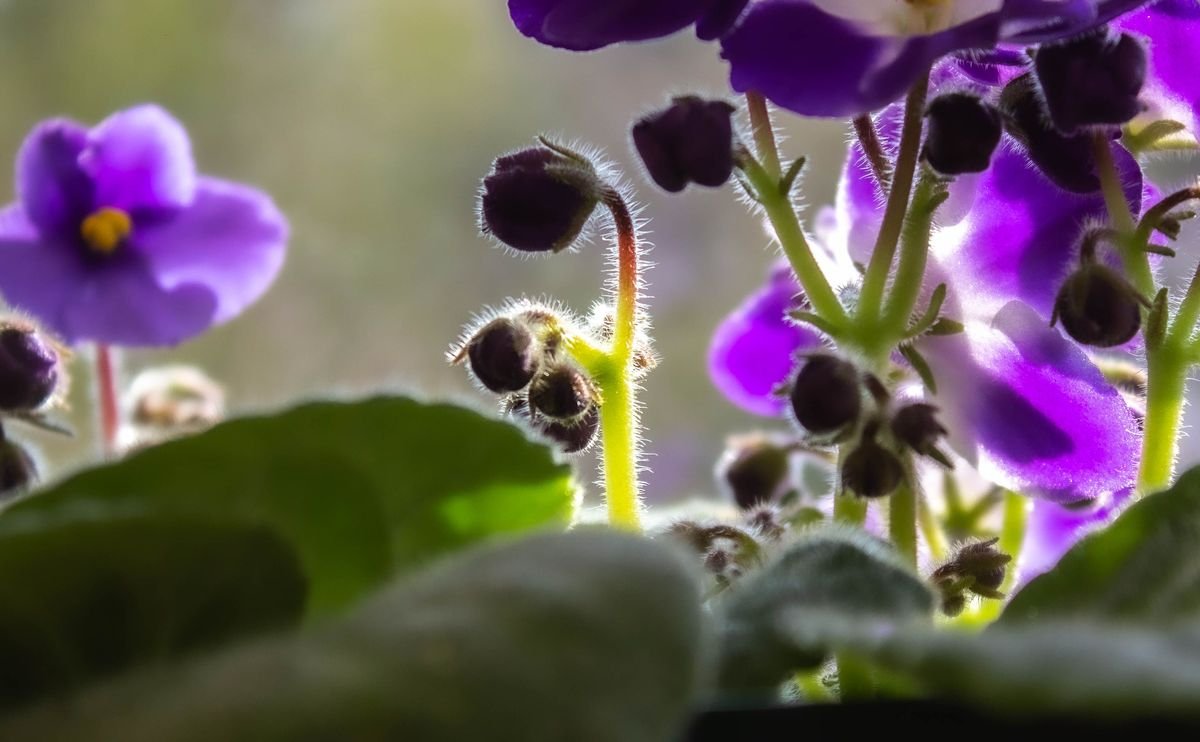
Light quality and duration directly dictate how an African violet shapes its leaves.
When an African violet receives too much intense or direct light, the plant attempts to shield its crown by bunching up its center. The leaf stems (petioles) remain very short, and the leaves crowd together into an extremely tight, bunched cluster.
Conversely, when light levels are far too low, the plant will stretch its leaves toward the light source, creating long, weak stems and an uneven rosette. In an effort to capture more photons, the plant may also push out auxiliary shoots.
Aim for 10 to 12 hours of bright, indirect sunlight daily. East-facing or north-facing windowsills are generally ideal locations. If you use artificial grow lights, keep the light fixture roughly 10 to 12 inches above the top of the foliage for balanced, flat growth.
Temperature Extremes and Stress Foliage
African violets thrive in the same temperature range that most people find comfortable indoors, between 65 and 75 degrees Fahrenheit.
When exposed to sustained temperatures above 80 degrees Fahrenheit, the plant undergoes heat stress. High heat accelerates transpiration and can trigger abnormal foliage production where the center becomes tight, hard, and overly compact.
Cold drafts from leaky window seals, air conditioning vents, or patio doors cause equal harm. Cold shock can stunt outer leaves while forcing the crown to produce tiny, curled leaves in self-defense.
Ensure that daytime and nighttime temperatures stay consistent, ideally with no more than a 5-degree drop during the night. Protecting your violet from drafts will keep foliage expanding in a relaxed, horizontal plane.
Understanding African Violet Crowns and Suckers
To fix a violet with too many leaves, you must understand what a sucker actually is.
A sucker is an offshoot that develops in the leaf axil, which is the small junction where a leaf stem meets the main central stalk. It starts as a tiny set of paired leaves.
Unlike flower buds, which emerge with tiny rounded bud heads on thin stems, suckers begin life with two tiny, fuzzy leaves with no bud present. If left alone, a sucker will continue growing into a complete duplicate plant attached to the side of the parent stalk.
Because multiple crowns share a single root system and pot, they quickly compete for space, moisture, and nutrients. The leaves crowd each other out, block air circulation, and suppress flowering entirely.
How to Spot Suckers on Your Plant
Catching suckers early makes removing them quick and painless for both you and the plant.
Inspect the main stem under the existing layers of leaves on a monthly basis. Look closely at the points where the leaf petioles attach to the main stem.
- Flower Buds: Show a slender stem terminating in a small, rounded nodule with no leaf pairs.
- Suckers: Show four tiny leaves emerging together from the junction point without a blossom head.
- Side Shoots: Larger, established suckers that already resemble a miniature plant hugging the main stem.
Identifying these shoots when they only have two to four tiny leaves ensures you can pop them off with minimal disruption to the parent plant.
Step by Step Guide to Removing Suckers
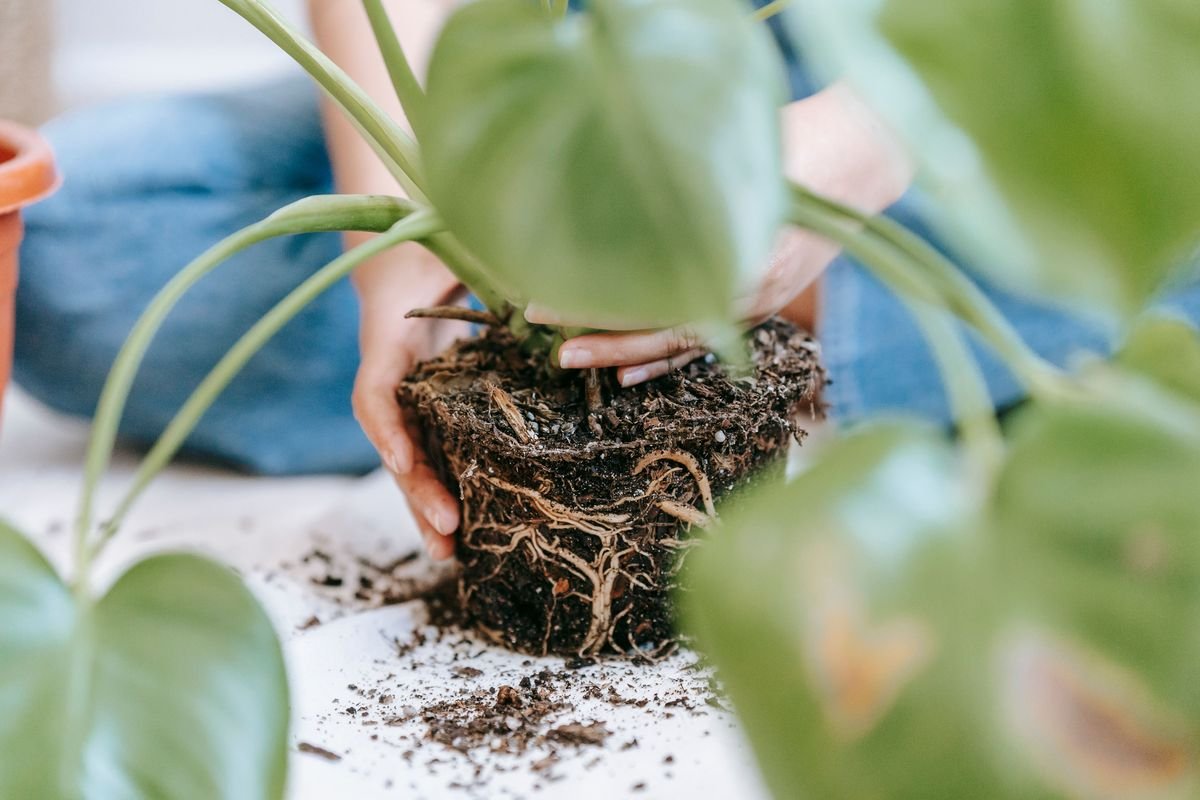
Removing suckers requires a gentle touch and clean tools to avoid damaging the main crown.
- Gather a blunt toothpick, a pair of tweezers, or a small hobby knife with a sanitized blade.
- Gently push aside the surrounding mature leaves so you have a clear view of where the sucker connects to the main stem.
- Place the tip of the tool at the base of the sucker, right at the junction.
- Apply gentle sideways pressure to pry or cut the sucker cleanly off the stalk.
- Inspect the area to ensure the growing point of the sucker was completely removed so it does not regenerate.
Work carefully around the main stem to avoid gouging the central trunk. If the sucker is already large, you can remove some of the lower parent leaves first to gain better access.
How to Propagate the Removed Suckers
A healthy sucker does not need to go to waste, as it provides an easy way to propagate an exact clone of your African violet.
Fill a small 2-inch plastic pot with a moist, lightweight mix containing equal parts peat moss and perlite. Avoid heavy potting soils that stay waterlogged.
Make a small indentation in the center of the soil mix. Insert the base of the removed sucker gently into the hole, pressing the mix around it so the shoot stands upright.
Place the potted sucker inside a clear plastic bag or humidity dome to maintain high moisture levels while new roots form. Set the container in a bright spot away from direct sun. Within 3 to 4 weeks, the sucker will establish its own root system and begin actively growing.
Fixing a Long Neck on an African Violet
As you groom lower leaves and remove suckers over time, your African violet will naturally develop an exposed section of stem beneath the foliage, commonly referred to as a neck.
A long, bare neck makes the plant look like a tiny palm tree and causes the upper leaves to become unstable and top-heavy.
Fortunately, the tissue along an African violet neck contains latent root cells. When placed beneath moist potting soil, this stem will readily produce a fresh network of healthy roots.
Never simply chop off the top leaves to fix an elongated plant. Instead, address the neck through proper root pruning and repotting so the plant can reset its height without going into shock.
Root Trimming and Potting Up Techniques
Repotting your African violet every six months keeps the plant compact, refreshes exhausted soil, and removes unsightly necks.
Begin by removing the plant from its container. Use a clean, sharp knife to shave off the bottom of the root ball by the exact same height as the exposed neck. For example, if your plant has a 1-inch neck, slice 1 inch of roots directly off the bottom of the root ball.
Gently scrape the surface of the bare neck with the dull edge of a blade to remove crusty brown tissue and expose fresh green layer underneath. This light scraping stimulates new root formation along the stem.
Place the plant back into the same pot or a clean pot of the exact same diameter. Fill the bottom and sides with fresh African violet potting mix until the soil level comes right up to the base of the lowest leaves, burying the bare neck completely.
Ongoing Care Routine to Keep Blooms Coming
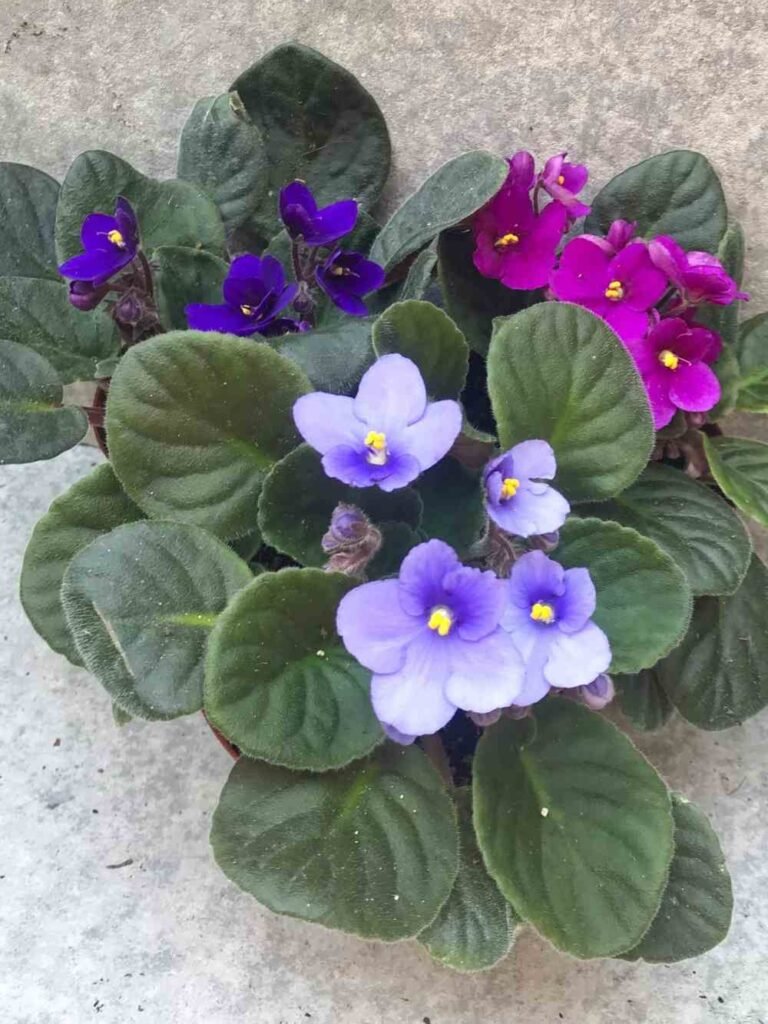
Maintaining a neat, floriferous African violet comes down to regular inspection and balanced care.
Water from the bottom or use a self-watering wick system to prevent water droplets from sitting on the fuzzy foliage, which can cause leaf spots. Always use room-temperature water, as cold water shocks the root system.
Rotate your pot a quarter turn every time you water. This ensures all sides receive equal light exposure, preventing the plant from leaning or clustering leaves toward one side.
Keep up with monthly grooming by removing old, yellowing outer leaves and picking off suckers as soon as they appear. By maintaining a tidy, single crown, your African violet can channel all its strength into producing bountiful clusters of blooms throughout the entire year.
Is Your African Violet Overcrowded?
Answer 4 quick questions to see your result