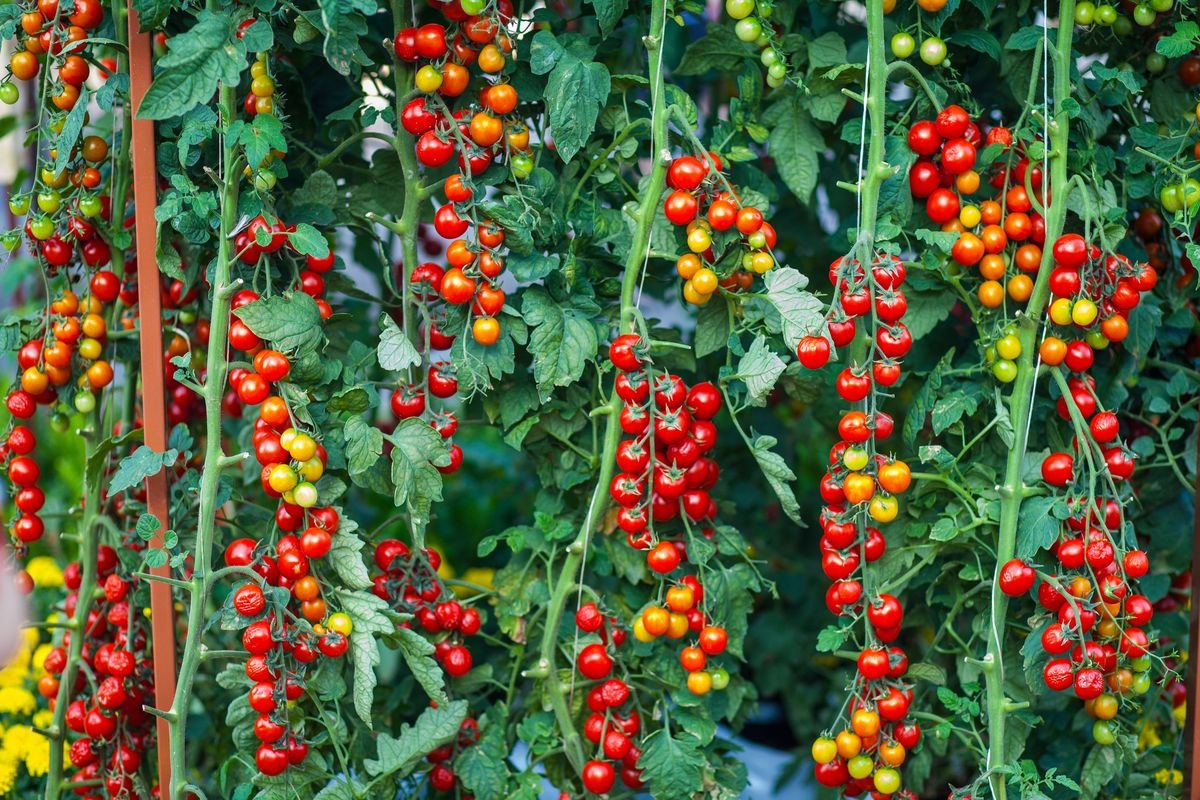
Few things compare to the satisfaction of walking into your garden to pick a ripe, fragrant tomato. You spend weeks planting seeds, staking vines, pinching off suckers, and watching green globes slowly transform into vibrant red fruit.
Finding those beautiful tomatoes split wide open right before harvest is completely heartbreaking. Understanding why this happens and how to manage your garden can protect your crop so you enjoy every single fruit you grow.
The Science Behind Tomato Splitting
Tomato skin acts as a protective barrier holding together all the juicy pulp and seeds inside. When a plant takes up water at a normal, steady pace, the skin stretches smoothly alongside the expanding flesh.
Problems begin when an unexpected surge of water enters the root system after a dry period. The interior fruit cells absorb this sudden influx of moisture rapidly, expanding far faster than the outer skin can stretch.
Much like an overfilled water balloon, the internal pressure simply becomes too great for the skin fibers to handle. The skin ruptures, leaving visible cracks across the top or down the sides of the tomato.
This rapid expansion is primarily a structural failure driven by hydrostatic pressure. When the cell walls inside the tomato take in water through osmosis, they swell instantly, pushing outward against the epidermis until it tears open.
Radial Cracks Compared to Concentric Cracks
Not all tomato cracks look the same. Gardeners typically encounter two distinct cracking patterns on their plants, each telling a slightly different story about growing conditions. Radial cracking occurs when splits extend straight downward from the stem end along the sides of the fruit. This type of cracking is usually caused by sudden, heavy rainfall following a drought period and tends to be deep and severe. Concentric cracking appears as circular split rings around the top of the fruit near the stem. These rings are often shallower and develop when the tomato experiences high temperatures, intense sun exposure, and fluctuating humidity levels.- Radial splits run vertically down the fruit shoulders and often penetrate deep into the flesh.
- Concentric rings circle around the stem cap and usually remain near the surface of the skin.
- Both types of damage expose the interior flesh to airborne pathogens, pests, and moisture loss.
Is It Safe to Eat a Cracked Tomato
The good news is that cracked tomatoes are not automatically ruined. As long as you catch the split early and inspect the fruit closely, you can still enjoy most of your harvest.
If the crack is fresh and the exposed flesh looks clean and firm, the tomato is completely safe to eat. You should simply cut away the damaged split portion with a clean paring knife and use the rest of the tomato immediately.
However, if the split has been open for several days, trouble can quickly develop. Open wounds invite fungal spores, bacterial rot, and insects like fruit flies or sap beetles into the fruit.
Never consume a tomato that exhibits foul odors, slimy discoloration around the wound, oozing liquid, or visible mold growth. When in doubt, toss damaged fruit into the compost pile.
Why Inconsistent Watering Is the Main Culprit
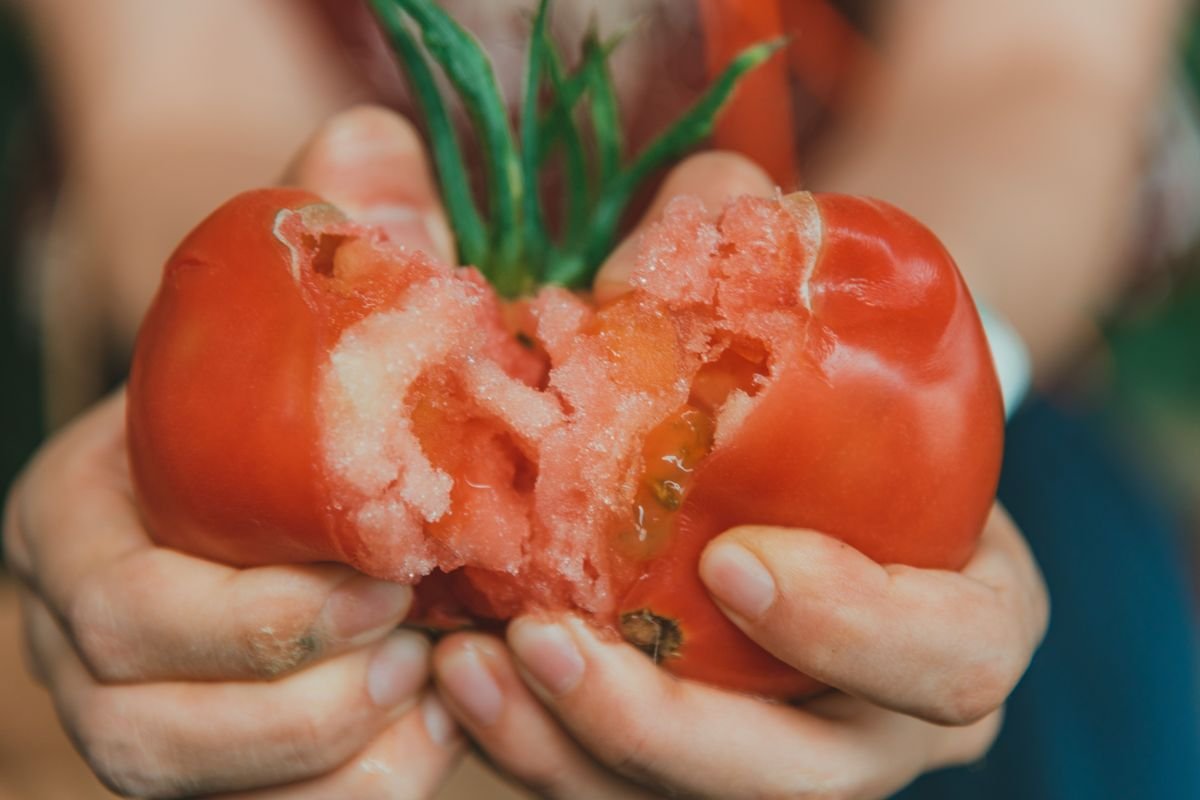
The single most common trigger for cracked fruit is an irregular watering routine. When tomato plants experience dry soil for several days, they adapt by slowing their growth and toughening the outer skin of developing fruit.
If you suddenly soak the parched soil with a garden hose or experience a massive summer storm, the roots pump gallons of water directly into the fruit. The toughened skin cannot expand fast enough, causing it to burst under pressure.
Outdoor garden beds are particularly vulnerable to this cycle because summer weather frequently alternates between intense heatwaves and sudden thunderstorms.
Maintaining steady soil moisture keeps the tomato skin pliable and elastic. Elastic skin easily accommodates daily growth without tearing or scarring.
How to Water Tomatoes Correctly
Providing your plants with the right amount of water at the right time is the best defense against split skins. Most tomato plants require roughly one to two inches of water per week, distributed evenly across several days.
Always water at the base of the plant rather than spraying the foliage from above. Wet leaves encourage foliar diseases like early blight and powdery mildew while wasting water through evaporation.
Watering deeply two or three times a week is far more effective than giving your plants a light daily sprinkle. Deep watering encourages roots to grow downward into cooler, more stable soil layers where moisture levels remain consistent.
Morning is the ideal time to water your garden. Early watering gives plants the hydration they need to endure hot afternoons while allowing any accidental splash on lower leaves to dry quickly in the sun.
Using Mulch to Maintain Soil Moisture
Applying a thick layer of organic mulch around your tomato plants is one of the easiest ways to prevent sudden moisture swings in the root zone. Mulch acts as an insulating blanket over the soil, slowing down evaporation during hot days and moderating soil temperature. It also absorbs heavy rainfall, preventing sudden water surges from shocking thirsty roots. Apply a two to three inch layer of mulch around the base of your plants, keeping it a couple of inches away from the main stem to prevent fungal issues.- Clean straw or seedless hay provides excellent insulation and breaks down slowly.
- Shredded hardwood mulch retains moisture well and keeps garden paths tidy.
- Untreated grass clippings offer moisture retention along with a gentle nitrogen boost as they decompose.
- Shredded autumn leaves work wonderfully to build soil biology while protecting root zones.
Improving Garden Soil for Better Drainage
Heavy clay soil holds onto excess water for too long after a storm, while loose sandy soil drains too fast to support steady plant growth. Both extremes create erratic moisture conditions that lead to split tomatoes.
Working plenty of organic matter into your garden soil before planting creates a balanced structure that drains well while retaining optimal moisture.
Compost acts like a sponge, holding onto water when conditions are dry while allowing excess water to drain away freely during heavy downpours.
Consider incorporating aged compost, well-rotted leaf mold, or aged manure into the top eight to twelve inches of your garden beds each spring. Over time, this creates rich, loamy soil that provides your tomatoes with a steady, reliable moisture reservoir.
Crack Resistant Tomato Varieties to Grow
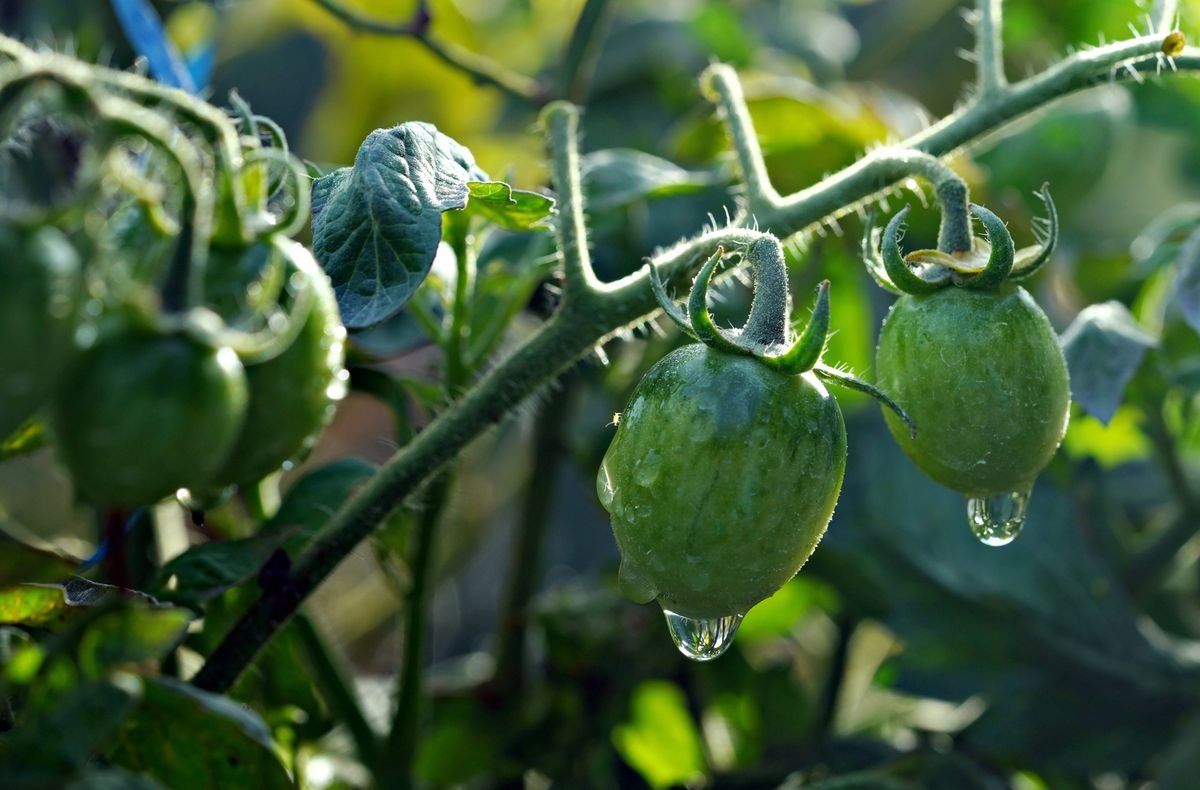
- Big Beef produces large, meaty slicing tomatoes with exceptional crack resistance and disease tolerance.
- Celebrity is a dependable bush variety known for tough skins and steady production throughout summer.
- Sun Gold produces exceptionally sweet cherry tomatoes that resist cracking better than many heirloom cherry types.
- Juliet produces plum-shaped salad tomatoes with glossy skins that hold up well against heavy rain.
- Arkansas Traveler is an heirloom variety celebrated for handling high humidity and heat without splitting.
- Chef Choice Orange offers sweet citrus notes and crack-resistant skin on vigorous indeterminate vines.
Harvesting Fruit at the Breaker Stage
One of the most effective strategies for preventing cracked tomatoes is picking them before they reach peak ripeness on the vine.
Many gardeners believe tomatoes must turn fully red while still attached to the plant to achieve great flavor. In reality, once a tomato begins showing its first blush of color (known as the breaker stage), it has accumulated all the sugars and acids it will ever have.
At this stage, the fruit seals off its connection to the vine with a layer of cells called the abscission zone. The fruit is no longer receiving nutrients from the plant; it is simply converting internal starches into sugars using natural ethylene gas.
Leaving ripe tomatoes on the vine exposes them to unnecessary risks like heavy rain, hungry birds, and split skins. By harvesting early, you protect your crop without sacrificing any homegrown taste.
How to Ripen Tomatoes Indoors Safely
Ripening tomatoes indoors is simple, effective, and completely safe for preserving flavor and texture. Once you harvest fruit at the breaker stage, bring them inside to a sheltered spot.
Place your tomatoes on a counter or table out of direct sunlight in a room where temperatures stay between 70 and 75 degrees Fahrenheit. Direct sunlight can scorch picked fruit or cause uneven softening.
Arrange the tomatoes stem-side down on a clean flat surface or paper towel. Placing them stem-down prevents moisture from escaping through the scar where the stem was attached, keeping the fruit firm and plump.
Never store unripe tomatoes in the refrigerator. Cold temperatures below 55 degrees Fahrenheit permanently destroy the aromatic flavor compounds and create a mealy, unappealing texture.
Nutrient Deficiencies and Skin Toughness
While water is the primary trigger for cracking, soil nutrition directly affects the structural strength and elasticity of the tomato skin.
Calcium is essential for building strong cell walls in both the fruit flesh and the skin. A deficiency in calcium (or poor uptake caused by dry soil) can lead to weak epidermal layers that rupture under slight pressure, in addition to causing blossom end rot.
Potassium also plays a critical role in regulating water balance within plant tissues and strengthening outer skin layers. Ensuring balanced soil fertility helps plants handle environmental stress.
Avoid heavy applications of high-nitrogen fertilizers once plants begin setting fruit. Excessive nitrogen encourages rapid, lush vegetative growth and watery fruit tissue, which significantly increases the likelihood of severe radial cracking.
Growing Tomatoes in Containers to Control Water
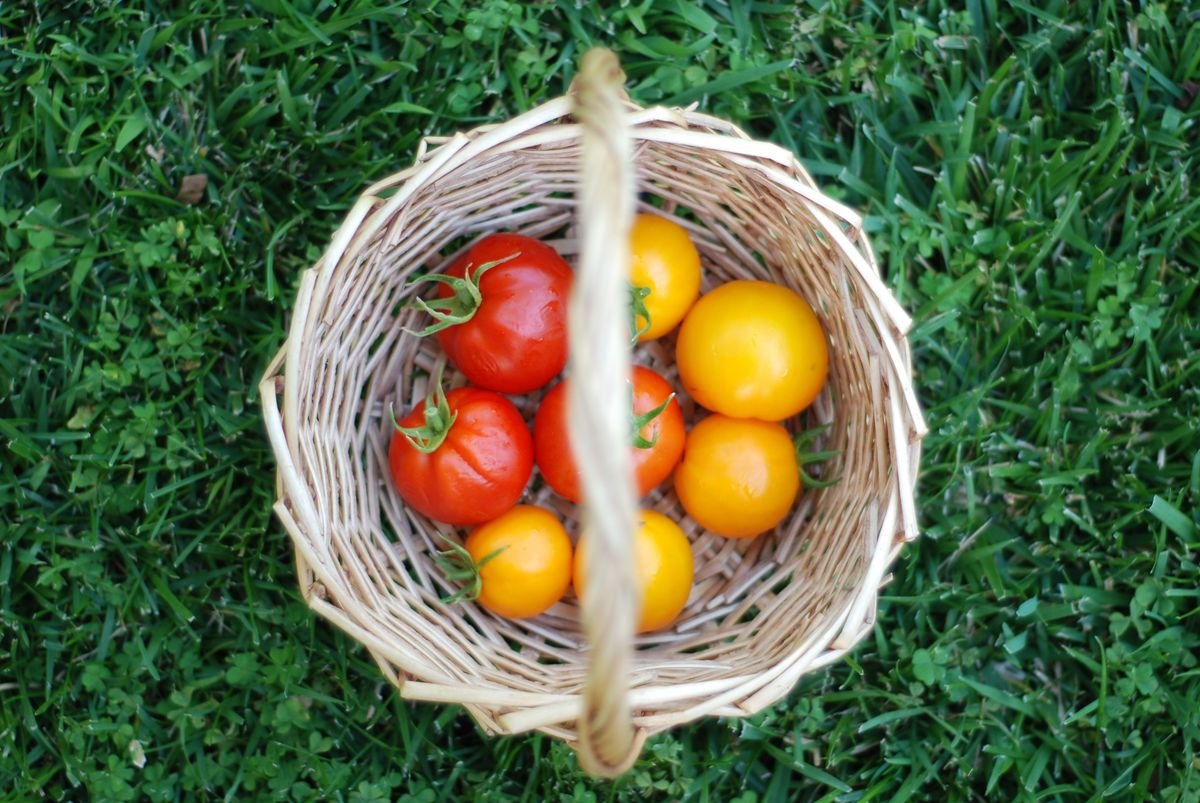
Container gardening gives you complete control over soil moisture, making it an excellent option for gardeners in regions with unpredictable rainfall.
Potted tomatoes allow you to control the exact potting mix used, ensuring perfect aeration and drainage that prevents waterlogged roots.
When a major rainstorm is predicted, you can easily move potted plants under a porch roof, patio awning, or garage overhang until the storm passes.
Keep in mind that container plants dry out much faster than in-ground garden beds during hot weather. You may need to water potted tomatoes daily, or use self-watering sub-irrigated planters to maintain the steady moisture levels required to avoid split skins.
How High Is Your Garden Risk for Split Tomatoes
Answer 4 quick questions to see your result