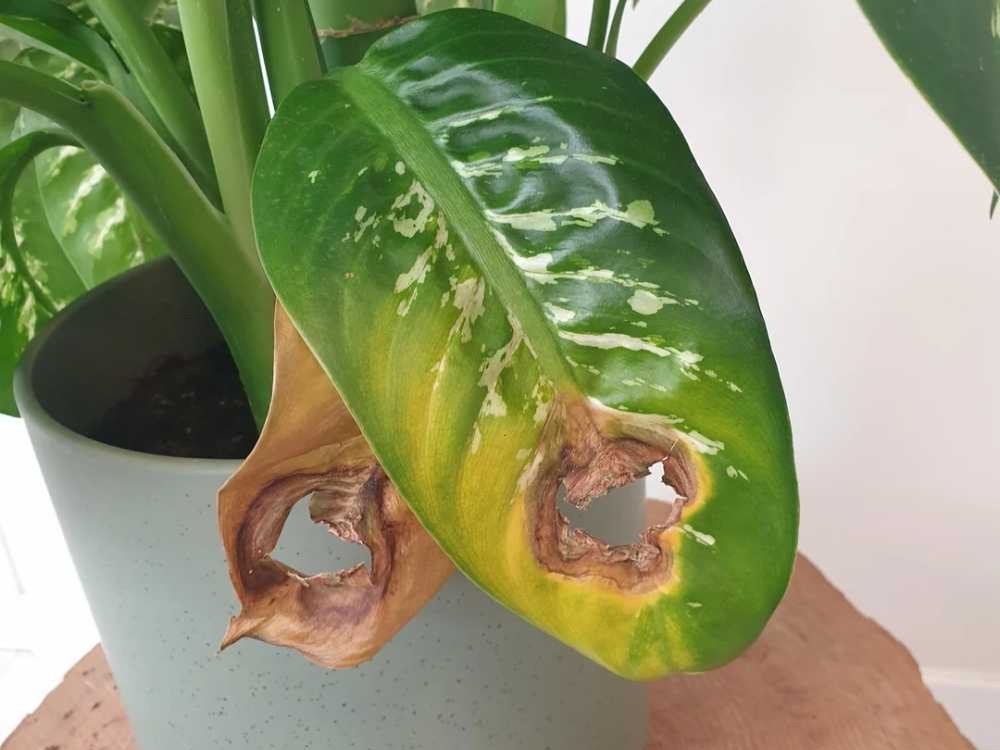
A few months ago, a friend gave me a stunning dieffenbachia plant with lush, cream-and-green variegated leaves. For the first several weeks, it looked like a showstopper on my living room stand.
Then, almost out of nowhere, the lower leaves started turning bright yellow and the whole plant went completely limp.
Dieffenbachia, often called dumb cane, has a reputation for being an easy houseplant, so seeing it decline so quickly felt alarming.
I reached out to a seasoned nursery grower to figure out where I went wrong and what I could do to reverse the damage.
It turns out that dumb canes are tough, but they react quickly when their basic environment is out of balance. In this guide, I will walk you through the most common reasons your dieffenbachia is struggling and give you clear, actionable steps to nurse it back to full health.
Common Signs Your Dieffenbachia Is in Trouble
Before you can fix your plant, you need to understand what its symptoms are telling you.
Dieffenbachia plants communicate their distress through their large, expressive leaves and fleshy stems.
When a plant is unhappy, it rarely hides the problem.
Here are the most frequent warning signs you should watch for:
- Lower leaves turning completely yellow and dropping off rapidly.
- Crispy brown edges or dry, papery leaf tips.
- Soft, mushy, or blackened stems near the soil line.
- Sudden, overall drooping even after you add water.
- Pale foliage that loses its signature cream and deep green patterns.
- Sticky residue or fine webbing on the undersides of leaves.
Noticing these signs early makes a massive difference in your plant’s recovery.
If you catch a problem when only one or two leaves are yellowing, the turnaround is fast and simple.
If the plant has reached the point of stem collapse, you will need to take more aggressive rescue measures.
How Improper Watering Causes Rapid Decline
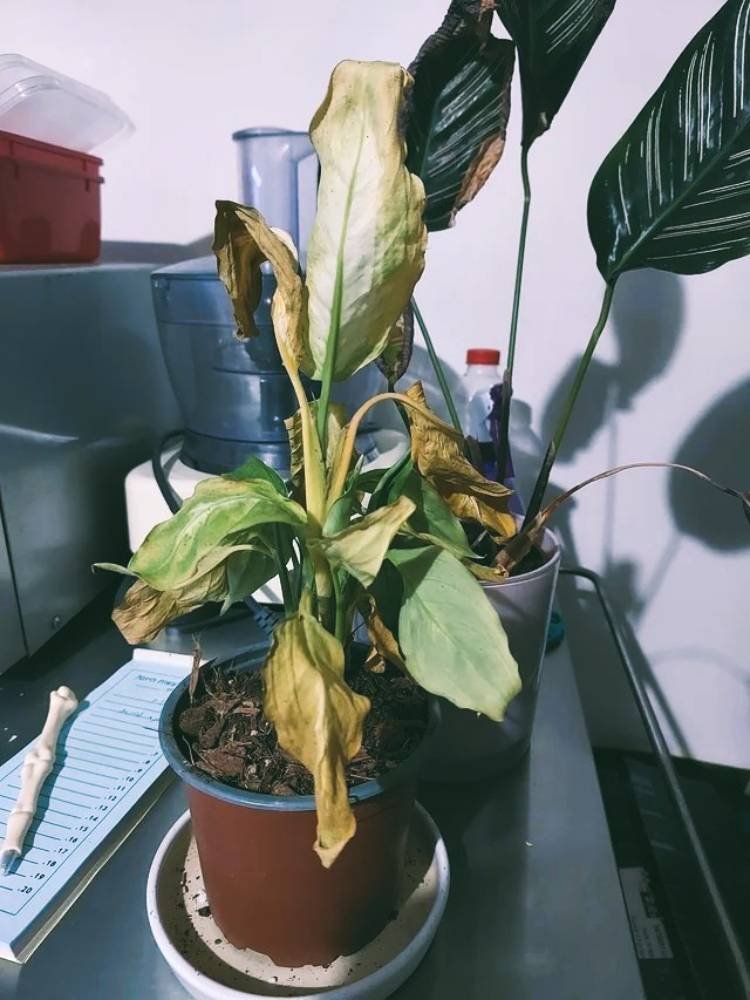
Watering mistakes account for the vast majority of dying dieffenbachia plants.
These tropical perennials have thick, fleshy stems that store a fair amount of moisture.
Because of those water-storing stems, they are far more sensitive to overwatering than many other common houseplants.
When growers stick to a rigid calendar schedule instead of checking soil conditions, problems start quickly.
Inconsistent moisture stresses the root hairs and prevents them from functioning correctly.
A dumb cane requires soil that stays lightly moist around the root zone without ever becoming swampy or completely bone dry.
Spotting and Treating Destructive Root Rot
Root rot is the most dangerous consequence of giving your dieffenbachia too much water.
When soil stays wet for too long, oxygen cannot reach the roots.
The suffocated roots begin to die, creating an ideal breeding ground for harmful anaerobic fungi.
As the root system decays, it can no longer take up water or nutrients, which causes the top of the plant to wilt and turn yellow.
This paradox often tricks plant owners into pouring even more water into the pot, accelerating the plant’s death.
If you smell a sour, swampy odor coming from the pot, you are almost certainly dealing with root rot.
To save a plant with root rot, you must act quickly:
- Gently slide the dieffenbachia out of its container and shake away the soggy soil.
- Rinse the roots under lukewarm tap water to inspect them closely.
- Use sterile scissors to trim away all black, brown, soft, or foul-smelling roots.
- Healthy roots should look firm and white or pale cream.
- Dust the remaining root system with a light coating of cinnamon powder or spray it with diluted hydrogen peroxide.
- Repot the plant into fresh, dry potting soil with plenty of perlite for drainage.
- Hold off on watering for two days to let the cut root surfaces callous over.
Recognizing the Stress of Underwatering
While overwatering causes root decay, underwatering creates a different kind of crisis for dumb canes.
When a dieffenbachia goes without water for too long, its cells lose turgor pressure, causing the entire plant to collapse.
The foliage will feel limp and paper-thin rather than firm and leather-like.
You will usually notice lower leaves turning yellow, while the tips and margins turn dry and crispy.
The potting soil will also pull away from the inner sides of the container, leaving a noticeable gap.
When you finally pour water into severely dehydrated soil, the liquid often runs straight down the sides of the pot and out the bottom without wetting the root ball.
To fix severe dehydration, bottom-water your plant:
Place the pot in a shallow basin or sink filled with 3 to 4 inches of lukewarm water.
Let the pot sit for roughly 30 to 45 minutes so the soil can wick moisture upward through the drainage holes.
Once the top layer of soil feels damp to your touch, remove the pot and let it drain completely.
Lighting Mistakes That Ruin Dumb Cane Foliage
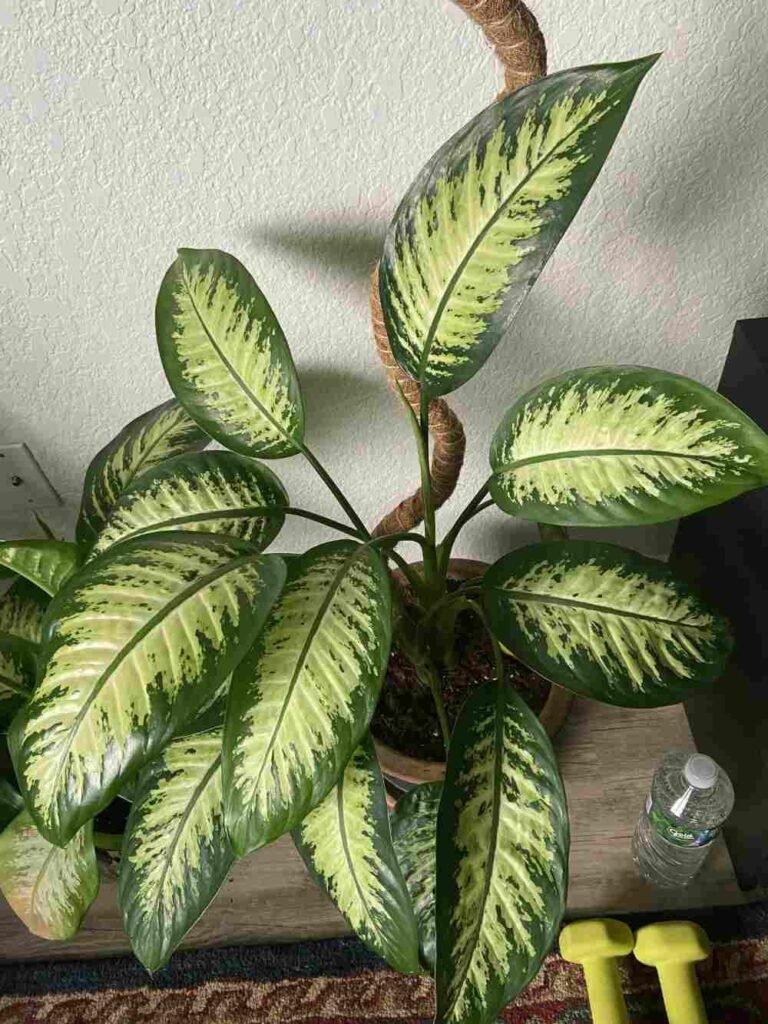
Light quality directly dictates how quickly your dieffenbachia processes water and generates energy.
In their native tropical rainforest habitats, dumb canes grow under the thick canopy of larger trees.
They have evolved to thrive in bright, filtered light rather than open, unobstructed sunshine.
Placing your plant in the wrong lighting spot can quickly ruin its foliage and lead to a slow decline.
Scorching from Harsh Direct Sun Exposure
Direct sunlight through a south-facing or west-facing window is often too intense for dieffenbachia leaves.
The thin leaf tissue burns easily when exposed to strong ultraviolet rays.
Sunburn on a dumb cane looks like bleached, white, or pale yellow patches on the leaves that face the light.
Over time, these bleached spots turn crispy, papery, and dark brown.
Sunburn damage is permanent on those specific leaves, but you can protect future growth by moving the plant.
Shift your plant a few feet back from hot windows or hang a sheer white curtain to diffuse the rays.
Morning sunlight from an east-facing window is usually gentle enough for dieffenbachia to handle without burning.
Stunted Growth and Loss of Pattern in Low Light
While direct sun burns the foliage, keeping your dieffenbachia in deep shade creates its own set of serious problems.
Without sufficient light, the plant cannot produce enough energy through photosynthesis.
As a defense mechanism, it will stop producing new leaves and shed its oldest lower leaves.
You will also notice that the vibrant variegation fades, leaving the plant with dull, solid green leaves.
Low light also slows down water consumption dramatically.
If you water a plant sitting in dim light at a normal rate, the soil stays wet for weeks, which rapidly triggers root rot.
If natural light is scarce in your home, set up an LED grow light roughly 12 to 18 inches above the plant for 10 to 12 hours each day.
Temperature Extremes and Cold Draft Problems
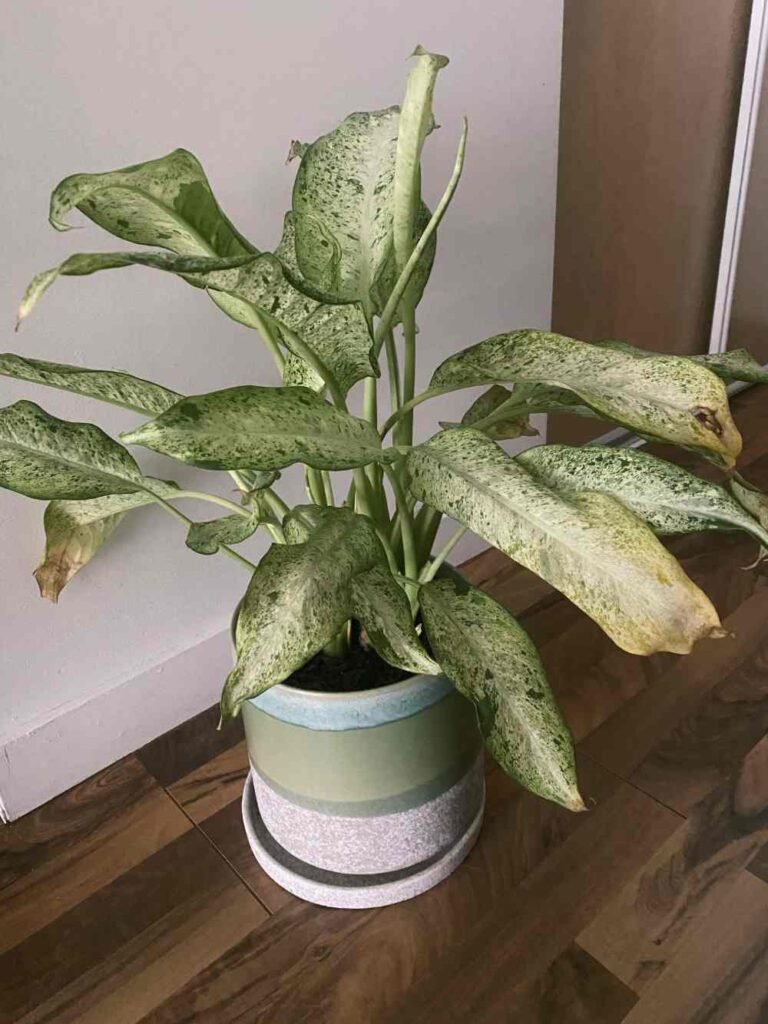
Dieffenbachia plants are tropical natives that prefer warm, consistent conditions.
The ideal temperature range for a dumb cane is between 65 and 80 degrees Fahrenheit.
They do not handle cold environments well at all.
When ambient temperatures drop below 60 degrees Fahrenheit, the plant slows down metabolic processes and enters survival mode.
If temperatures dip under 50 degrees Fahrenheit, cellular damage occurs, causing leaves to droop, turn black, and drop off.
Cold drafts from leaky window frames, exterior entry doors, and air conditioning vents are silent killers.
Even if your room feels warm overall, a steady stream of cold air hitting the leaves will cause rapid leaf drop.
Similarly, placing the plant directly next to a radiator, fireplace, or heating vent can dry out the foliage and cause extreme heat stress.
Keep your dieffenbachia in a room with stable temperatures year round.
Why Low Humidity Causes Dry Leaf Edges
Indoor air in modern homes, especially during winter when heaters run constantly, is often very dry.
Dieffenbachia plants thrive best when relative humidity levels stay above 50 percent.
When humidity drops into the 20 to 30 percent range, the broad leaves lose moisture faster than the roots can supply it.
This imbalance leads to crispy brown leaf tips and brittle margins.
While low humidity rarely kills a mature plant on its own, it weakens the plant and makes it vulnerable to pest invasions.
Here are effective ways to boost humidity around your dieffenbachia:
- Run a small cool-mist humidifier near your plant display.
- Set the pot on a pebble tray filled with water, making sure the bottom of the pot stays above the water level.
- Group your dieffenbachia together with other tropical houseplants to create a humid microclimate.
- Place the plant in a naturally humid space, such as a bright bathroom or kitchen, if light levels permit.
Avoid misting the leaves with a spray bottle.
Misting only raises humidity for a few minutes and leaves wet droplets on the foliage, which invites fungal infections.
Pot Size and Rootbound Plant Complications
The container your dieffenbachia lives in plays a massive role in its health.
These plants develop robust root systems that expand steadily throughout the growing season.
If the pot is too small, the roots circle the bottom tightly and become rootbound.
A rootbound dumb cane cannot absorb water or nutrients effectively because there is little soil left in the pot.
Conversely, choosing a pot that is too large can be equally dangerous.
An oversized container holds a vast volume of wet soil that the plant’s root system cannot quickly drink up.
This excess wet soil stays saturated for weeks, setting off severe root rot.
Always pick a container that is only 1 to 2 inches wider in diameter than the plant’s existing root ball.
Make sure the pot has at least one functional drainage hole at the bottom so water never pools around the root zone.
Fertilizer Burn and Nutrient Deficiencies
Feeding your dieffenbachia provides the nitrogen, phosphorus, and potassium it needs to produce large, colorful leaves.
However, giving too much fertilizer is far more harmful than giving too little.
Excess mineral salts from chemical fertilizers build up in the potting mix over time.
These concentrated salts pull moisture out of the root tissue, causing root burn.
Above ground, fertilizer burn shows up as scorched, brown leaf margins, yellowing lower foliage, and sudden wilting.
To prevent fertilizer burn, dilute balanced liquid houseplant fertilizer to half strength.
Feed your dumb cane only once a month during spring and summer, and stop fertilizing entirely during the fall and winter months.
If you suspect salt accumulation in your pot, flush the soil thoroughly by running room-temperature tap water through it for three minutes, allowing the excess to drain completely.
Common Pests That Attack Dieffenbachia Foliage
Houseplant pests love feeding on the tender, nutrient-rich sap inside dieffenbachia stems and leaves.
Because these pests are small, an infestation can multiply unnoticed until the plant starts showing severe damage.
Sap-sucking insects drain the plant of energy, leading to yellow speckled foliage, distorted new growth, and wilting.
Here are the three most common culprits:
- Spider Mites: Microscopic pests that thrive in dry air. They leave fine, silky webbing across the leaf undersides and cause tiny yellow stippling dots.
- Mealybugs: Small, slow-moving insects that look like white cottony puffs. They gather in stem crevices and along leaf veins, secreting sticky honeydew.
- Scale Insects: Small, brown, shell-like bumps that attach firmly to stems and leaf ribs, sucking sap and weakening the plant.
Isolate your plant immediately if you spot any of these pests to prevent them from spreading to your other houseplants.
How to Make a Gentle Homemade Pest Spray
You can eliminate most common plant pests using simple, natural ingredients you already have at home.
Homemade insecticidal sprays are safe, budget-friendly, and effective against spider mites, mealybugs, and aphids.
Here is a dependable recipe and application process:
- Fill a clean spray bottle with one quart of warm water.
- Add one teaspoon of mild liquid castile soap or gentle dish soap.
- Add one tablespoon of cold-pressed neem oil or horticultural oil.
- Shake the bottle well until the oil and soapy water emulsify completely.
- Wipe off visible bugs with a cotton swab dipped in rubbing alcohol first.
- Spray the plant generously, making sure to coat both the tops and bottoms of all leaves as well as the stem crevices.
- Repeat this treatment every 5 to 7 days for three weeks to catch newly hatched insects.
Fungal and Bacterial Leaf Spot Infections
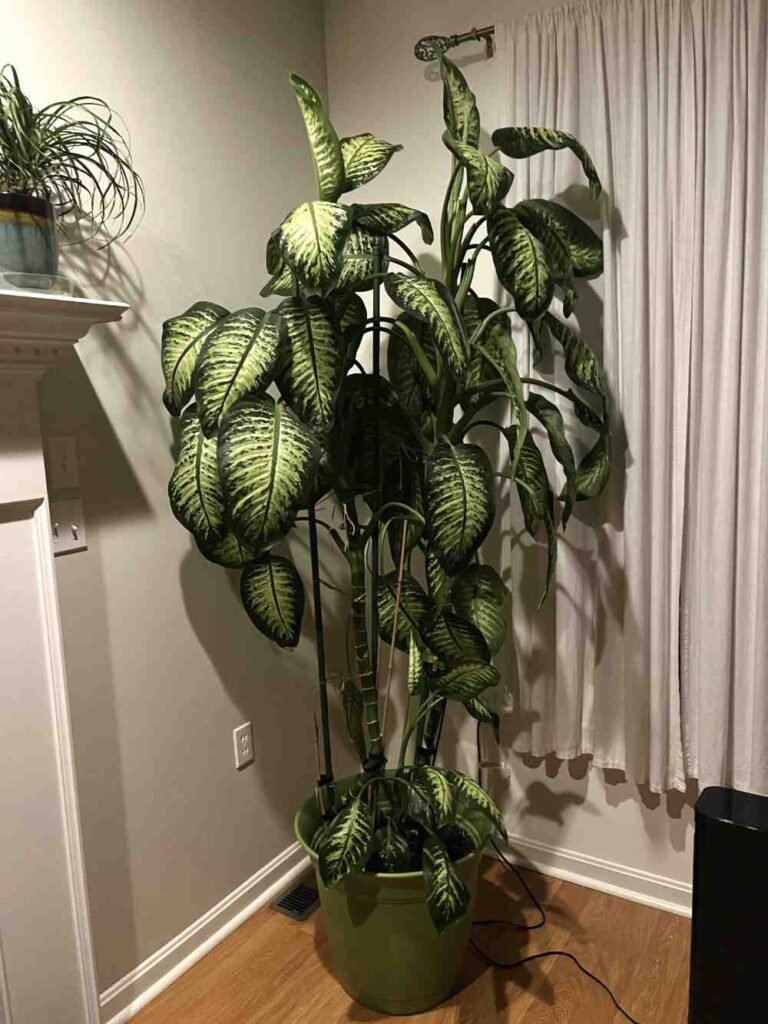
If you notice unsightly spots spreading across your dieffenbachia foliage, pathogenic infections could be the reason.
Bacterial and fungal pathogens thrive in warm, stagnant environments with high surface moisture.
Bacterial leaf spot often starts as tiny water-soaked lesions that quickly turn dark brown or black with a distinct yellow halo.
These spots can merge together, causing large sections of the leaf to collapse into mush.
Fungal leaf spot tends to form concentric rings or dry, papery brown circles across the leaf blade.
To manage leaf spot diseases, immediately prune off all infected foliage with clean shears.
Wipe your cutting blades with 70 percent rubbing alcohol between every single cut to avoid spreading pathogens.
Improve air circulation around your plant with a gentle oscillating fan and always water the soil directly, keeping the foliage dry.
Anthracnose and Stem Rot Issues
Anthracnose is a specific fungal issue that can cause major damage to dumb canes.
It produces tan or dark brown patches that typically start along the leaf margins and work inward.
In severe cases, you may see tiny black fruiting bodies form inside the dead spots.
Stem rot, often caused by species of Erwinia or Phytophthora, is even more destructive.
It attacks the thick trunk of the dieffenbachia, turning the firm green stem into a soft, foul-smelling brown pulp.
Once stem rot takes hold at the soil line, that section of the plant cannot be cured.
Your best option is to cut the stem well above the soft, rotten section using a clean knife.
You can then propagate the healthy top cutting in water or moist perlite to start a new, disease-free plant.
How to Prune Away Damaged Growth
Pruning is an essential step in reviving a dying dieffenbachia.
Yellowing, dead, or heavily spotted leaves will never turn green again.
Leaving dying leaves on the plant drains valuable energy that the dumb cane needs for producing fresh, healthy root and shoot growth.
Here is how to prune your plant properly:
- Put on a pair of protective gardening gloves to keep the plant’s irritating sap off your skin.
- Use a sharp pair of bypass pruners or kitchen shears sanitized with rubbing alcohol.
- Cut yellow or damaged leaves right at the base of their leaf stalk, near where they meet the main trunk.
- If a main stem has grown leggy, bare, or top-heavy, cut it back to 4 to 6 inches above the soil line.
- Dieffenbachia stems have dormant growth nodes that will produce fresh shoots within a few weeks after being trimmed.
- Discard all trimmed foliage in the trash rather than your compost pile if you suspect disease or pest presence.
Easy Steps to Repot and Revive Your Plant
Giving your struggling dieffenbachia fresh, airy soil in a clean pot is one of the most reliable ways to reset its health.
Over time, old potting soil breaks down, becomes dense, and traps harmful fertilizer salts.
Repotting refreshes the root environment and gives you an opportunity to fix underlying root problems.
Here is a step-by-step method to repot your plant for maximum recovery:
- Select a container made of plastic or unglazed terracotta that has multiple drainage holes.
- Prepare a chunky, well-aerated potting blend: mix two parts standard houseplant potting soil with one part perlite and one part orchid bark.
- Carefully tip the pot and ease the dieffenbachia out, supporting the main stems near the base.
- Gently untangle tight roots and prune away any dead or rotting sections.
- Add a layer of fresh potting mix to the bottom of the new container.
- Center the plant in the pot, making sure it sits at the exact same depth as it was previously planted.
- Fill in the sides with your soil mix, tapping the pot lightly on a table to settle the mix without packing it down firmly.
- Water lightly until moisture drips from the drainage holes, then place the plant in bright, indirect light.
Daily and Seasonal Care Habits for Long Term Success
Once you have addressed the immediate crisis, building consistent daily and seasonal habits will keep your dieffenbachia flourishing for years.
During the active growing season in spring and summer, your dumb cane drinks more water and produces new leaves rapidly.
Check the soil moisture every 4 to 6 days during warm weather by inserting your finger two inches deep.
If that top layer feels dry, give the plant a deep, thorough watering.
Rotate the pot a quarter turn every time you water so all sides receive balanced light exposure.
This simple trick prevents the heavy stems from leaning sideways toward the window and snapping under their own weight.
In late autumn and winter, the plant’s growth naturally slows down due to shorter daylight hours.
Cut back your watering frequency, stop all fertilizer applications, and move the plant away from drafty windows or heating units.
Wiping the large leaves once a month with a damp microfiber cloth removes dust and boosts light absorption.
Important Pet Safety Warnings for Dumb Cane
While dieffenbachia is a striking ornamental plant, you must exercise caution if you share your home with pets or young children.
The plant earned the common name ‘dumb cane’ because of the defensive chemical compounds found inside its cells.
Dieffenbachia leaves and stems contain microscopic, needle-shaped crystals called calcium oxalate raphides, along with proteolytic enzymes.
When a pet chews on any part of the plant, these sharp crystals shoot out into the soft tissues of the mouth, tongue, and throat.
This causes immediate burning, severe oral irritation, excessive drooling, pawing at the mouth, and localized swelling.
In rare cases, severe swelling can make swallowing or breathing difficult.
Always display your dieffenbachia on a high shelf, plant stand, or in a room that curious cats and dogs cannot access.
If you suspect your pet has chewed on a dieffenbachia leaf, contact your veterinarian immediately for guidance.
Final Thoughts on Saving Your Dumb Cane
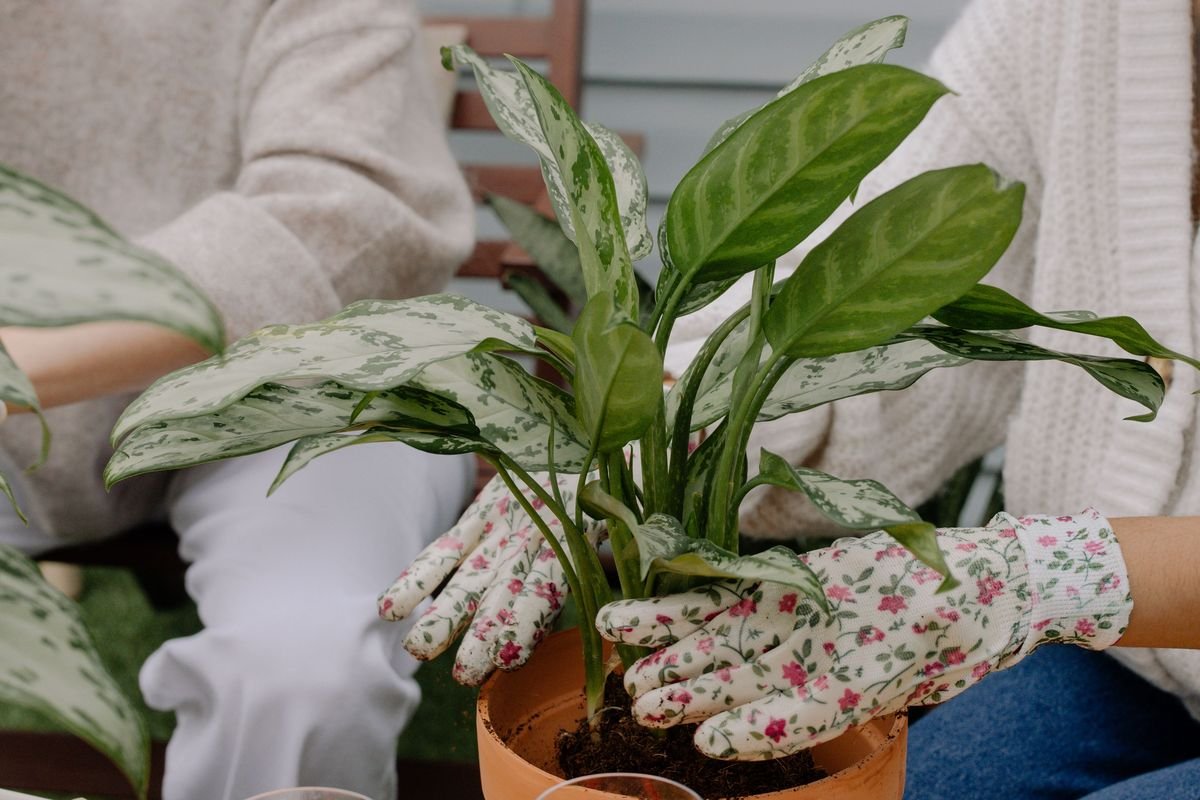
Seeing your dieffenbachia droop or turn yellow can feel discouraging, but these tropical plants are remarkably resilient.
Most plant declines stem from straightforward issues like overwatering, low light, cold drafts, or hidden pests.
By taking a step back and methodically assessing your plant’s soil, lighting, and foliage, you can pinpoint the exact cause of stress.
Trim away damaged leaves, correct your watering routine, and give the plant bright, indirect sunshine.
With a little patience and proper care, your dumb cane will soon push out vibrant, healthy new leaves and regain its lush tropical beauty.
How Urgent Is Your Dieffenbachia Distress Level?
Answer 4 quick questions to see your result