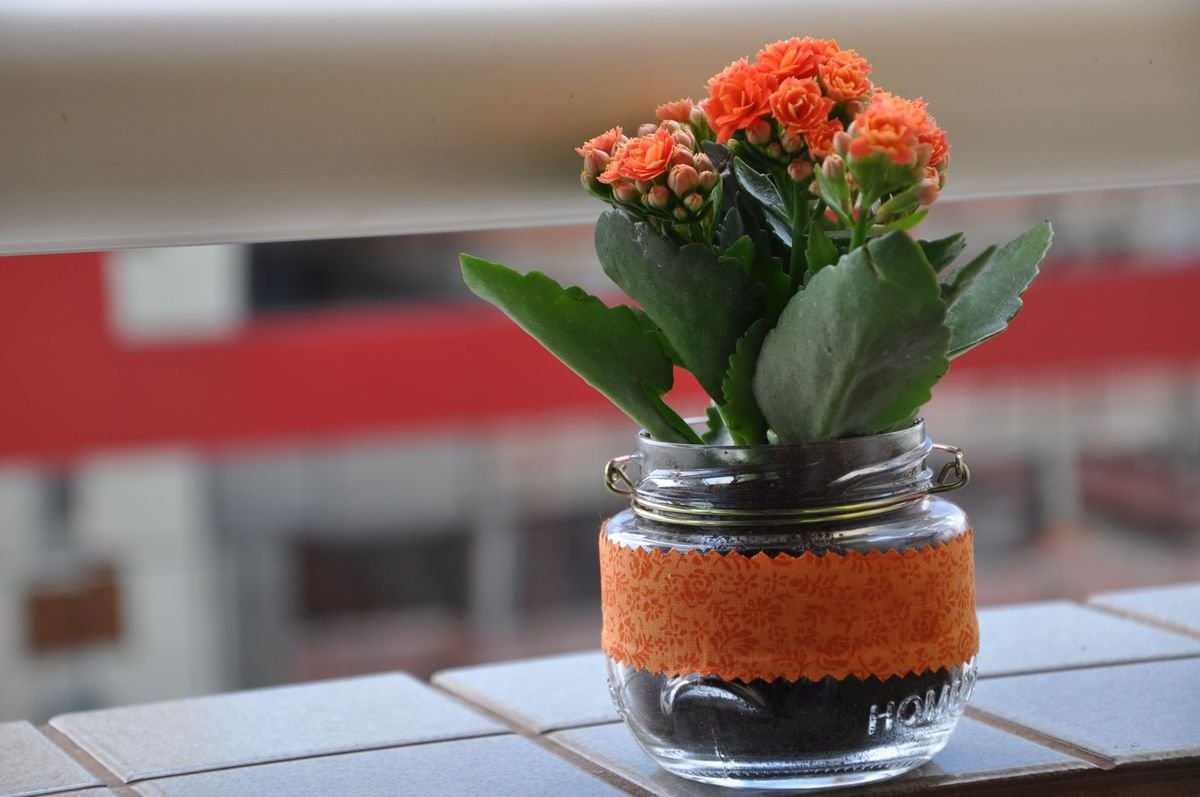
Kalanchoe plants are cherished around the world for their thick, scallop-edged foliage and vivid clusters of long-lasting blooms.
These resilient succulents generally thrive with minimal fuss, making them popular choices for sunny windowsills and indoor gardens. When their leaves begin to curl, cup, or wrinkle, it is a direct signal that the plant is dealing with environmental stress.
Because kalanchoe leaves act as water storage organs, any disruption in moisture, light, nutrition, or temperature will show up quickly in their shape and texture.
Determining the exact cause of the curling requires a careful inspection of your plant and its growing setup. With the right adjustments to your routine, you can nurse your kalanchoe back to vibrant health and keep its foliage firm and lush.
Understanding Kalanchoe Leaf Dynamics
Kalanchoes belong to the Crassulaceae family, which consists of plants that have evolved specialized water-storage tissues. In their native habitats across Madagascar and tropical parts of Africa, these succulents endure long stretches of dry weather interspersed with brief, heavy downpours.
The leaves of a healthy kalanchoe should feel firm, slightly rubbery, and plump to the touch. When a plant experiences stress, it alters the water pressure within its leaf cells, scientifically known as turgor pressure.
A drop or surge in this cellular pressure often forces the leaf edges to curl upward into a cup shape or roll inward and downward.
Observing the direction of the curl, the texture of the leaf surface, and any accompanying discoloration will give you valuable clues about the underlying problem. Addressing the issue early prevents permanent tissue damage and keeps root systems intact.
Overwatering and Soggy Soil
Overwatering is the single most common reason kalanchoe leaves curl and lose their structural integrity.
Because succulents store substantial moisture within their stems and leaves, their root systems are adapted to dry out completely between watering sessions.
When the soil remains saturated for extended periods, the tiny root hairs begin to suffocate from a lack of oxygen.
Without oxygen, roots drown and die, preventing them from transporting moisture and essential minerals up to the foliage. This causes the paradoxical symptom of curling, soft, and translucent leaves even while the potting mix is soaking wet.
Signs that excess moisture is the culprit include:
- Soft, mushy, or yellowing lower leaves that curl downward
- Soil that remains wet more than seven to ten days after watering
- A sour or swampy odor rising from the base of the pot
- Stems turning dark brown or black near the soil line
If you notice these symptoms, stop watering immediately and inspect the root system for decay.
Severe Underwatering and Drought Stress
While kalanchoes tolerate dry spells exceptionally well, they are not immortal. Prolonged neglect eventually forces the plant to consume its own internal water reserves to keep the central stem and root crown alive.
As the stored water in the foliage depletes, the leaf tissue shrivels and folds inward. The leaves lose their glossy sheen, taking on a dull, matte appearance with visible wrinkles along the surface. Unlike overwatered leaves, which feel squishy and limp, underwatered foliage feels thin, papery, and leathery.
Underwatering also causes the lower leaves to crisp up along the edges and drop prematurely. Once rehydrated thoroughly, a mildly underwatered kalanchoe will usually plump back up within 24 to 48 hours.
Poor Soil Drainage
Even if you follow a sensible watering schedule, dense or compacted potting soil can trap water around the roots and trigger leaf curl. Standard indoor potting soils are formulated with heavy peat moss and compost designed to retain moisture for tropical foliage plants.
Kalanchoes need a gritty, fast-draining substrate that allows water to pass through freely while leaving plenty of air pockets around the root zone. Heavy soils retain water like a sponge, suffocating the roots and mimicking the symptoms of chronic overwatering.
Compacted soil also restricts root expansion. Over time, the roots become bound tightly in a dense clump that cannot absorb moisture evenly, leading to localized dehydration and curled leaf margins.
Inadequate Pot Size or Lack of Drainage Holes
The container you choose plays a vital role in root health and foliage stability. Pots without drainage holes are a leading cause of root failure in succulents, as excess water has nowhere to escape and collects at the bottom of the vessel.
Pots that are too large also present a serious hazard. When a small plant sits in an oversized container, the large volume of soil holds onto moisture far longer than the small root system can absorb. This prolonged dampness causes root rot and leaf distortion.
Conversely, a pot that is too small leaves the plant severely rootbound. When roots completely fill the container, water runs straight down the sides without penetrating the center of the root ball, causing chronic dehydration and curling.
Intense Direct Sunlight and Sunburn
Kalanchoes love bright light, but harsh, direct afternoon sun can overwhelm their sensitive foliage. When exposed to intense ultraviolet rays through hot window glass, the leaves react by curling their edges inward to minimize surface area and reduce moisture evaporation.
Sunburn often accompanies light-induced curling. You may observe red, purple, or bronze margins developing along the leaves, which is the plant producing protective anthocyanin pigments.
If the light intensity remains excessive, these colorful edges turn into bleached, dry, white, or brown patches of dead tissue. Moving the plant back a few feet from intense south-facing windows provides immediate relief.
Insufficient Light and Etiolation
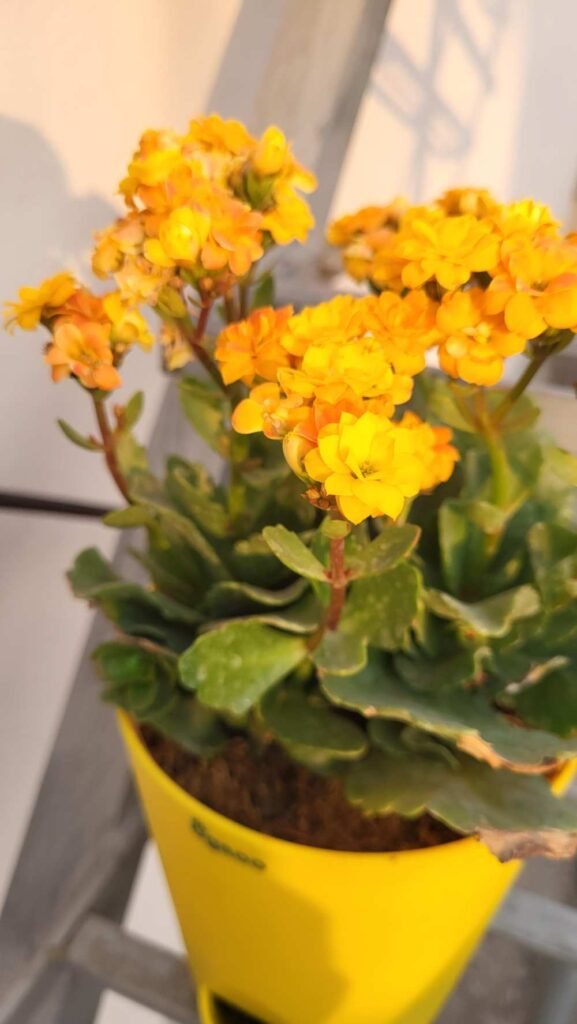
Placing a kalanchoe in a dim hallway or low-light room causes just as many structural problems as harsh direct sun. In low light, the plant undergoes etiolation, a survival mechanism where stems stretch out and leaves bend in search of light.
Leaves growing in insufficient light tend to curl downward, flattening out or cupping in an effort to present maximum surface area to whatever weak light is available. The new growth usually emerges pale green or yellow and noticeably smaller than mature foliage.
Without adequate light, the plant also slows down its metabolic activity. This means it consumes water much more slowly, increasing the risk of accidental overwatering and subsequent leaf damage.
Extreme Heat and Environmental Stress
Kalanchoes flourish in comfortable room temperatures between 60 and 85 degrees Fahrenheit. When ambient temperatures rise above 90 degrees Fahrenheit, the plant enters a protective semi-dormant state to conserve hydration.
During extreme heat waves, the rate of transpiration (water evaporation through leaf pores) increases drastically. To prevent catastrophic moisture loss, the leaves roll inward and droop.
If you keep your kalanchoe outdoors during the summer, provide light afternoon shade and monitor soil moisture closely on scorching days. Indoors, ensure plants are kept away from heat-generating appliances and uninsulated sunny spots.
Cold Drafts and Freezing Temperatures
Because kalanchoes are native to warm climates, they have virtually zero tolerance for freezing temperatures or sudden cold drafts. Exposure to temperatures below 50 degrees Fahrenheit causes cellular damage within the fleshy leaves.
Cold injury causes leaf edges to curl downward and inward. Affected areas often turn dark green, water-soaked, and limp before eventually collapsing into a black or translucent mush.
Common sources of cold damage indoors include:
- Drafty windowpanes during winter months
- Direct airflow from air conditioning vents in summer
- Exterior doors opening frequently in cold weather
- Unheated porches or sunrooms during seasonal shifts
Always position your kalanchoe in a stable, draft-free room where temperatures remain consistent day and night.
Low Humidity and Dry Indoor Air
Although kalanchoes tolerate arid air much better than tropical ferns or calatheas, extremely dry indoor conditions can still pull moisture out of their foliage faster than roots can replenish it.
During the winter months, central heating systems dramatically reduce indoor humidity levels, often dropping them below 20 percent. In such bone-dry air, the thin edges of kalanchoe leaves begin to dry out, curl up, and turn brittle.
You do not need a tropical greenhouse setup, but maintaining indoor humidity levels between 40 and 50 percent helps the plant maintain balanced transpiration without encouraging mold growth.
Mineral Buildup from Tap Water
Water quality is an often-overlooked factor in succulent care. Municipal tap water frequently contains dissolved mineral salts, chlorine, chloramines, and fluoride that accumulate in the soil over time.
As these minerals build up around the root zone, they alter soil pH and create an osmotic imbalance. High salt concentrations in the soil actually pull moisture out of the root cells, leading to chemical root burn and foliage deformation.
Leaves affected by mineral toxicity often curl along their tips, which turn brown and crusty. You may also notice a white, chalky crust forming on the soil surface or around the terracotta pot rim.
Excessive Fertilizer Application
Kalanchoes are light feeders adapted to nutrient-poor soils. Applying synthetic fertilizers too frequently, or using formulas that are too concentrated, easily damages delicate root hairs.
Excess nitrogen forces rapid, weak vegetative growth that is prone to curling, twisting, and snapping. High fertilizer salts in the soil also burn root tips, preventing normal water uptake and causing the plant to show classic drought and leaf curl symptoms.
During non-flowering periods, kalanchoes require very little nutritional support. Overfeeding does far more harm than underfeeding.
Sap Sucking Insect Infestations
Tiny pest insects love to feed on the sweet, nutrient-rich sap contained within kalanchoe stems and foliage. As these bugs pierce the leaf cuticle and drain cellular fluids, the structural integrity of the leaf collapses, causing localized curling, stunting, and puckering.
The most common pests that attack kalanchoes include:
- Mealybugs: Small, white, cotton-like clusters hiding in leaf axils and crevices
- Aphids: Soft-bodied green, black, or peach insects congregating on tender new buds
- Spider Mites: Microscopic arachnids that leave fine webbing and speckled leaf discoloration
- Scale: Flat, brownish oval shells attached firmly to stems and leaf veins
Regularly inspect the undersides of leaves and the junctions where stems meet the main stalk to catch infestations before they deform the entire plant.
Fungal Infections and Root Rot
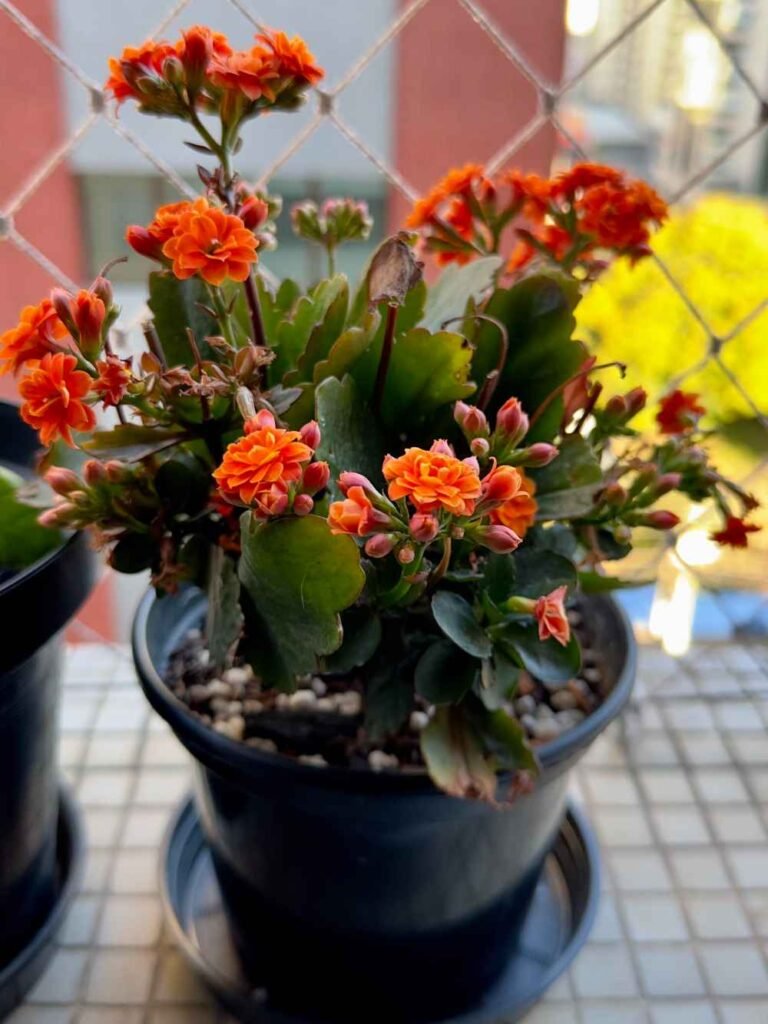
Fungal pathogens such as Pythium, Phytophthora, and Fusarium thrive in cool, waterlogged soil. When roots are compromised by excess moisture, these fungi invade root tissue and spread upward into the vascular system.
Once vascular channels are blocked by fungal hyphae, the plant can no longer circulate water and nutrients to its leaves. The foliage reacts by curling, yellowing, and collapsing. Stem rot often accompanies root rot, showing up as a brown, slimy discoloration at the soil level.
Powdery mildew is another fungal issue that directly attacks leaf surfaces. It appears as a white, flour-like dusting on leaves and causes them to cup, wrinkle, and drop.
Post Bloom Fatigue and Senescence
Producing dense clusters of vibrant flowers consumes an immense amount of energy and stored resources. After a kalanchoe finishes its long blooming cycle, it is common for the older, lower leaves to curl, lose some fullness, and fade.
This natural senescence is part of the plant lifecycle as it shifts energy away from reproduction and back toward vegetative root and shoot development.
As long as the new growth at the center and top of the plant remains healthy, firm, and pest-free, mild curling on the oldest lower leaves is no cause for panic. These spent leaves can be trimmed away cleanly.
Establishing a Reliable Watering Routine
To prevent and cure leaf curling caused by moisture stress, adopt the soak-and-dry watering technique. This method mimics the natural desert precipitation patterns to which succulents are adapted.
Instead of giving your plant small sips of water on a rigid calendar schedule, check the moisture depth manually before every watering:
- Insert a wooden skewer or your finger two inches into the potting soil.
- If the soil feels cool and damp, or if soil particles cling to the skewer, delay watering.
- When the top two inches are completely dry, take the pot to a sink and pour room-temperature water evenly over the soil until it drains freely from the bottom.
- Empty the drainage saucer after 15 minutes so the pot never sits in stagnant runoff.
During active growth and bloom in spring, you will water more frequently than during the cooler, darker winter months.
Selecting the Ideal Soil Blend
Providing your kalanchoe with the proper growing medium solves many moisture and aeration issues immediately. Commercial all-purpose potting mixes retain too much water on their own, so you must amend them or purchase a specialized blend.
An ideal soil mix for kalanchoes should dry out within three to five days after a deep soak. You can make an outstanding homemade succulent blend using simple, accessible ingredients:
- Two parts standard quality potting soil
- One part coarse horticultural sand or pumice
- One part perlite or small grit
Avoid using fine beach sand or playground sand, as fine grains pack tightly together when wet and choke out airflow to the roots.
Choosing the Right Pot and Drainage Setup
The material and structure of your container significantly impact how quickly moisture evaporates from the soil. Unglazed terracotta pots are by far the best choice for kalanchoes and other succulents.
Because terracotta is porous, air and moisture move freely through the pot walls. This breathable environment prevents moisture pockets and allows roots to receive constant oxygen, drastically reducing the chances of root rot and leaf curling.
Ensure your container has at least one large drainage hole at the base. When repotting, select a pot that is only one to two inches wider in diameter than the existing root ball to avoid excess uncolonized soil.
Optimizing Light and Room Temperatures
Place your kalanchoe in an area that receives plenty of bright, indirect sunlight throughout the day. An east-facing window that provides gentle morning sun and bright ambient light in the afternoon is ideal.
If you place the plant in a south- or west-facing window, use a sheer curtain to diffuse intense midday rays and prevent leaf scorch. If natural sunlight is limited in your home, consider supplementing with a full-spectrum LED grow light positioned 12 inches above the canopy for 10 to 12 hours daily.
Keep ambient temperatures between 65 and 75 degrees Fahrenheit during the day, with a slight drop at night. Protect the plant from heat registers, cold drafty hallways, and window panes that chill down in winter.
Safe Pest Management Strategies
If an insect infestation is causing your kalanchoe leaves to deform and curl, prompt treatment will save the plant and protect your other houseplants. Always isolate the affected plant immediately to prevent bugs from spreading.
For localized mealybugs and aphids, dip a cotton swab in 70 percent isopropyl alcohol and touch the pests directly. The alcohol dissolves their protective waxy layer and kills them on contact without harming the leaf.
For broader pest issues, mix a mild solution of insecticidal soap or pure cold-pressed neem oil with warm water and spray the plant thoroughly, paying special attention to the undersides of all leaves. Apply treatments in the evening or away from bright light to avoid leaf burning.
Pruning and Long Term Plant Maintenance
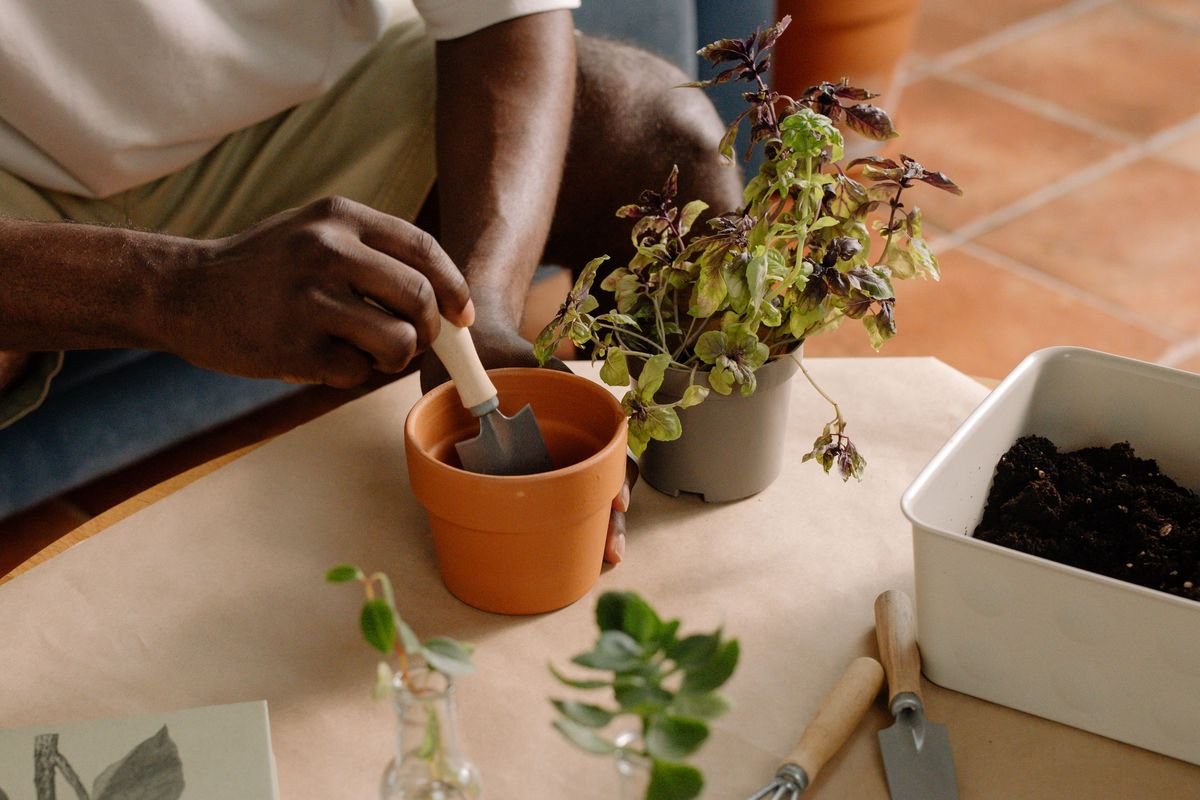
Pruning helps your kalanchoe maintain a compact, bushy shape while eliminating damaged or diseased tissue. Use clean, sharp pruning shears sterilized with rubbing alcohol before making any cuts.
Trim away spent flower stems down to the main leaf node once blossoms fade. Remove badly curled, yellowed, or shriveled lower leaves to improve air circulation around the base and encourage fresh growth.
During the spring and early summer, feed your kalanchoe once a month using a balanced, water-soluble succulent fertilizer diluted to half or quarter strength. Suspend feeding entirely during late autumn and winter when plant growth naturally slows down.
How Severe Is Your Kalanchoe Leaf Distress?
Answer 4 quick questions to see your result