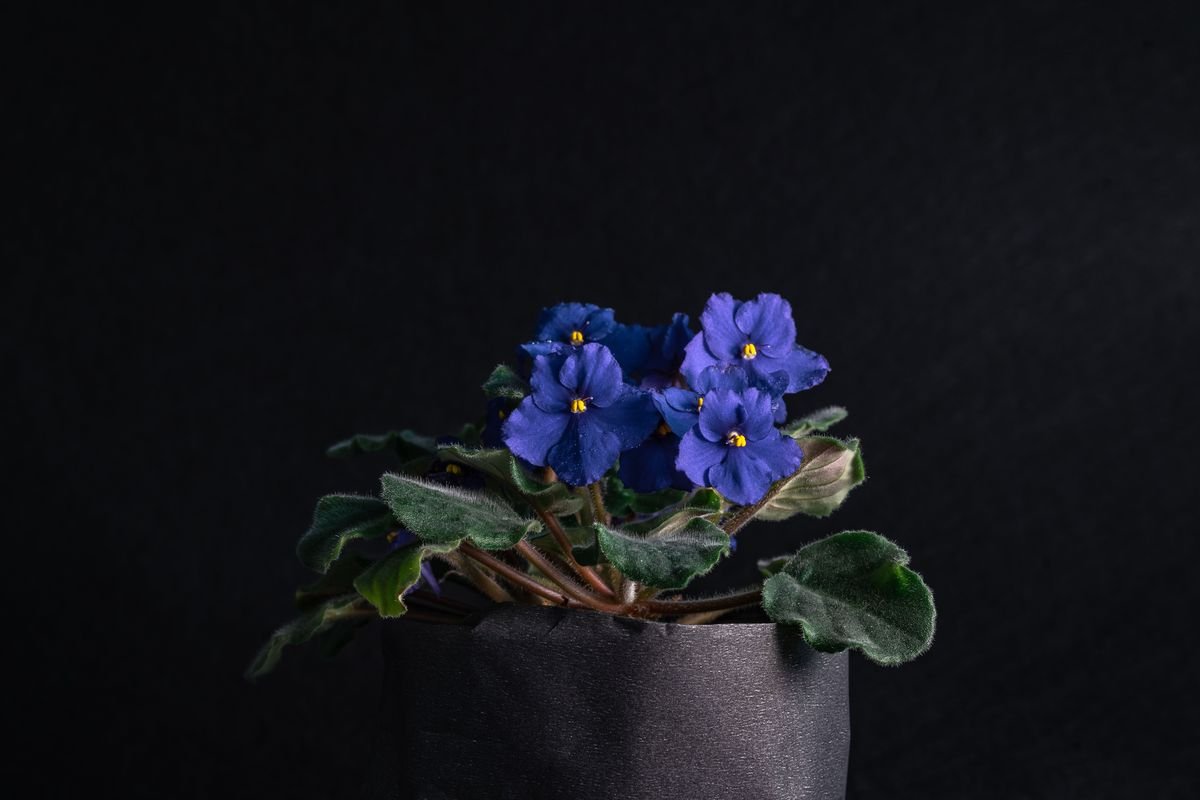
African violets are beloved for their fuzzy foliage and vibrant, continuous blooms. When healthy, these classic houseplants can produce flowers almost non-stop throughout the year.
It can be deeply frustrating when a plant looks lush and green but refuses to set flower buds, or when tiny buds form only to shrivel and drop before opening.
While genetic differences mean some cultivars bloom slightly more freely than others, every healthy African violet has the capability to blossom indoors.
Getting your plant to flower is simply a matter of aligning its daily environment with its natural tropical needs.
Understanding the African Violet Blooming Cycle
African violets (Saintpaulia) originate from the cloud forests and river valleys of eastern Africa, where they grow in rocky, shaded crevices under continuous warmth and filtered light.
Because they do not experience dramatic seasonal shifts in their native habitat, they do not require a distinct winter dormancy period to initiate flowers.
Under stable indoor conditions, an African violet can remain in an ongoing cycle of setting buds, opening flowers, and resting for just brief interludes between flushes.
If your plant goes several months without showing fresh buds, it is communicating that one or more vital environmental factors are out of balance.
Provide Sufficient Light for Flower Production
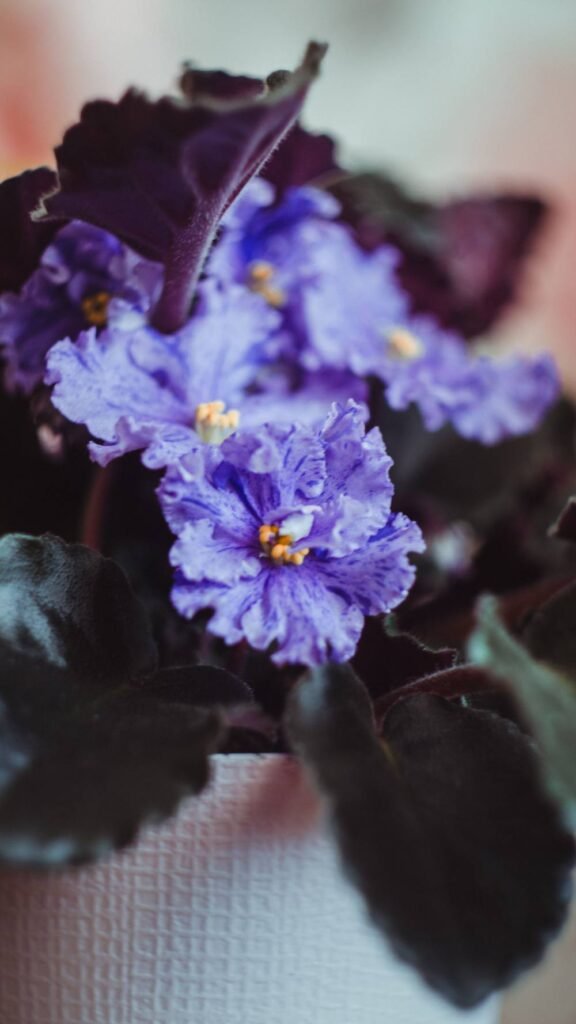
Inadequate light is the single most common reason African violets fail to bloom. Foliage can survive in relatively dim settings, but generating flower buds demands a massive reserve of carbohydrate energy that only intense, indirect light can supply.
An African violet needs between 12 and 14 hours of bright, indirect sunlight every single day to fuel continuous flowering. Placing your plant near an east-facing window usually provides ideal gentle morning sun. If your window faces south or west, diffuse the harsh afternoon rays with a sheer curtain to prevent foliage burn.
Using Full Spectrum Grow Lights
During the shorter days of late autumn and winter, natural window light rarely delivers the duration needed for flowering. Setting up supplemental LED or fluorescent grow lights can completely transform stubborn plants.
Standard household bulbs lack the balanced wavelengths necessary for flowering plants. African violets require full spectrum lighting that covers both blue wavelengths (around 400 to 450 nanometers) for robust leaf structure and red wavelengths (around 660 nanometers) to trigger flowering responses.
Position your light fixture approximately 10 to 12 inches directly above the plant canopy and run it on a timer for 12 to 14 hours daily. Never leave lights on for 24 hours straight, as the plant requires at least 8 hours of total darkness to properly metabolize sugars created during photosynthesis.
Master Proper Watering Techniques
African violets have extremely sensitive root systems that will quickly shut down if given improper moisture levels. The goal is to keep the potting medium evenly damp, similar to a wrung-out kitchen sponge, without ever letting the soil turn soggy or completely parched.
When roots dry out completely, delicate root hairs die off. When drenched, roots suffocate from lack of oxygen and rot. In either stressful scenario, the plant diverts its energy away from flower production toward emergency survival.
Bottom Watering and Water Quality
Bottom watering is generally the safest and most reliable method for watering African violets. Fill a shallow tray with room-temperature water and set your potted plant inside for roughly 15 to 20 minutes. The soil will pull moisture upward through the drainage holes via capillary action.
Always empty leftover water from the saucer after 20 minutes so the roots do not sit in standing water. If you choose to water from the top, apply moisture directly to the soil surface under the foliage to prevent water droplets from pooling on the leaves, which causes unsightly pale spots.
Water quality matters greatly for these delicate plants. Cold tap water can shock root systems, while water treated with softening salts or high levels of chlorine can inhibit nutrient uptake. Use filtered, distilled, or rainwater brought to room temperature for the best results.
Setting Up a Continuous Wick System
Wick watering is an exceptional way to maintain consistent soil moisture levels without daily monitoring. In a wick setup, a piece of synthetic yarn or cord runs from inside the potting mix, through the drainage hole, and into an external reservoir of water below.
Because synthetic materials do not decompose, braided nylon or acrylic yarn pulls a gentle stream of moisture upward as the roots absorb it. To make a wick system successful, your potting mix must be very light and porous, containing at least 40 to 50 percent perlite to guarantee abundant airflow around the root hairs.
Choose the Correct Pot Size
Many growers make the mistake of planting an African violet into an oversized container, expecting it to grow rapidly into the space. In reality, African violets bloom best when their root balls are snug and lightly root-bound within their pots.
When placed in an overly spacious pot, the plant focuses all its metabolic resources on root expansion rather than flower development. Large quantities of unoccupied potting mix also retain excess moisture, increasing the danger of root rot.
The One Third Pot Rule
A reliable guideline for African violets is the ‘one-third rule’. The diameter of your pot should measure roughly one-third the diameter of the plant’s leaf span.
- For a standard plant spanning 9 to 12 inches across, use a 3 to 4 inch diameter pot.
- For miniature varieties measuring under 6 inches wide, use a 2 to 2.5 inch pot.
- For semi-miniature plants, select a pot between 2.5 and 3 inches wide.
African violets produce shallow, spreading root systems rather than deep taproots. Choose wide, shallow containers (often called azalea pots) rather than tall, deep pots to provide ideal oxygen exchange.
Maintain Proper Humidity and Temperature
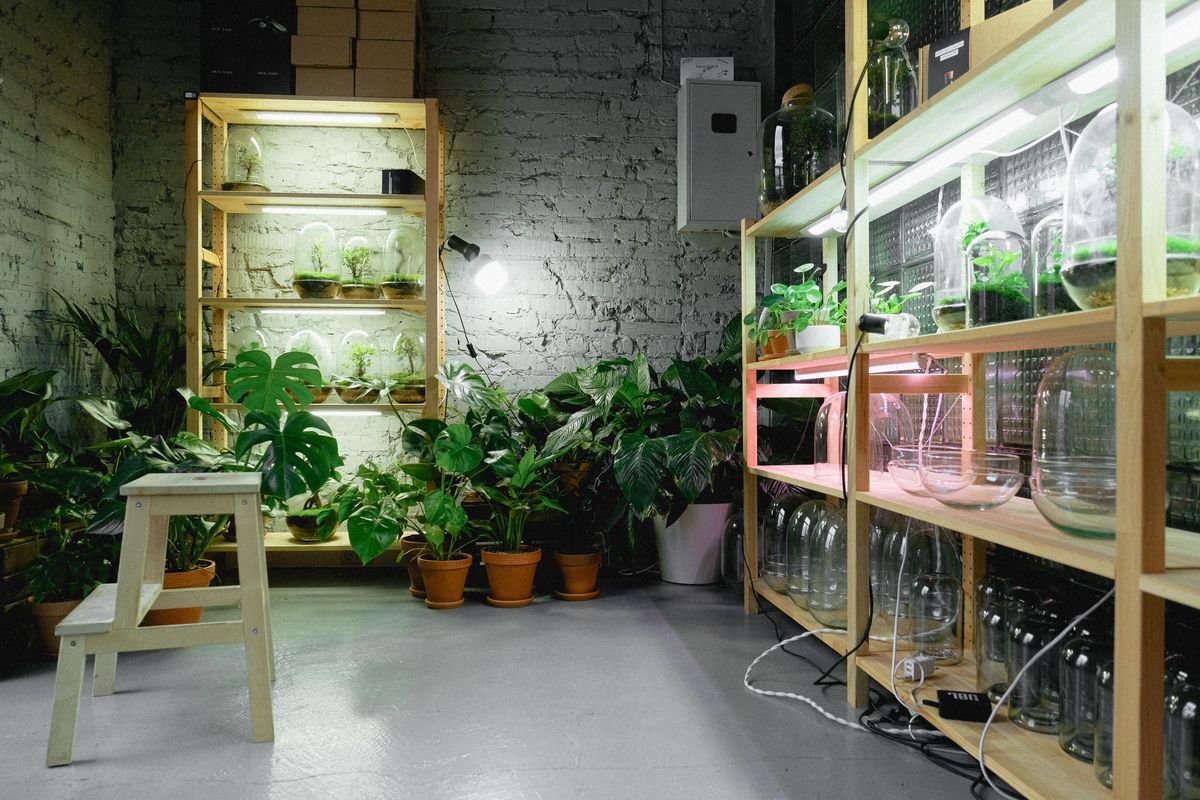
Because African violets naturally inhabit humid riverbanks and cloud forests, indoor winter heating and dry summer air can stall flower bud formation. If the relative humidity drops below 40 to 50 percent, emerging buds may dry up and drop before they ever open.
Ideal ambient indoor temperatures range between 68°F and 75°F (20°C to 24°C). If temperatures consistently fall below 60°F (15°C), growth slows drastically and flowering ceases completely.
Raising Humidity Without Misting
Never mist the foliage of an African violet to raise humidity. Misting traps droplets on the fuzzy leaf surfaces, which encourages fungal diseases like powdery mildew and causes fungal leaf spotting.
Instead, raise humidity around your plant safely using these practical methods:
- Place the pot on a tray filled with pebbles and water, ensuring the pot bottom sits above the water line.
- Group several houseplants together to create a microclimate rich in natural plant transpiration.
- Run a small cool-mist room humidifier nearby during dry winter months.
Apply Balanced Fertilizer Consistently
Because African violets bloom repeatedly, they deplete essential minerals in their potting soil relatively quickly. Feeding irregularly or using an improper nutrient ratio is a primary culprit behind missing blooms.
High-nitrogen fertilizers encourage lush, deep green leaves but suppress flower formation. For steady blossoms, choose a balanced fertilizer or a specialized African violet formula containing an N-P-K ratio such as 14-12-14 or 7-7-7.
The Weakly Weekly Feeding Method
Rather than applying full-strength fertilizer once a month, which can burn sensitive feeder roots, use the ‘weakly, weekly’ method. Mix water-soluble plant food at one-quarter to one-eighth of the recommended label strength every time you water.
This continuous, low-level supply of nutrition mimics how plants gather nutrients in nature and provides steady fuel for flower formation. Once every four to six weeks, flush the soil thoroughly with plain water to wash away residual fertilizer salts.
Repot on a Regular Schedule
Even with diligent care, potting mix breaks down over time, becoming compacted, acidic, and saturated with mineral salts. As peat moss and perlite decompose, the roots lose access to oxygen, and the plant stops flowering.
Standard African violets benefit from repotting into fresh soil every 6 to 12 months. Regular repotting restores soil structure, balances soil pH between 6.2 and 6.8, and encourages active root growth that sustains new flower buds.
Selecting the Right Soil Formula
Never plant African violets in heavy garden soil or dense standard potting soil. Their delicate, fibrous roots require a loose, airy medium with exceptional drainage and aeration.
A great homemade blend consists of equal parts peat moss (or coconut coir), perlite, and coarse vermiculite. Commercial African violet mixes are widely available, but adding an extra handful of perlite to pre-bagged soil improves drainage and helps prevent root suffocation.
Remove Suckers and Groom Foliage
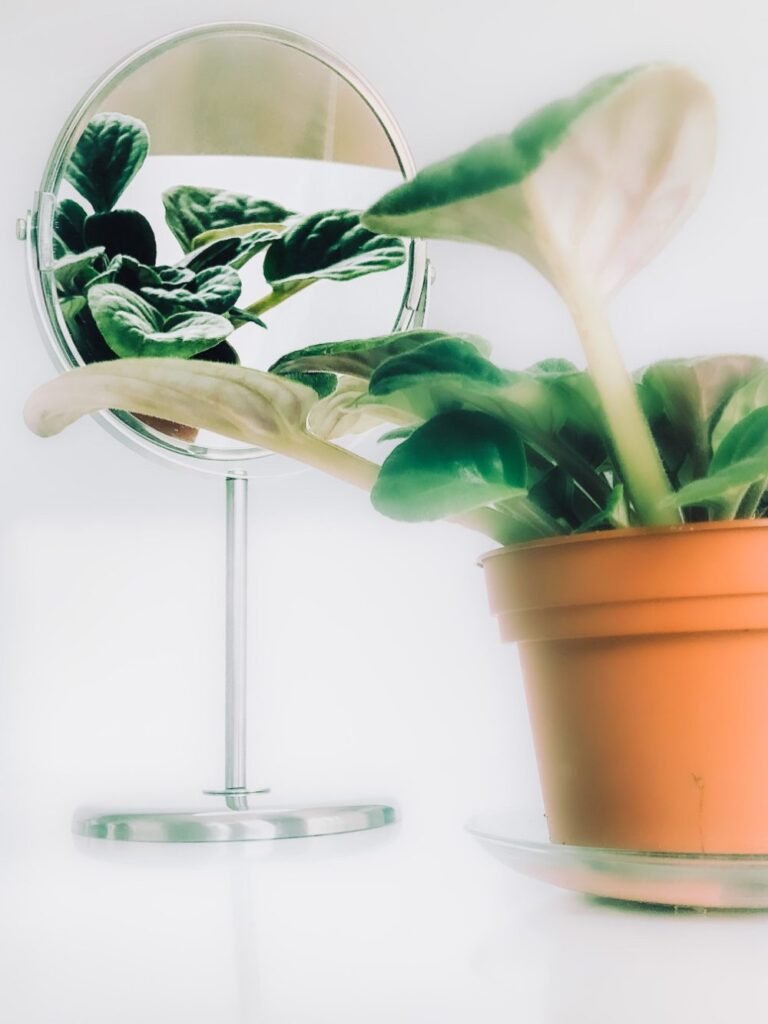
African violets often produce secondary crowns, commonly referred to as ‘suckers’, that sprout along the main stem or in the leaf axils. If left alone, these suckers siphon energy away from the main crown and cause congested, deformed growth.
When multiple crowns compete for light and nutrients in a single pot, the plant directs its energy into vegetative foliage rather than buds. Removing these side shoots keeps the central crown symmetrical and stimulates prolific flowering.
Pruning Suckers and Spent Blossoms
Check your African violet monthly for tiny clusters of leaves forming between the main stem and leaf stems. Gently pry or cut these tiny crowns off using a clean toothpick, blunt craft knife, or small tweezers while taking care not to nick the main stem.
If the sucker has formed several small leaves, you can gently root it in moist potting mix to grow an entirely new plant. Additionally, pinch off fading or wilted blossoms right at the base of the flower stalk. Removing spent flowers prevents seed development, prompting the plant to direct its strength into fresh new flower clusters.
African Violet Bloom Health Assessment
Answer 5 quick questions to see your result