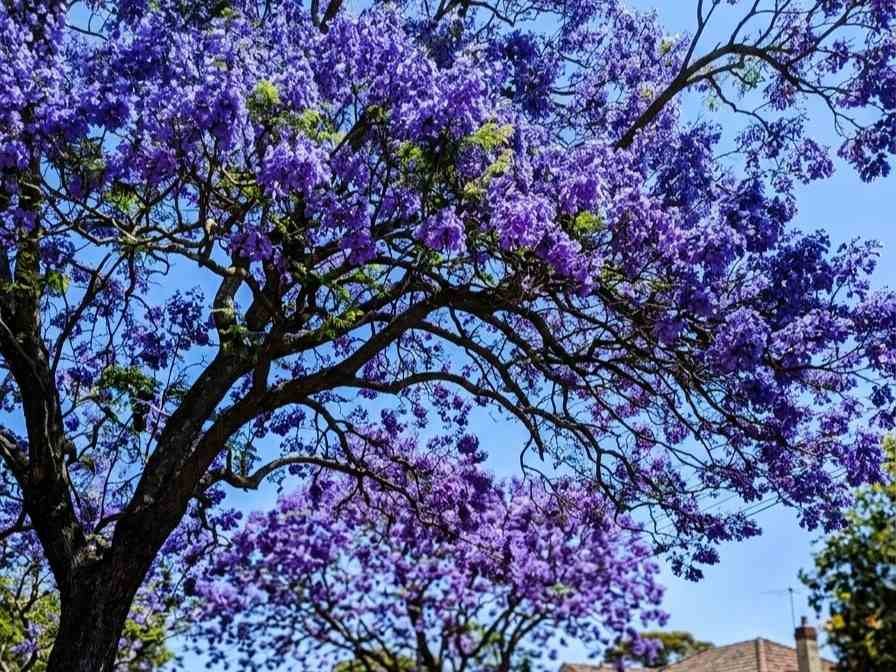
Purple-flowering trees create an unforgettable visual impact in any landscape setting.
Cooler violet tones give garden spaces an optical illusion of depth, while intense magenta-purple blossoms provide high-contrast focal points against green foliage.
Beyond pure visual appeal, these flowering trees attract beneficial pollinators and provide cooling shade during hot summer days.
Here are purple-flowering trees, complete with practical growing specifications to help you plan your landscape design.
1. Blue Jacaranda (Jacaranda mimosifolia)
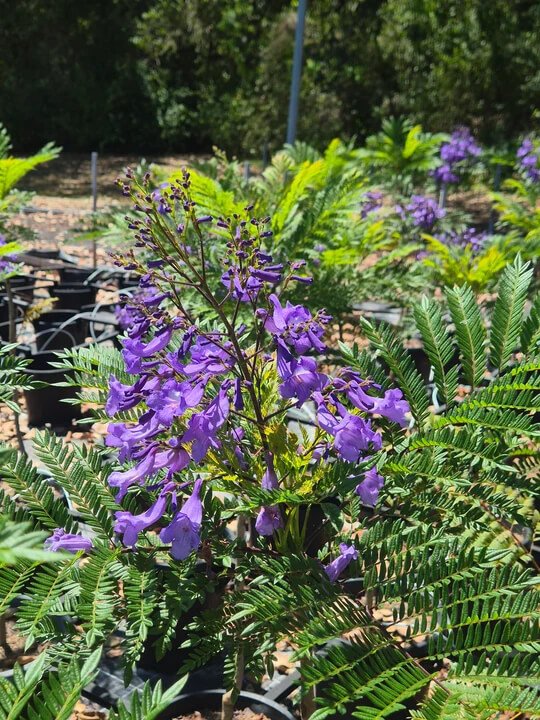
The Blue Jacaranda is one of the most celebrated purple-blooming canopy trees across warm regions of the world. Its soft, fern-like bipinnate leaves provide pleasant filtered shade throughout the warm months.
During late spring, the crown explodes with dense clusters of bell-shaped violet-blue flowers. Spent blossoms fall in large quantities to blanket surrounding walkways in a purple carpet.
- Light: Full sun (at least 6 to 8 hours of direct sun daily)
- Water: Moderate; highly drought-tolerant once established
- Bloom Time: Late spring to early summer
- Colors: Violet-blue, lavender, and soft purple
- Mature Size: 30 to 50 feet tall, 25 to 40 feet wide
2. Queen Crape Myrtle (Lagerstroemia speciosa)
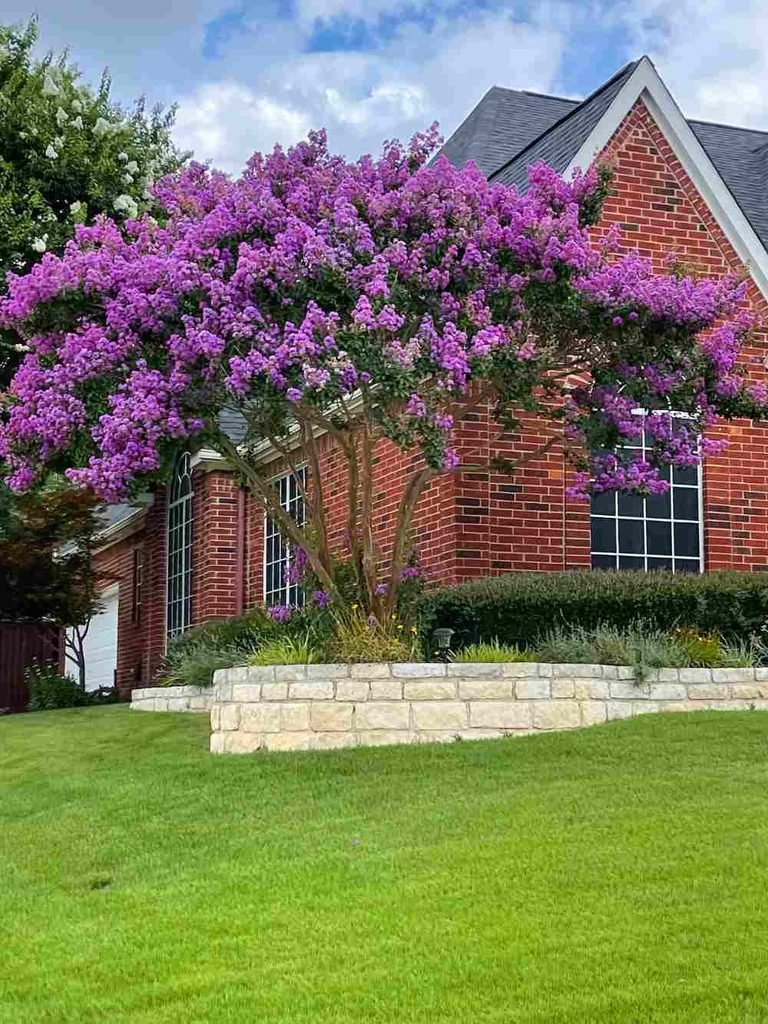
Queen Crape Myrtle is a majestic tropical shade tree native to Southern and Southeast Asia. Unlike common shrubby crape myrtles, this species reaches true timber-tree heights with a robust trunk and wide canopy.
During the hottest summer months, the branch tips bear massive, crinkled floral spires that shift from deep reddish-violet to soft mauve. It makes an exceptional urban shade tree for parks, large open yards, and wide boulevards.
- Light: Full sun
- Water: Regular watering; thrives in moist, fertile soils
- Bloom Time: Peak summer through early autumn
- Colors: Royal violet, reddish-purple, and pale mauve
- Mature Size: 40 to 60 feet tall, 30 to 45 feet wide
3. Purple Trumpet Tree (Handroanthus impetiginosus)
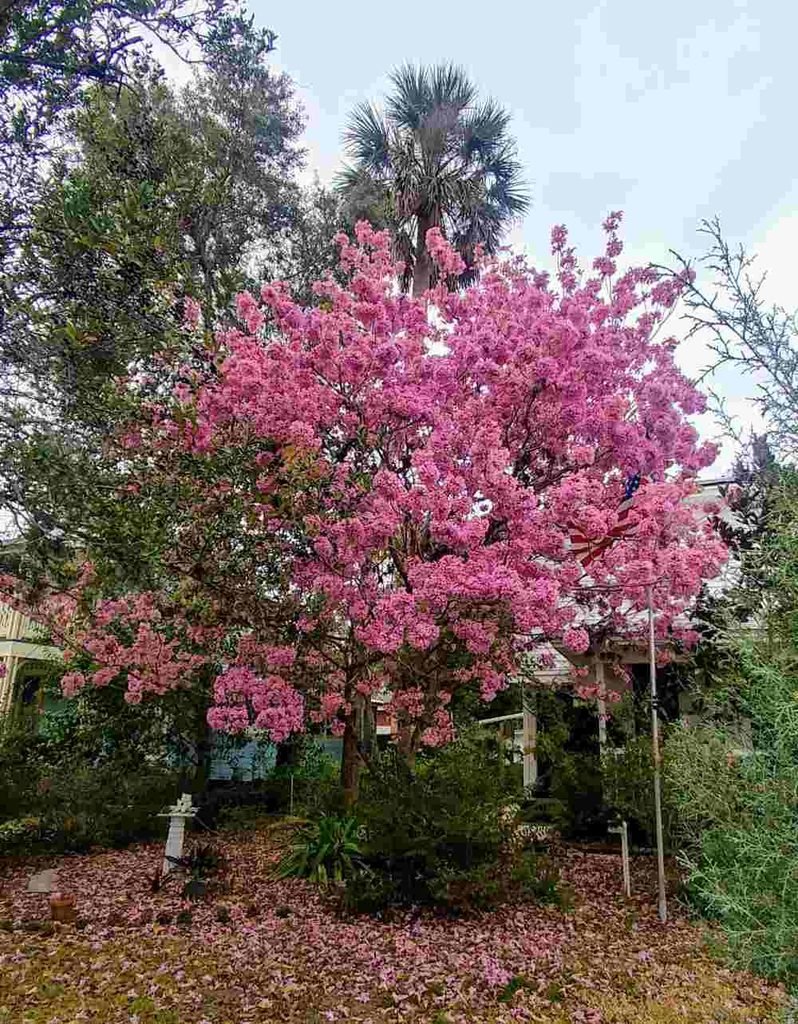
The Purple Trumpet Tree, also known as Pau d’Arco, produces one of the most vivid floral displays in the subtropics. The tree briefly drops its leaves at the end of winter to reveal an architectural wooden scaffold.
In early spring, dense clusters of ruffled trumpet flowers cover the bare limbs in rich magenta and lilac-purple tones. The species is known for strong wood and non-invasive root systems, making it safe near paved hardscapes.
- Light: Full sun
- Water: Low to moderate; drought-tolerant once established
- Bloom Time: Late winter to mid-spring
- Colors: Magenta-purple, violet-pink, and pale lilac with yellow throats
- Mature Size: 25 to 40 feet tall, 20 to 30 feet wide
4. Hong Kong Orchid Tree (Bauhinia x blakeana)
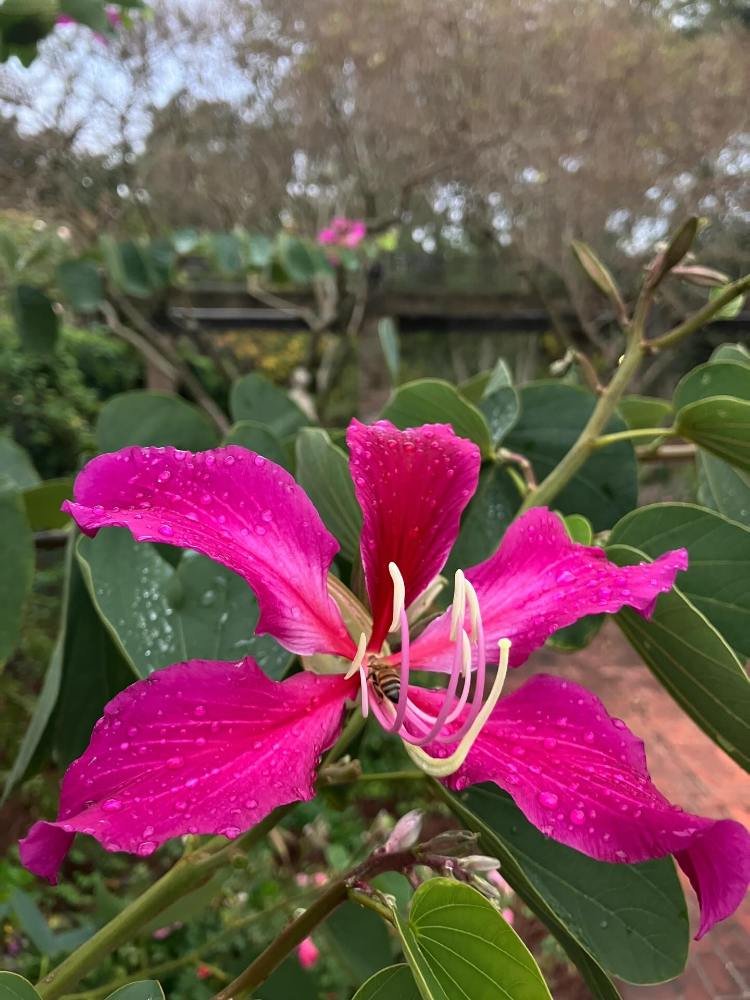
The Hong Kong Orchid Tree is famous for its exotic flowers and unique butterfly-shaped leaves. This showy hybrid blooms continuously from late autumn all the way through spring.
Its velvety, scented blossoms measure up to six inches wide and display royal violet and magenta hues. Because this tree is sterile, it does not drop messy brown seed pods across your garden paths.
- Light: Full sun to light partial shade
- Water: Moderate; prefers consistent moisture during the growing season
- Bloom Time: Late autumn through mid-spring
- Colors: Magenta-purple, violet, and crimson streaks
- Mature Size: 20 to 30 feet tall, 20 to 25 feet wide
5. Purple Orchid Tree (Bauhinia purpurea)
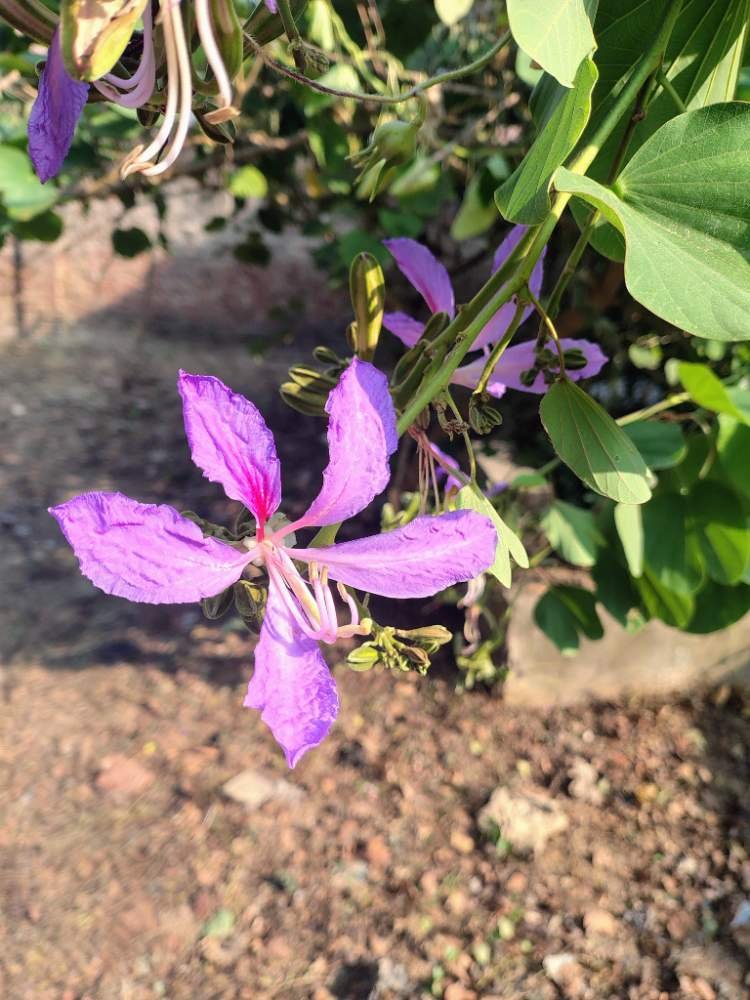
The Purple Orchid Tree is a tough, fast-growing ornamental specimen native to tropical Asia. It forms a broad, rounded canopy filled with twin-lobed, camel-foot leaves.
In autumn, narrow strap-shaped flowers open across the branches in saturated shades of lavender, violet, and rose-purple. While highly resilient in poor soils, it produces long woody seed pods that drop in winter.
- Light: Full sun
- Water: Low to moderate; tolerates dry conditions well once rooted
- Bloom Time: September through December
- Colors: Rose-purple, lavender, and violet
- Mature Size: 20 to 28 feet tall, 15 to 25 feet wide
6. Royal Empress Tree (Paulownia tomentosa)
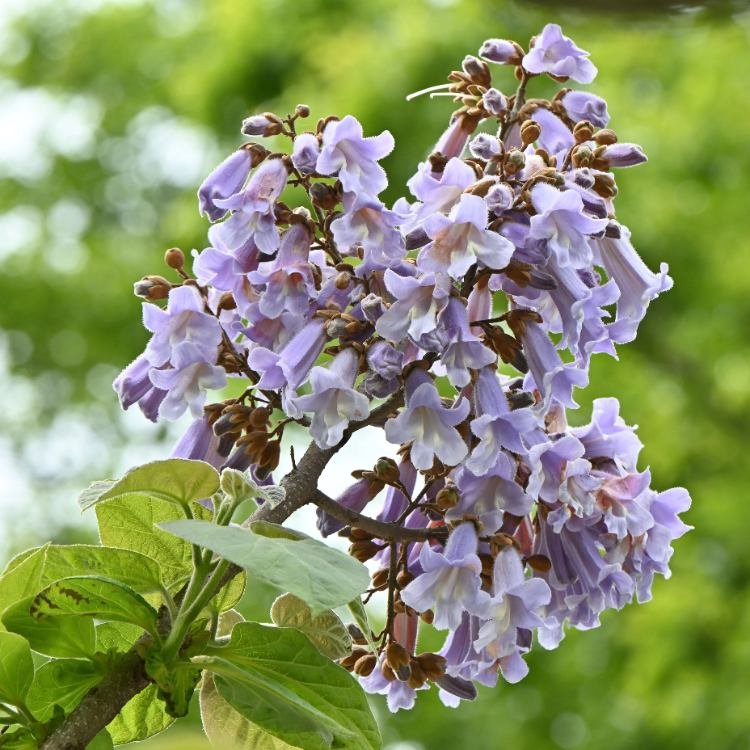
The Royal Empress Tree is renowned for its rapid growth speed and towering floral display. It features an open, spreading crown that produces immense, velvety heart-shaped leaves later in the season.
Before any foliage appears in spring, the canopy is covered in tall upright clusters of fragrant, foxglove-shaped lavender flowers. Because it can self-seed aggressively, gardeners should check local regional guidelines before planting.
- Light: Full sun
- Water: Moderate; tolerates poor, dry soils once established
- Bloom Time: Early spring
- Colors: Pale violet, lilac, and lavender with yellow throat stripes
- Mature Size: 40 to 65 feet tall, 30 to 45 feet wide
7. Chinese Princess Tree (Paulownia fortunei)
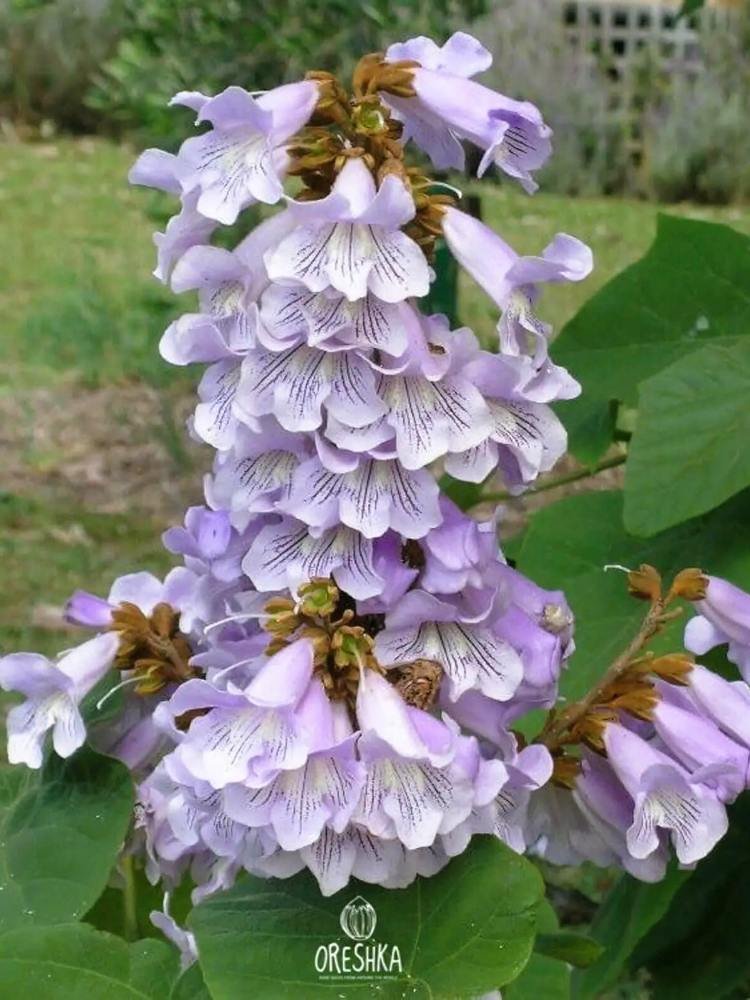
Paulownia fortunei, commonly called the Chinese Princess Tree, provides a disciplined, upright alternative to other princess trees. It grows rapidly into a columnar canopy that fits comfortably into larger park perimeters or wide streetscapes.
The spring blooms emerge before the foliage in large, upright clusters displaying cool violet and deep purple tones. Its blossoms emit a delicate, sweet perfume that drifts through surrounding garden patios.
- Light: Full sun
- Water: Moderate; adapts well to typical garden soils
- Bloom Time: Early spring
- Colors: Deep violet-purple, lavender
- Mature Size: 35 to 55 feet tall, 25 to 35 feet wide
8. Chaste Tree (Vitex agnus-castus)
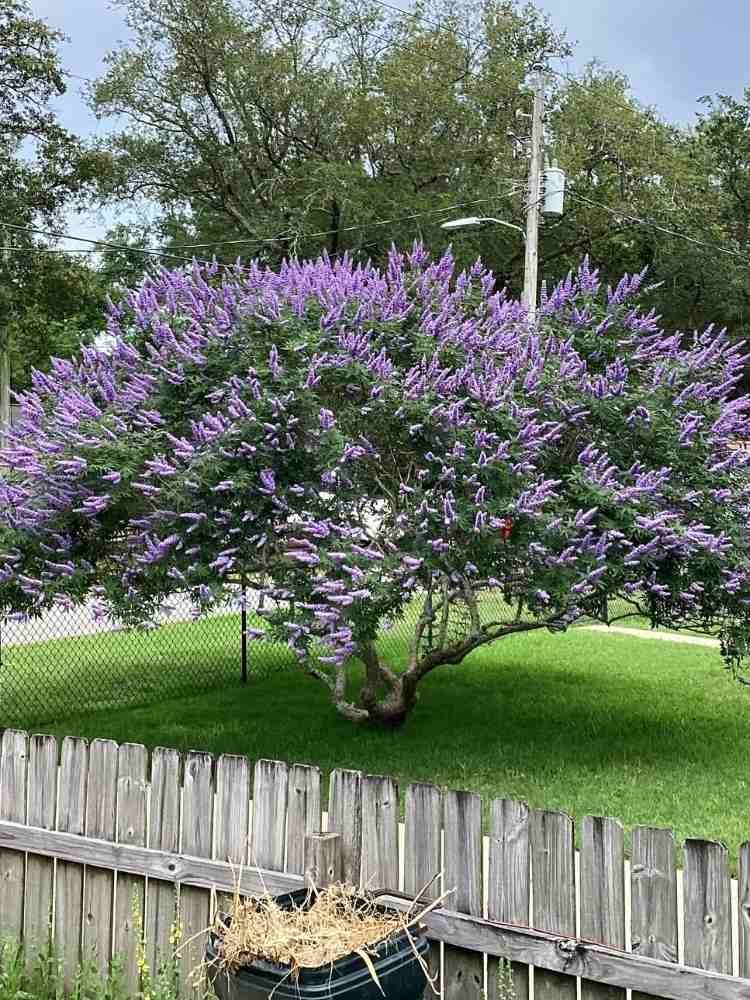
The Chaste Tree is a durable small tree native to the Mediterranean region. It features textured gray-green foliage that gives off a pleasant, peppery aroma when brushed.
Throughout the heat of midsummer, the canopy produces dense terminal spikes of fragrant purple and lilac blossoms. It thrives in dry, rocky soils and requires very little maintenance once established.
- Light: Full sun
- Water: Low; highly drought-resistant
- Bloom Time: Late spring through late summer
- Colors: Lavender, lilac, violet, and deep purple-blue
- Mature Size: 12 to 20 feet tall, 10 to 18 feet wide
9. Texas Mountain Laurel (Dermatophyllum secundiflorum)
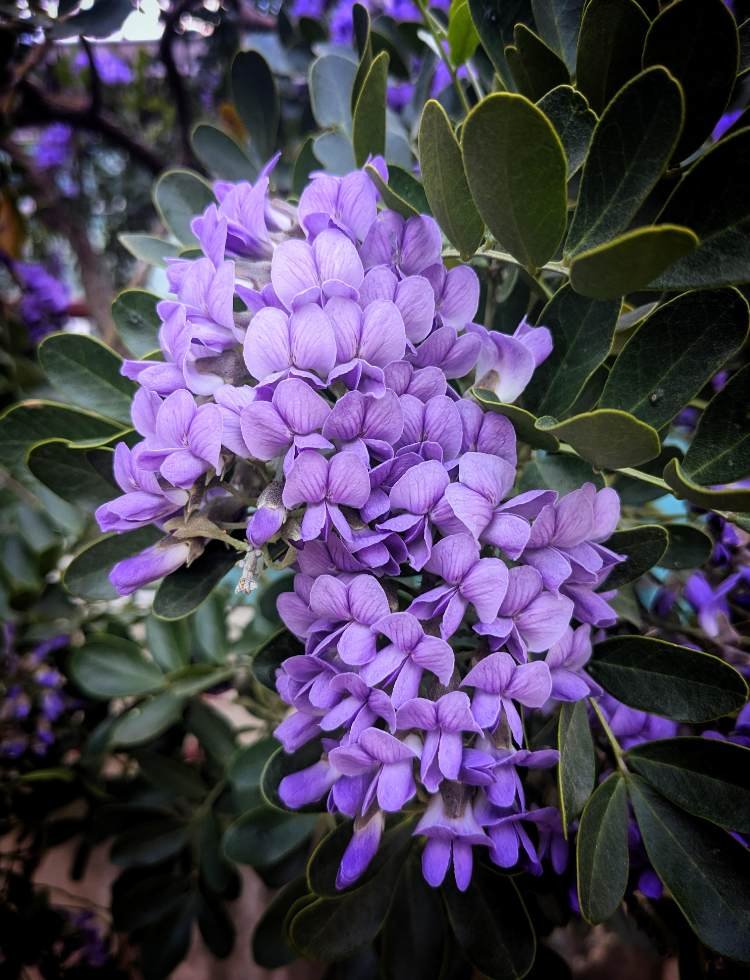
Texas Mountain Laurel is a slow-growing evergreen tree well suited for arid and limestone landscapes. Its compact canopy is dressed year-round in glossy, leathery green leaves that resist intense desert heat.
In late winter or early spring, heavy drooping clusters of violet-purple flowers emerge across the branches. These showy blossoms release a sweet fragrance that smells distinctly like grape soda.
- Light: Full sun to light afternoon shade
- Water: Very low; thrives on minimal natural rainfall
- Bloom Time: February through April
- Colors: Deep purple, violet, and lavender-blue
- Mature Size: 10 to 18 feet tall, 8 to 12 feet wide
10. Desert Willow (Chilopsis linearis)
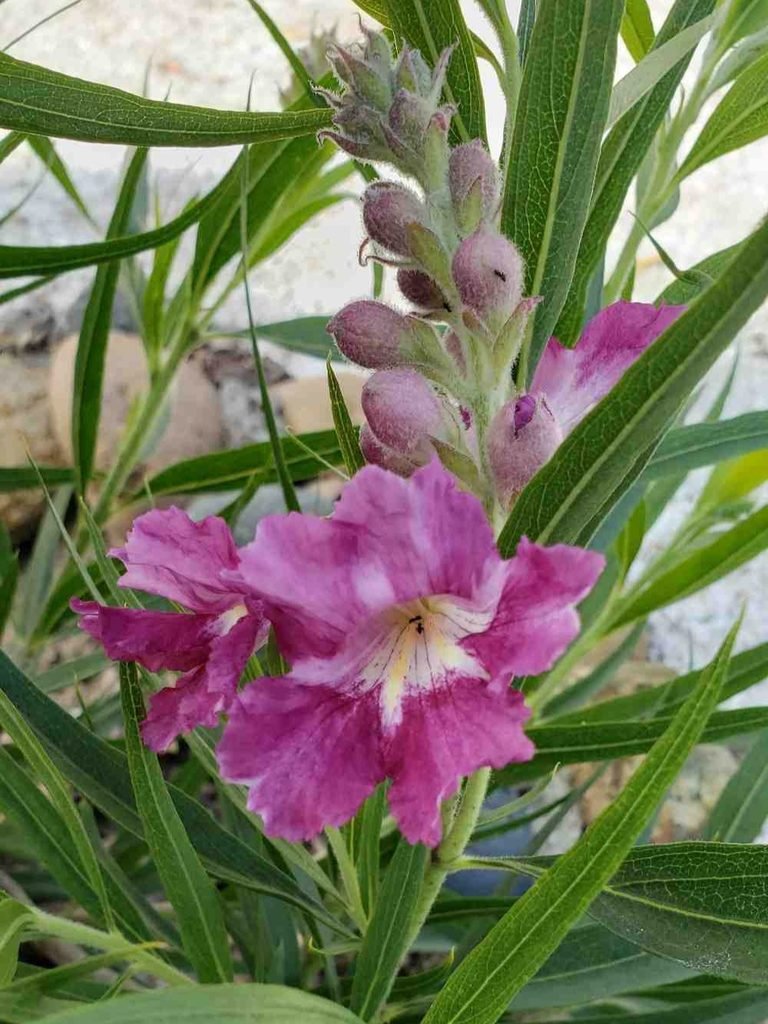
Despite its common name, the Desert Willow is a tough flowering tree belonging to the trumpet vine family. It features an open, weeping habit with narrow, willow-like green leaves.
From late spring through early autumn, dark purple cultivars like ‘Bubba’ bear continuous flushes of ruffled, trumpet-shaped flowers. It easily endures blazing heat, high winds, and arid soils without wilting.
- Light: Full sun
- Water: Very low; needs well-drained, sandy, or gravelly soil
- Bloom Time: May through September
- Colors: Rich purple, burgundy-violet, and lavender with yellow throats
- Mature Size: 15 to 25 feet tall, 12 to 20 feet wide
11. Eastern Redbud (Cercis canadensis)
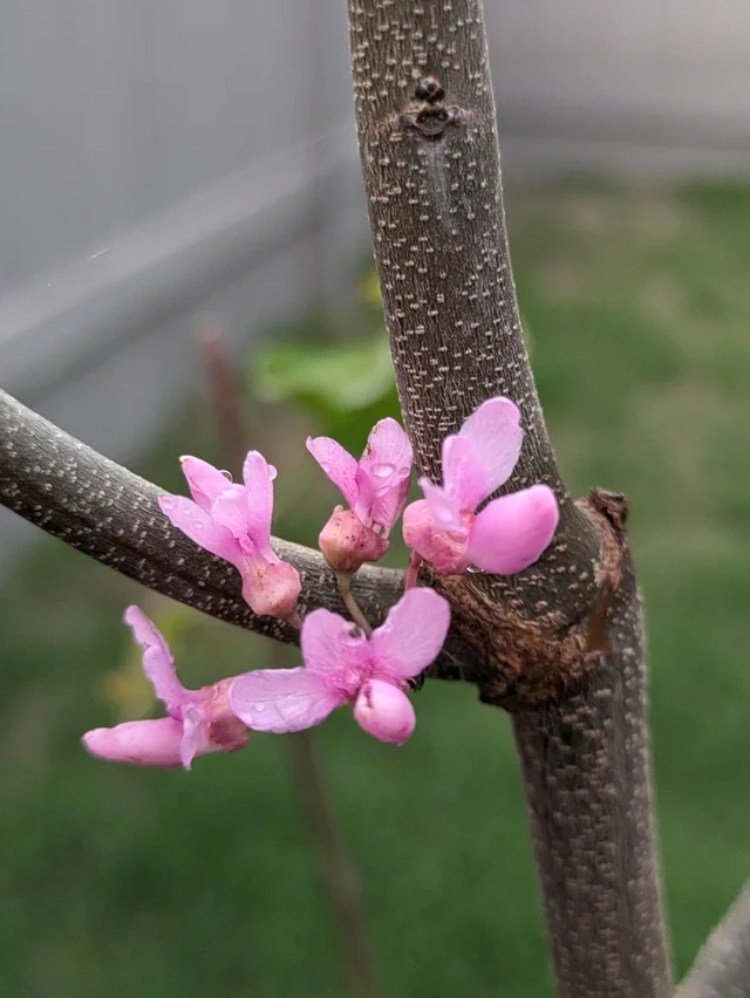
The Eastern Redbud is a beloved understory tree native to woodlands across North America. Before its heart-shaped leaves appear, tiny pea-like blossoms emerge directly from the bare branches and trunk.
Purple-leaf cultivars like ‘Forest Pansy’ and ‘Merlot’ offer purplish-pink spring blooms followed by deep burgundy foliage. This compact specimen fits neatly into suburban gardens, woodland edges, and lawn borders.
- Light: Full sun to partial shade
- Water: Moderate; prefers consistently moist, well-drained soil
- Bloom Time: Early spring
- Colors: Magenta-purple, rosy-violet, and lavender-pink
- Mature Size: 20 to 30 feet tall, 25 to 35 feet wide
12. Purple Lily Magnolia (Magnolia liliiflora)
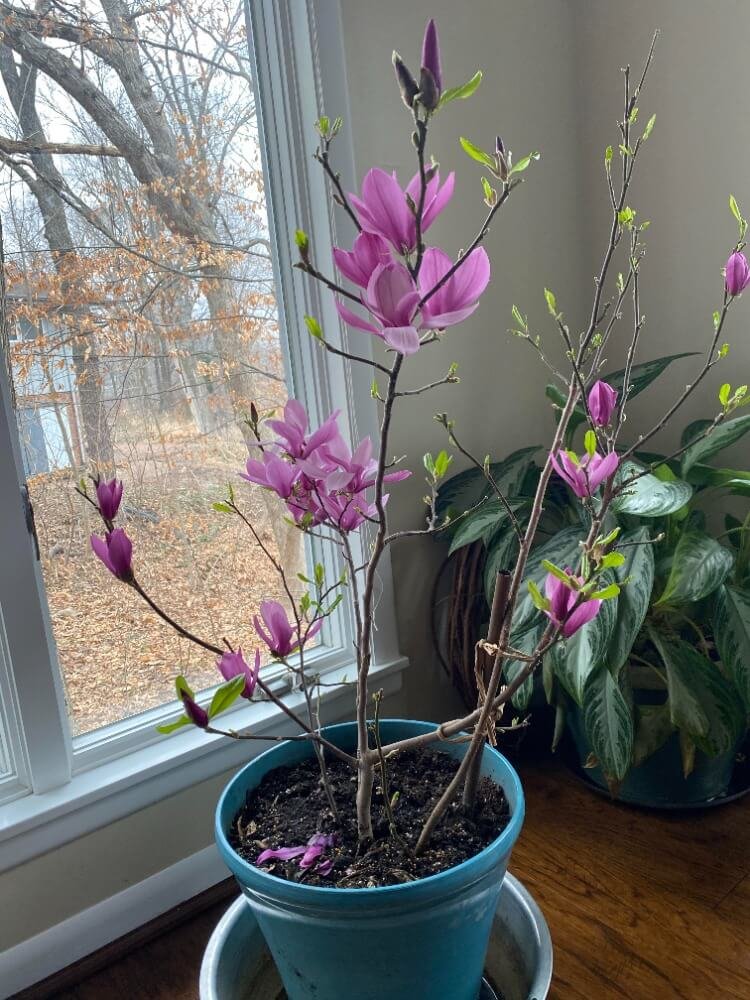
The Purple Lily Magnolia is a graceful ornamental tree originating from southwestern China. It forms an elegant, multi-stemmed structure that thrives in sheltered garden courtyards.
During early spring, erect goblet-shaped flowers open across the bare crown in dramatic shades of velvety wine-purple. The thick, fragrant petals unfold to reveal contrasting pale pink interiors that brighten the garden.
- Light: Full sun to partial shade
- Water: Regular; keep soil consistently moist and mulched
- Bloom Time: Early to mid-spring
- Colors: Dark wine-purple, violet, and pale creamy-pink
- Mature Size: 10 to 15 feet tall, 10 to 15 feet wide
13. Purple Robe Locust (Robinia pseudoacacia ‘Purple Robe’)
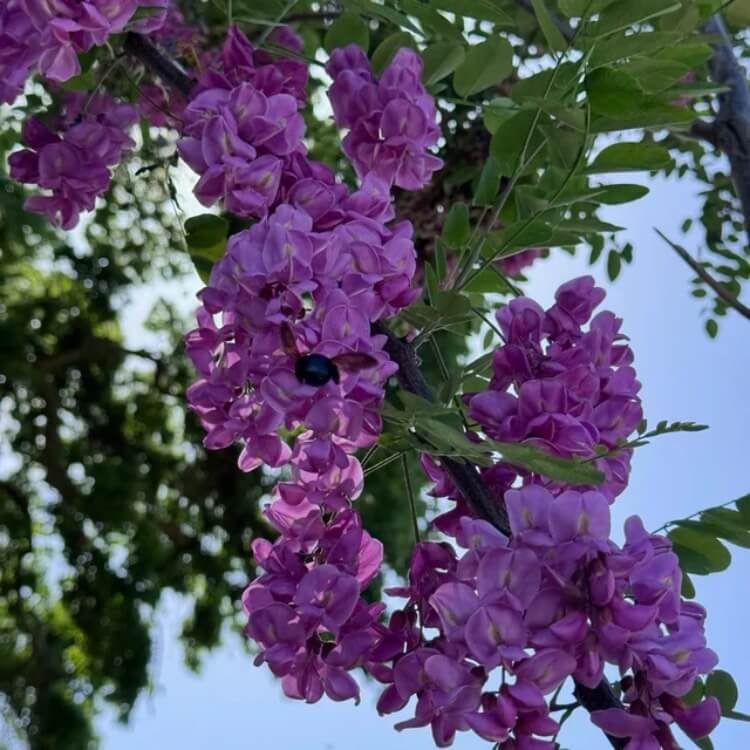
Robinia pseudoacacia ‘Purple Robe’ is a fast-growing deciduous tree recognized for its vivid pendulous flower clusters. Its delicate pinnate foliage emerges with a bronze tint before settling into soft blue-green.
In late spring, the tree produces hanging racemes of intensely fragrant, rose-violet flowers that resemble wisteria. It easily tolerates poor urban soils and fixes its own nitrogen, though branches can be brittle.
- Light: Full sun
- Water: Low to moderate; very drought-tolerant once established
- Bloom Time: May to early June
- Colors: Rose-violet, magenta-purple, and bronze-purple
- Mature Size: 30 to 40 feet tall, 20 to 30 feet wide
14. Common Crape Myrtle (Lagerstroemia indica Purple Cultivars)
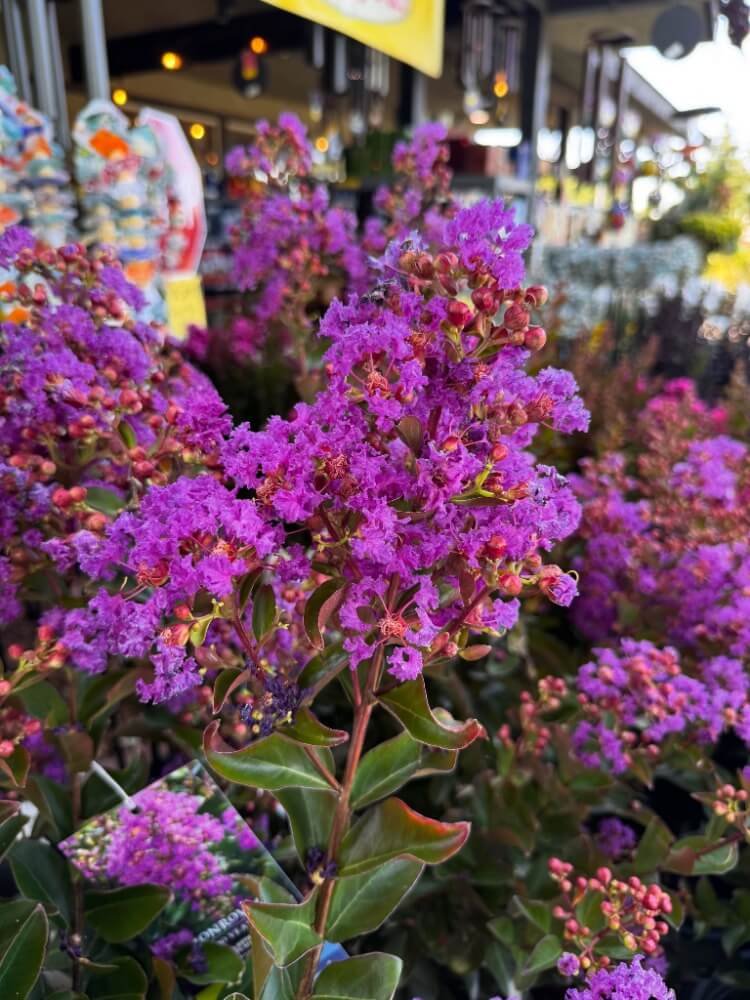
The Common Crape Myrtle (Lagerstroemia indica) is a versatile small tree adored for its smooth peeling bark and prolific summer flowers. Cultivars like ‘Catawba’ and ‘Twilight’ were specifically bred to showcase saturated violet and royal purple blossoms.
Crinkled crepe-paper-like petals form massive flower heads that bloom continuously for up to one hundred days in summer. It possesses non-invasive roots, making it an ideal choice for sidewalks and home patios.
- Light: Full sun
- Water: Moderate; drought-hardy once established
- Bloom Time: Early summer through autumn
- Colors: Deep purple, royal violet, and rich lavender
- Mature Size: 15 to 25 feet tall, 12 to 18 feet wide
15. Purple Glory Tree (Tibouchina granulosa)
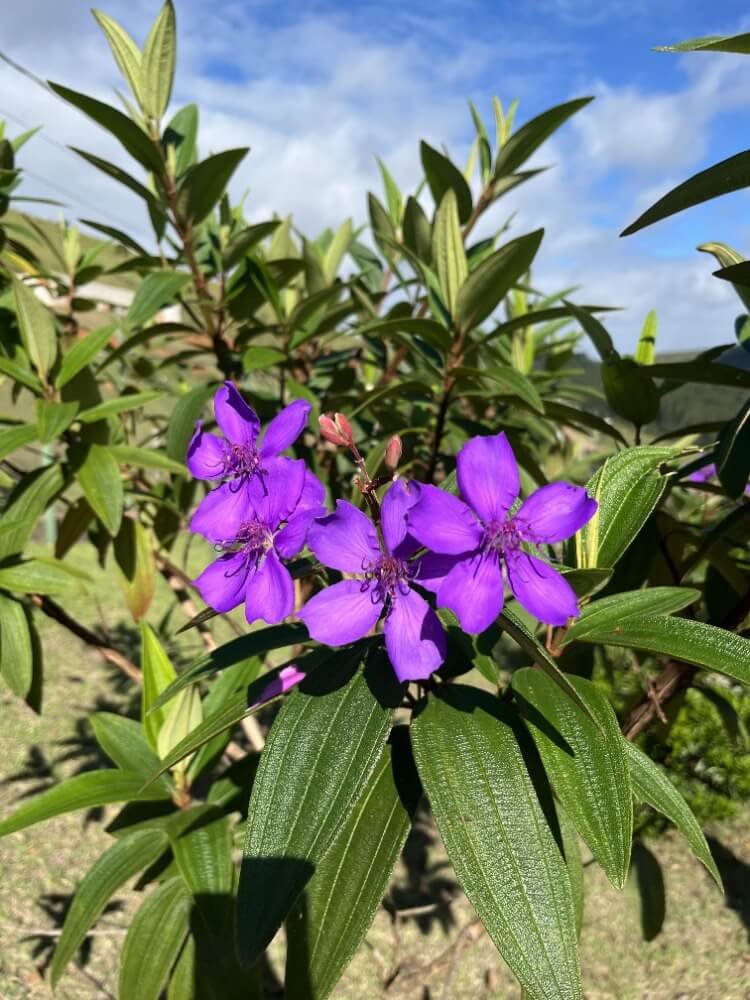
The Purple Glory Tree is an outstanding evergreen native to the coastal rainforests of Brazil. It features four-angled branches and dark green leaves marked with distinct lengthwise veins.
From midsummer into winter, the tree covers itself in clusters of luminescent, velvety royal purple blossoms. It requires acidic, fertile soil and protection from cold winds to perform at its peak.
- Light: Full sun to light afternoon shade
- Water: Regular; requires consistent moisture and good drainage
- Bloom Time: Summer through early winter
- Colors: Royal purple, fluorescent violet, and magenta-purple
- Mature Size: 15 to 25 feet tall, 10 to 15 feet wide
16. Queen’s Wreath Tree (Petrea volubilis Arborescent Standard)
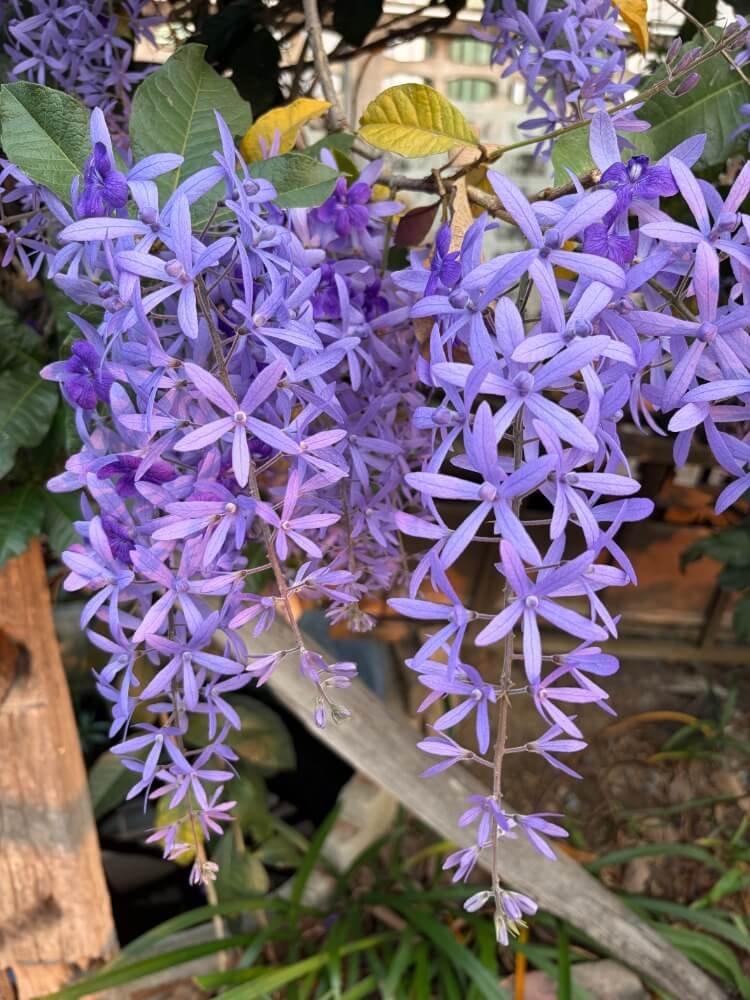
While naturally a vigorous woody vine, Petrea volubilis (commonly called Queen’s Wreath or Sandpaper Vine) can be trained into a striking weeping standard tree.
Its rough, sandpaper-textured leaves provide an attractive backdrop for dramatic weeping flower clusters.
Throughout spring and summer, long pendulous sprays showcase light lavender star-shaped calyces surrounding rich violet petals. Routine pruning after each blooming flush preserves its weeping umbrella shape and encourages new flowers.
- Light: Full sun
- Water: Moderate; drought-tolerant once established
- Bloom Time: Spring to autumn with repeating flushes
- Colors: Two-tone violet and soft blue-lavender
- Mature Size: 10 to 15 feet tall, 6 to 10 feet wide (when pruned as a tree)
Practical Selection Guide
To select the best purple-flowering tree for your outdoor space, consider your local climate and nearby structures:
- For humid tropical and warm subtropical climates: Choose Lagerstroemia speciosa, Handroanthus impetiginosus, Bauhinia x blakeana, or Tibouchina granulosa.
- For dry, arid, and Mediterranean zones: Vitex agnus-castus, Chilopsis linearis, and Dermatophyllum secundiflorum will flourish without excessive irrigation.
- For cold-temperate climates with freezing winters: Hardy options like Cercis canadensis, Magnolia liliiflora, and Robinia pseudoacacia ‘Purple Robe’ deliver rich purple spring displays.
- For tight patio cutouts and sidewalks: Prioritize trees with well-behaved, non-invasive roots such as Handroanthus impetiginosus, Lagerstroemia indica, and standard-pruned Petrea volubilis.