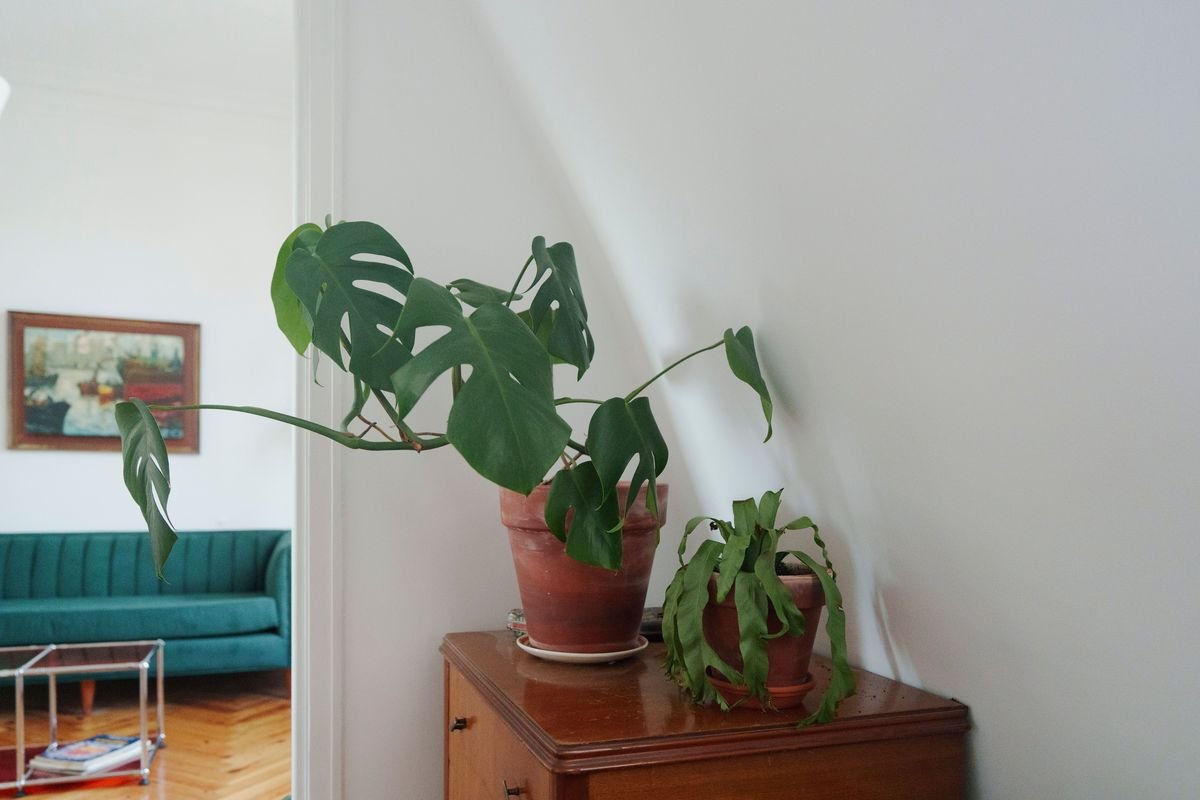
Walking into a garden center or scrolling through houseplant forums can quickly leave you wondering whether that dramatic, split-leaf green plant is a Monstera or a Philodendron.
With their lush tropical foliage, wild aerial roots, and impressive heart-shaped silhouettes, it is easy to see why beginner and experienced growers alike mix them up.
While these two beloved tropicals share similar aesthetic vibes and belong to the very same plant family, they are distinctly different botanical genera.
Understanding their unique traits, from how their leaf splits form to how they climb and expand across a room, will help you identify what you have on your windowsill and provide the exact care it needs to thrive.
Are Monstera and Philodendron the Same Plant
At first glance, many people assume Monstera is simply a fancy variety of Philodendron. In fact, you will often find Monstera deliciosa mislabeled as ‘split-leaf philodendron’ in big box stores and commercial nurseries. Despite this common retail confusion, they are entirely separate plant groups.
Both plants belong to the larger Araceae family, commonly called the aroid family. Aroids share distinct botanical reproductive traits, most notably the production of an inflorescence composed of a spike called a spadix surrounded by a modified leaf called a spathe.
Peace lilies, pothos, anthuriums, and aglaonemas also belong to this massive plant family.
Even though they share a family tree, Monstera and Philodendron represent two separate botanical genera.
Because they occupy different genera, they cannot cross-pollinate to form hybrid varieties. In evolutionary terms, Monstera is actually more closely related to Epipremnum (pothos) and Spathiphyllum (peace lilies) than it is to true Philodendrons.
Knowing the botanical difference is not just trivia for plant collectors. It dictates how each plant physically develops, how its root structures support massive foliage, and what kind of physical support you need to provide inside your home.
Why People Confuse Split Leaf Philodendron and Monstera
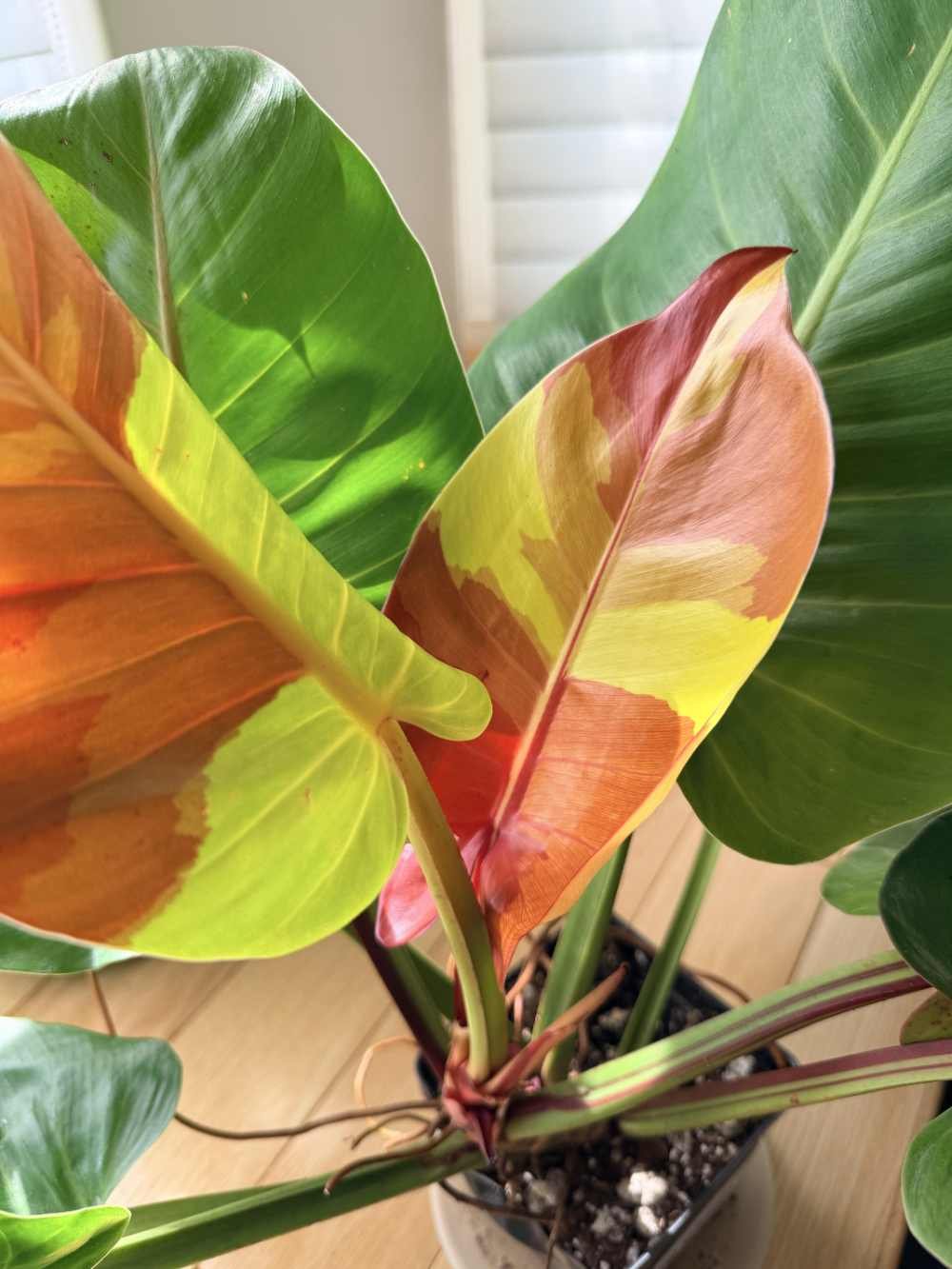
The widespread mix-up between these two plants stems from historical naming conventions and visual overlap during juvenile growth stages.
Decades ago, horticulturists often grouped large-leafed tropical aroids together under broad trade names before genetic and structural classifications became standard.
Another layer of confusion comes from the plant formerly known as Philodendron bipinnatifidum or Philodendron selloum.
Botanists have recently reclassified this specific species into its own genus named Thaumatophyllum bipinnatifidum (commonly known as the tree philodendron or horsehead philodendron). However, old habits die hard in the nursery trade, and growers still sell it under the classic name split-leaf philodendron.
When Monstera deliciosa and Thaumatophyllum bipinnatifidum are young seedlings, their leaves look remarkably similar.
Both start out as simple, solid green, heart-shaped leaves without any tears or splits. As a plant parent standing in a nursery aisle looking at six-inch nursery pots, distinguishing a juvenile Monstera from a juvenile Philodendron can be genuinely tricky until mature growth characteristics start to emerge.
Key Differences in Leaf Fenestration and Texture
The easiest way to tell a mature Monstera apart from a Philodendron is by closely inspecting the leaf blade, its edges, and the presence of internal openings.
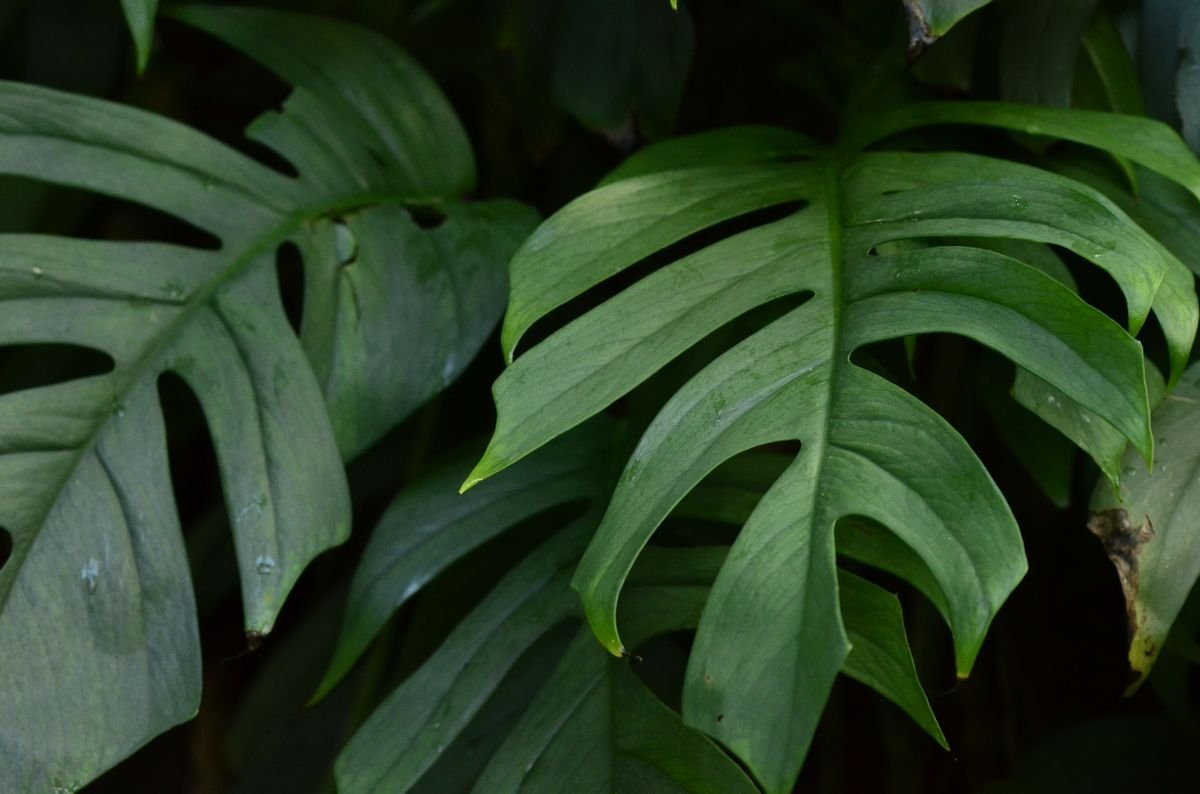
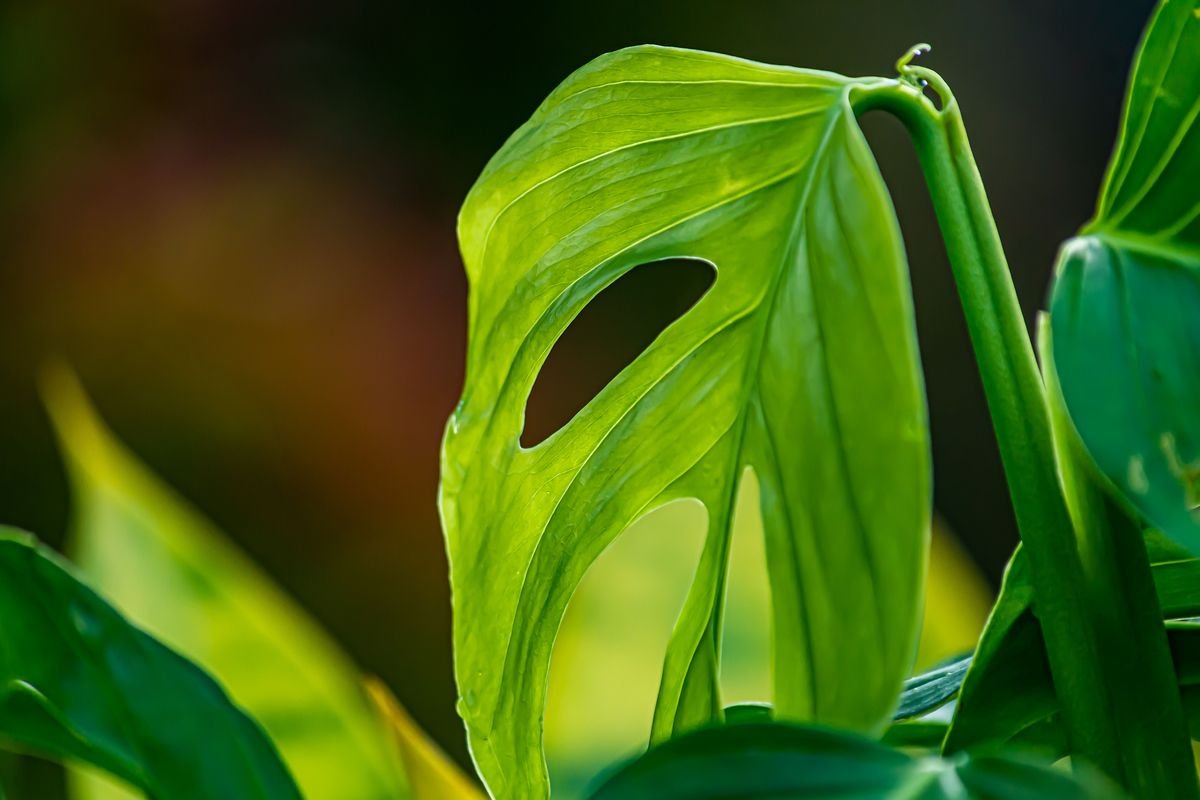
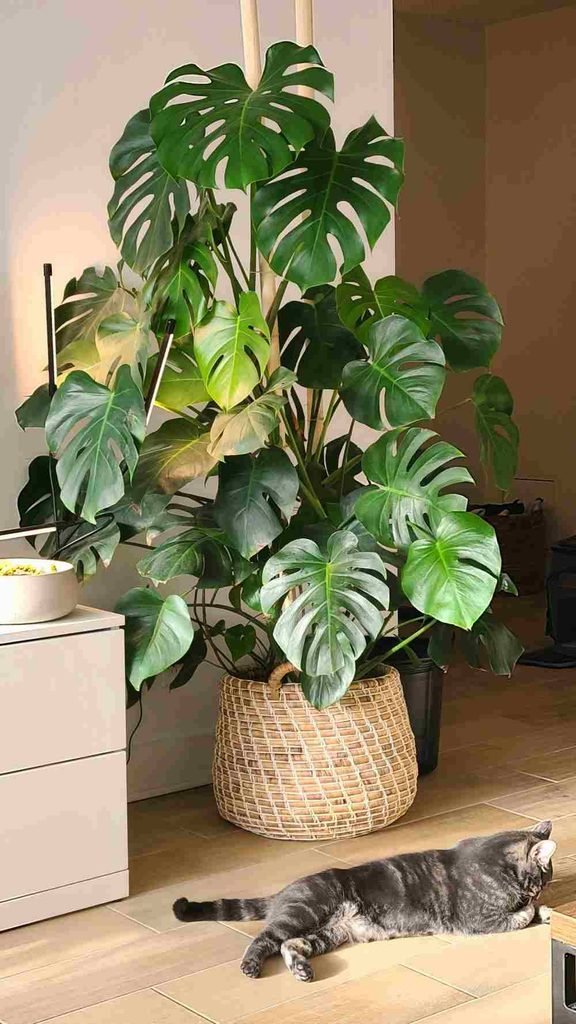
Monstera deliciosa is famous for true fenestrations. The word fenestration comes from the Latin word for window, referring to the neat holes and perforations that form within the body of the leaf blade itself in addition to the deep cuts extending inward from the margins.
Botanists believe these natural windows allow tropical storm winds to pass through without tearing massive leaves, while letting precious dappled sunlight reach the lower foliage in dense jungle canopies.
Split-leaf philodendrons and tree philodendrons do not develop true internal holes or windowed fenestrations. Instead, their leaves develop deep, sinuous ruffles and finger-like indentations called lobes along the outer margins.
The cuts can reach all the way down near the central rib, making the leaf look like a ruffled palm frond or an intricate feathered plume, but you will never find an enclosed hole floating isolated within the leaf blade.
Leaf texture offers another immediate physical clue when you touch the foliage:
- Monstera leaves: Smooth, glossy, rubbery, and somewhat stiff to the touch, with clean, even edges around each split.
- Philodendron leaves: Often slightly thinner, more pliable, or noticeably leathery with textured surface veins and crinkled, wavy leaf margins.
- Cataphylls: Philodendrons produce specialized protective modified leaves (cataphylls or prophylls) that sheath new emerging leaves and later dry up into papery brown tissue along the stem, a feature absent in Monstera leaf emergence.
Growth Habits and Climbing Patterns
How a plant moves, climbs, and anchors itself as it grows will tell you immediately whether you are caring for a Monstera or a Philodendron species.
Monsteras are natural hemiepiphytic climbers. In their native Central and South American rainforests, seeds germinate on the forest floor, and the juvenile vines crawl along the ground toward dark vertical shapes (a behavior known as negative phototropism or skototropism).
Once they locate the trunk of a massive host tree, they begin climbing upward toward the light, producing thick, rope-like aerial roots that cling tightly to tree bark.
Philodendrons, on the other hand, display two main distinct growth habits depending on the species:
- Vining and climbing types: Species like Philodendron hederaceum (heartleaf philodendron) or Philodendron verrucosum produce trailing or climbing vines with relatively long distances between leaf nodes.
- Self-heading types: Species like Thaumatophyllum bipinnatifidum, Philodendron birkin, or Philodendron imperial red grow in a non-vining, self-supporting rosette pattern. They produce very tight nodal spacing, creating a sturdy, upright central woody trunk that supports a wide canopy without needing to climb a host tree.
If your plant is spreading horizontally with a dense, thick, trunk-like central base and cascading outward in all directions, you are likely looking at a self-heading philodendron.
If it is sending out directional climbing stems searching for a vertical pole, it is behaving like a Monstera or climbing philodendron.
Differences in Size and Indoor Space Needs
Both plants can turn an ordinary living room into an indoor jungle, but they demand very different physical footprints over time.
In the wild, Monstera deliciosa can climb to astonishing heights of 60 to 70 feet against rainforest trees, with individual leaves spanning over three feet wide.
Indoors, restrained by a pot and typical ceiling heights, a mature Monstera usually maxes out around 8 to 12 feet tall and 4 to 6 feet wide when trained up a sturdy cedar plank, moss pole, or trellis.
Because Monsteras climb vertically, you can manage their lateral footprint by tying unruly stems to their central support.
Self-heading split-leaf philodendrons (Thaumatophyllum) do not climb upward in a neat column. Instead, they expand dramatically outward in a broad, vase-like architecture.
A mature indoor specimen can easily span 6 to 8 feet in diameter, with massive arching petioles (leaf stems) claiming immense floor space.
Before bringing either plant home, consider where you plan to display it. Monsteras fit well in vertical corners where a moss pole can direct their upward ascent, while large philodendrons need wide, open floor space where their spreading fronds will not be constantly bumped by foot traffic.
Soil and Potting Preferences for Both Plants
Because both plants are aroids adapted to forest ecosystems, they share a fundamental need for rich, chunky, highly oxygenated potting soil that never holds stagnant water.
In natural jungle environments, aroid roots do not grow in dense, suffocating garden dirt. They spread through loose topsoil layers made up of decaying bark, fallen leaves, moss, and composted organic material. Recreating this structure in a container is essential for preventing root suffocation and fungal root rot.
A proven standard DIY aroid potting mix works exceptionally well for both genera:
- 2 parts high-quality peat moss or coco coir (for moisture retention)
- 2 parts coarse perlite or pumice (for drainage and aeration)
- 2 parts coarse orchid bark (to create large air pockets and mimic natural debris)
- 1 part horticultural charcoal (to filter impurities and maintain soil freshness)
- 1 part worm castings or aged compost (for gentle organic nutrition)
While Monsteras tolerate a slightly wider range of soil conditions, self-heading philodendrons are notoriously sensitive to mineral and salt buildup from heavy tap water or synthetic fertilizers.
If salts accumulate in dense soil, philodendron leaf margins will quickly develop brown, crispy tips and yellow halos. Using an airy mix that flushes clean during every watering prevents this issue.
Watering and Moisture Differences
Proper hydration is the cornerstone of keeping both Monstera and Philodendron foliage vibrant, but their subtle anatomical differences influence how forgiving they are when you make a watering mistake.
Monstera deliciosa stores a moderate amount of moisture in its thick, fibrous stems and hearty petioles. It prefers what growers call the soak and dry method.
You should thoroughly saturate the potting mix until water flows freely out of the drainage holes, and then allow the top two to three inches of soil to dry out completely before watering again.
Monsteras handle accidental underwatering much better than overwatering. If kept in soggy soil, their roots quickly succumb to rot, showing up as soft black patches surrounded by yellow rings on the lower leaves.
Many philodendron species, especially self-heading varieties, appreciate slightly more consistent baseline moisture.
You should let the top inch or two of soil dry out, but avoid letting the root ball become bone dry for extended periods.
When a split-leaf philodendron dries out too much, its lower leaves rapidly turn pale yellow and drop, and the leaf tips turn crisp and papery.
Always use your finger or a wooden moisture meter inserted deep into the root zone rather than relying on a fixed calendar schedule. Seasonal temperature shifts, household humidity, pot material (terracotta vs. plastic), and lighting levels all change how quickly the soil dries out.
Light and Temperature Requirements
Lighting dictates how fast these plants grow, how large their leaves become, and whether Monstera leaves will actually develop those coveted internal splits.
Monstera deliciosa requires bright, indirect light to produce split foliage. If a Monstera is kept in a dim corner or low-light room, it will survive, but it will revert to producing small, solid, unsplit juvenile leaves on long, leggy, stretching petioles.
For maximum fenestration, place your Monstera near an east-facing window where it receives gentle morning sun, or several feet back from an unobstructed south or west-facing window.
Philodendrons are generally more adaptable to moderate and medium indirect light conditions.
While they certainly grow faster and fuller in bright indirect light, many philodendron varieties can maintain their vibrant color and leaf form in lower light levels where a Monstera would stretch and lose its shape.
However, direct mid-afternoon summer sunlight will scorch the leaves of both plants, creating bleached, papery burn marks.
Temperature and humidity expectations for both plants include:
- Ideal temperature: 65°F to 85°F (18°C to 29°C). Never expose them to drafts or temperatures below 55°F (13°C).
- Humidity range: Both thrive in 50% to 70% relative humidity. While they tolerate average home humidity (around 40%), higher humidity prevents new leaves from sticking and tearing during unfurling.
Repotting and Long Term Root Care
As both plants mature, their vigorous root systems will gradually fill their containers, requiring periodic repotting to sustain healthy foliage.
Monsteras develop thick, exploratory root systems that handle being slightly root-bound quite well. In moderate home conditions, a young Monstera typically needs repotting every one to two years, while a mature specimen in a large 12 to 16-inch container can comfortably stay in the same pot for three years.
When you do repot, choose a container that is only two to three inches larger in diameter with ample drainage holes.
Large philodendrons, particularly fast-growing self-heading types, produce extensive, fibrous root balls that consume soil volume rapidly.
A vigorous split-leaf philodendron often requires yearly repotting during its active spring growth spurt. If left severely root-bound, the massive canopy will demand water almost daily, and root congestion can restrict oxygen flow.
Whenever you repot either plant, inspect the root ball closely. Healthy roots should look firm, plump, and creamy white or light tan. Trim away any dark, mushy, or foul-smelling roots using sterilized shears before setting the plant into fresh aroid potting mix.
Propagation Methods and Aerial Roots
Propagating your plants is a rewarding way to create new specimens for your home or share cuttings with friends, but the anatomy of each plant determines how easy the process will be.
Monsteras are exceptionally straightforward to propagate through stem cuttings. To take a successful Monstera cutting, you must include at least one visible node (the bumpy brown ring where leaves and aerial roots emerge from the stem).
Simply cutting a single leaf with its petiole will not produce a new plant; without node tissue, a rooted leaf petiole cannot generate new growth shoots (often called a zombie leaf). Monsteras root eagerly in plain water, damp sphagnum moss, or chunky perlite within three to six weeks.
Propagating philodendrons depends entirely on the type you have:
- Vining philodendrons: Extremely easy to propagate in water or soil using simple stem cuttings containing one or two nodes.
- Self-heading philodendrons: Much more challenging because their nodes are stacked tightly along a dense, woody base. Propagating them usually requires air layering the main stem or separating natural basal offshoots (pups) that sprout around the base of the mother plant.
Both plants produce aerial roots from their stems. In your home, you do not have to cut these roots off. You can gently train them into a moist moss pole or tuck them back down into the potting soil, where they will transform into normal subterranean roots and deliver extra moisture and nutrients directly to the upper foliage.
Common Pests and Health Problems
Even hardy houseplants occasionally run into pest infestations and physiological issues. Fortunately, both Monstera and Philodendron are susceptible to the same group of common houseplant pests, and treatments are largely identical.
Spider mites, thrips, mealybugs, and scale insects are the primary culprits:
- Thrips: Tiny, slender insects that feed on plant cells, leaving silvery patches, black fecal specks, and deformed emerging leaves. Thrips are particularly fond of Monstera foliage.
- Spider mites: Microscopic pests that thrive in dry indoor air, creating fine webbing under leaf joints and leaving pale yellow stippling across the leaf surface.
- Mealybugs: White, cottony clusters that nestle in stem crevices, leaf axils, and around new unfurling foliage.
- Scale insects: Small, brown, shell-like bumps attached firmly to stems and leaf veins that excrete sticky honeydew.
Treat pest outbreaks immediately by isolating the plant, wiping down all leaf surfaces with insecticidal soap or a diluted neem oil solution, and spraying the top and bottom of every leaf weekly until pests are eliminated.
Aside from pests, watch out for watering indicators. Yellowing lower leaves usually signal overwatering or depleted nutrients, while crispy brown edges suggest low humidity, mineral buildup from tap water, or underwatering.
Other Lookalike Plants That Fool Plant Owners
Monstera deliciosa and split-leaf philodendrons are not the only tropical plants that cause identity confusion. Several other popular houseplant varieties share similar foliage traits and deceptive trade names.
One of the most famous lookalikes is Rhaphidophora tetrasperma. Often sold under the misleading trade names ‘Mini Monstera’ or ‘Philodendron Ginny’, this fast-growing climber is neither a Monstera nor a Philodendron.
It belongs to the separate genus Rhaphidophora, native to Southeast Asia. It produces charming split leaves that look like miniature Monstera foliage, making it a fantastic choice for tight spaces.
Another confusing plant is Monstera standleyana, which nurseries frequently mislabel as ‘Philodendron Cobra’. This climbing plant features elongated, lance-shaped leaves speckled with cream or white variegation without any splits or holes.
Similarly, Epipremnum pinnatum (dragon tail plant or Cebu blue pothos in its mature form) develops deep leaf fenestrations and splits as it climbs upward in high humidity, often tricking growers into thinking they have discovered a rare Monstera variety. Checking the botanical name on the plant tag is always the best way to verify what you are purchasing.
How to Choose the Right Plant for Your Space
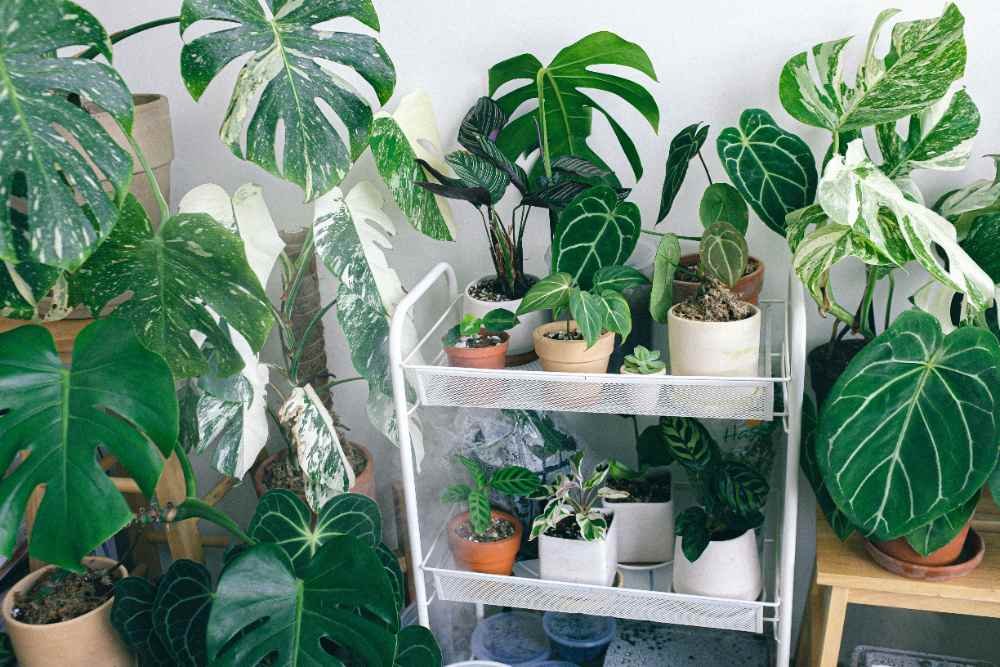
Choosing between a Monstera and a Philodendron comes down to your personal design aesthetic, your available indoor space, and your lighting setup.
If you have a bright room with tall ceilings, an empty corner near a window, and the desire to train a dramatic climber up a moss pole, Monstera deliciosa is hard to beat. Watching each new leaf unfurl with bigger splits and more complex hole patterns is one of the most rewarding experiences in indoor gardening.
If you prefer a wide, architectural plant with cascading, deeply ruffled fronds that will sit on a low plant stand or wide floor planter, a self-heading philodendron like Thaumatophyllum bipinnatifidum makes a bold visual statement.
Alternatively, if you are looking for easy-care trailing greenery for bookshelves, hanging baskets, or lower-light areas, classic vining philodendrons are practically indestructible.
Both plants bring timeless tropical beauty, resilience, and lush green energy into any living space. Whichever you choose, providing well-draining soil, adequate ambient light, and mindful watering will keep your tropical centerpiece thriving for decades to come.