
Healthy garden soil is an intricate ecosystem built on minerals, organic matter, water, and beneficial microbes. Among the essential nutrients required for strong plant growth, calcium plays a fundamental structural role that gardeners often overlook until problems appear on leaves or developing fruit.
Understanding how to evaluate your soil and provide the right source of calcium ensures your plants develop resilient cell walls, robust root systems, and disease resistance. Adding calcium involves matching the correct amendment to your soil pH and specific garden needs.
The Role of Calcium in Plant Growth
Calcium is classified as a secondary macronutrient, but plants require it in quantities comparable to primary nutrients like nitrogen and potassium.
It serves as the building block for plant cell walls by binding with pectin to form calcium pectate. This compound acts like mortar between bricks, providing rigidity, stability, and physical protection against fungal spores and bacterial pathogens.
In addition to structural support, calcium acts as a crucial secondary messenger in plant cell signaling, regulating enzyme activity, hormone movement, and carbohydrate transport throughout tissues.
Essential Plant Macronutrients
Plants need a balanced supply of essential elements to thrive throughout their life cycle. Macronutrients are needed in relatively large amounts compared to trace micronutrients.- Primary macronutrients: Nitrogen, Phosphorus, Potassium
- Secondary macronutrients: Calcium, Magnesium, Sulfur
- Structural elements: Carbon, Hydrogen, Oxygen
Understanding Soil Testing and Cation Exchange
Before spreading any amendments across your garden beds, conducting a comprehensive soil test is the most responsible first step. A standard lab soil test provides clear insight into current nutrient reserves, organic matter percentages, and your soil pH level.
A test also measures Cation Exchange Capacity, often abbreviated as CEC. This metric indicates your soil’s capacity to hold onto positively charged nutrient ions, called cations, such as calcium, magnesium, potassium, and sodium.
Clay soils and soils rich in decomposed organic matter have high CEC ratings. They store ample nutrients and resist rapid leaching after heavy rainfall or irrigation. Sandy soils with low CEC struggle to retain calcium cations, which wash out rapidly into the subsoil.
The Direct Link Between Soil pH and Calcium
Soil pH significantly dictates how much calcium is chemically available for root absorption. In acidic soils with a pH below 6.0, calcium ions often become tightly locked or leach out, leaving plants starved even if trace minerals are present.
Neutral to slightly alkaline soils (pH 6.5 to 7.5) naturally hold higher levels of available calcium. However, if pH climbs above 8.0, calcium can bind with phosphorus to form insoluble compounds, creating simultaneous nutrient lockouts.
Balancing your soil pH into the optimal 6.2 to 6.8 range ensures roots can freely absorb calcium dissolved in soil water.
Identifying Calcium Deficiency in Foliage
Because calcium is an immobile nutrient within plant tissues, plants cannot redistribute it from mature foliage to new growth. Consequently, deficiency symptoms always appear first on the youngest leaves, growing shoots, and emerging buds.- Distorted, cupped, or hooked new leaves
- Stunted shoot tips and death of terminal buds
- Chlorosis and necrosis along leaf margins
- Brittle stems and fragile foliage that snaps easily under light wind
Recognizing Root Symptoms of Low Calcium
The root system suffers severe consequences when calcium availability declines. Calcium is mandatory for cell elongation at the very tips of feeder roots.
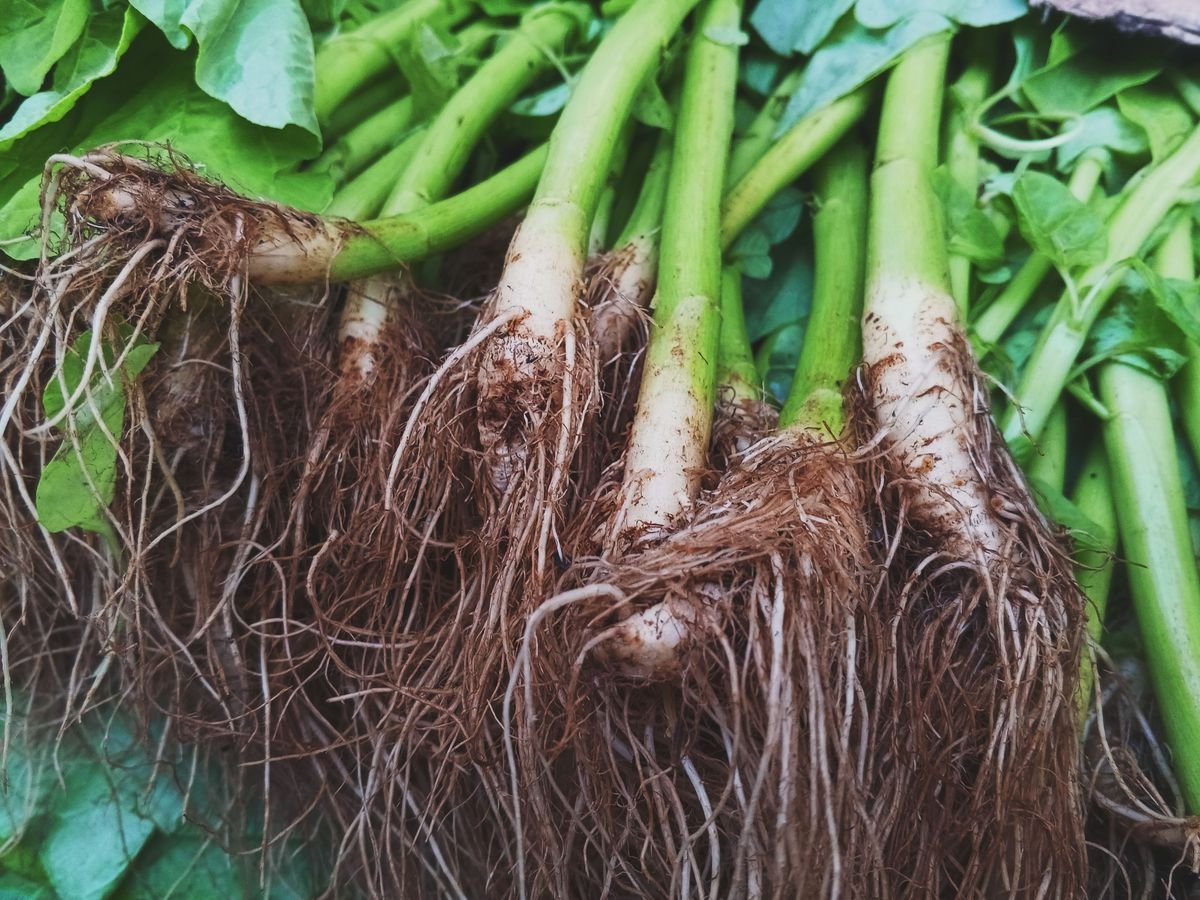
Deficient roots stop expanding and become short, stubby, and abnormally branched. Over time, the outer cell walls weaken, allowing soil-borne pathogens like Pythium and Phytophthora to invade easily.
Affected root systems frequently turn dark brown or black, lose their firm texture, and feel slimy to the touch, drastically impairing the plant’s ability to take up moisture.
Damage to Fruits and Vegetables
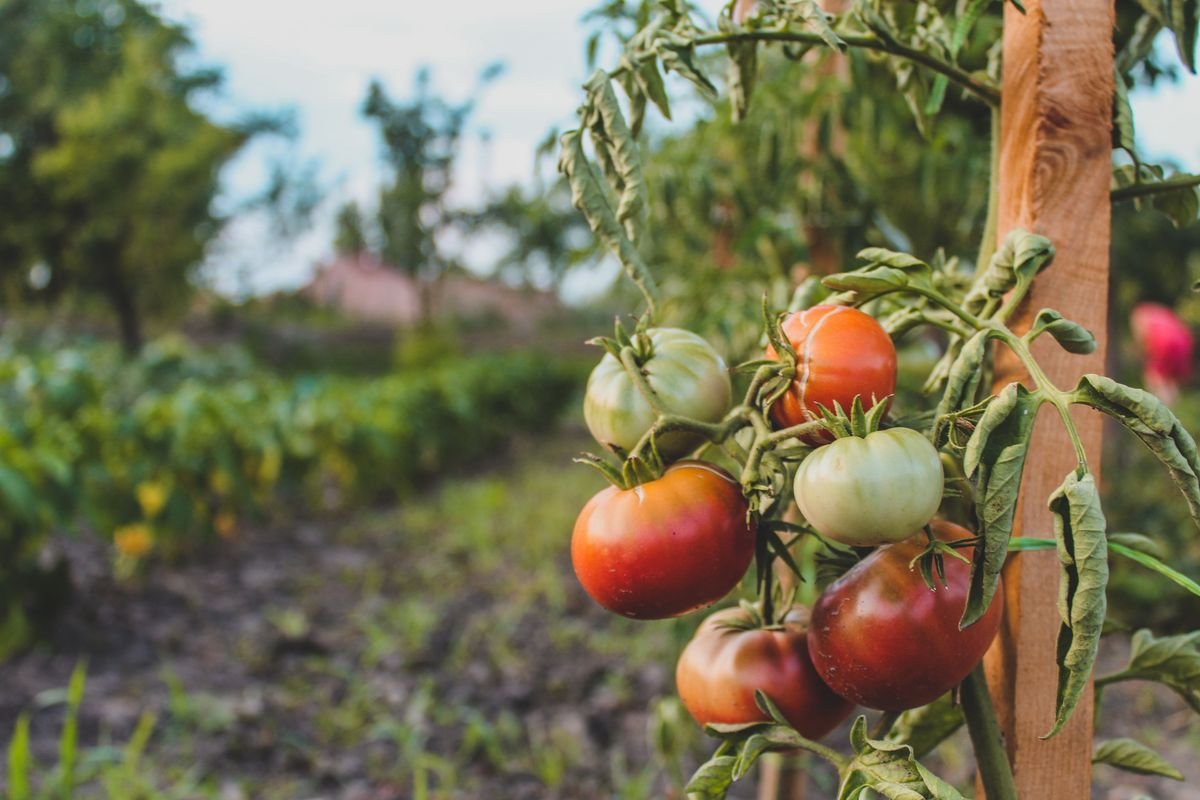
Fruit development demands high volumes of calcium during the rapid cell division stage shortly after pollination. If calcium cannot reach the developing fruit tissues quickly enough, localized cell breakdown occurs.
Blossom end rot is the most famous example of this issue. It creates sunken, leathery black patches on the bottoms of tomatoes, peppers, eggplants, and squash.
Fruit trees also suffer from calcium shortages. Apples frequently develop bitter pit, characterized by small, sunken brown depressions beneath the fruit skin that ruin flavor and storage quality.
Why Inconsistent Watering Causes Problems
A widespread misconception among home gardeners is that blossom end rot always indicates a total lack of calcium in the soil. In reality, irregular watering practices are often the true culprit.
Calcium moves through the plant almost exclusively via transpiration stream in the xylem vessels. When soil dries out completely, water uptake stops, halting calcium transport to the fast-growing fruit tips.
Overwatering causes similar issues by saturating root zones and suffocating root hairs, preventing efficient nutrient uptake. Keeping soil consistently moist through regular deep watering and thick organic mulch solves many apparent calcium issues without added fertilizers.
Methods for Adding Calcium to Your Soil
Once you confirm that your soil genuinely lacks calcium or has an unfavorable pH, you can choose from several organic and mineral amendments.
Your choice should depend on your target soil pH, how quickly your plants need relief, and your soil type.
Applying amendments correctly during soil preparation in autumn or early spring gives the materials sufficient time to break down and integrate into the root zone.
Using Agricultural Lime
Agricultural lime, made from mined and pulverized calcitic limestone, consists primarily of calcium carbonate. It is one of the most cost-effective and dependable ways to raise soil calcium while reducing excessive soil acidity.
Calcitic lime breaks down steadily over several months as it reacts with natural soil acids. It is an outstanding choice for acidic soils with a pH below 6.0.
To apply lime, broadcast the fine powder or granules evenly across your garden beds and work it into the top six inches of soil, ideally several weeks before planting.
Applying Dolomitic Lime
Dolomitic lime contains both calcium carbonate and a substantial percentage of magnesium carbonate. It raises soil pH while replenishing both vital secondary nutrients simultaneously.
This amendment should be reserved strictly for soils that your lab test proves are deficient in both calcium and magnesium.
Avoid using dolomitic lime if your soil already contains high levels of magnesium. Excessive magnesium can tighten heavy clay soils and hinder potassium uptake.
Amending Soil With Gypsum
Gypsum, chemically known as calcium sulfate dihydrate, is a remarkable soil amendment because it supplies abundant calcium and sulfur without altering soil pH.
If your soil is already at an ideal neutral pH (6.5 to 7.0) but requires supplementary calcium, gypsum is the premier amendment to choose.
Gypsum is also widely valued for improving the physical structure of heavy clay soils affected by excess sodium. Calcium ions displace sodium on clay particles, encouraging the soil to aggregate into loose, crumbly granules that drain efficiently.
Crushed Oyster and Clam Shells
Crushed oyster, clam, and crab shells provide a slow-release, renewable source of calcium carbonate that suits organic gardening methods perfectly.
Shell products release their mineral content gradually over several growing seasons, creating a gentle, long-term buffering effect on soil acidity.
Coarsely crushed shells also improve aeration in heavy garden beds, while crab and lobster meal provide the added bonus of chitin, which feeds soil microorganisms that suppress parasitic root nematodes.
Adding Hardwood Ashes to Garden Beds
Clean hardwood ashes gathered from wood stoves or fire pits contain significant amounts of calcium carbonate along with potassium, magnesium, and trace minerals.
Wood ash is highly alkaline and dissolves much faster than standard limestone, meaning it raises soil pH rapidly. You must use it with caution and in modest quantities.
Never apply wood ash around acid-loving crops like blueberries, azaleas, or potatoes, as raising the pH around potatoes encourages common potato scab infections.
Using Soft Rock Phosphate
Soft rock phosphate, sometimes referred to as colloidal phosphate, is a natural mineral product containing roughly twenty percent calcium alongside phosphorus and micronutrients.
It releases its nutrient payload slowly over two to four years, making it an excellent investment for perennial flower beds, fruit orchards, and new vegetable plots.
Because it does not cause rapid shifts in soil pH, soft rock phosphate works well across a broad range of soil conditions, fostering strong early root establishment and heavy flowering.
Bone Meal Applications
Bone meal is an organic amendment manufactured from steamed and finely ground animal bones. It delivers an outstanding combination of slow-release phosphorus and bioavailable calcium.
It is an ideal amendment when planting flowering bulbs, root vegetables like carrots and beets, and newly transplanted fruiting crops like tomatoes.
Keep in mind that bone meal requires active soil microbial life and a soil pH below 7.0 to break down efficiently and release its calcium to surrounding plant roots.
The Truth About Eggshells in Garden Beds
Tossing raw, unground eggshells directly into garden soil is a very popular gardening tip, but it rarely produces the swift results gardeners expect. Eggshells are composed almost entirely of calcium carbonate, but their dense, crystallized structure breaks down very slowly in typical soil environments.
Whole or coarsely crushed shells can take multiple years to decompose and deliver usable calcium ions to nearby plants.
To make eggshell calcium immediately useful, clean and bake the shells, pulverize them into an ultra-fine flour using a coffee grinder, and steep the powder in household vinegar to extract water-soluble calcium acetate.
Fast Relief With Foliar Calcium Sprays
When fruiting crops show active signs of blossom end rot or rapid shoot dieback, soil amendments may work too slowly to save the current harvest. Foliar sprays provide emergency relief by delivering calcium straight to active plant tissues.
Products formulated with calcium chloride, calcium chelate, or calcium nitrate can be diluted with clean water and misted directly onto stems, developing fruit, and the undersides of leaves.
Apply foliar sprays early in the morning or near dusk when temperatures are cool to minimize evaporation and avoid leaf burn.
Step by Step Guide to Applying Calcium
Adding calcium successfully involves a clear, calculated sequence of actions to protect plant health and avoid creating nutrient imbalances.- Perform a comprehensive lab soil test to check pH, CEC, and existing calcium reserves.
- Select the amendment that matches your target pH (lime to raise pH, gypsum to maintain pH).
- Measure the recommended quantity precisely based on your square footage.
- Distribute the material evenly across the soil surface and incorporate it into the top few inches.
- Water the garden bed deeply to initiate mineral breakdown and start nutrient movement into the root zone.
Maintaining Long Term Soil Nutrient Balance
Managing calcium is not a one-time chore, but an ongoing component of good soil stewardship. Incorporating abundant organic compost on an annual basis continually improves cation exchange capacity and buffers against severe nutrient swings.
Pair balanced soil fertility with uniform moisture control through drip irrigation and natural mulching practices.
By monitoring plant growth, understanding your soil chemistry, and applying the proper calcium sources, you create resilient garden soil that supports bountiful, disease-free harvests year after year.
Does Your Garden Need Calcium Support?
Answer 4 quick questions to see your result