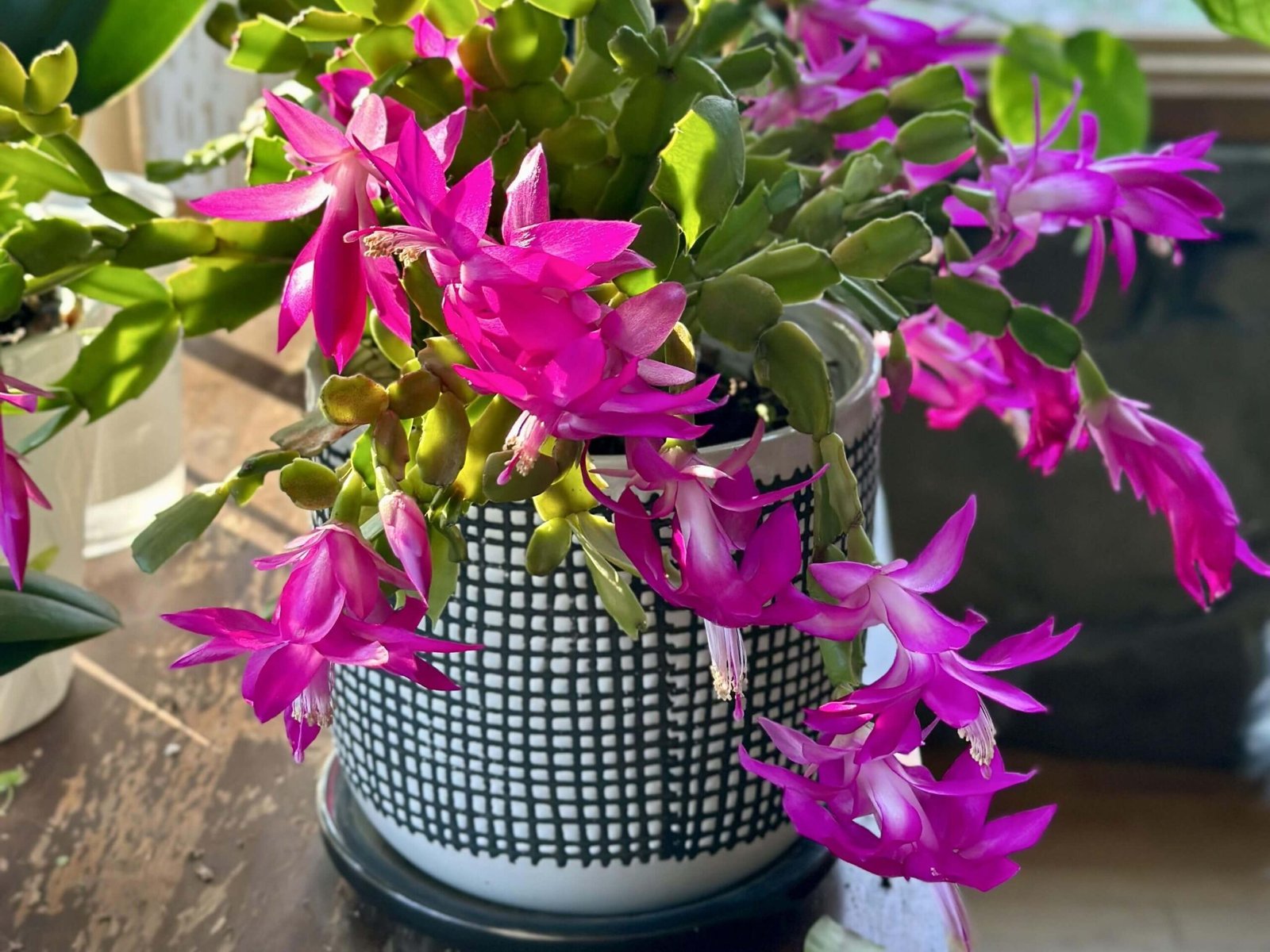
Bringing floral color into your living space does not require a commercial greenhouse or years of gardening experience.
While many houseplants are prized strictly for their leafy green silhouettes, a select group of resilient flowering taxa thrives in regular residential conditions.
Here are twelve dependable, easy-to-grow flowering houseplants that deliver vibrant blossoms, paired with essential care guidelines to help them flourish.
1. African Violet (Saintpaulia ionantha)
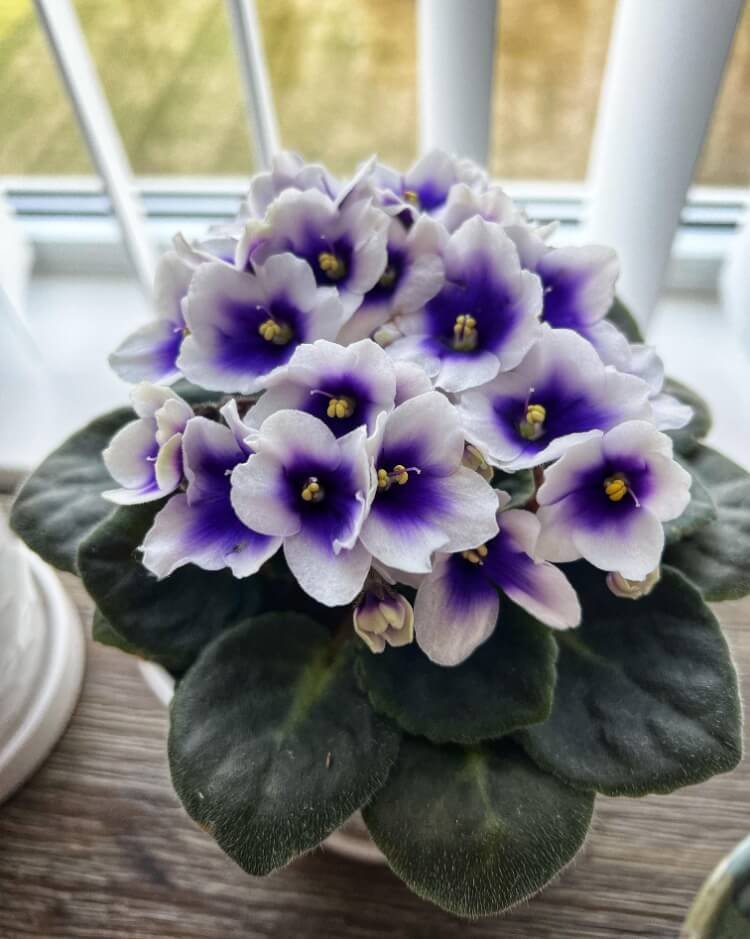
African violets are classic indoor bloomers that reward basic care with nearly continuous color. Their thick, fuzzy leaves grow in a compact rosette and frame tight clusters of velvety blossoms.
These charming plants thrive in bright, filtered sunlight away from harsh afternoon rays. Because cold water can spot their delicate foliage, sub-irrigating from the saucer keeps both leaves and roots healthy. They are also completely safe for curious cats and dogs.
- Light: Bright, filtered indirect light or gentle morning sun; thrives under fluorescent light
- Water: Water from the bottom when the topsoil feels dry; avoid splashing cold water on the foliage
- Bloom Time: Year-round with consistent indoor light
- Colors: Purple, violet, lavender, pink, magenta, and pure white
- Mature Size: 6 to 10 inches tall, 6 to 12 inches wide
2. Moth Orchid (Phalaenopsis Cultivars)
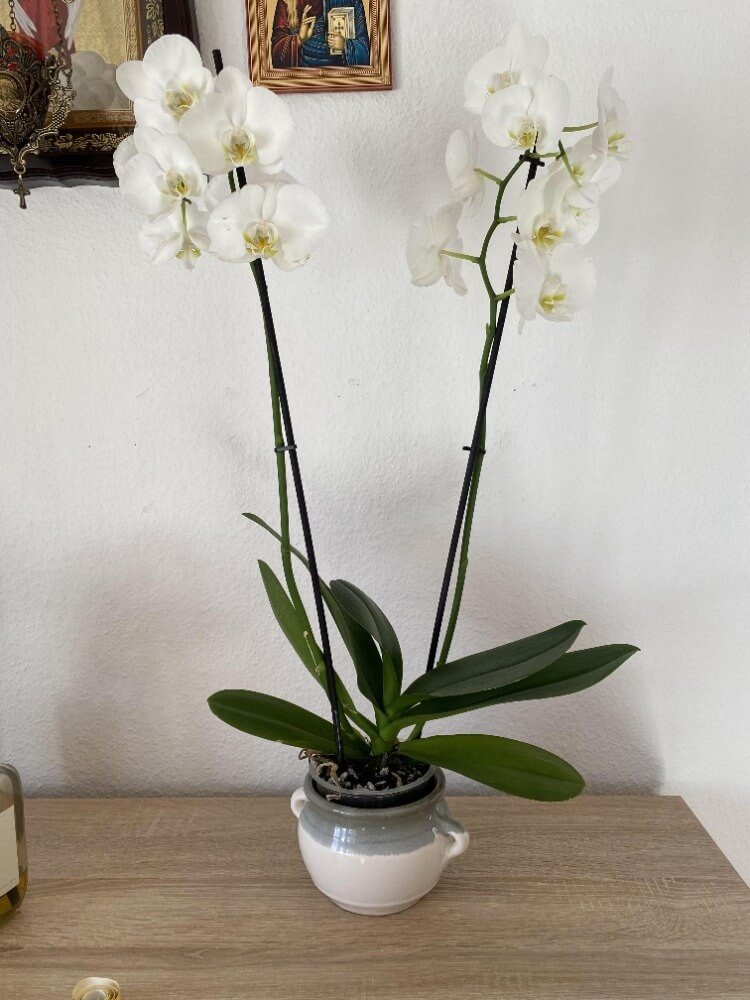
Moth orchids are far tougher and more adaptable than their fragile appearance suggests. They produce graceful, arching spikes crowded with wide, petal-rich flowers that stay open for months at a time.
Unlike common soil-dwelling plants, their roots absorb air and moisture through open fir bark chips. A gentle drop in night temperature during autumn easily prompts fresh flower spikes to emerge for winter. In addition, pet owners can display them anywhere because they are entirely non-toxic.
- Light: Bright, filtered indirect light; east or shaded south window
- Water: Soak thoroughly when root velamen turns silvery-gray, then allow the bark to dry out
- Bloom Time: Late winter through spring; individual blooms persist 8 to 16 weeks
- Colors: White, pink, purple, yellow, peach, and speckled patterns
- Mature Size: 12 to 24 inches tall, 12 to 18 inches wide
3. Holiday Cactus (Schlumbergera spp.)
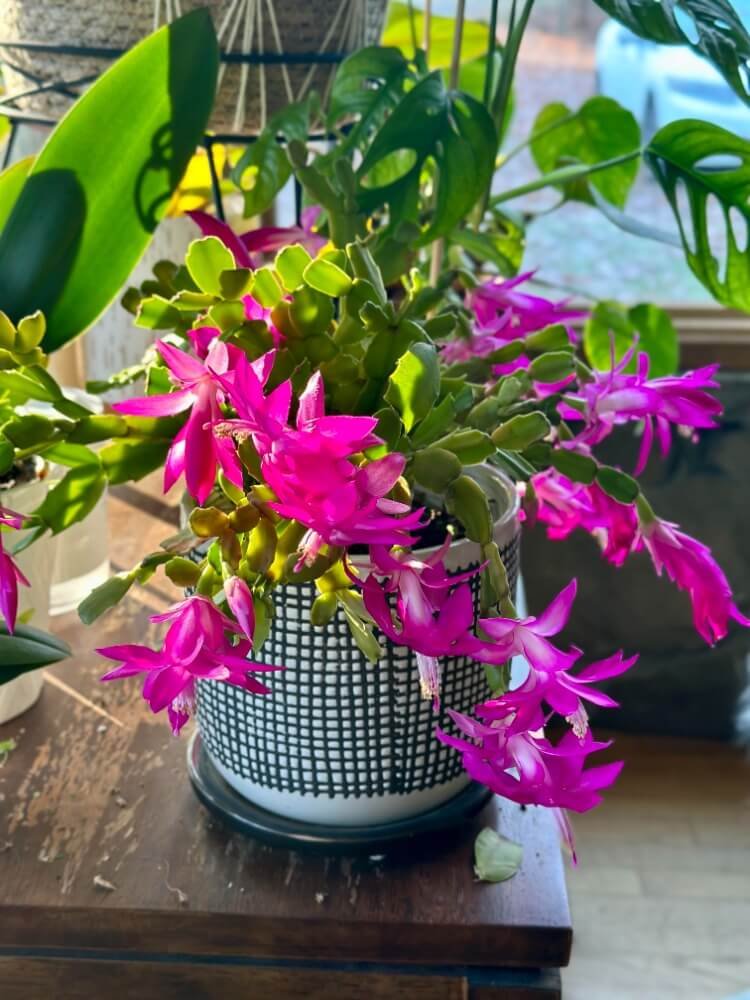
Holiday cacti (Schlumbergera truncata and Schlumbergera x buckleyi) provide bursts of festive color during late autumn and winter. Instead of true leaves, they form dense chains of flattened green stems that produce exotic, tubular flowers at their tips.
Native to coastal Brazilian cloud forests, they prefer moist potting soil rather than desert-dry conditions. Giving them cool autumn evenings and long, uninterrupted nights reliably coaxes out heavy sets of flower buds. They are long-lived heirloom plants and completely harmless to household pets.
- Light: Moderate to bright indirect light; avoid direct, scorching sun
- Water: Keep lightly moist; water thoroughly when the top inch of mix dries out
- Bloom Time: November through January
- Colors: Crimson red, bright pink, fuchsia, coral, and creamy white
- Mature Size: 10 to 12 inches tall, 12 to 24 inches wide
4. Peace Lily (Spathiphyllum wallisii)
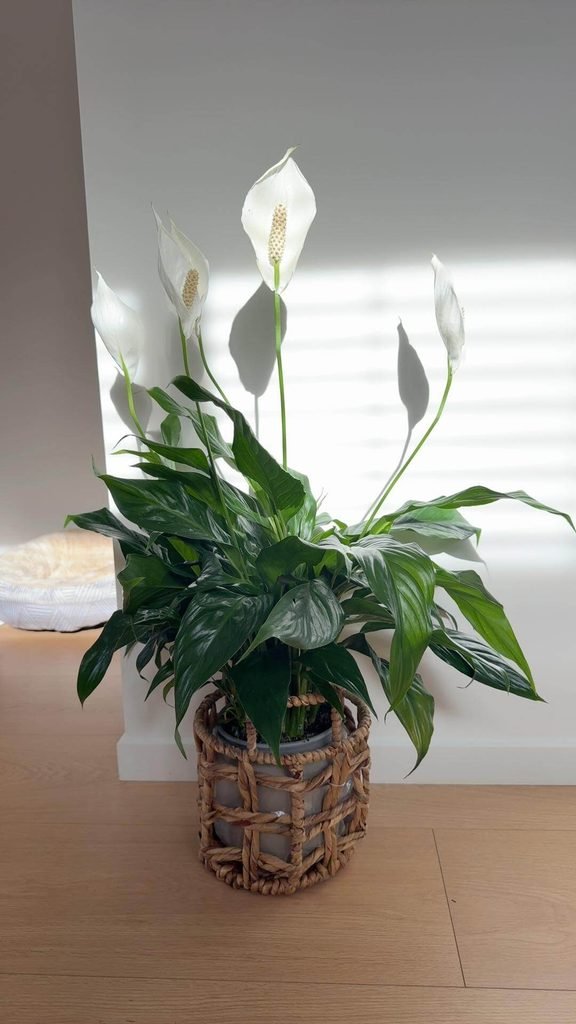
Peace lilies are famous for their lush, deep-green foliage and elegant white floral structures. Each bloom consists of a textured central spadix wrapped by a clean, petal-like spathe.
They tolerate low-light corners where most bloomers struggle, though medium to bright indirect light sparks far more flowers. The leaves droop noticeably when thirsty, serving as a clear visual reminder to water. Keep this plant away from pets, however, as its foliage contains insoluble calcium oxalate crystals.
- Light: Low to bright indirect light; brighter filtered light yields more flowers
- Water: Water when the top inch dries; avoid letting the pot sit in standing water
- Bloom Time: Spring and summer, occasionally reblooming in autumn
- Colors: Crisp white to creamy ivory, aging to soft green
- Mature Size: 1 to 3 feet tall, 1 to 3 feet wide
5. Flamingo Flower (Anthurium andraeanum)
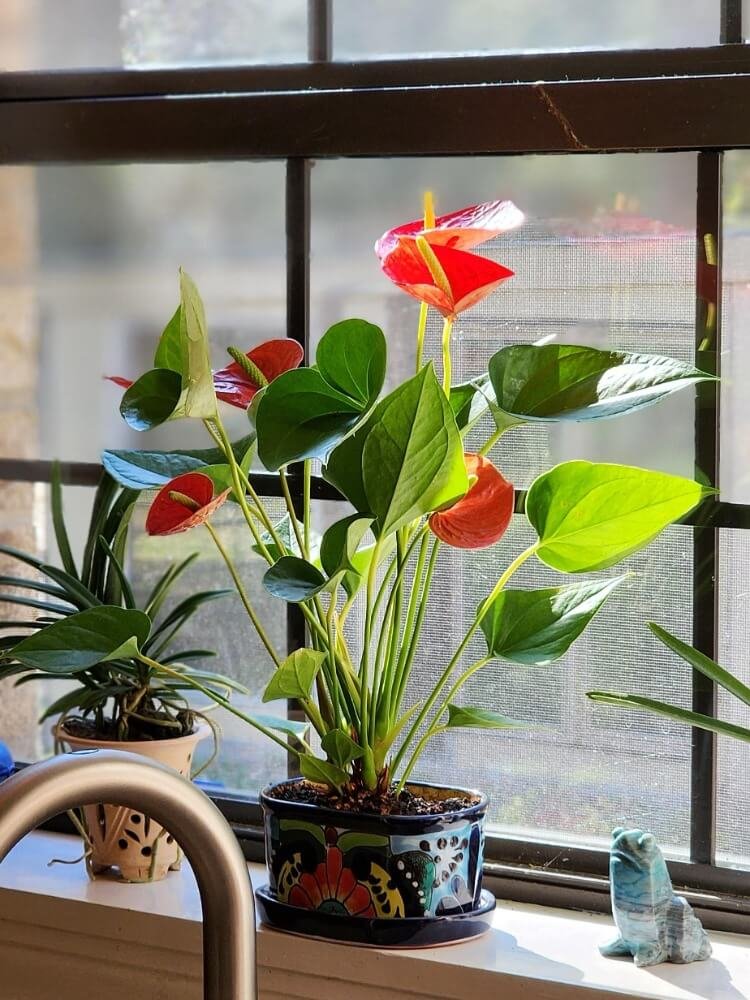
Flamingo flowers offer some of the longest-lasting floral displays among popular houseplants. Their showy spathes look like shiny, lacquered hearts accented by an upright, pale spadix.
These tropical plants appreciate warm temperatures, gentle humidity, and bright, indirect light near a window. Grown in a coarse, breathable potting mix, they produce a continuous parade of new spathes across all four seasons. Because their tissues contain calcium oxalates, keep them out of reach of nibbling cats and dogs.
- Light: Bright, indirect light; protect from direct midday solar heat
- Water: Allow the top inch or two of potting mix to dry before watering deeply
- Bloom Time: Nearly year-round with adequate warmth and bright light
- Colors: Scarlet red, pink, coral, white, and deep burgundy
- Mature Size: 12 to 18 inches tall, 10 to 15 inches wide
6. Flaming Katy (Kalanchoe blossfeldiana)
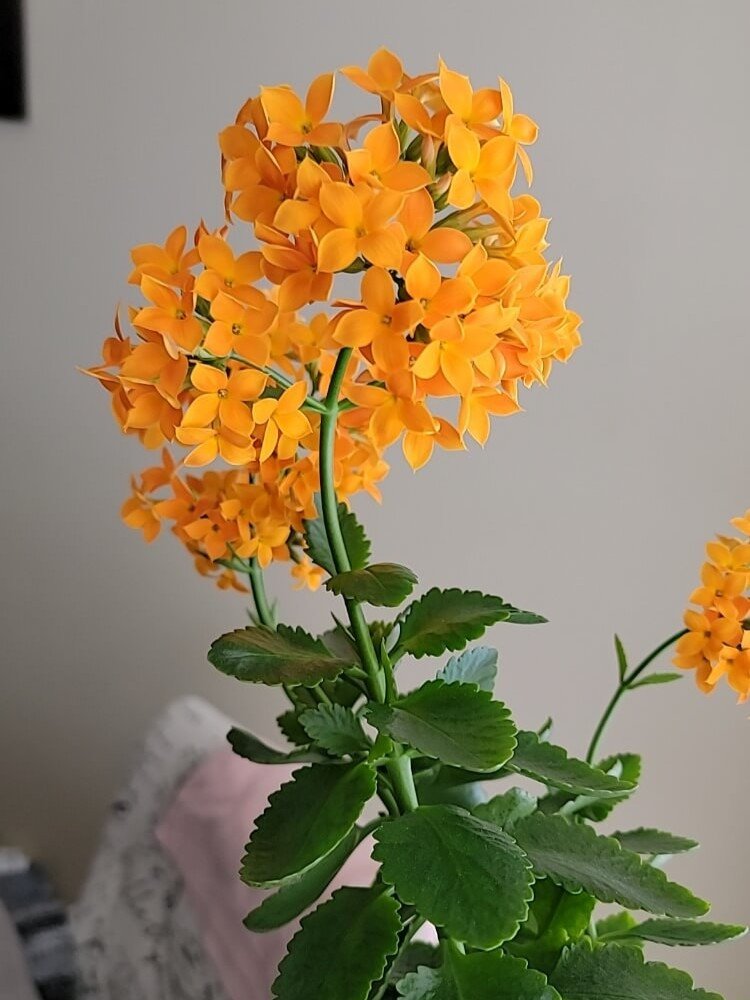
Flaming Katy is a cheerful succulent that pairs low maintenance with dense bouquets of colorful blossoms. Its thick, scalloped green leaves store moisture efficiently, forgiving the occasional missed watering.
The plant thrives on bright windowsills and requires thorough drying between waterings to keep roots sound.
Like holiday cacti, it forms fresh flower buds when given long nights and short days in autumn. Because its tissues contain cardiac glycosides, place it safely out of reach of domestic pets.
- Light: Bright light with direct morning sun; south or east window
- Water: Water deeply only when the soil mix dries out almost completely
- Bloom Time: Late winter through spring; individual flower clusters last 6 to 8 weeks
- Colors: Crimson, orange, golden yellow, pink, and pure white
- Mature Size: 8 to 12 inches tall, 8 to 12 inches wide
7. Crown of Thorns (Euphorbia milii)
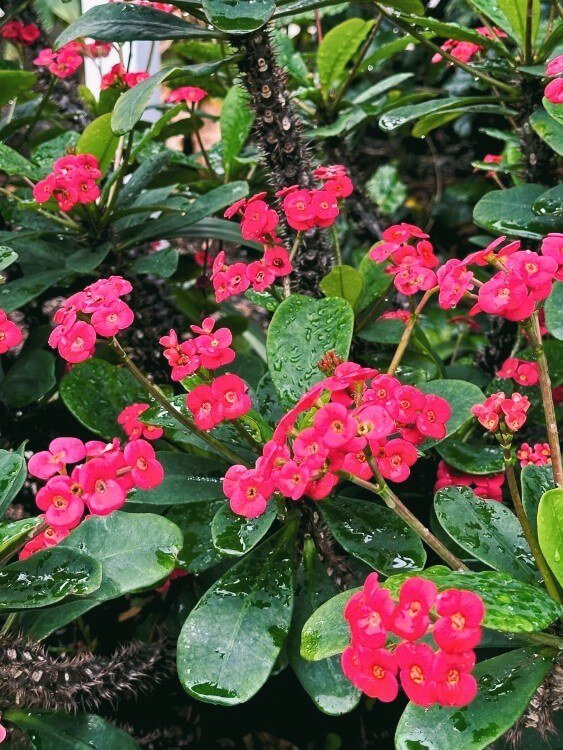
Crown of Thorns is an exceptionally hardy semi-succulent shrub that loves basking in direct sunlight. While its woody branches bear sharp protective spines, they are balanced by lush green leaves and clusters of delicate floral bracts.
This resilient plant can stay in bloom nearly year-round when positioned in a sunny window.
It shrugs off dry indoor air and needs only moderate watering once the soil dries. Handle it carefully and wear gloves when pruning, as its milky white sap can irritate skin and cause harm to pets.
- Light: Direct sunlight; at least 3 to 4 hours of strong sun daily
- Water: Allow the top half of the soil to dry out before watering again
- Bloom Time: Nearly year-round with ample direct sunlight
- Colors: Vibrant red, salmon, soft pink, yellow, and cream
- Mature Size: 12 to 24 inches tall, 10 to 18 inches wide indoors
8. Wax Plant (Hoya carnosa)
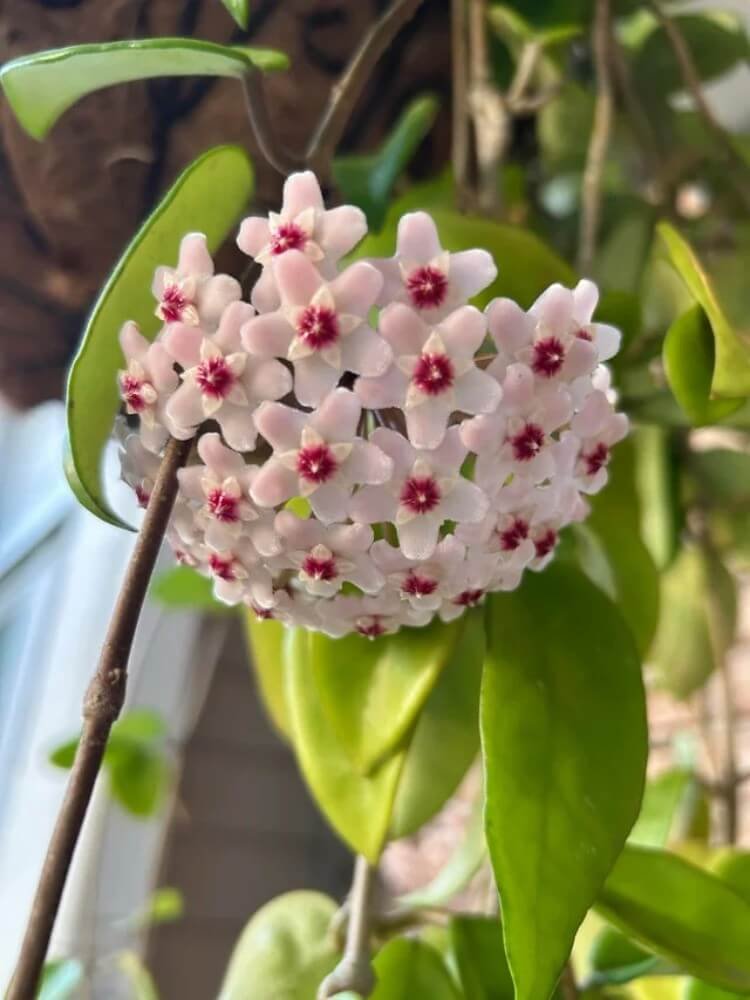
The wax plant is an easy-care trailing vine prized for its thick, leathery foliage and porcelain-like flower clusters. Each rounded umbel contains dozens of fragrant, star-shaped blossoms that release a delicate scent in the evening.
Hoyas grow happily cascading from hanging planters or climbing a small indoor trellis in bright indirect light. Let the chunky potting mix dry out between waterings to protect its epiphytic root system.
Never snip off the spent flower spurs, as new blooms appear on the exact same stems year after year. They are also entirely non-toxic to cats and dogs.
- Light: Bright, indirect light with 2 to 4 hours of gentle morning sun
- Water: Allow the potting medium to dry almost completely before watering thoroughly
- Bloom Time: Late spring through summer and early autumn
- Colors: Porcelain white, soft blush, and pale pink with red center stars
- Mature Size: Vines trail 3 to 6 feet long; compact when trained on a trellis
9. Purple Shamrock (Oxalis triangularis)
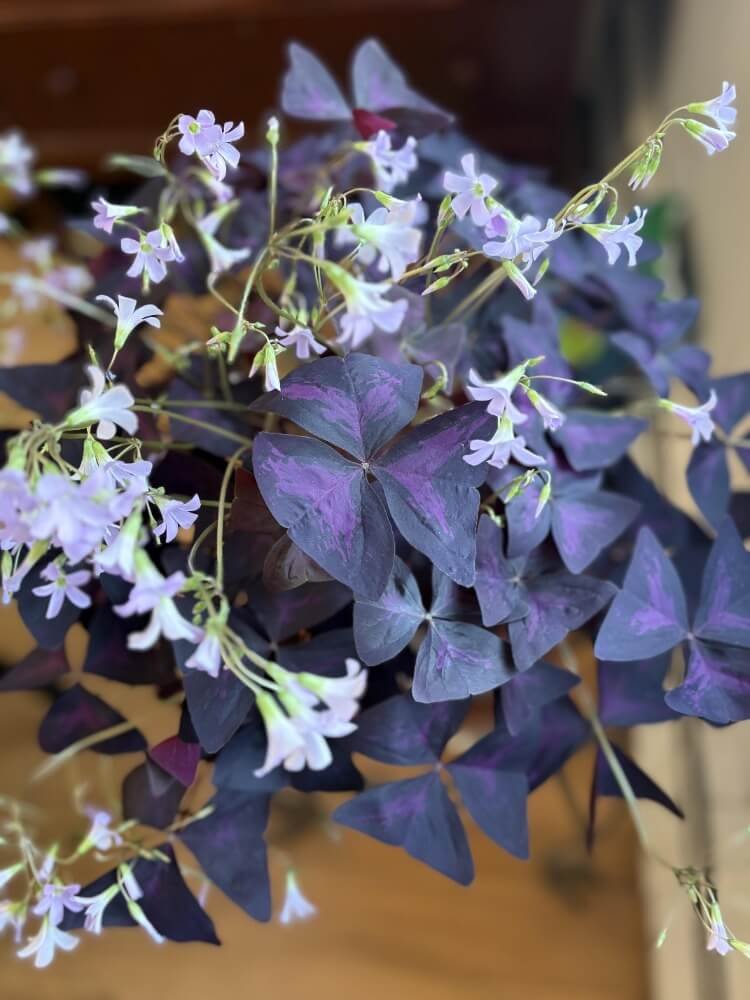
Purple shamrock offers dramatic visual contrast with its deep-violet foliage and nodding, star-like flowers. Its triangular leaflets fold down neatly at sunset and open wide toward morning light.
This tuberous plant thrives in bright, indirect light and prefers light watering whenever the surface soil dries out.
If the foliage dies back after several months of growth, simply let the tubers rest in a cool spot for a few weeks before watering again. Keep the plant out of reach of companion animals due to its oxalic acid content.
- Light: Bright, indirect light with gentle morning sun
- Water: Water when the top inch of soil feels dry; pause watering during dormant periods
- Bloom Time: Repeatedly from spring through autumn
- Colors: Soft lavender, pale pink, and white
- Mature Size: 6 to 12 inches tall, 10 to 18 inches wide
10. Lipstick Plant (Aeschynanthus radicans)
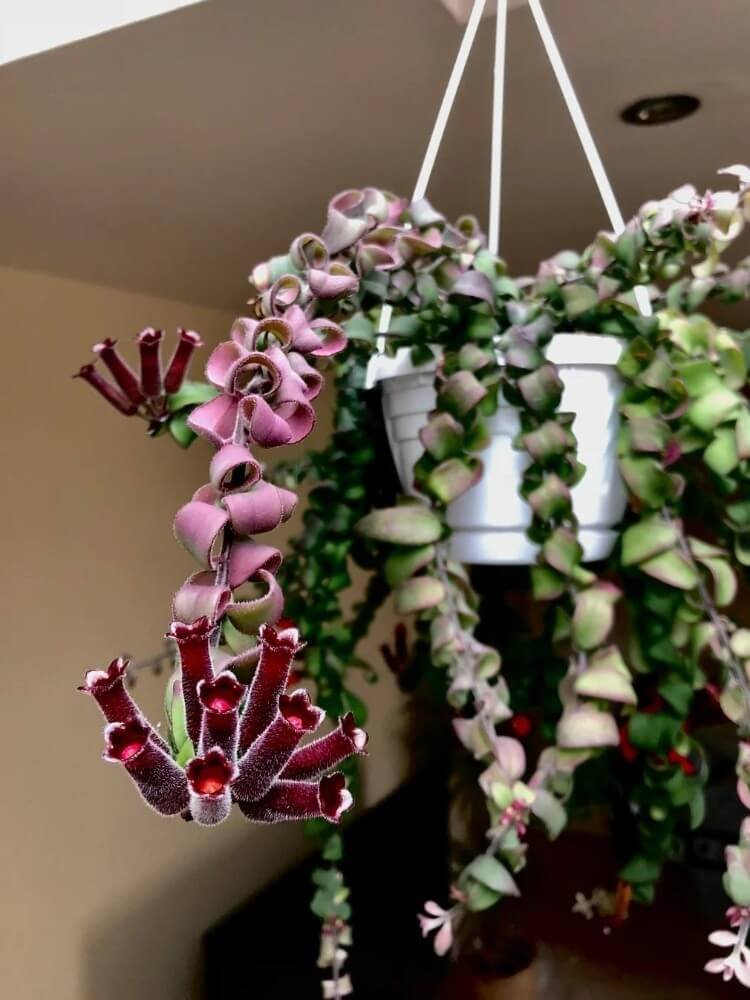
The lipstick plant is a cascading tropical vine celebrated for its dramatic, jewel-toned blossoms. Its fiery red tubular petals push out from dark, maroon calyces, resembling mini tubes of lipstick.
This trailing epiphyte flourishes in warm, humid rooms with filtered light, making it a great addition to bright kitchens or bathrooms.
An open, bark-heavy potting blend gives the roots plenty of airflow while preventing excess water buildup. It is also non-toxic to household pets, making it a safe choice for hanging baskets.
- Light: Bright, filtered indirect sunlight; protect from direct hot rays
- Water: Keep lightly moist; allow the top inch to dry between waterings
- Bloom Time: Late spring through summer and early autumn
- Colors: Scarlet red with yellow throat accents and dark maroon calyces
- Mature Size: Stems trail 1 to 3 feet long, spreading 12 to 18 inches wide
11. Cape Primrose (Streptocarpus Hybrids)
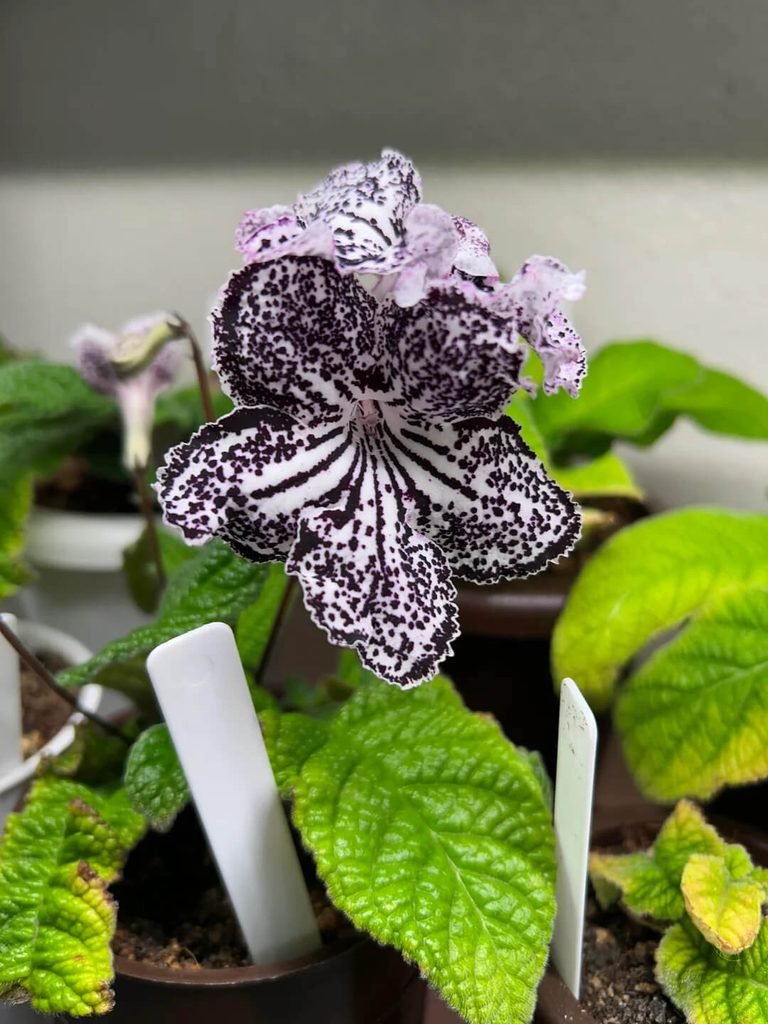
Cape primrose is a close cousin of the African violet that produces large, trumpet-shaped flowers. Its blooms rise above a rosette of quilted, strap-like leaves, showing off detailed veining along the throat.
This cool-tolerant bloomer thrives near east-facing windows, avoiding excessive afternoon heat.
Snipping away spent flower stems at the base directs the plant’s energy into producing new buds for up to ten months every year. Best of all, Cape primrose is verified as non-toxic to both dogs and cats.
- Light: Bright, indirect light; ideal near an east-facing window
- Water: Water when the top inch or two of potting mix feels dry; avoid soaking the leaf base
- Bloom Time: Spring through late autumn, often blooming for up to 10 months
- Colors: Purple, royal blue, lavender, magenta, pink, and white with yellow nectar guides
- Mature Size: 8 to 12 inches tall, 10 to 15 inches wide
12. Scarlet Star Bromeliad (Guzmania lingulata)
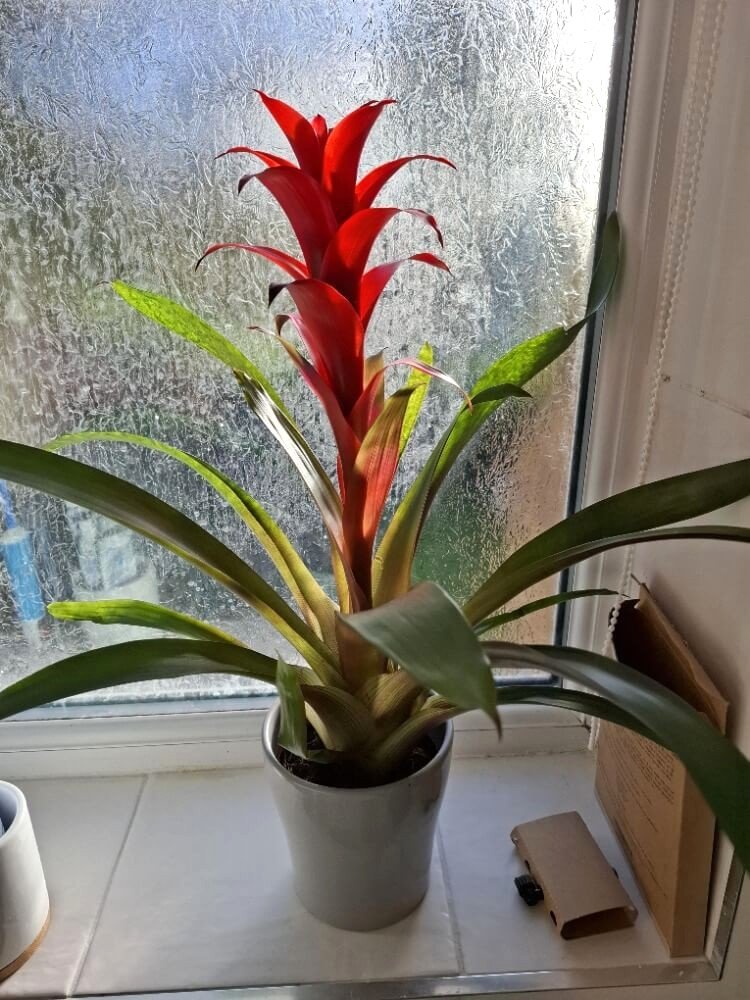
Scarlet star bromeliads provide bold, architectural greenery with minimal daily fuss. While the true blossoms are small, they are held within an upright star of fiery red or orange bracts that stay colorful for up to six months.
In nature, these epiphytes collect rainfall in a central leaf cup, which can be kept lightly filled with fresh water indoors.
Their root system functions mostly as an anchor, needing only a light bark mix and occasional watering. Completely non-toxic to cats and dogs, they make a striking centerpiece for any bright tabletop.
- Light: Medium to bright indirect light; avoid direct sunlight
- Water: Keep the central leaf cup filled with fresh water; keep the potting medium lightly moist
- Bloom Time: Colorful flower bracts persist for 3 to 6 months
- Colors: Scarlet red, bright orange, and golden yellow
- Mature Size: 12 to 24 inches tall, 12 to 18 inches wide