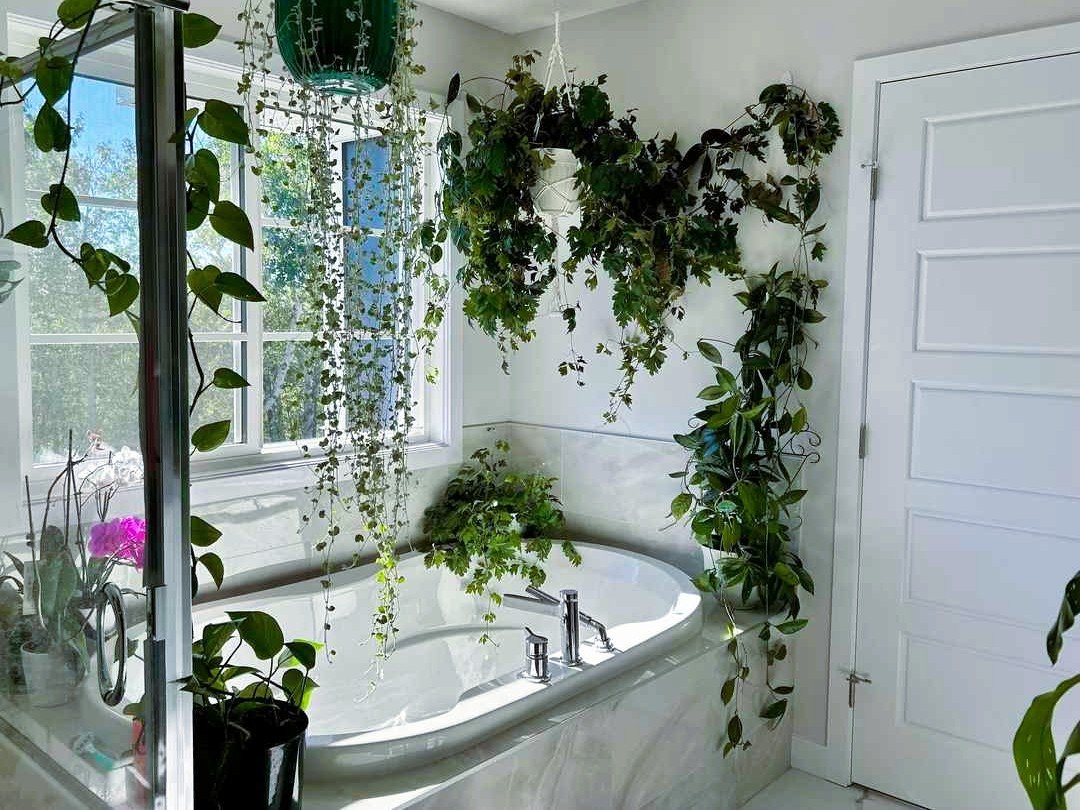
Steamy showers and enclosed layouts make residential bathrooms prime territory for trapped moisture, damp air, and unwanted mildew.
While houseplants cannot fully replace an electric exhaust fan or a condenser dehumidifier, certain species naturally capture water vapor through specialized leaves and aerial roots.
Placing these greenery solutions around your bathroom balances ambient humidity, helps trap airborne mold spores, and turns your space into an indoor sanctuary.
Here are moisture-absorbing plants ideal for bathrooms, complete with care instructions to inspire your decor.
1. Boston Fern (Nephrolepis exaltata)
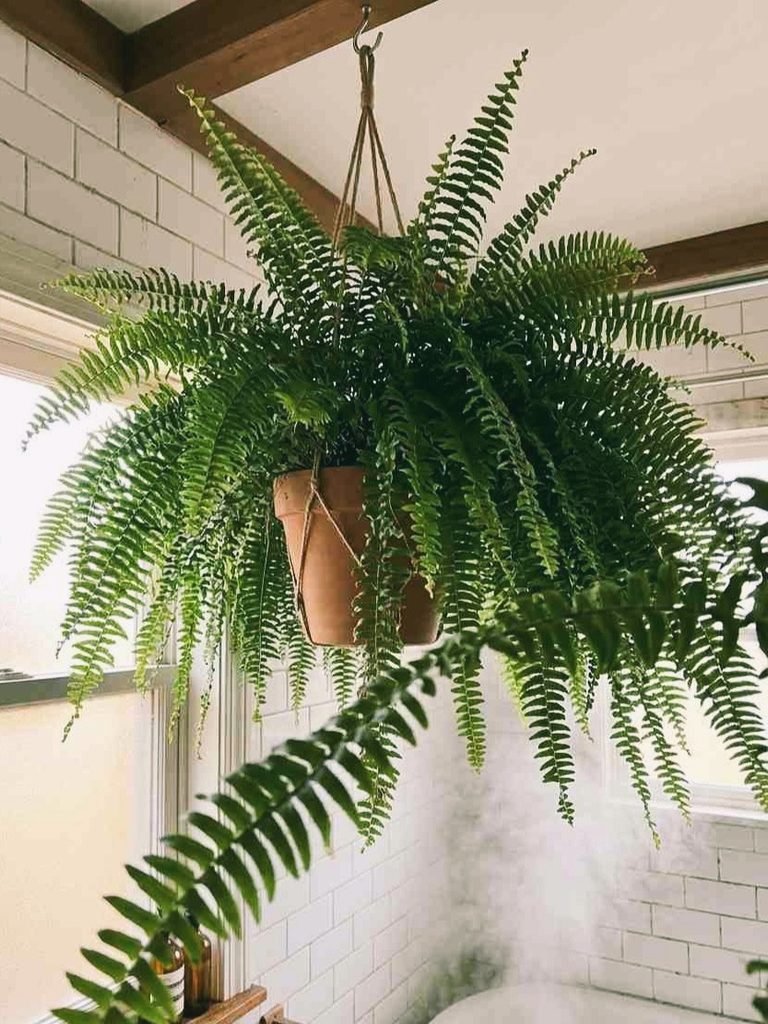
The Boston Fern is one of the most classic humidity loving houseplants for bathrooms. Its feathery fronds create an expansive surface area that condenses airborne steam and absorbs moisture directly through its leaves.
This plant thrives in moist environments where post-shower steam helps prevent crispy foliar tips.
It prefers consistent moisture in the soil, but bathroom humidity reduces how frequently you need to water it. Additionally, this species is completely non-toxic and safe around dogs and cats.
- Light: Medium to bright indirect light
- Water: Keep soil consistently moist but never soggy
- Mature Size: 2 to 3 feet tall, 2 to 3 feet wide
- Pet Safety: Non-toxic to cats and dogs
2. Air Plant (Tillandsia spp.)
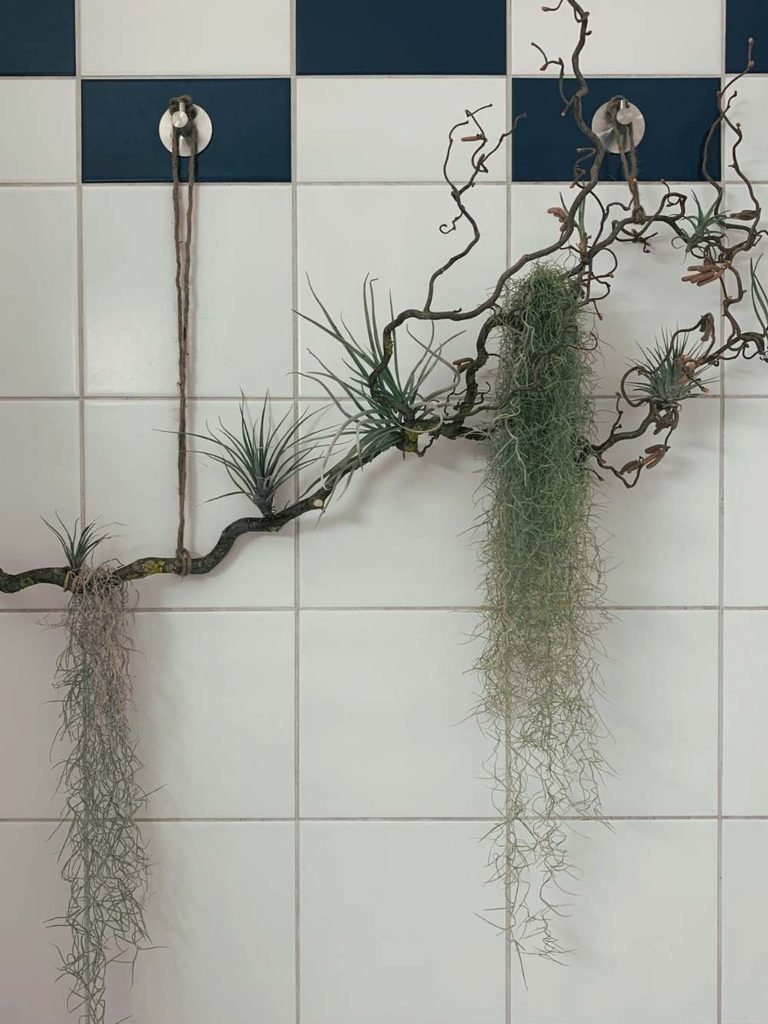
Air Plants do not need any soil to thrive because they absorb all moisture through their foliage. They use microscopic scale structures called trichomes to capture steam and ambient bathroom water vapor.
Daily shower routines provide nearly all the hydration these epiphytic plants need to stay healthy.
You only need to give them an occasional water dip when the humidity drops. They are also entirely harmless to curious pets.
- Light: Bright indirect to moderate light
- Water: Mist with shower steam, soak in water every 2 to 3 weeks
- Mature Size: 2 to 6 inches tall, 2 to 5 inches wide
- Pet Safety: Non-toxic to cats and dogs
3. Moth Orchid (Phalaenopsis spp.)
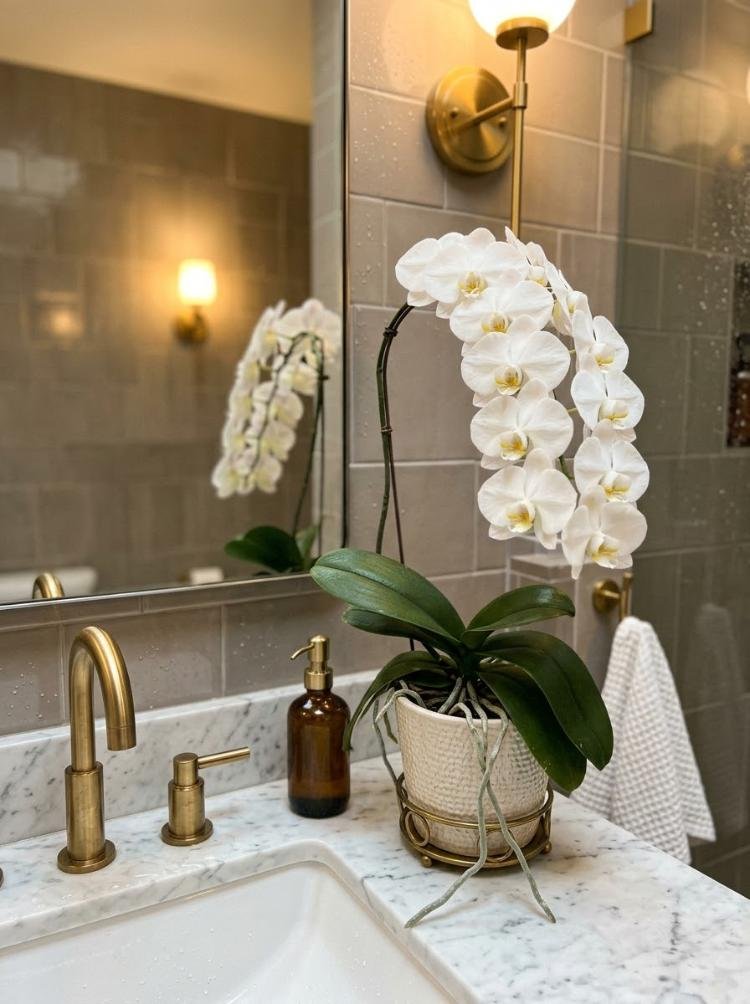
The Moth Orchid brings tropical beauty and smart moisture management to bright bathrooms. Its silvery aerial roots are coated in a spongy layer that drinks in shower steam and humidity from the air.
When exposed to humid bathroom air, the roots turn from silver to green as they hydrate.
The plant needs coarse bark rather than potting soil so its roots can breathe freely between showers. Best of all, moth orchids are non-toxic to household pets.
- Light: Low to medium filtered light
- Water: Allow aerial roots to turn silvery-gray before watering
- Mature Size: 1 to 2 feet tall, 1 foot wide
- Pet Safety: Non-toxic to cats and dogs
4. Bird’s Nest Fern (Asplenium nidus)
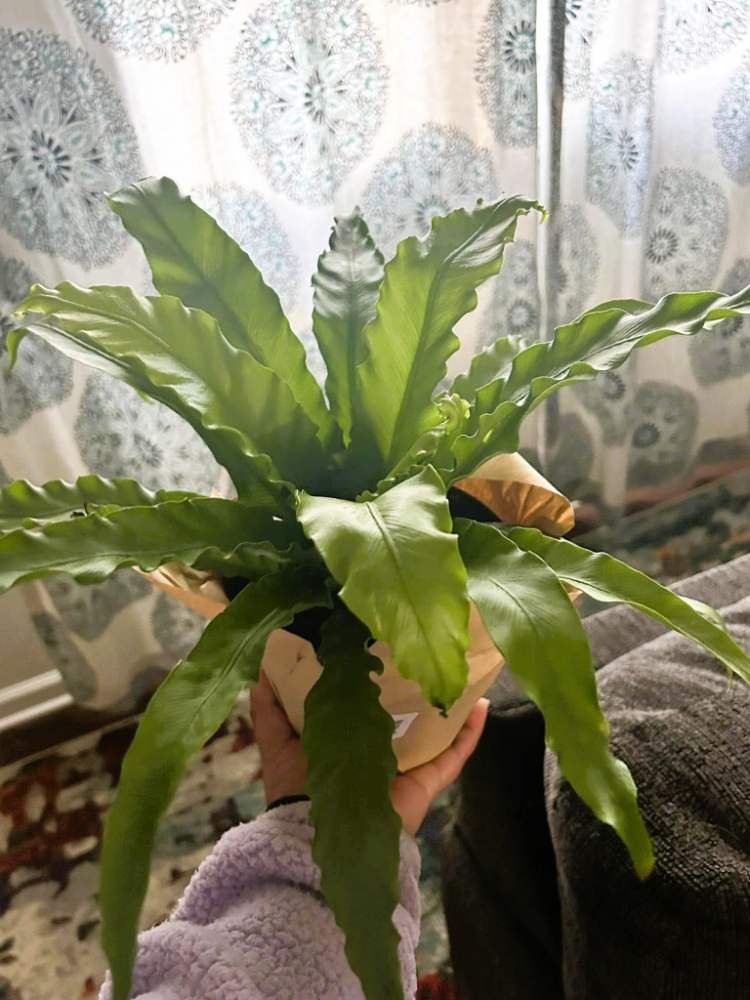
Bird’s Nest Ferns feature broad, crinkled fronds that naturally channel condensation straight toward their root zone. This architectural shape allows the plant to collect ambient bathroom moisture with exceptional ease.
Unlike delicate feathery ferns, its thick and leathery leaves handle bathroom conditions without dropping brown foliage. Keep the soil evenly moist while watering only around the rim of the pot to protect the central crown. This lush tropical plant is completely non-toxic to cats and dogs.
- Light: Low to medium indirect light
- Water: Keep soil moderately moist, avoid pouring water into the center rosette
- Mature Size: 1 to 2 feet tall, 1 to 2 feet wide
- Pet Safety: Non-toxic to cats and dogs
5. Spider Plant (Chlorophytum comosum)
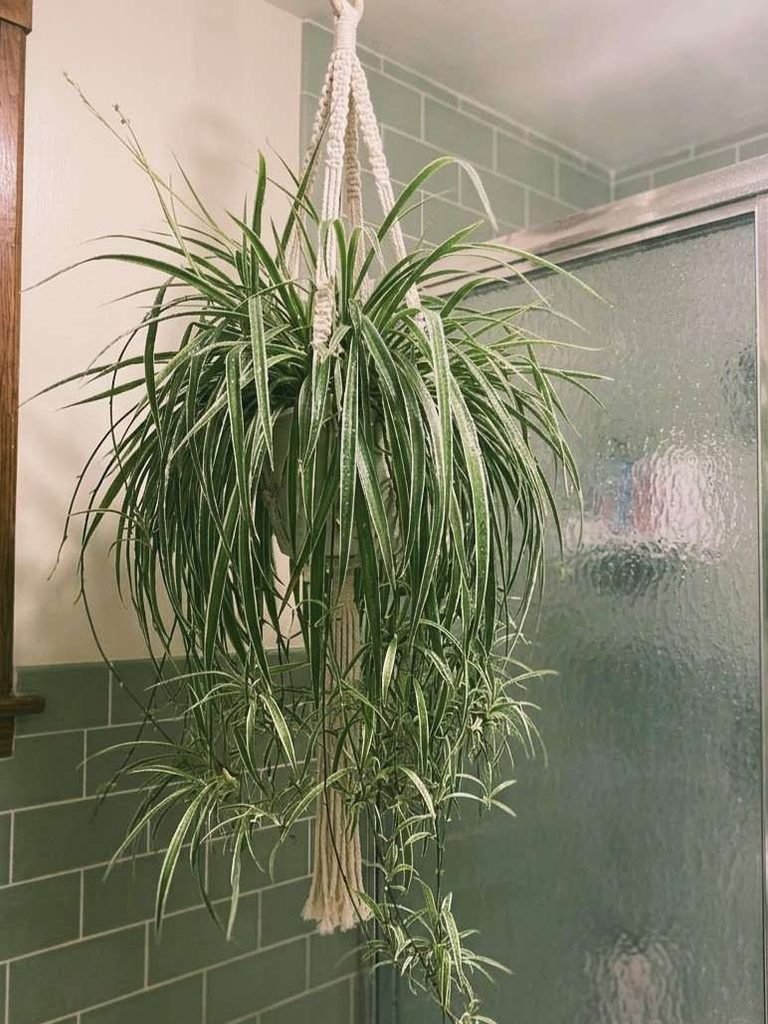
The Spider Plant is a tough, adaptable plant that thrives on bathroom steam. Its arching ribbon foliage catches ambient humidity, guiding water droplets downward into thick moisture-storing roots.
It tolerates low light, irregular care, and humidity fluctuations better than most indoor plants.
Because it cascades gracefully, it is easy to hang from shower curtain rods or ceiling hooks. This resilient grower is also verified non-toxic for four-legged companions.
- Light: Low to bright indirect light
- Water: Allow the top 1 to 2 inches of soil to dry between waterings
- Mature Size: 1 to 2 feet tall, 2 to 3 feet wide
- Pet Safety: Non-toxic to cats and dogs
6. Peace Lily (Spathiphyllum wallisii)
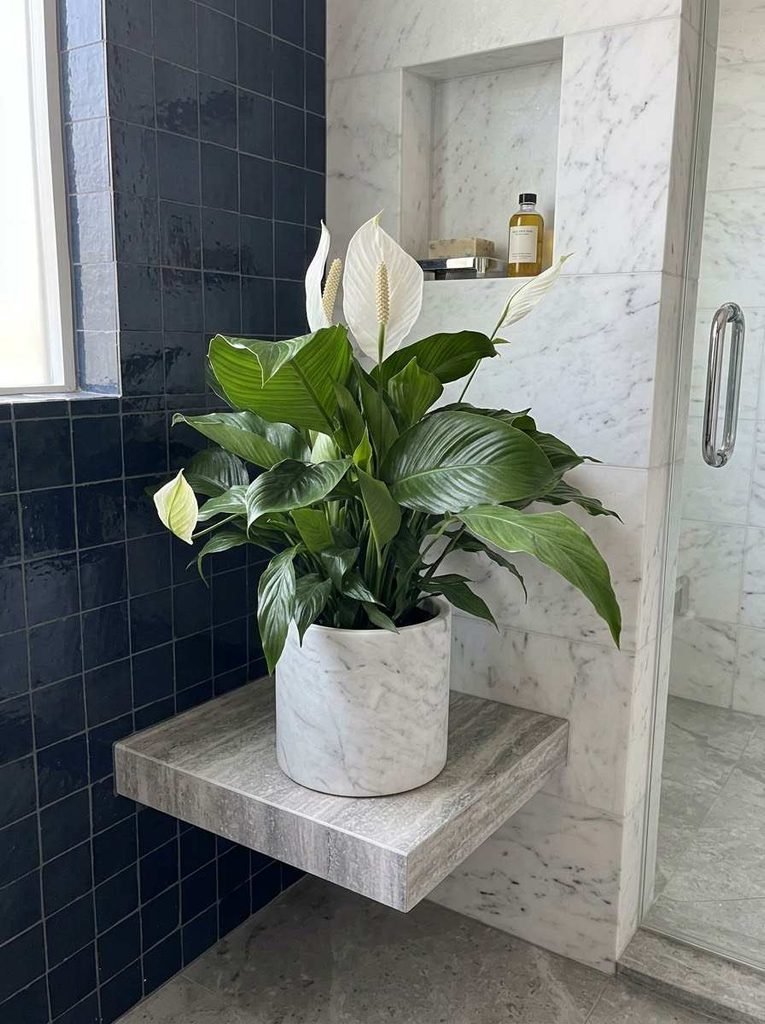
The Peace Lily uses its large, glossy leaves to absorb steam and collect airborne moisture. It also helps filter bathroom air by trapping airborne mold spores and airborne toxins.
This plant does well in dimmer bathrooms that lack expansive windows. If the room gets dry, the leaves droop dramatically to tell you when it needs extra hydration.
Keep it out of reach of pets, however, because its leaves contain irritating calcium oxalate crystals.
- Light: Low to medium indirect light
- Water: Water when the top inch of soil feels slightly dry
- Mature Size: 1 to 3 feet tall, 1 to 3 feet wide
- Pet Safety: Toxic to cats and dogs, keep elevated
7. English Ivy (Hedera helix)
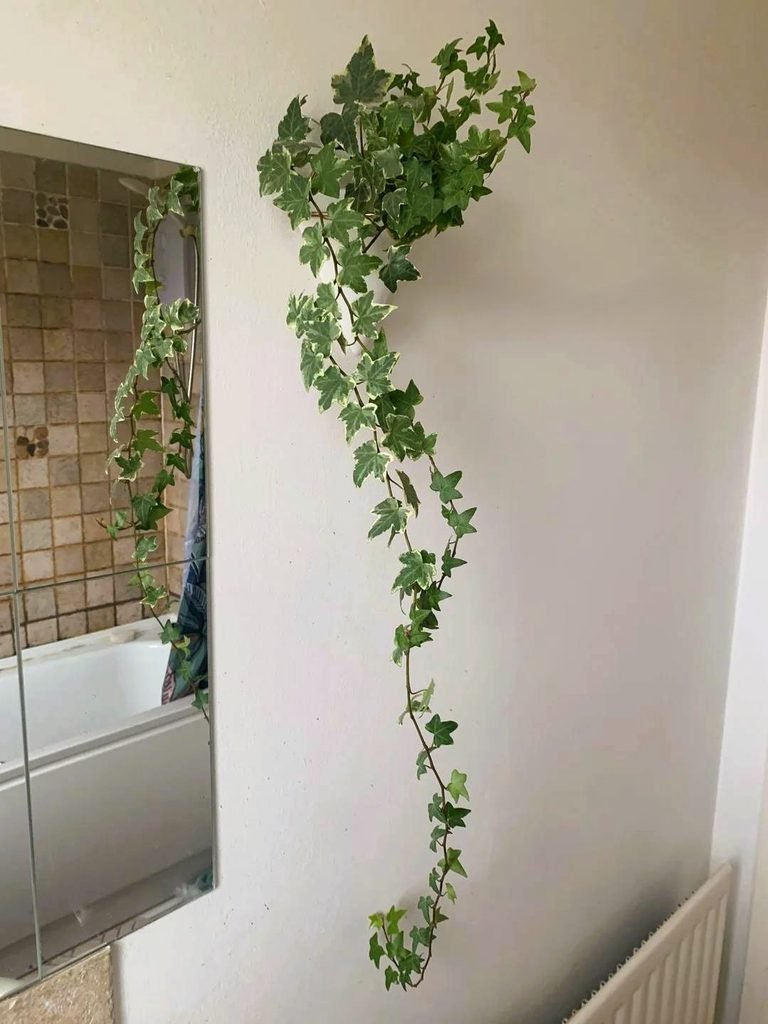
English Ivy is a vigorous climbing vine that excels in humid conditions. Its dense foliage intercepts post-shower humidity and actively captures airborne mold spores.
The plant adapts readily to moderate indoor lighting and enjoys the warm steam produced by daily bathing.
You can place it on a high shelf or in a ceiling basket to let the stems trail down freely. Because it is toxic to pets, keeping it hung high up also protects your dogs and cats.
- Light: Medium to bright indirect light
- Water: Allow the top inch of soil to dry out between waterings
- Mature Size: Trails 3 to 6 feet indoors
- Pet Safety: Toxic to cats and dogs, place out of reach
8. Snake Plant (Dracaena trifasciata)
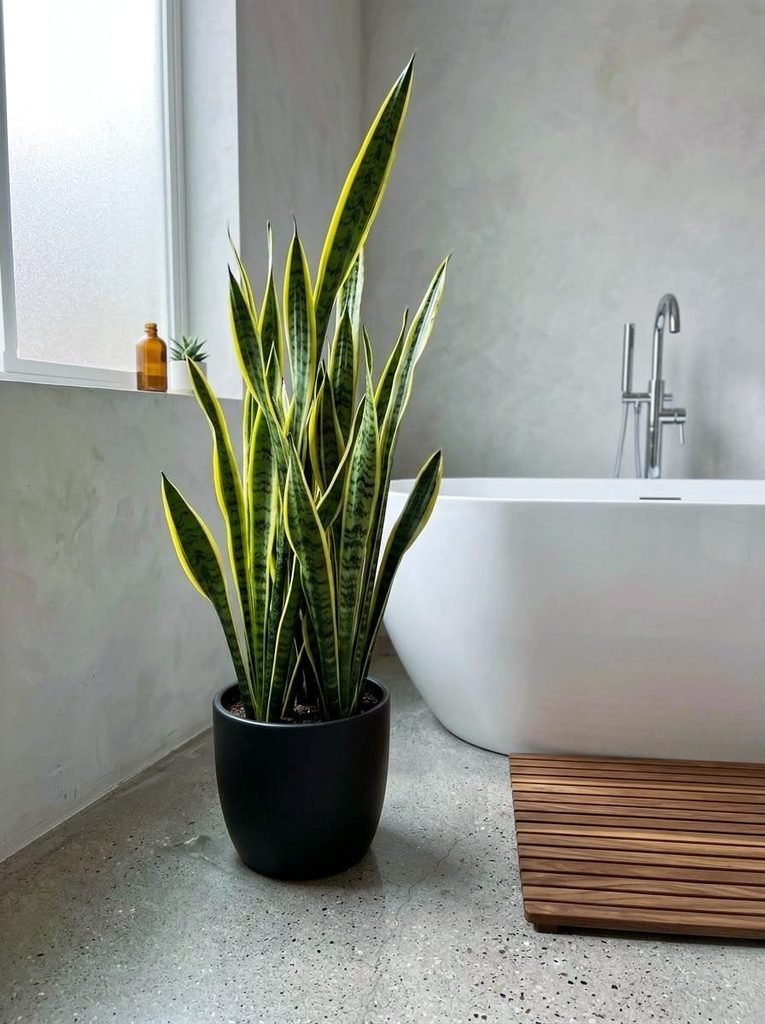
The Snake Plant absorbs humidity primarily during the night through special evening gas exchange.
Its upright, waxy sword-like leaves collect daytime shower condensation and guide it down toward the base.
This is virtually the most indestructible houseplant you can choose for a low-light bathroom. It needs very little water and can go weeks between waterings in a humid room. It contains saponins, so keep curious pets from nibbling on the foliage.
- Light: Low to bright indirect light
- Water: Allow the potting mix to dry out completely between waterings
- Mature Size: 2 to 4 feet tall, 1 to 2 feet wide
- Pet Safety: Toxic to cats and dogs, do not ingest
Quick Styling and Placement Tips
- Near the Shower: Mount soilless epiphytes like Tillandsia or potted Boston Ferns along curtain rails or high shower perimeters where rising steam collects fastest. Avoid direct streams of hot soapy water.
- On Vanity Sinks: Display compact pots of Moth Orchids or Bird’s Nest Ferns on trays where they receive gentle ambient steam without taking up too much counter room.
- High Shelves for Safety: Always place toxic species like English Ivy or Peace Lilies on elevated hanging brackets or high window sills to keep foliage away from inquisitive pets.