Houseplant enthusiasts often find themselves drawn to both Anthurium and Alocasia for their striking foliage and sculptural growth. Because both genera belong to the same overarching botanical family, they share several visual and physiological traits that can easily confuse beginners.
Despite their similarities, these two tropical plants have completely different growth habits, stem structures, flower morphologies, and seasonal needs. Understanding how to distinguish an Anthurium from an Alocasia will help you choose the right plant for your indoor environment and provide the specialized care each one requires.
Understanding the Anthurium Genus
Anthurium represents the largest genus in the Araceae family, comprising well over one thousand recognized species. Native to the wet tropical forests of Central and South America, as well as parts of the Caribbean, these plants are celebrated for their incredible diversity.
While some Anthurium varieties are cultivated for their vivid, long-lasting floral spathes, many others are prized entirely for their velvety, deeply veined foliage. In their natural habitats, they thrive in warm, sheltered microclimates beneath dense forest canopies.
Key Characteristics of Anthurium
Anthuriums are characterized by their thick, fleshy aerial roots and distinct growth patterns. In the wild, most anthurium species grow either as epiphytes on the bark of trees or as semi-epiphytes rooted in fallen organic debris.
Their leaves often feature a pronounced sinus, which is the cleft where the petiole attaches to the leaf blade. Depending on the species, their leaf surfaces range from thick and leathery to soft and iridescently velvety.
Popular Anthurium Species to Know
Several Anthurium species have become beloved staples in modern indoor plant collections. Each offers a unique display of foliage or vibrant bracts.
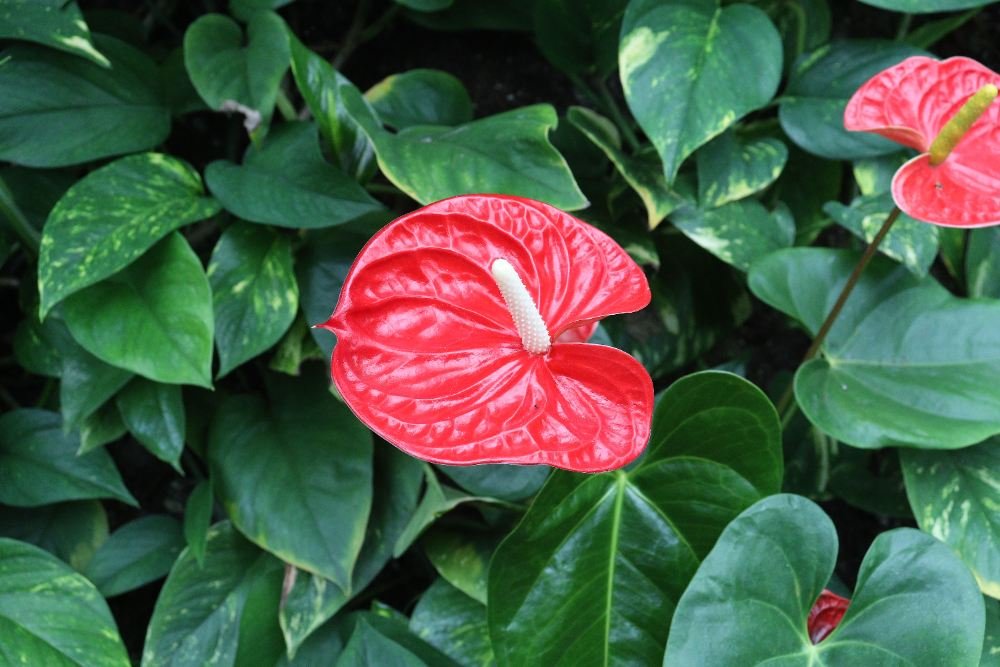
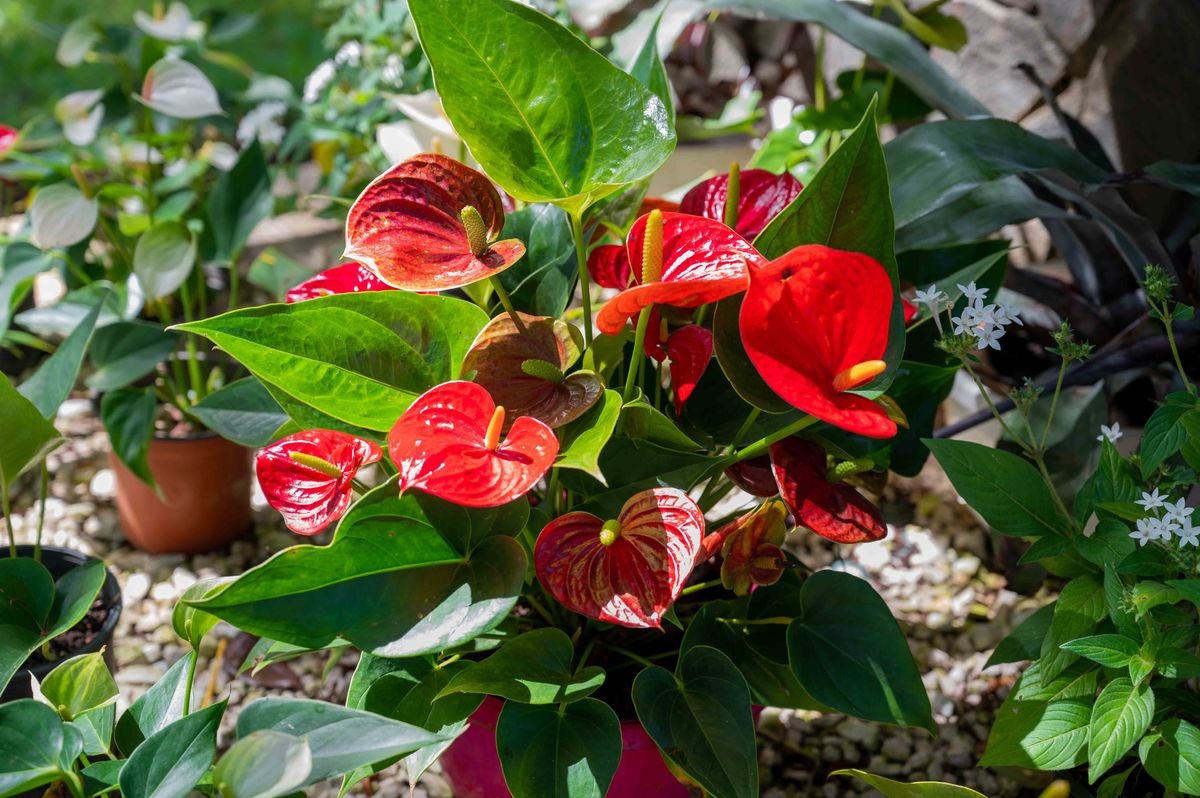
- Anthurium andraeanum: The famous flamingo flower known for bright red, pink, or white spathes that look almost artificial.
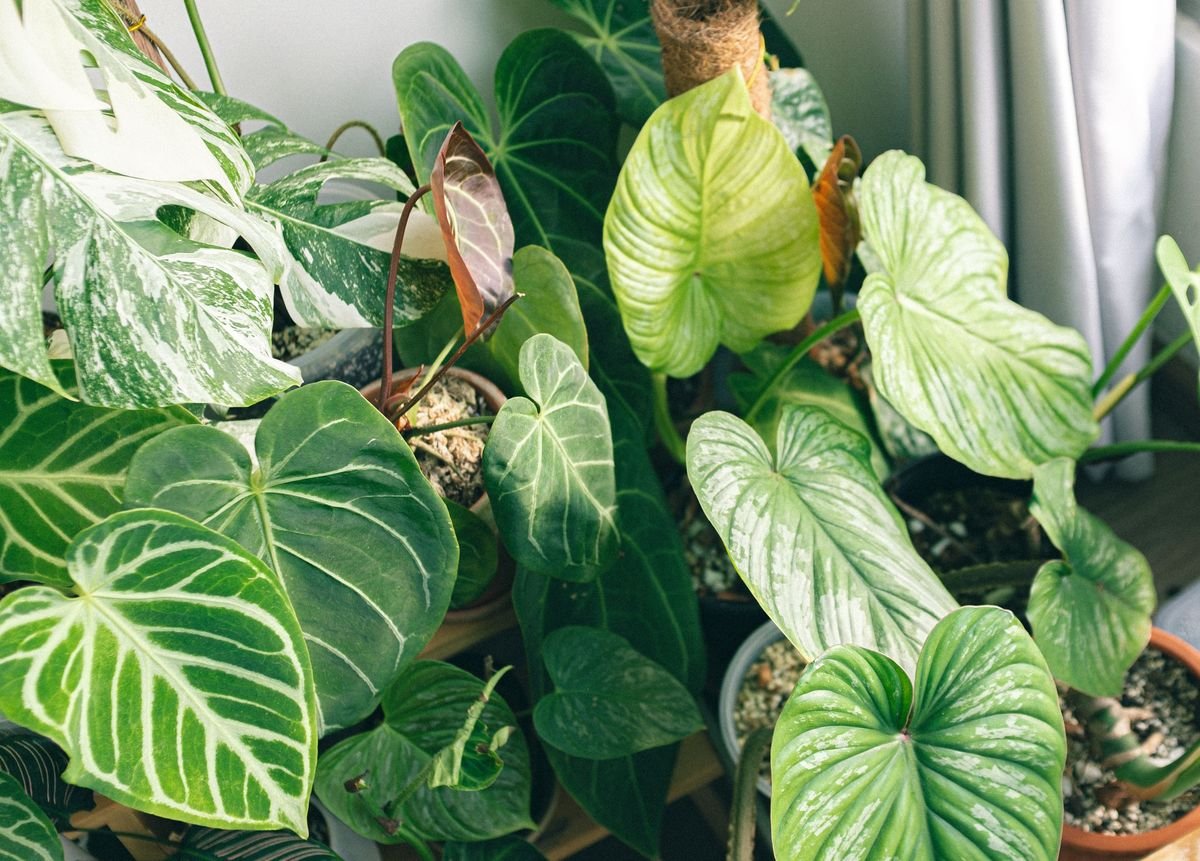
- Anthurium clarinervium: A velvety, heart-shaped foliage plant with striking white veins on deep green cardboard-like leaves.
- Anthurium crystallinum: Renowned for delicate, glittering silver-white veins on large, emergent bronze foliage.
- Anthurium veitchii: The king anthurium, featuring long, corrugated, pendant leaves that can grow several feet in length.
- Anthurium warocqueanum: The queen anthurium, celebrated for its narrow, dark velvet foliage and elegant silver ribbing.
Understanding the Alocasia Genus
Alocasia is another prominent genus within the Araceae family, containing roughly ninety accepted species. These plants are native to the tropical and subtropical regions of Asia and Eastern Australia.
Commonly known as elephant ears, alocasias are famous for their bold, architectural foliage and dramatic veining. Unlike anthuriums, alocasias are rarely cultivated for their flowers and are grown almost exclusively for their commanding leaf displays.
Key Characteristics of Alocasia
Alocasias grow from an underground rhizome or starchy tuberous corm. They are primarily terrestrial geophytes that stay firmly anchored in nutrient-rich forest floors.
Their foliage is typically held aloft on long, sturdy petioles that emerge directly from the underground growth points. The leaves often have dramatic arrow-shaped or shield-shaped outlines, and many species possess distinct metallic or jewel-like sheens.
Popular Alocasia Species to Know
Alocasia species offer an impressive spectrum of sizes, leaf textures, and structural forms for indoor growers.
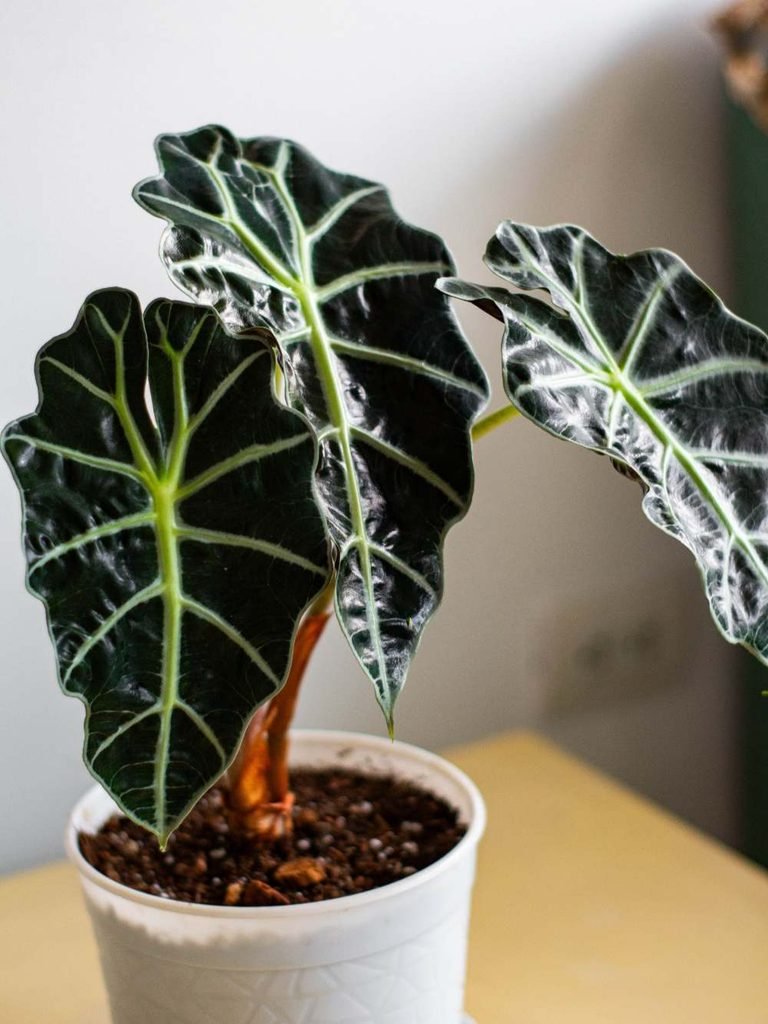
- Alocasia amazonica (Polly): A compact hybrid with scalloped edges, dark green blades, and bold white primary veins.
- Alocasia baginda (Silver Dragon): A jewel alocasia with textured, silvery-gray leaves and deep green venation.
- Alocasia micholitziana (Frydek): Prized for its soft, velvety, emerald green foliage and contrasting neon-white midribs.
- Alocasia zebrina: Famous for its upright growth and unique striped patterns on its long petioles.
- Alocasia macrorrhizos: The giant taro, capable of producing massive, upright green leaves that can reach several feet wide in optimal conditions.
Similarities Between Anthurium and Alocasia
Because both anthuriums and alocasias share a common botanical heritage, they exhibit multiple shared traits that explain why they are frequently compared.
Shared Botanical Family
Both genera are classified as aroids, which means they are members of the Araceae family. This classification gives them comparable vascular structures, sap properties, and basic cell compositions.
As close botanical relatives, they share an evolutionary history shaped by the damp understories of warm, equatorial rainforests around the globe.
Lighting and Temperature Needs
Both anthuriums and alocasias flourish in bright, indirect sunlight. Direct afternoon sunlight can quickly scorch their sensitive foliage, leading to bleached or dry patches on the leaves.
Both genera prefer warm ambient room temperatures between 65°F and 85°F (18°C to 29°C). Neither plant is frost-tolerant, and temperatures dropping below 55°F (13°C) can cause rapid damage or premature leaf loss.
Soil Mix and Drainage Demands
Neither plant tolerates dense, compacted potting soil. Standard garden soil retains too much moisture and prevents oxygen from reaching the root zone, leading to rapid root rot.
Both require an airy, chunky aroid mix that balances moisture retention with sharp drainage. Combining chunky orchid bark, coarse perlite, horticultural charcoal, and coco coir creates the ideal porous environment for their roots.
Inflorescence and Spadix Structure
The reproductive structure in both anthuriums and alocasias is an inflorescence composed of a spathe and a spadix. The spadix is a fleshy floral spike covered in tiny, individual blossoms.
The spathe is a modified leaf-like bract that surrounds or sits behind the spadix. This specialized floral structure is the universal hallmark of all aroid species.
Toxicity and Defense Compounds
Both plants produce microscopic, needle-shaped crystals called calcium oxalate raphides. These crystals serve as a primary defense mechanism against herbivores in the wild.
If chewed or ingested, the raphides cause immediate oral pain, burning, swelling of the lips and tongue, and digestive upset. For this reason, both plants should be placed well out of reach of curious cats, dogs, and small children.
Differences Between Anthurium and Alocasia
While their shared traits are notable, the fundamental differences between anthurium and alocasia are extensive. Examining their botanical structures makes telling them apart simple.
Epiphytic Versus Terrestrial Growth Habits
In their natural jungle habitat, most anthuriums grow as epiphytes or hemi-epiphytes. They establish themselves along tree trunks, in the forks of branches, or on mossy rock faces where their roots absorb moisture from the air and decaying leaf matter.
Alocasias are predominantly terrestrial geophytes. They anchor themselves deeply into the soil floor, relying on ground moisture and the nutrient bank stored inside their underground structures.
Stem and Root Systems
Anthuriums grow along true aerial stems that feature distinct nodes and internodes. As the plant climbs or elongates, thick aerial roots emerge from these nodes to anchor the plant and gather airborne moisture.
Alocasias do not develop thick, wood-like aerial climbing stems. Instead, their leaves emerge from an underground rhizome or rounded tuber known as a corm, which acts as a dense energy reservoir.
Spathe Appearance and Color Variations
The spathe of an anthurium is typically flat, broad, and held open at a wide angle to the spadix. In flowering cultivars, the spathe is glossy, waxy, and brightly pigmented in shades of red, pink, orange, or white.
In contrast, an alocasia spathe is usually hood-shaped, pale green, or creamy white. It forms a protective lower chamber around the base of the spadix and remains largely inconspicuous compared to the plant foliage.
Reproductive Biology and Flower Anatomy
Anthurium flowers are bisexual, meaning every tiny floret along the spadix contains both male (stamens) and female (pistil) reproductive organs. These florets mature sequentially to avoid self-pollination, but the flower structure itself is uniform along the spike.
Alocasia flowers are unisexual and clearly divided into distinct zones along the spadix. The female flowers are housed in a secure bottom chamber, followed by a sterile transition zone, a male pollen-producing zone above it, and an infertile appendix at the tip.
Foliage Shapes and Margins
Anthurium leaves are predominantly cordate (heart-shaped), lanceolate (strap-like), or broadly ovate. Their leaf margins are almost always smooth and continuous without jagged indentations.
Alocasia leaves are typically sagittate (arrowhead-shaped) or peltate (shield-shaped). Many species have distinctly undulating, scalloped, or wavy margins, as seen in varieties like Alocasia amazonica and Alocasia lauterbachiana.
Leaf Textures and Vein Patterns
Anthurium foliage often features a prominent central midrib from which fine, web-like reticulate veins branch outward. Velvet-leaf varieties showcase crystalline or iridescent vein patterns that shimmer under ambient light.
Alocasia leaves exhibit bold primary veins that extend outward toward the edges and connect into looping, continuous marginal borders. The leaf blades are often thick, leathery, bullate, or possess a distinctive matte or satin finish.
Dormancy and Seasonal Reactions
Anthuriums do not experience a true dormancy period. As long as temperature, moisture, and light remain stable, an anthurium will continue producing leaves and roots slowly throughout the entire year.
Alocasias are naturally adapted to seasonal changes. When light levels drop, humidity plummets, or temperatures cool during winter, an alocasia may drop all its leaves and retreat into dormancy until favorable conditions return in the spring.
Propagation Techniques
Propagating an anthurium is generally done by taking stem cuttings that contain at least one node and an aerial root, or through careful root division and seed germination.
Alocasias cannot be propagated via simple stem cuttings because they lack true above-ground stems. Instead, growers propagate alocasias by harvesting and sprouting small underground corms or dividing offset plants from the mother rhizome during repotting.
Caring for Anthuriums at Home
Successfully growing anthuriums indoors requires mimicking their native humid, epiphytic tree-dwelling conditions.
Watering Schedule and Humidity Requirements
Allow the top inch or two of the potting medium to dry out before watering your anthurium thoroughly. Always ensure excess water drains away completely from the bottom of the container.
Anthuriums appreciate high humidity, ideally staying between 60% and 80%. While tough flowering varieties can tolerate average household humidity, velvet-leaf collector species require a humidifier or plant cabinet to prevent dry leaf edges.
Common Anthurium Pests and Solutions
Anthuriums can occasionally fall victim to common indoor pests like thrips, scale insects, and mealybugs.
Inspect the undersides of leaves and leaf crevices regularly. Wipe down the foliage with a damp cloth every few weeks, and treat early infestations with insecticidal soap or cold-pressed neem oil to keep pests under control.
Caring for Alocasias at Home
Alocasias require a steady balance of moisture, bright light, and warmth to prevent unexpected leaf shedding.
Watering Schedule and Corm Management
Alocasias prefer consistent soil moisture during their active growing season in spring and summer. Water when the top inch of soil feels dry, but reduce watering significantly during the cooler winter months.
If your alocasia enters winter dormancy and drops its foliage, do not throw the pot away. Keep the underground corm warm and slightly dry; fresh shoots will readily re-emerge once warm weather returns.
Common Alocasia Pests and Solutions
Spider mites are the most persistent pest for alocasia plants, especially in dry, heated indoor spaces during winter.
Increase ambient humidity and wash the foliage under lukewarm water regularly to deter spider mites. Applying horticultural oil or introducing beneficial predatory mites provides effective control against stubborn outbreaks.
Choosing the Right Plant for Your Space
Selecting between an anthurium and an alocasia comes down to your personal aesthetic preferences and the specific environment in your home.
If you want year-round floral color or magnificent, shimmering velvet foliage and can provide consistent humidity, an anthurium is a wonderful match.
If you prefer dramatic, architectural silhouettes with deeply scalloped, arrow-shaped leaves and do not mind managing seasonal dormancy, an alocasia will make a bold statement in your collection.