
Monstera deliciosa and other Swiss cheese plant varieties are celebrated for being resilient and forgiving indoor companions. They produce dramatic, perforated foliage that instantly gives any room a lush jungle feel.
Because these tropical beauties hail from warm, moist rainforests in Central America, moisture in the air plays a major role in their overall health. Getting the balance right between indoor comfort and your plant’s tropical needs is easier than you might think.
Why Monsteras Love High Humidity
In their natural habitat, Monsteras climb up giant tree trunks under dense forest canopies where the air remains consistently warm and damp.
They have adapted to absorb ambient moisture through both their leaves and their thick aerial roots. When humidity is high, their pores open smoothly to exchange gases without losing excessive water.
Indoor air is often much drier than a rainforest, especially when air conditioners or central heating units run constantly. Giving your plant extra moisture encourages faster growth, larger leaves, and deeper splits.
Ideal Humidity Levels for Monstera Deliciosa
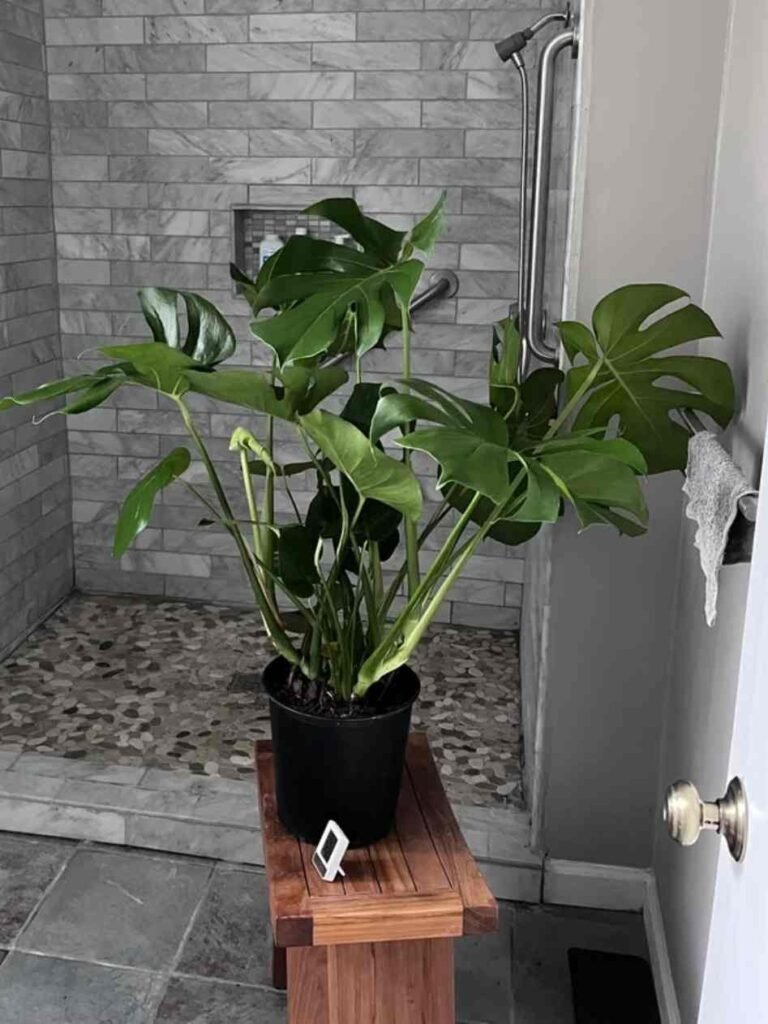
Most Monstera varieties thrive best in relative humidity levels between 55% and 70%. In this range, the plant transpires efficiently and unfurls new leaves with minimal effort.
However, Monsteras are remarkably adaptable houseplants. They can tolerate standard indoor humidity levels around 40% to 50% without showing severe distress.
If the humidity drops below 40%, you will likely start noticing dry leaf tips and sluggish growth. Anything above 75% in a home setting can cause mold issues on walls and furniture unless you have active air circulation.
Can a Monstera Get Too Much Moisture
While these plants love humid air, it is entirely possible to overdo it indoors. In nature, high humidity is paired with constant natural breezes, sunlight, and open space.
Inside a home, stagnant humid air traps water droplets on the foliage for extended periods. This creates the perfect breeding ground for fungal spores and bacterial blights.
High humidity also slows down how fast the potting soil dries out. If you water on your usual schedule without checking the soil, the roots may sit in wet compost for too long, leading to root rot.
The Problem with Poor Airflow and High Moisture
Air movement is the missing ingredient when indoor plant growers try to recreate tropical conditions. Stagnant, humid air creates a microclimate where moisture cannot evaporate from leaf surfaces.
When water sits on foliage for hours, spore germination happens quickly. You might see dark, water-soaked lesions or fuzzy gray mold appearing on fresh stems.
If you run a humidifier or keep plants in a closed cabinet, always run a small oscillating fan nearby to keep air gently moving.
How Excess Moisture Affects Plant Transpiration
Transpiration is the natural process where water moves up through the roots, travels through the stems, and evaporates out of the leaf pores. This pull is what distributes vital soil nutrients throughout the plant.
When the surrounding air is completely saturated with water vapor, the evaporation rate slows down dramatically.
If transpiration stops, the plant cannot draw fresh water and minerals up from the potting mix. This paradoxically causes symptoms that look like drought stress, such as soft, limp leaves.
Signs Your Monstera Needs More Moisture
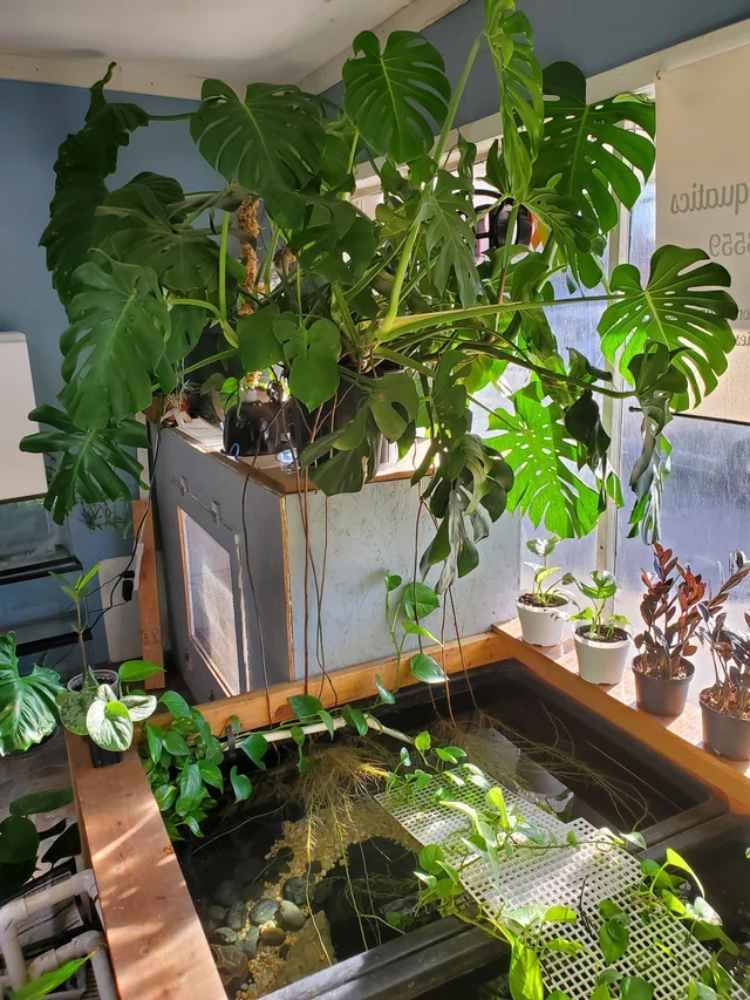
When your home’s air is too dry, your Monstera will give you clear visual cues that it is losing water faster than its roots can supply it.
Catching these warning signs early helps you adjust your care routine before foliage suffers permanent cosmetic damage.
- Dry, crispy leaf margins that feel papery to the touch
- Tips of mature leaves turning brown and brittle
- New leaves getting stuck in their sheath while trying to unfurl
- Leaves curling downward or inward to reduce exposed surface area
- Aerial roots shriveling and drying out completely
Brown Crispy Edges and Curling Leaves
Brown, crunchy leaf tips are the most frequent complaint among indoor Monstera owners during the winter months.
When dry air pulls moisture directly from the leaf edges, the plant cannot pump water out to those outer cells fast enough. The tissue dries up and dies, leaving a tan or dark brown crispy border.
Curling leaves often accompany this symptom. The Monstera curls its foliage inward to protect its stomata (pores) from drying air currents.
Stunted Growth and Failed Fenestrations
Dry conditions force the plant into survival mode, where it conserves energy rather than putting out massive new growth.
New leaves that do manage to emerge may be noticeably smaller than older foliage. They may also fail to develop the classic holes and splits known as fenestrations.
In severe cases of low humidity, new leaves become so dry while emerging that they tear themselves apart as they try to unroll.
Signs of Too Much Humidity in Your Home
Excessive humidity shows up on both the plant and your living space. If you notice any of the following signs, it is time to reduce moisture levels or improve ventilation.
- Black or dark brown mushy spots on foliage surrounded by a yellow halo
- White powdery coating or mold developing on top of the potting soil
- Water droplets continually hanging from leaf tips (known as guttation) without drying
- Condensation dripping down interior window panes
- A persistent musty smell in the room where your plants live
The Best Ways to Increase Monstera Humidity
You do not need an expensive indoor greenhouse to provide your Monstera with the moisture it craves. A few practical adjustments can elevate ambient humidity safely without damaging your home.
Focus on methods that provide continuous, gentle moisture rather than short, sudden bursts of water.
Use an Ultrasonic Room Humidifier
An ultrasonic cool-mist humidifier is by far the most effective and reliable tool for indoor plant parents. It puts a steady stream of micro-droplets into the air throughout the day.
Place the humidifier roughly 3 to 4 feet away from your Monstera. Avoid pointing the direct vapor plume straight at the leaves, as constant wetness can invite bacterial infections.
Fill your unit with filtered or distilled water whenever possible to prevent white mineral dust from coating your plant’s shiny foliage.
Group Tropical Houseplants Together
Grouping your Monstera with other leafy tropicals creates a natural microclimate that costs nothing to maintain.
Every plant releases moisture into the surrounding air through transpiration. When you place several plants near one another, that shared moisture stays trapped around their foliage.
Great companion plants include pothos, philodendrons, calatheas, and ferns. Just make sure to leave a few inches between pots so air can still circulate freely.
Set Up a Pebble Tray with Water
A pebble tray is an easy, passive method to boost humidity in the immediate area around an individual pot.
Take a wide, shallow plastic tray and fill it with a single layer of small pebbles, river stones, or expanded clay pebbles. Pour water into the tray until it sits just below the top of the stones.
Place your Monstera pot on top of the stones. The bottom of the pot must remain above the water level so the soil does not wick up excess moisture and cause rot. As the water evaporates, it rises directly around the leaves.
The Truth About Misting Monstera Leaves
Misting with a spray bottle is a popular habit, but it is actually one of the least effective ways to raise indoor humidity.
Misting only raises local humidity for 10 to 15 minutes. Once the water droplets evaporate from the leaf surface, humidity levels immediately plummet back to room baseline.
Furthermore, wet leaves sitting in a room with poor airflow invite fungal leaf spot diseases. If you enjoy misting, use a very fine continuous mister and only do it in the morning so leaves dry fully before nightfall.
Managing Humidity During Cold Winter Months
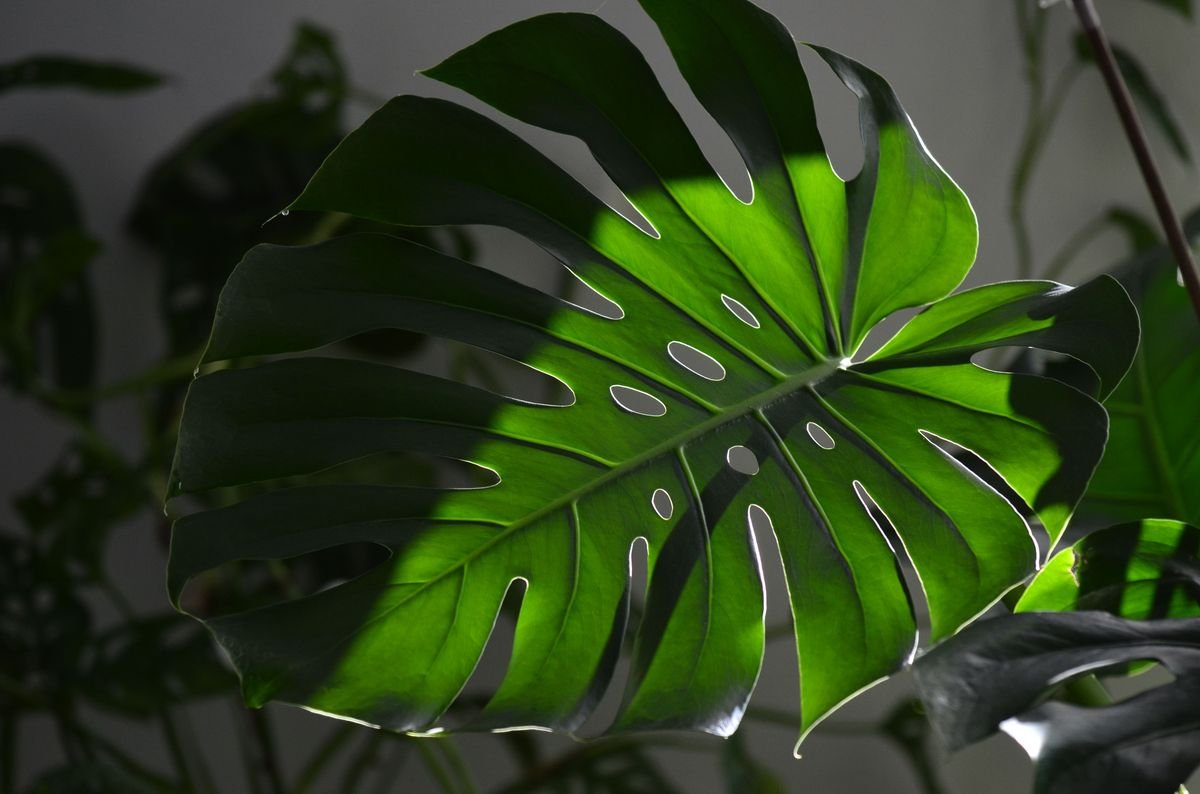
Winter presents the biggest challenge for indoor Monstera care because central heating systems strip moisture from indoor air. Winter humidity in heated homes often drops as low as 20% to 25%.
Keep your Monstera well away from heating vents, radiators, and fireplaces. Hot, dry air blowing directly on the foliage will scorch leaf margins within days.
Pair your humidifier with a digital hygrometer. This simple, inexpensive tool lets you monitor the exact temperature and humidity percentage in your plant area so you can adjust settings accurately.
Does Your Monstera Have the Right Humidity Level?
Answer 4 quick questions to see your result