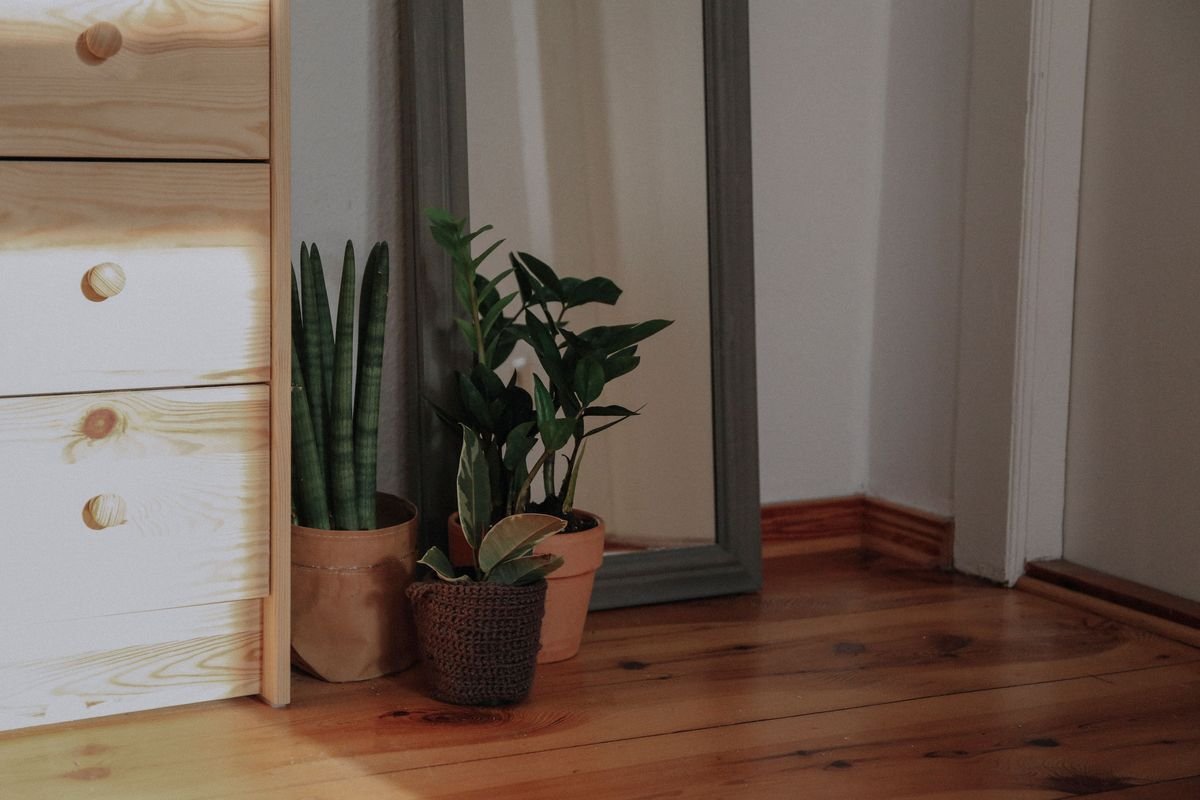
When you want a resilient houseplant that thrives on neglect, two names always rise to the top of the list: the ZZ plant and the snake plant.
Both species have earned legendary reputations among indoor gardeners for surviving dim corners, irregular watering routines, and dry indoor air.
While they share a reputation for being nearly indestructible, these two greenery favorites come from entirely distinct botanical backgrounds.
Understanding their unique physical traits, growth patterns, and environmental preferences will help you choose the best specimen for your living space and keep it thriving for decades.
Key Differences Overview
At first glance, both houseplants bring rich green architectural interest into an interior design scheme. However, their structural growth and botanical adaptations are quite distinct.
ZZ plants grow thick, arching stems covered with glossy oval leaflets that emerge directly from heavy underground tubers. Snake plants produce upright, sword-shaped leaves that emerge vertically from the soil in tight rosettes without true stems.
While both tolerate low light and extended dry spells, their light preferences, leaf textures, and root structures require slightly different handling to achieve peak growth.
Botanical Classification and Families
Despite their similar care routines, these plants belong to completely separate plant families.
The ZZ plant, known botanically as Zamioculcas zamiifolia, belongs to the Araceae family. This makes it a close relative of peace lilies, philodendrons, and monsteras. Zamioculcas is a monotypic genus, which means the ZZ plant is the only recognized species within its entire genus.
Snake plants belong to the Asparagaceae family, placing them in close relation to asparagus ferns, agaves, and hostas.
Formerly classified under the genus Sansevieria, snake plants were reclassified by botanists into the genus Dracaena. The most widespread houseplant variety is Dracaena trifasciata, which includes dozens of cultivated varieties.
Geographic Origins and Native Habitats
Both plants are native to the African continent, but they adapted to distinct regional ecosystems.
ZZ plants originate from eastern Africa, where their native range extends from Kenya down through Tanzania, Mozambique, and eastern South Africa. In these environments, they inhabit lowland forests, dry grasslands, and rocky riverbanks that cycle between heavy seasonal rain and prolonged dry spells.
Snake plants are native to tropical western Africa, spanning from Nigeria across to the Congo basin.
In western Africa, snake plants grow in arid rocky plains, open savannahs, and dry shrublands where soil is nutrient-poor and rainfall is scarce for many months at a time.
Growth Habits and Mature Sizes
The overall architecture and growth rate of each plant dictate how much floor or shelf space they will occupy.
ZZ plants form wide, graceful mounds. As new stalks shoot up from the soil, they curve outward, creating a full canopy. Mature indoor specimens usually reach between 2 and 4 feet in height, with an equal spread across the top.
Snake plants grow primarily in an upright, vertical direction. This narrow growth habit makes them an ideal choice for compact floor corners, tight hallways, or narrow desks.
While wild snake plants can reach heights exceeding 8 feet, potted indoor varieties typically stabilize between 2 and 4 feet tall while maintaining a very slim width of just a few inches per leaf cluster.
Foliage Structure and Leaf Characteristics
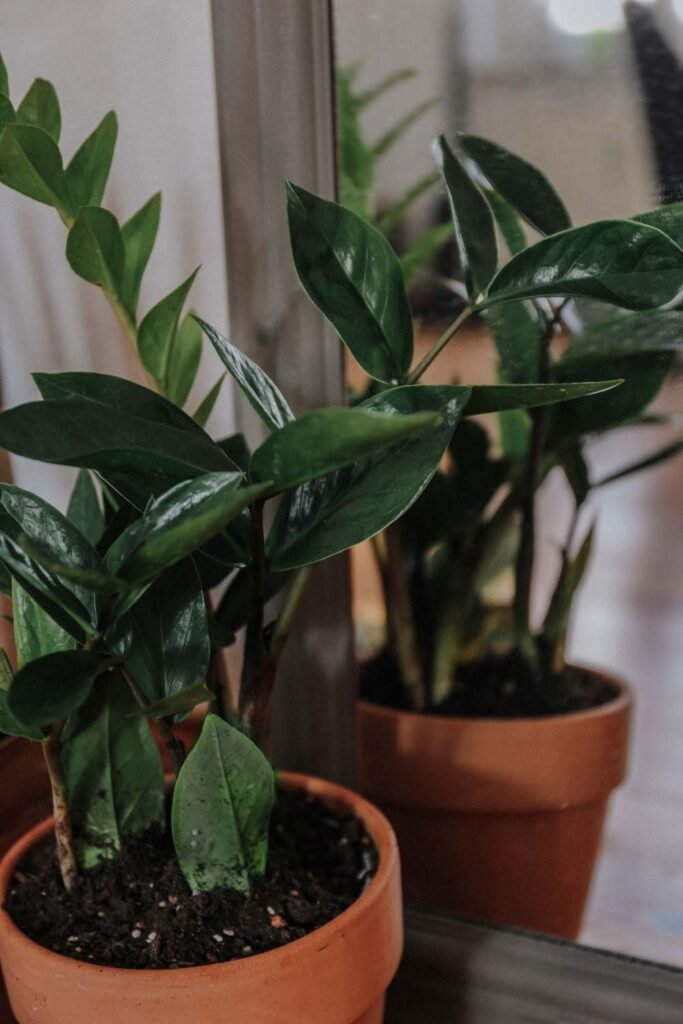
Leaf structure is the clearest way to differentiate these two popular species.
ZZ plants feature pinnately compound leaves. Each thick central stem holds pairs of fleshy, feather-like leaflets with a naturally high-gloss finish that looks polished even without leaf shine products. These leaflets are broad, oval, and deep emerald green.
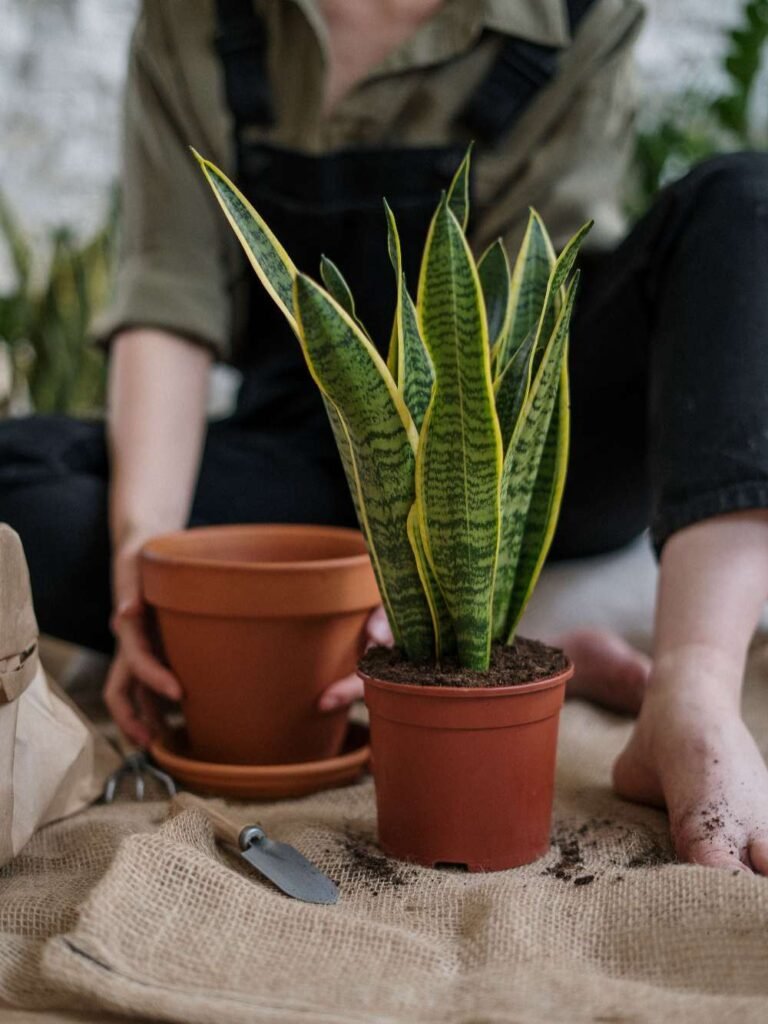
Snake plants produce simple, stiff, sword-shaped foliage with a matte or leathery texture.
The foliage of snake plants is famously variegated. Most types display horizontal silvery-green banding across dark green centers, while popular cultivars like Laurentii feature vibrant golden yellow margins along the outer edges.
Underground Root Systems and Tubers
Both plants survive long periods without rainfall thanks to specialized water storage organs, though the anatomy is slightly different.
ZZ plants produce large, potato-like underground structures known as subterranean tubers or swollen rhizomes. These rounded tubers store massive reserves of moisture and nutrients, sending thick fleshy roots down into the soil.
Snake plants develop fibrous, woody, creeping rhizomes that spread horizontally just below the soil surface.
These horizontal rhizomes produce new offsets, commonly called pups, which push up right next to the mother plant to create dense clusters.
Sunlight and Lighting Requirements
While both species survive in low-light conditions better than most tropical greenery, their optimal lighting levels diverge.
ZZ plants prefer medium to bright indirect light. They tolerate low-light settings exceptionally well, making them ideal for windowless offices or basement rooms with fluorescent illumination. However, direct outdoor sun will scorch their glossy leaflets.
Snake plants are more adaptable to intense illumination. They thrive in everything from dark hallways to intense, direct morning sun.
If you want your snake plant to produce fast growth and vivid variegation patterns, giving it several hours of direct or filtered sunlight each day will deliver noticeable results.
Watering Needs and Drought Tolerance
Both plants are prone to overwatering, but the ZZ plant is slightly more sensitive due to its bulbous tubers.
As a general guideline, water both species only when their soil is completely dry from the top of the pot down to the bottom drainage holes.
- Water ZZ plants every 3 to 4 weeks during the growing season, and reduce to once every 5 to 6 weeks in winter.
- Water snake plants every 2 to 3 weeks in summer, and let them dry out for up to a month in colder months.
- Always discard excess runoff standing in saucers to prevent fungal root infection.
Temperature Tolerances and Cold Sensitivity
Because both plants originate in warm, frost-free climates, they must be protected from chilly conditions.
ZZ plants thrive in temperatures between 65 and 85 degrees Fahrenheit. When ambient temperatures drop below 55 degrees, growth halts completely, and prolonged exposure to 45 degrees will cause stem collapse.
Snake plants manage a slightly broader range, performing well between 60 and 90 degrees Fahrenheit.
Keep both plants away from drafty exterior entryways, air conditioning vents, and single-pane windows during freezing winter months.
Humidity Levels and Air Circulation
Unlike finicky tropicals such as calatheas and ferns, neither of these plants demands high atmospheric humidity.
Both ZZ and snake plants thrive in average household humidity levels between 30 and 50 percent. They handle dry winter heating systems without developing crisp, brown leaf tips.
Avoid placing either species in poorly ventilated, damp bathrooms where stagnant moisture can accumulate on the foliage and invite fungal spotting.
Soil Requirements and Pot Selection
Good drainage is essential for keeping the root systems of both plants healthy.
A heavy, moisture-retentive potting soil will cause root rot in both species. The best mix contains standard potting soil blended with perlite, pumice, or coarse sand in a 2 to 1 ratio.
When selecting a container, choose heavy materials like unglazed terracotta or ceramic. Terracotta allows moisture to evaporate through pot walls, which protects against overwatering.
Heavy pots also prevent top-heavy mature snake plants from tipping over.
Fertilizing Routines
Because both plants grow at a measured pace, their nutrient requirements are minimal compared to fast-growing vines.
Apply a balanced, water-soluble houseplant fertilizer diluted to half strength once or twice during the spring and summer.
Never fertilize during late autumn or winter when the plants enter natural semi-dormancy. Over-fertilizing can lead to mineral salt accumulation, which burns root tips and discolors the foliage.
Common Similarities Between Both Plants
Despite their different botanical families and physical appearances, ZZ plants and snake plants share several practical features.
Both are celebrated for clean lines, modern aesthetic appeal, tolerance of neglect, and low vulnerability to common pests like spider mites and fungus gnats.
These overlapping traits make them constant companions in modern interior design projects.
Low Maintenance Nature
If you travel frequently or struggle with plant care schedules, either species will suit your lifestyle.
Both plants survive weeks without attention, require minimal pruning beyond removing an occasional aged lower leaf, and do not need regular repotting.
In fact, both prefer being slightly root-bound and can remain in the same container for two to three years without issues.
Propagation Techniques
Both plants can be propagated easily at home using division or leaf cuttings.
- Division: Unpot a mature plant and separate the rhizomes or tubers using clean shears, ensuring each division retains roots and stems.
- Water Cuttings: Place clean leaf cuttings in filtered water until root nodules develop.
- Soil Cuttings: Insert clean leaf segments directly into moist cactus soil and maintain warmth.
Note that snake plant cultivars with yellow edges will lose their variegation and revert to solid green when grown from leaf cuttings, whereas division preserves the parent pattern.
Toxicity for Pets and Children
Both the ZZ plant and snake plant are considered toxic to cats, dogs, and humans if ingested.
ZZ plants contain insoluble calcium oxalate crystals that cause immediate oral pain, burning of the lips and tongue, and stomach irritation upon chewing.
Snake plants contain chemical compounds called saponins, which protect them from insects in the wild but cause nausea, vomiting, and diarrhea in pets.
Always place both plants out of reach of curious puppies, kittens, and small children.
Choosing the Right Plant for Your Space
Deciding between these two resilient houseplants comes down to available space and lighting.
Choose a ZZ plant if you have a wide table, deep shelf, or empty credenza that benefits from arching foliage, or if your room receives low to medium indirect light.
Choose a snake plant if you need a narrow, vertical floor plant to frame a doorway, fit behind furniture, or occupy a spot next to a bright, sunny window.
Final Care Recommendations
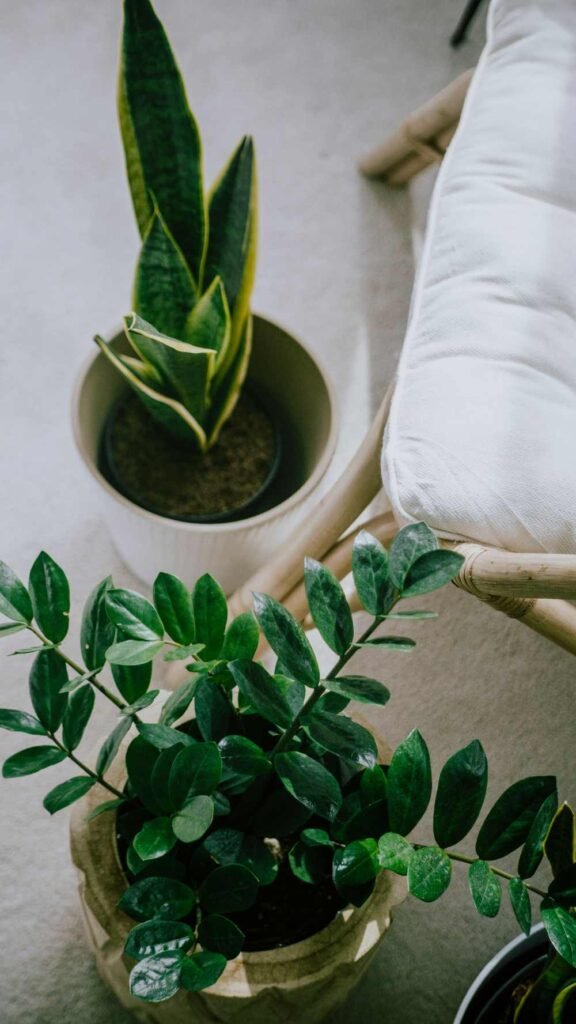
Whether you pick the glossy arching stems of the ZZ plant or the architectural swords of the snake plant, you are investing in a durable green companion.
Keep the potting mix loose and well-aerated, water only after the pot has dried out completely, and keep temperatures comfortably warm.
By following these simple guidelines, your plant will deliver dependable beauty to your home for years to come.
ZZ Plant or Snake Plant: Which Matches Your Home?
Answer 4 quick questions to see your result