If you love the dramatic trumpets, recurved petals, and vibrant colors of true lilies, you are not alone. Across gardens and floral shops, many popular plants share the famous “lily” name or feature blooms that look almost identical to true lilies from the genus Lilium.
However, botanical look-alikes belong to completely different plant families. Learning to spot the differences is not just fun for plant lovers; it is also crucial for pet safety, because while some look-alikes are harmless, true lilies and certain mimics carry serious toxins.
Here are seven gorgeous flowers that look just like lilies, complete with identification tips and growing essentials for your home or garden.
1. Daylily (Hemerocallis)
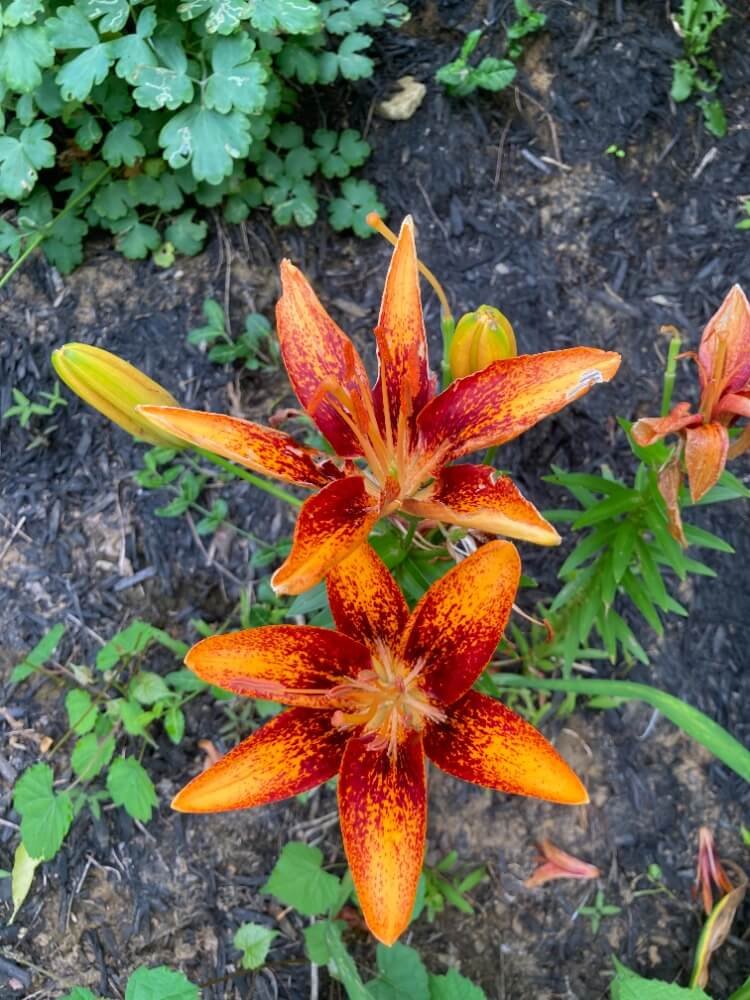
Daylilies (Hemerocallis) are among the most common garden flowers mistaken for true lilies. They produce open, flared trumpet blooms with six colorful petals that mirror classic lily blossoms.
Unlike true lilies that grow foliage along a single tall stalk, daylily leaves grow as dense clumps of arching grass-like blades directly from the soil.
Each individual bloom opens for only a single day, but mature clumps produce dozens of buds that keep opening for weeks. Note that daylilies are severely toxic to cats, causing sudden kidney damage.
- Light: Full sun to partial shade
- Water: Moderate watering, drought tolerant once established
- Mature Size: 1-4 ft. tall, 1.5-3 ft. wide
- Bloom Time: Late spring through mid-summer
- Flower Color: Yellow, orange, red, pink, purple, and bicolors
2. Peruvian Lily (Alstroemeria)
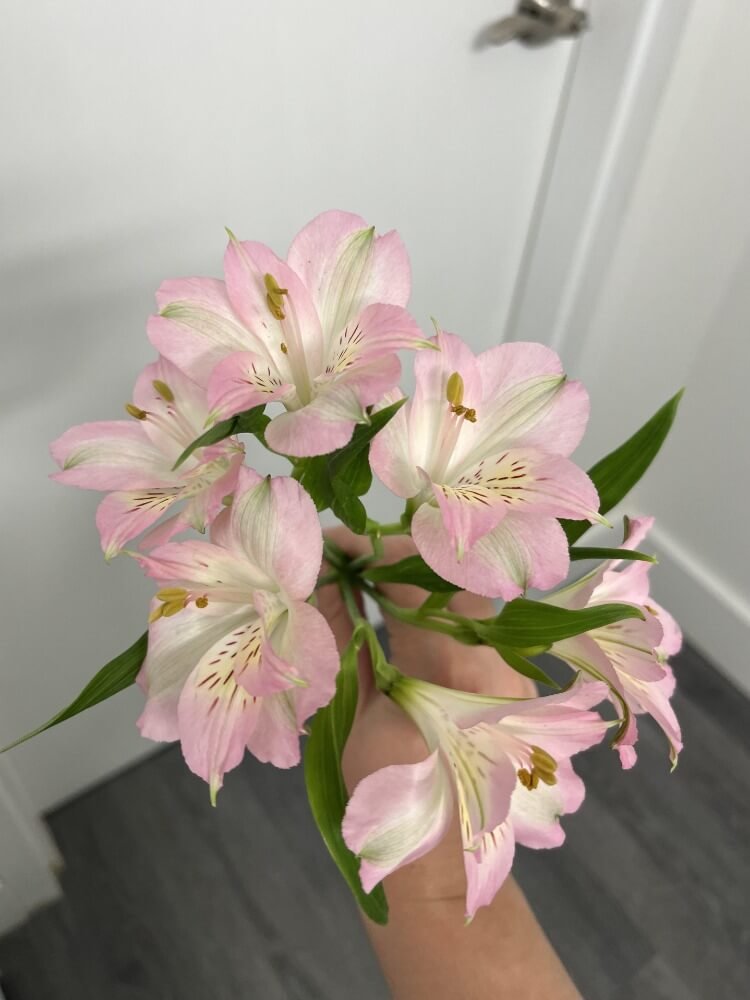
Peruvian lilies are beloved floral shop staples that look like miniature lily arrangements. Their blooms feature six showy petals arranged in two rings, complete with delicate freckles and streaks that mimic lily nectar marks.
Their foliage undergoes a unique twist where the leaf stalks turn completely upside down as they emerge.
These plants produce branching clusters of flowers atop slender stems rather than a solitary terminal spike. They can cause mild skin irritation for sensitive florists due to protective organic compounds in the sap.
- Light: Full sun to bright indirect light
- Water: Consistent moisture, allow topsoil to dry slightly between waterings
- Mature Size: 1-3 ft. tall, 1-2 ft. wide
- Bloom Time: Late spring through autumn
- Flower Color: White, yellow, orange, pink, lavender, red, and bicolors
3. Amaryllis (Hippeastrum)
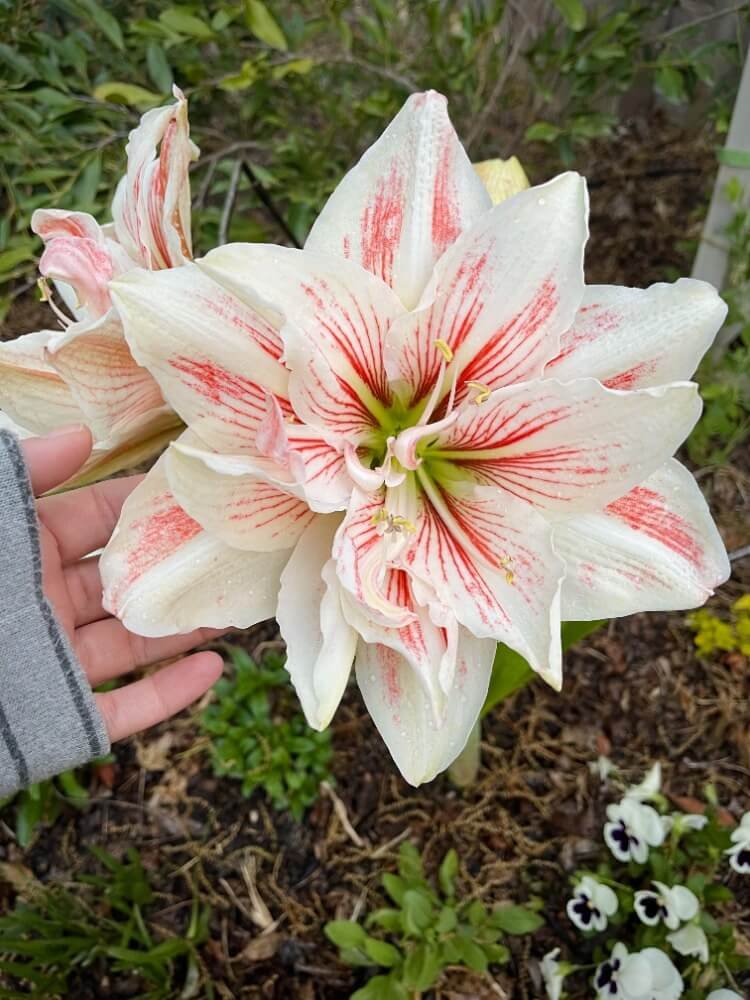
Amaryllis produces enormous trumpet-shaped flowers that look identical to classic Easter lilies or Asiatic lilies. Their velvety blooms can span up to ten inches across with six wide, overlapping petals.
Amaryllis grows from a large papery bulb and sends up a tall, hollow flower stalk without any leaves on the stem.
Flat, strap-shaped leaves sprout only from the base of the plant. The entire plant contains lycorine alkaloids that cause stomach distress in pets if swallowed.
- Light: Bright, indirect sunlight
- Water: Water thoroughly when top inch of soil is dry, avoid overwatering dormant bulbs
- Mature Size: 1.5-2 ft. tall, 9-12 in. wide
- Bloom Time: Winter to early spring indoors, spring outdoors
- Flower Color: Red, white, coral, pink, burgundy, and striped bicolors
4. Calla Lily (Zantedeschia aethiopica)
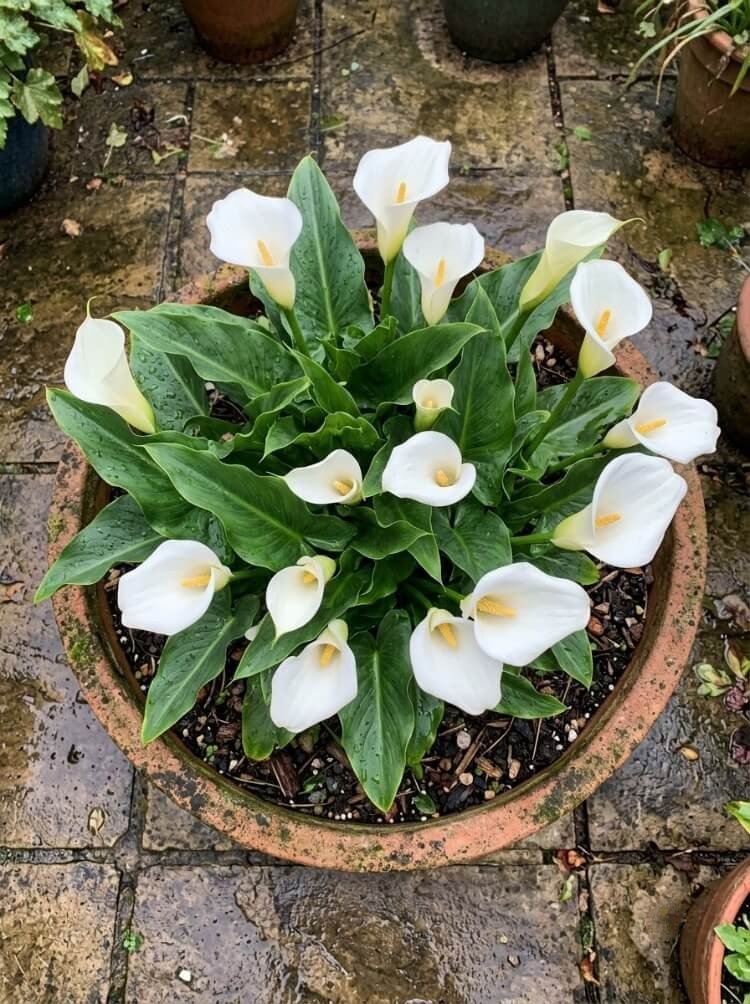
Calla lilies are renowned for their sleek chalice shape that many people mistake for a true lily bloom. What looks like a smooth petal is actually a modified leaf called a spathe wrapped around a tiny spike of true flowers.
The foliage consists of large, glossy arrow-shaped leaves on long stems that rise directly from an underground rhizome.
These plants contain needle-like calcium oxalate crystals that cause sudden burning and swelling in the mouth if chewed. They prefer damp garden locations and can even grow near shallow water edges.
- Light: Full sun to bright partial shade
- Water: High moisture needs, keep soil consistently moist during growth
- Mature Size: 2-3 ft. tall, 1.5-2 ft. wide
- Bloom Time: Late spring to mid-summer
- Flower Color: White, pink, yellow, orange, deep purple, and peach
5. Flame Lily (Gloriosa superba)
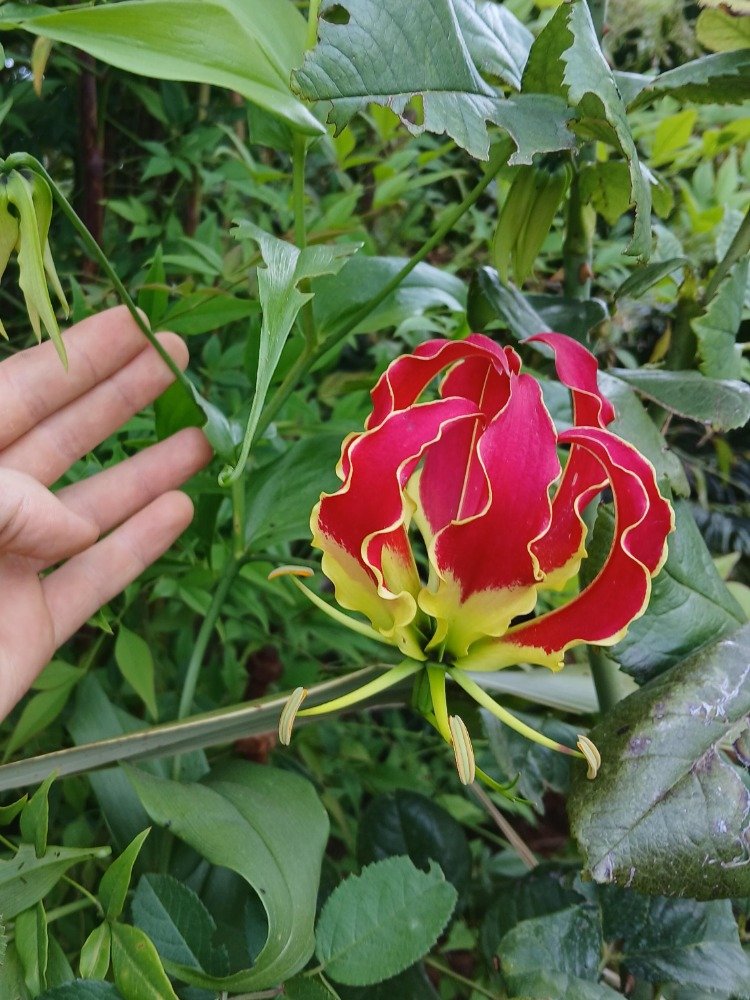
Flame lilies produce vibrant blooms with sweeping, reflexed petals that resemble Turk’s cap lilies. The petals feature ruffled, wavy edges with bright yellow margins that blend into brilliant scarlet red tips.
Rather than growing as an upright bush, this exotic plant is a slender climbing vine that pulls itself up using small tendrils on its leaf tips.
It develops from an underground fork-shaped tuber instead of a scaly bulb. Every part of this plant contains dangerous levels of colchicine, making it extremely poisonous to humans and household pets.
- Light: Bright, filtered sunlight or morning sun
- Water: Regular watering during active growth, keep dry during winter dormancy
- Mature Size: 4-6 ft. climbing vine length, 1-2 ft. spread
- Bloom Time: Mid-summer to early autumn
- Flower Color: Yellow, orange, red, and bicolors
6. Canna Lily (Canna indica)
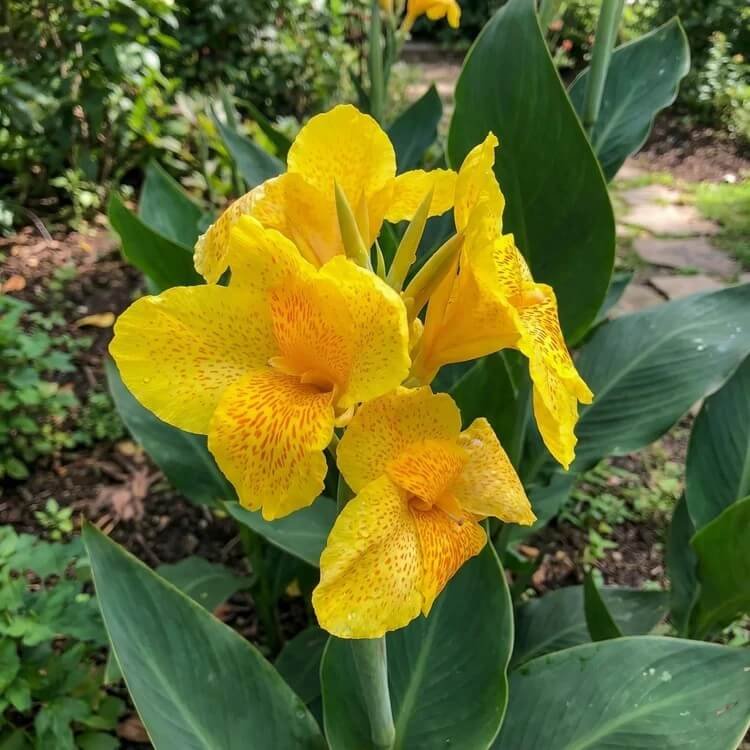
Canna lilies mimic the warm, bold colors and upright stature of vibrant Asiatic lilies in summer landscapes. Their large blossoms display petal-like structures in vivid tones of orange, yellow, and red.
Botanically, those colorful petals are actually sterile, transformed stamens that expand into broad ruffles.
The plants produce massive, tropical paddle leaves along thick stems anchored by sturdy horizontal roots. Canna lilies are completely non-toxic to dogs and cats, making them a worry-free lily alternative.
- Light: Full direct sun (at least 6 hours daily)
- Water: High watering needs, thrives in rich, consistently moist soil
- Mature Size: 3-6 ft. tall, 2-3 ft. wide (dwarf varieties 2-3 ft. tall)
- Bloom Time: Early summer through the first frost
- Flower Color: Red, orange, yellow, pink, and speckled bicolors
7. Spider Lily (Hymenocallis littoralis)
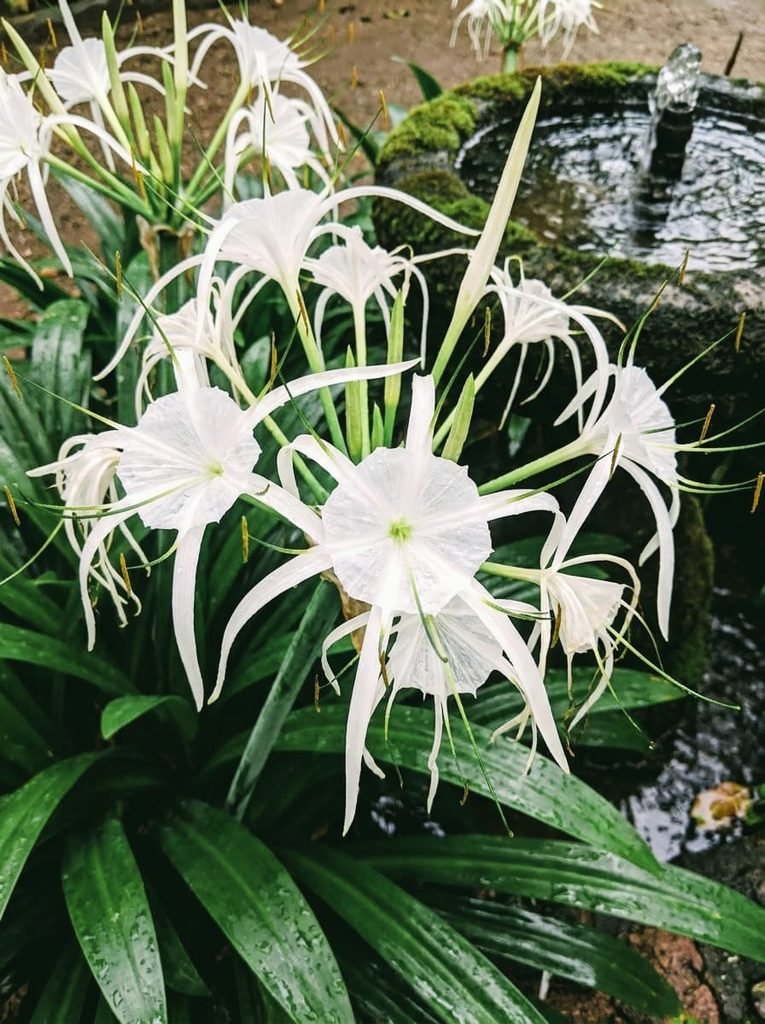
Spider lilies create a dramatic, spidery version of the classic white lily blossom. Each fragrant flower carries six long, slender petals that spread outwards like fine ribbon streamers.
The center of each blossom features a unique translucent, papery cup connecting the stamens, similar to a delicate daffodil cup.
Its long, glossy leaves emerge in a thick fountain directly from the soil line. While spider lilies are toxic to dogs and cats if chewed, they do not cause the lethal kidney damage associated with true lilies.
- Light: Full sun to partial shade
- Water: Moderate to high moisture, handles wet or boggy conditions well
- Mature Size: 2-3 ft. tall, 2-3 ft. wide
- Bloom Time: Mid-summer to early autumn
- Flower Color: Pure white with light green or yellow throat centers
Final Thoughts
While many plants share the lily name or mimic its iconic form, each offers its own set of growing habits, seasonal rhythms, and safety considerations.
Whether you are looking for pet-friendly alternatives like Canna lilies or eye-catching landscape climbers like Flame lilies, these seven plants let you enjoy the elegance of lilies across every corner of your garden.