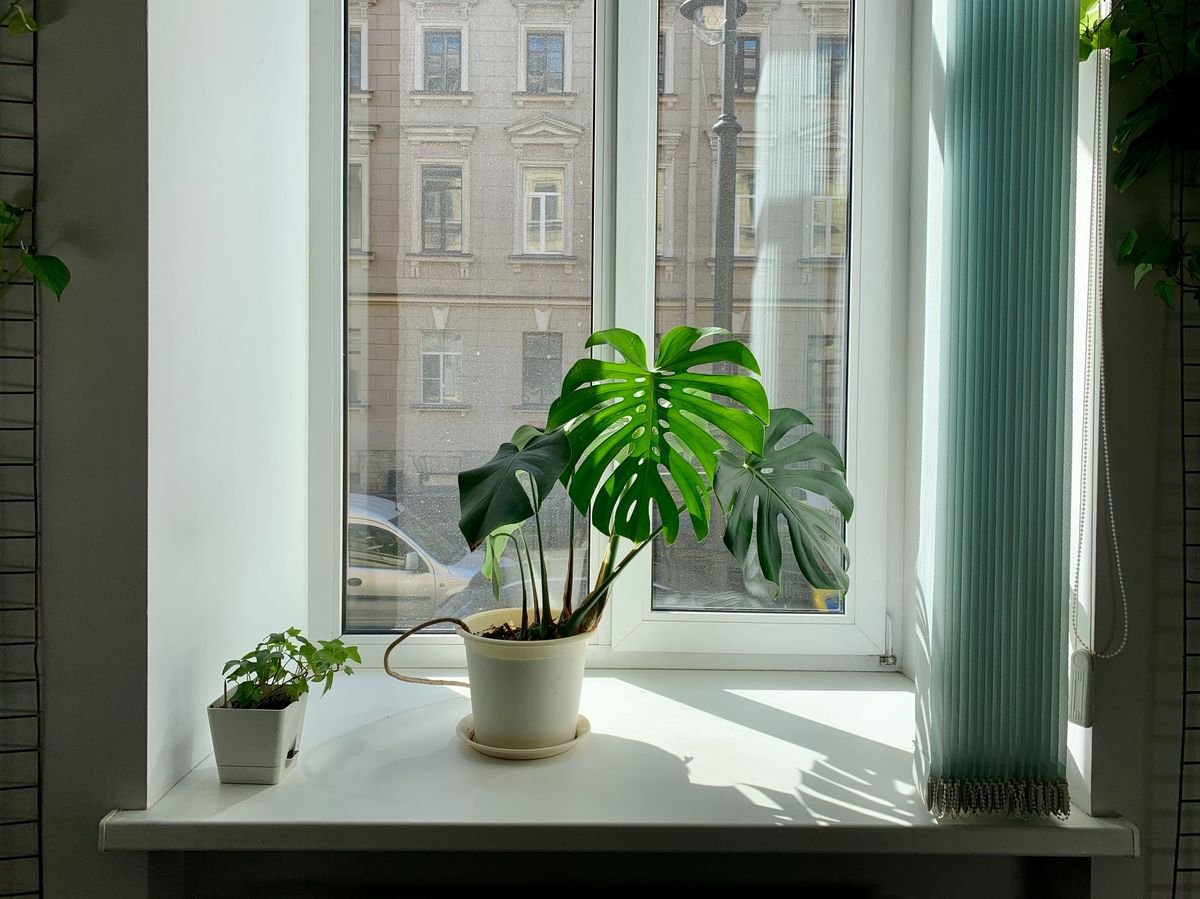
Monstera deliciosa is easily one of the most beloved houseplants in the world. Their broad, glossy leaves and iconic splits make them a stunning statement piece in any room.
Because they are such vibrant growers, it can be alarming when your plant suddenly starts tipping sideways, leaning heavily over the rim of the pot, or collapsing completely.
When a monstera begins to slump, it is not simply giving up. It is sending you a clear signal that something in its environment needs attention.
Whether your plant is craving something solid to climb, crying out for more balanced sunlight, or struggling with root trouble beneath the soil, getting it back on its feet is straightforward once you know what to look for.
Why Your Monstera Is Leaning or Collapsing
A drooping or leaning monstera is rarely suffering from a single mystery ailment. In most cases, the issue comes down to plant mechanics, light distribution, or root health.
In the wild, these plants are natural epiphytic climbers that rely on towering rainforest trees for stability. Indoors, they lack those massive tree trunks, which means their thick, heavy stems will eventually surrender to gravity unless you step in to help.
Aside from structural needs, internal cell pressure keeps stems turgid and upright. When water, nutrients, or light become unbalanced, the plant loses that internal pressure.
As a result, the petioles soften, the leaves bow downward, and the entire plant can look like it is ready to topple over.
Natural Climbing Habit and Lack of Support
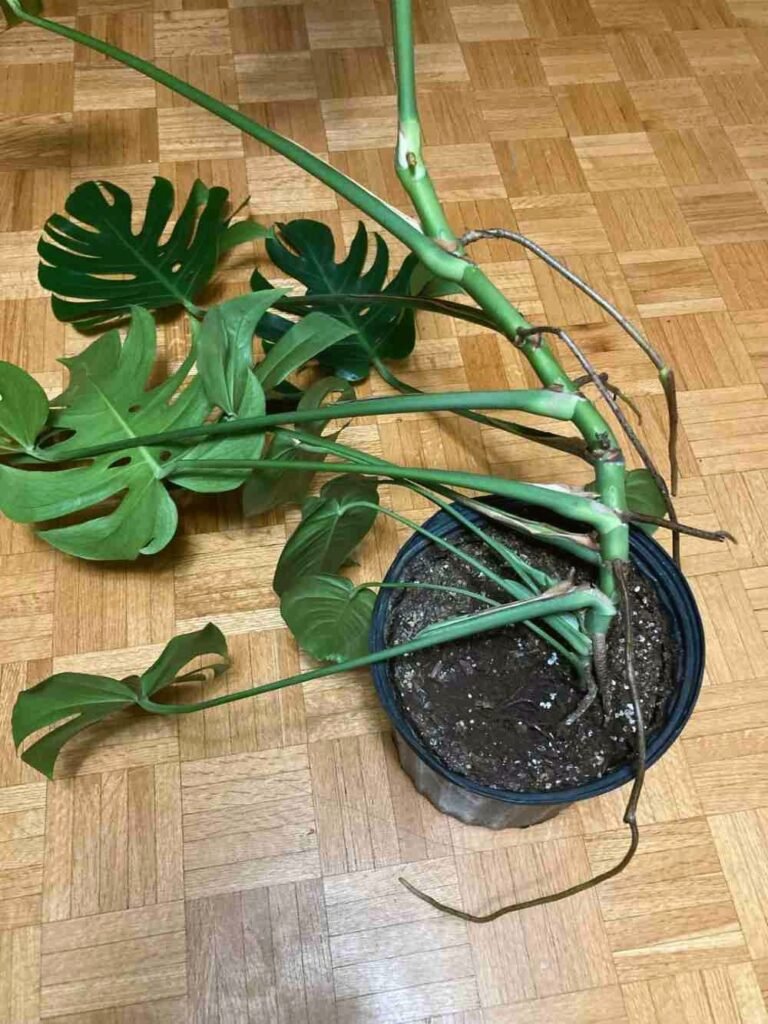
The most common reason a healthy monstera falls over has nothing to do with disease. It is simply behaving the way nature designed it to grow.
In their native tropical habitats across Central and South America, monsteras germinate on the forest floor. As they grow, they produce long aerial roots that grip tree bark. They use this external framework to climb high into the forest canopy where sunlight is plentiful.
Because they evolved to lean against trees, monsteras do not produce woody trunks. Their stems remain semi-flexible vines. As your plant matures and produces larger, heavier foliage, the main stem simply cannot bear the combined weight of those huge leaves on its own.
Without a sturdy stake or pole, your monstera will naturally sprawl across the floor or tip its container over.
Choosing the Right Support Structure
Providing artificial support allows your monstera to grow vertically just as it would in nature. It also saves a tremendous amount of floor space in your home.
Here are the most popular support options you can use:
- Moss Poles: These poles are wrapped in sphagnum moss or coco coir. They mimic tree bark and give aerial roots something textured and moist to grab onto.
- Sturdy Wood Planks: Untreated cedar or redwood boards work exceptionally well. Monstera aerial roots naturally love attaching to flat wooden surfaces.
- Bamboo Stakes: Bamboo is affordable, lightweight, and discreet. It is great for younger monsteras that need a quick, simple stake.
- Metal or Wood Trellises: Trellises offer multiple anchoring points across a wider area, making them ideal for sprawling multi-stem plants.
Moss poles remain the gold standard among indoor growers because keeping them damp encourages the plant to produce larger leaves with dramatic fenestrations.
Insufficient Light and Phototropism
Plants are hardwired to seek energy from the sun. When light only hits one side of your monstera, the plant will go out of its way to reach for it.
This behavior is called phototropism. It is driven by plant growth hormones called auxins. Auxins gather on the darker, shaded side of the stem, causing those cells to elongate faster than the cells facing the light.
As the shaded side stretches, the stem bends toward the nearest window. Over several months, this one-sided growth causes the center of gravity to shift dramatically. The entire pot becomes unbalanced, making the monstera lean so far forward that it looks like it is falling over.
How Light Imbalance Changes Growth
When a monstera receives too little light overall, it develops weak, leggy stems. The internodes, which are the spaces between leaf nodes, become stretched and thin as the plant desperately searches for brightness.
These thin stems lack the structural strength to hold up heavy leaf blades. When a new leaf unfurls, the fragile stem under it bends under the load.
To correct this problem, place your monstera in a spot that receives bright, indirect sunlight for at least six to eight hours a day.
Make a habit of giving the pot a quarter turn every time you water it. Rotating the container ensures all sides receive equal light, which keeps the stems growing straight and evenly spaced.
Watering Issues That Cause Drooping
Water provides turgor pressure, which is the internal fluid force that keeps plant cells rigid and stems standing tall. When your watering routine is off, that pressure disappears and the plant collapses.
Both underwatering and overwatering can cause a monstera to wilt and lean sideways. Because the physical symptom of drooping looks similar in both cases, many plant parents accidentally make the problem worse by guessing incorrectly.
To solve the issue, you must inspect the potting mix and the roots to find out whether your monstera is parched or drowning.
Spotting Underwatering vs Overwatering
Determining whether your plant needs a drink or needs to dry out is easy when you check the soil texture and leaf signs.
Use these clear clues to diagnose the problem:
- Underwatering Clues: The soil is bone dry, shrunk away from the pot edges, and feels light when lifted. The leaves feel limp, papery, and soft. The tips may look crispy or curled inward.
- Overwatering Clues: The soil stays constantly soggy or smells sour. The lower leaves turn pale yellow, while black or dark brown water spots appear in the center of the leaves. The stems may feel soft and squishy near the soil line.
If the plant is underwatered, give it a thorough bottom watering soak for 30 minutes to rehydrate the root ball.
If the plant is overwatered, hold off on watering immediately. Ensure drainage holes are clear, and move the plant to a warmer, brighter spot to help the soil dry faster.
Fertilizer Burn and Root Stress
Feeding your monstera helps it produce lush growth, but too much fertilizer can quickly lead to root damage and drooping stems.
Commercial fertilizers contain concentrated mineral salts. When you apply fertilizer too often or mix it too strong, these salts build up in the potting soil.
Excess salts pull moisture out of the plant roots through reverse osmosis, effectively dehydrating the plant even if the soil feels damp. In severe cases, the salts chemically burn the sensitive root tips, leaving the monstera unable to support its heavy top growth.
How to Flush Excess Soil Salts
If you notice a white crust on top of your soil along with drooping stems and brown leaf margins, your monstera likely has fertilizer burn.
You can easily flush these excess minerals out of the potting mix with fresh water.
- Carry your monstera to a bathtub, large sink, or outdoor patio.
- Gently run room temperature tap water or distilled water through the top of the soil until it pours freely out of the drainage holes.
- Let the water drain out completely for 10 minutes.
- Repeat the flushing process two or three times to wash away dissolved salts from the root zone.
- Allow the pot to drain fully before returning it to its decorative saucer.
Pause all fertilizer applications for at least four to six weeks while the root system regenerates.
Root Bound Roots and Small Pots
Monsteras are fast growers with robust, thick root systems. When kept in the same container for too long, their roots quickly run out of room.
As the roots circle the bottom of the pot, they displace the potting soil. Eventually, there is more root mass than soil inside the container.
Without enough soil to retain moisture and anchor the plant, the root system cannot hold the massive foliage upright. The top-heavy plant will easily tip over at the slightest bump, or the stems will lean heavily because the roots can no longer provide a firm base.
If you see roots poking out of the drainage holes or wrapping around the surface of the soil, it is time to upgrade to a pot that is two to three inches wider.
How to Stake Your Monstera with a Moss Pole
Installing a support pole is the most effective long-term fix for a leaning monstera. Doing this restores the plant to an upright posture and encourages impressive foliage development.
Follow these steps to attach your monstera securely to a pole:
- Locate the Back of the Plant: Monsteras have a distinct front and back. The aerial roots grow from the back of the main stem, while leaves point forward toward the light. Place your pole behind the main vine.
- Insert the Pole: Carefully push the base of the pole deep into the soil near the center of the pot. Be gentle so you do not sever major root branches.
- Position the Stems: Gently pull the heaviest vines against the pole, making sure you support the stem rather than the thin leaf petioles.
- Fasten with Soft Ties: Use plant velcro, soft garden twine, or cloth strips to secure the main stem to the pole. Never tie around leaf petioles, as they need freedom of movement to follow light.
- Moisten the Pole: Mist the moss pole regularly so emerging aerial roots can dig in and anchor the plant naturally over time.
Long Term Care for an Upright Monstera
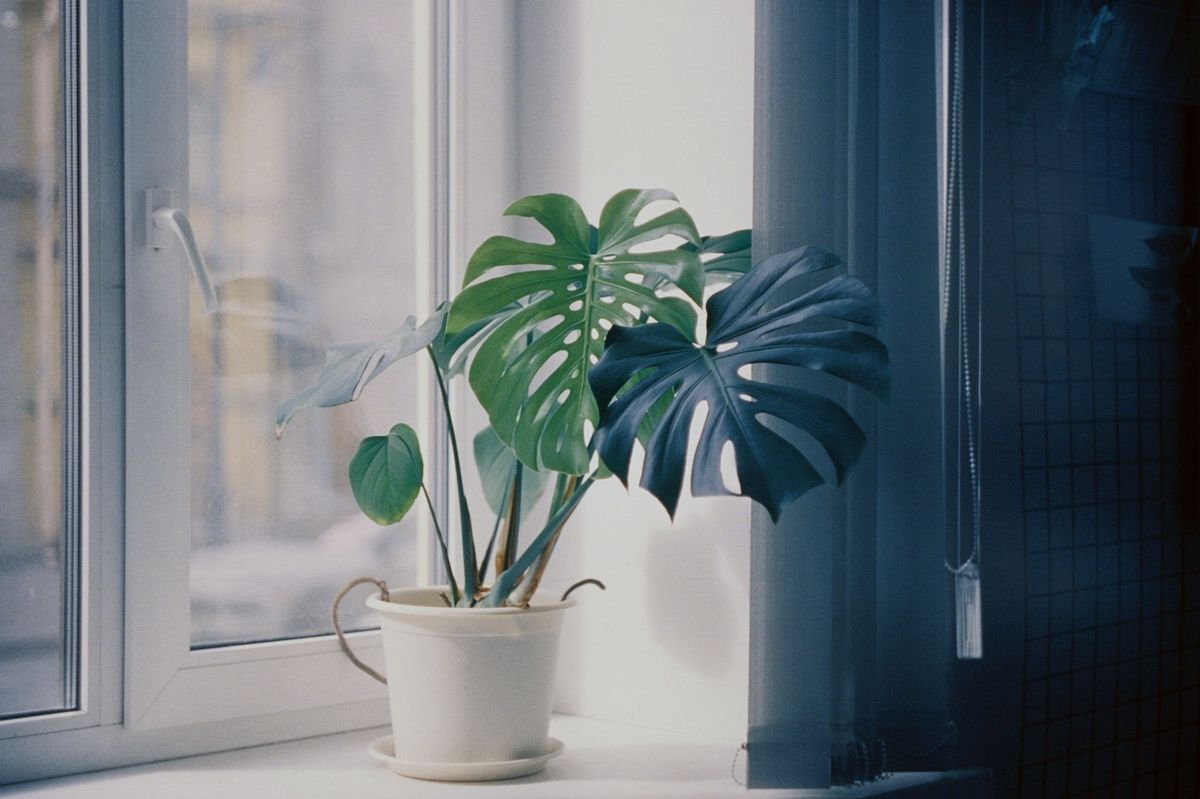
Keeping your monstera upright and structural requires a little ongoing maintenance as the plant continues to mature.
Check your plant ties every few months. As the central vine thickens, tight ties can cut into the green tissue. Loosen and reposition ties as needed to accommodate new girth.
Pruning is another fantastic tool for maintaining balance. If a particular stem has grown too long and threatens to pull the container over, you can prune the stem just below a node. You can then propagate that cutting in water to create an entirely new plant.
By combining reliable physical support, bright indirect light, and a consistent watering routine, your monstera will stand tall, proud, and beautifully upright for years to come.
Why Is Your Monstera Falling Over Self Assessment
Answer 5 quick questions to see your result