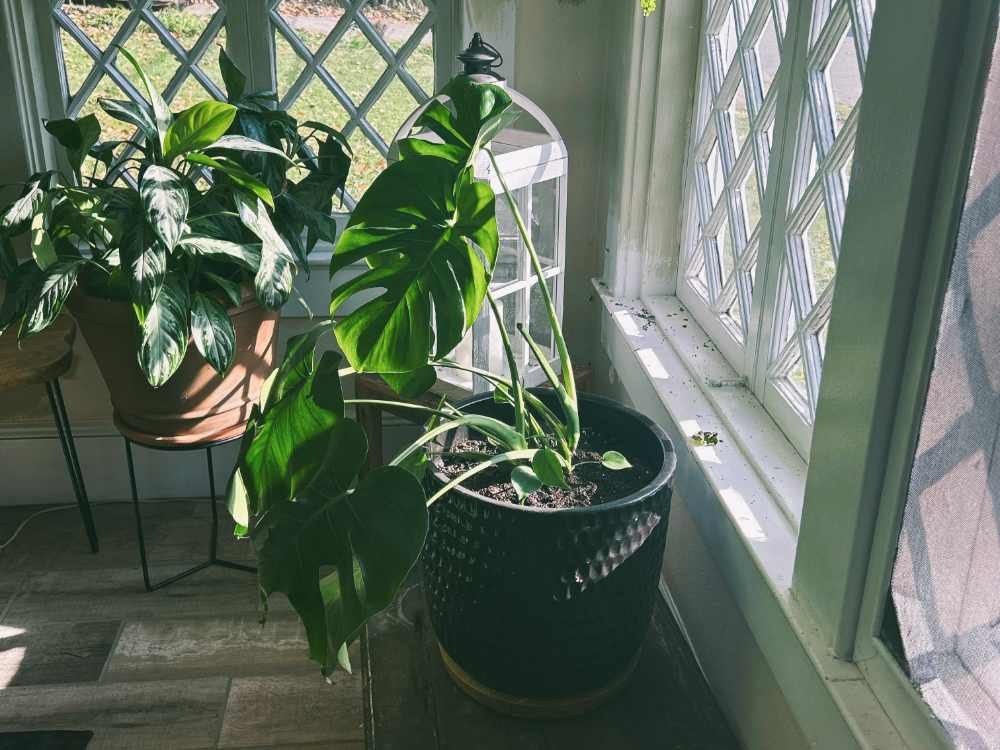
Finding the sweet spot for Monstera lighting can feel like a tricky balancing act. Give your plant too little light, and its lush split leaves will fail to develop. Expose it to harsh sun, and those beautiful green leaves will scorch within a few hours.
Monstera deliciosa and its tropical relatives need bright, filtered light to mimic their natural jungle habitat.
With a clear understanding of exposure, window directions, and seasonal shifts, you can give your Monstera the energy it needs to produce massive, healthy foliage all year long.
Understanding Monstera Light in the Wild
To understand what a Monstera needs indoors, you must look at how it grows in nature. Monsteras are native to the tropical rainforests of Central and South America. In these dense jungles, they start life on the forest floor before climbing up large tree trunks toward the canopy.
As understory plants, they rarely receive direct, unfiltered sunlight. Instead, they sit beneath layers of tree branches that diffuse the harsh rays. This natural environment provides them with bright, dappled sunlight throughout the day.
Replicating this dappled effect in your home is the secret to keeping your Monstera happy. You want to offer strong ambient brightness while protecting the broad leaves from intense, direct solar heat.
Daily Sunlight Hours Needed for Growth
A healthy indoor Monstera needs between 6 and 8 hours of bright, indirect sunlight every day. This duration gives the plant ample energy to run photosynthesis without exhausting its moisture reserves.
If you can extend that exposure to 10 or 12 hours of soft, indirect light, your plant will respond with even faster growth. Tropical houseplants are well adapted to long daylight hours, provided the light intensity remains moderate.
When daylight drops below 6 hours, your plant will slow down its metabolic processes. Growth will stall, and the plant will take much longer to absorb water from its potting mix.
Signs Your Monstera Needs More Light
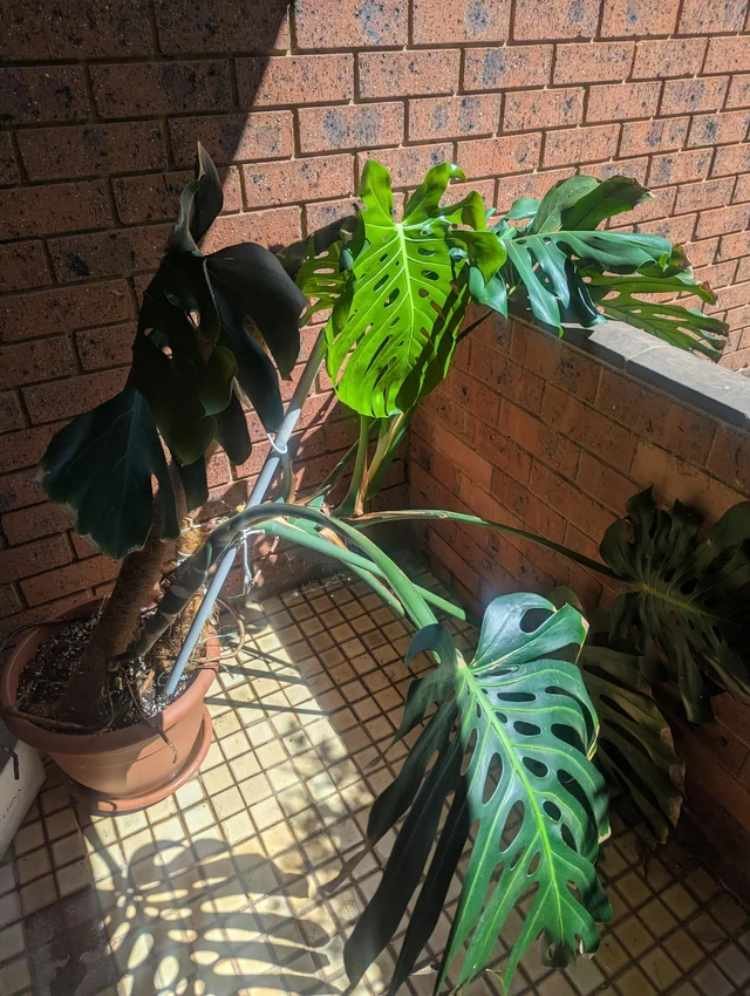
When a Monstera is starved of light, it communicates its distress through visible physical cues. Recognizing these symptoms early allows you to relocate your plant before long-term damage occurs.
Watch out for these common warning signs of insufficient light:
- Long, thin stems that stretch aggressively toward the nearest window
- Smaller, solid green leaves that lack natural splits or fenestrations
- Dull foliage that loses its deep green gloss and turns pale
- Soil that remains soggy for weeks because root uptake has slowed down
- Lower leaves turning yellow and dropping off prematurely
If your plant exhibits several of these issues, it is trying to tell you that its current spot is simply too dark.
Why Low Light Slows Fenestration
The iconic holes and splits in Monstera leaves are known scientifically as fenestrations. In the wild, these openings allow wind to pass through during storms and let lower leaves catch stray beams of light.
Producing fenestrated leaves requires a tremendous amount of cellular energy. When your plant sits in a dark corner, it enters a survival mode where energy conservation is paramount.
Instead of wasting resources on decorative leaf splits, the plant will only produce small, solid, juvenile foliage. Increasing your Monstera’s light exposure is the single most effective way to encourage mature, perforated leaves.
The Dangers of Direct Sun Exposure
While low light prevents growth, intense direct sunlight causes immediate physical damage. Monsteras have wide, sensitive leaf surfaces designed to capture scattered photons, not blazing afternoon heat.
Direct sun shining through window glass acts like a magnifying lens. It heats up the leaf tissue faster than the plant can transpire moisture to cool itself down.
This overheating destroys plant cells and breaks down chlorophyll. Once leaf tissue is scorched by the sun, those damaged sections cannot heal or turn green again.
How to Identify Sunburn on Leaves
Sunburn on a Monstera looks distinctly different from pest damage or watering problems. It usually appears on the upper surfaces of the leaves closest to the window.
Common signs of sunburn include:
- Bleached or pale ivory patches across the leaf surface
- Crispy brown or dark gray spots surrounded by a dried perimeter
- Curling leaf edges that feel dry and brittle to the touch
- Leaves that droop rapidly despite moist potting soil
If you see these patches forming, move the plant back into indirect light immediately. You can trim away fully blackened leaves, or simply allow the damaged leaf to remain while new healthy growth emerges.
Best Window Placements for Your Plant
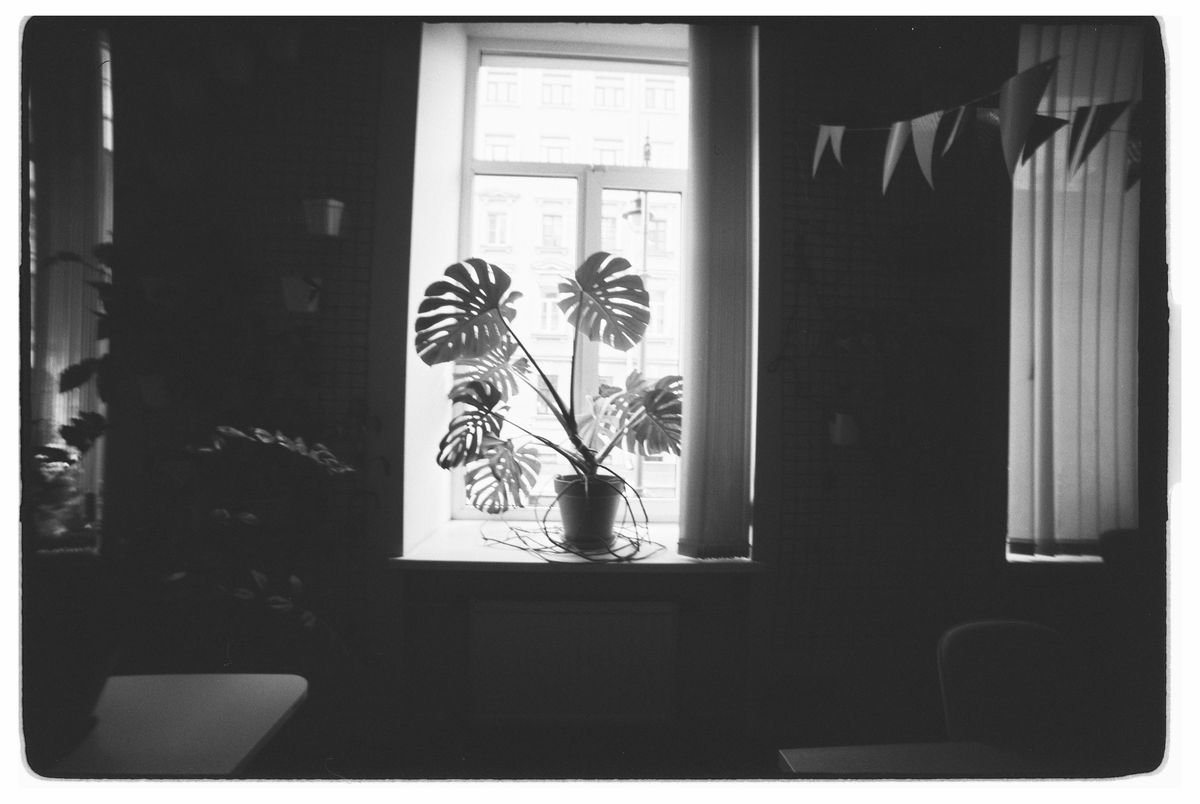
Choosing the right room and window orientation is the easiest way to give your Monstera ideal lighting. Different window exposures offer vastly different light qualities throughout the day.
In the Northern Hemisphere, windows facing east or north offer gentle light, while south and west windows bring intense afternoon heat. If you live in the Southern Hemisphere, this orientation is reversed.
Finding a spot where your plant receives bright reflections from walls and ceilings without sitting in the direct solar beam is the ultimate goal.
North and East Facing Window Care
An east-facing window is widely considered the gold standard for Monstera care. It provides gentle, cool morning sunlight for two to three hours, followed by bright indirect light for the rest of the day.
Because morning rays carry very little heat, your Monstera can sit right on the windowsill or within a couple of feet without any risk of leaf burn.
North-facing windows provide soft, consistent light all day with zero direct sun. While safe from sunburn, a north window may not offer enough intensity during winter, so you may need to keep the plant right against the glass.
South and West Facing Window Tips
South-facing and west-facing windows deliver the strongest light and highest temperatures of the day. Unfiltered exposure from these directions will quickly overheat a Monstera.
You can still use these sunny rooms, but you must modify the setup. Position your Monstera at least 4 to 6 feet away from the window pane so the light diffuses naturally across the room.
Alternatively, hang a sheer white curtain over the window. Sheer fabric filters harsh direct rays into gentle, bright glow that mimics a rainforest canopy perfectly.
Using Artificial Grow Lights Indoors
Not every home has huge windows with ideal exposure. If your living space has limited natural light, artificial grow lights are an outstanding solution for keeping your Monstera vibrant.
Modern LED grow lights consume very little electricity while delivering the full spectrum of light plants need for robust cellular growth.
Grow lights can be used as a standalone light source in windowless rooms or as supplemental lighting during gloomy winter months.
Choosing the Right Grow Light Bulb
When shopping for a grow light, focus on full-spectrum LED bulbs rather than traditional incandescent or purplish blurple lights. Full-spectrum white light looks natural in your home while providing balanced red and blue wavelengths.
Look for bulbs with a color temperature between 4000K and 6500K, which closely mimics natural daylight.
Ensure the light fixture fits the size of your plant. A single clip-on spotlight works well for a juvenile Monstera, while a large, sprawling specimen may need an overhead pendant or multi-head floor lamp.
Setting the Correct Distance and Schedule
Proper placement of your grow light is essential to prevent heat stress while ensuring adequate light reception. Hang or mount your LED grow light roughly 12 to 24 inches above the highest leaf of your Monstera.
If you use high-powered fixtures, keep them at least 24 inches away to prevent localized leaf scorch.
Run your artificial lights on an automatic timer for 10 to 14 hours per day. Plants require a predictable period of darkness each night to rest, process sugars, and maintain their biological rhythm.
Light Needs for Variegated Monstera Varieties
Variegated varieties like Monstera albo, Thai Constellation, and Aurea have special lighting demands compared to standard green plants. The white, cream, or yellow portions of their leaves lack chlorophyll and cannot produce energy.
Because only the green sections can carry out photosynthesis, variegated Monsteras need significantly more light to sustain their root system and foliage.
Provide these rare varieties with strong, bright indirect light for 8 to 10 hours daily. However, keep them strictly out of direct sun, as the white patches burn far more easily than green tissue.
Why You Should Rotate Your Plant
Monsteras exhibit strong phototropism, which means their stems and leaves actively bend toward the brightest light source. In nature, this climbing vine adjusts its posture to reach stray sunbeams.
If your Monstera sits in a fixed position near a window, all the leaves will gradually turn outward to face the glass, leaving the back of the plant bare and uneven.
To maintain a balanced, symmetrical shape, rotate the pot a quarter turn every two weeks when you water. This regular rotation ensures every leaf gets an even share of light and keeps your plant growing upright.
Measuring Light Levels With a Light Meter
Human eyes adapt quickly to dim environments, which makes guessing indoor light levels notoriously inaccurate. A corner that looks bright to you might actually be deep shade for a plant.
Using a digital light meter or a smartphone light meter app removes the guesswork. Light intensity is measured in foot-candles or lux.
Here are the target numbers for Monstera care:
- Low light threshold: 50 to 100 foot-candles (plant will survive but not grow)
- Ideal moderate growth: 200 to 400 foot-candles (steady growth with healthy leaves)
- Optimal bright indirect light: 500 to 1000 foot-candles (fast growth and large fenestrations)
- Direct sun risk zone: Above 1500 to 2000 foot-candles (high probability of sunburn)
Checking your light readings across different times of day helps you find the perfect position in your home.
Adjusting Lighting Across Different Seasons
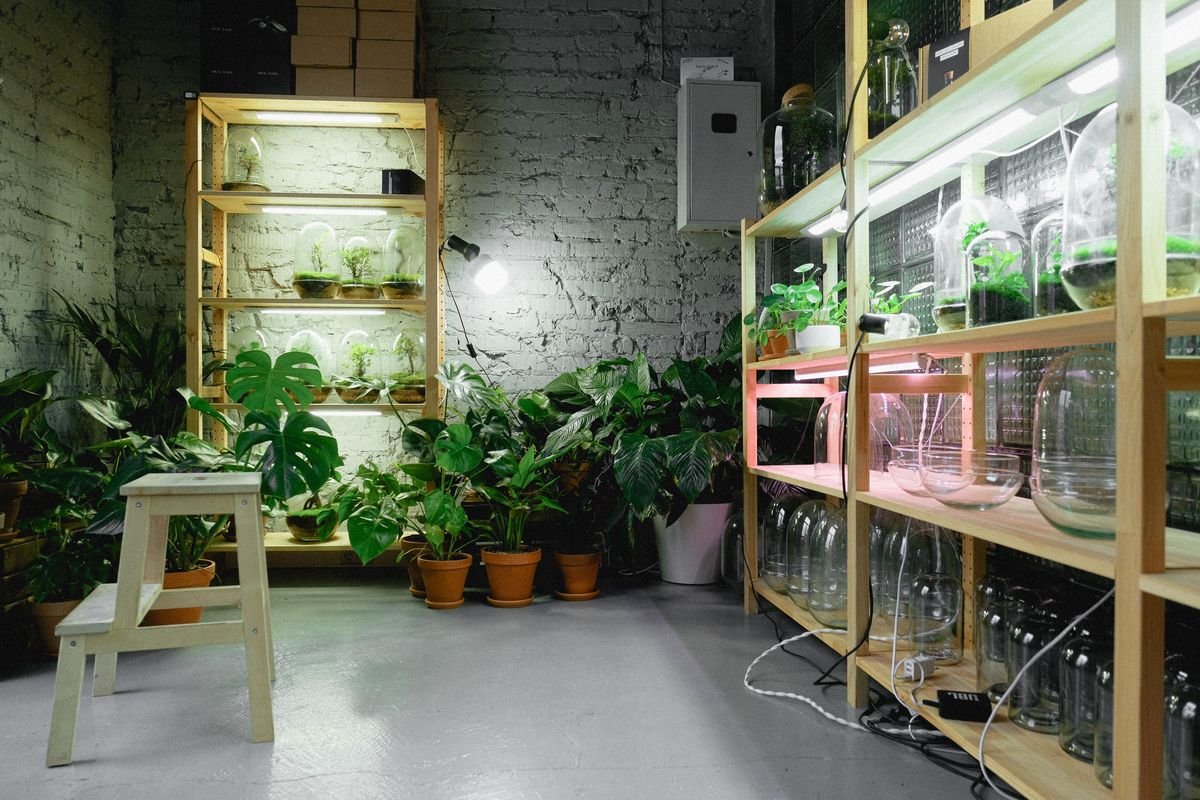
The amount of light entering your windows changes significantly throughout the year. The angle of the sun drops in winter, and daylight hours shorten dramatically.
A spot that receives safe, indirect light in July might become too dark in December. Conversely, a window shielded by outdoor tree leaves in summer may get blasted with harsh direct sun in late autumn after the leaves fall.
Be prepared to move your Monstera closer to the window pane during the low-light winter months. When spring arrives and the sun grows stronger, shift the plant back a few feet to protect it from rising temperatures.
Is Your Monstera Getting the Right Amount of Light?
Answer 4 quick questions to see your result