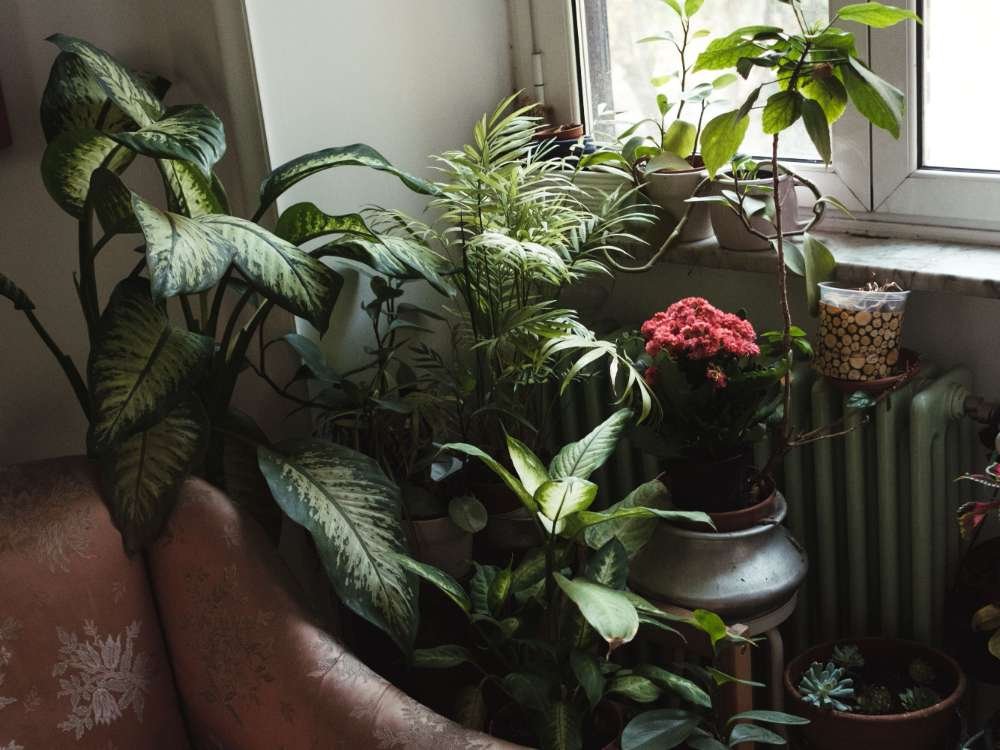
Choosing the right indoor plant often comes down to balance. You want something that brings vibrant greenery into your home without demanding hours of complicated maintenance.
Dieffenbachia and peace lilies are two of the most popular houseplants available today. While both share a lush tropical heritage and adapt well to interior spaces, their growth patterns, watering preferences, and visual displays differ in meaningful ways.
Distinct Foliage Features
Both plants offer striking foliage, but their aesthetic impact is quite distinct.
Dieffenbachia, often called dumb cane, is famous for its patterned leaves. The broad foliage features splashes of cream, white, and lime green surrounded by deep emerald borders. Each leaf unfurls from a thick cane-like central stem, giving the plant an upright, architectural presence.
Peace lilies, on the other hand, showcase solid dark green leaves with deep veins. The leaves emerge directly from the soil in dense clusters. Their glossy, arching form creates a softer, more rounded silhouette that fits gracefully into tabletop arrangements or floor planters.
Light and Sun Tolerance
Neither of these tropical plants enjoys harsh direct sunlight. In their native habitats, both live beneath forest canopies, which makes them well suited for standard home lighting.
Dieffenbachia prefers medium to bright indirect sunlight. If the light is too dim, the bright variegation on its leaves will begin to fade into solid green. Too much direct sun, however, will quickly bleach and scorch the delicate leaf surfaces.
Peace lilies are exceptionally tolerant of lower light conditions. They are a staple in windowless offices and shaded rooms because they can survive on modest ambient light alone. While they grow faster and bloom more frequently in bright filtered light, they remain remarkably resilient in darker corners.
Watering Habits and Moisture Needs
Watering is where these two plants show the most noticeable differences in behavior.
Peace lilies are famous for their dramatic communication style. When thirsty, the entire plant will droop down flat against the pot. Once you give it a thorough drink, the stems bounce back within a few hours.
You should generally water a peace lily when the top inch of soil feels dry. They prefer consistently moist soil, though they should never sit in stagnant water.
Dieffenbachia requires a slightly lighter touch. You should let the top two inches of soil dry out completely before adding moisture. Unlike the peace lily, dieffenbachia will not dramatically wilt to tell you it needs water, so you must rely on manual soil checks.
Susceptibility to Root Rot
Both plants can suffer if overwatered, but dieffenbachia is particularly prone to root and stem rot.
When a dieffenbachia sits in wet soil for too long, its thick fleshy canes absorb excess water. The canes soften, turn mushy near the soil line, and eventually collapse.
Peace lilies can also develop root rot, but their root system handles periodic overwatering slightly better than dieffenbachia. To protect both species, always ensure your planters have functional drainage holes.
Flowering Habits Compared
If indoor blossoms are your priority, the peace lily is the clear standout.
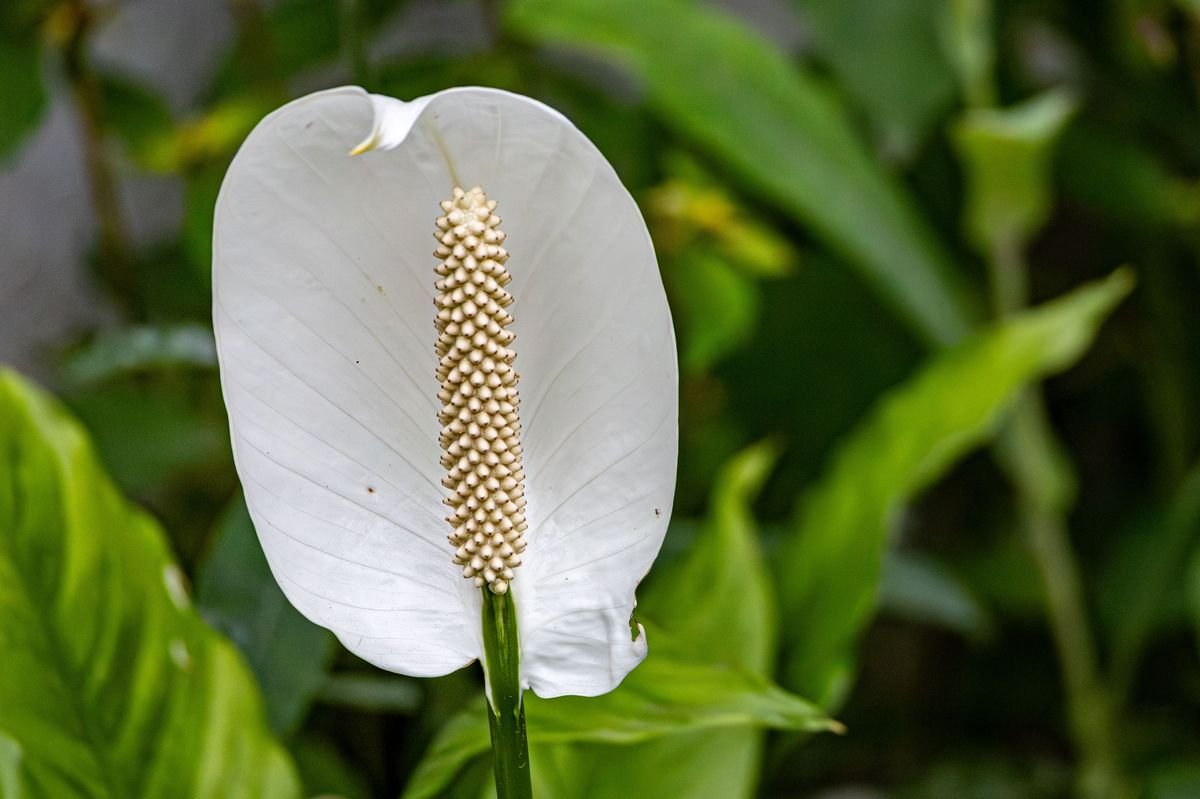
Peace lilies produce elegant white spathes on tall stalks that rise above the foliage. These long-lasting blooms appear reliably throughout spring and summer, especially when kept in bright indirect light.
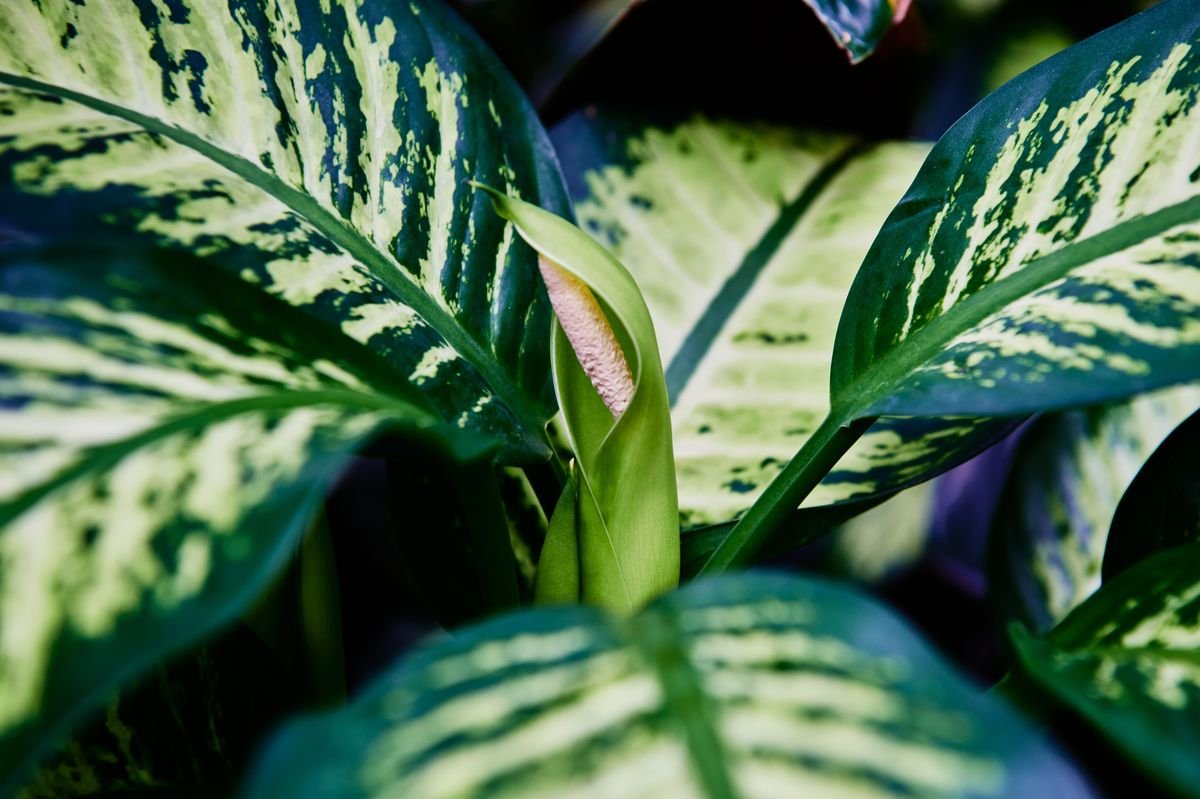
Dieffenbachia rarely produces flowers when grown indoors. When blooms do appear, they consist of a modest greenish-white spathe surrounding a central spadix. Most growers choose dieffenbachia purely for its variegated leaves rather than its occasional, understated flowers.
Growth Rate and Ultimate Size
Understanding the eventual dimensions of these plants helps you position them properly in your home.
Dieffenbachia is a relatively fast grower during spring and summer. Standard varieties can easily reach heights between four and six feet indoors, developing a tree-like cane over time.
Peace lilies tend to grow at a moderate pace. Most standard varieties stay between two and three feet tall and wide, forming a dense, rounded mound. Giant cultivars exist, but standard indoor specimens maintain a compact profile suitable for side tables and shelves.
Repotting and Soil Requirements
Healthy root systems require well-draining potting soil that holds light moisture without staying soggy.
A reliable potting mix for both plants contains standard indoor potting soil amended with perlite and peat moss or coco coir.
- Dieffenbachia benefits from the addition of coarse orchid bark to ensure maximum aeration around its thick roots.
- Peace lilies thrive in a slightly richer, moisture-retentive blend that still drains freely.
- Both plants should be repotted every one to two years when roots begin filling the container.
Temperature and Humidity Needs
Because both varieties hail from tropical climates, they share similar warmth and moisture requirements.
They perform best in temperatures between 65 and 80 degrees Fahrenheit. Neither plant tolerates cold drafts, air conditioning vents, or temperatures dipping below 55 degrees.
Humidity is equally vital. Peace lilies will develop crispy brown leaf tips if the surrounding air is excessively dry. Dieffenbachia also appreciates elevated humidity, which keeps its large foliage supple and pest-free. Placing a small humidifier nearby or setting pots on pebble trays filled with water helps both plants thrive.
Toxicity and Pet Safety Concerns
Safety is an important consideration when introducing new plants to a household with curious pets or young children.
Both dieffenbachia and peace lilies contain insoluble calcium oxalate crystals. These microscopic needle-like structures cause immediate oral irritation, burning, swelling, and drooling if chewed.
Dieffenbachia earned its common nickname ‘dumb cane’ because chewing the leaves can cause temporary vocal cord swelling and speech difficulty.
Neither plant is a true lily (such as Asiatic or Easter lilies, which cause fatal kidney failure in cats), but both will cause notable discomfort if ingested. Keep both species out of reach of pets and toddlers.
Common Problems and Yellow Leaves
Yellowing foliage is a common signal that your plant care routine needs a quick adjustment.
With dieffenbachia, yellow lower leaves usually indicate overwatering or poor drainage. Cold drafts can also cause sudden leaf drop.
For peace lilies, yellow leaves frequently point to either underwatering stress or mineral buildup from tap water. Peace lilies can be sensitive to chlorine and fluoride, so using filtered or distilled water often resolves leaf discoloration.
Common pests like spider mites and mealybugs occasionally target both plants. Inspect the undersides of broad leaves regularly and wipe them down with a damp cloth or insecticidal soap when needed.
Lifespan and Long Term Durability
Both plants are capable of thriving for many years with minimal intervention.
A peace lily can live between five and ten years, continuing to produce new clumps that can be divided during repotting.
Dieffenbachia can live for a decade or more. As the lower leaves naturally shed over time, the cane becomes taller and bare near the base. You can easily rejuvenate an older dieffenbachia by taking cane cuttings and rooting them in fresh soil to start new plants.
Choosing the Right Plant for Your Space
Your final decision depends on your room conditions and personal care style.
Choose the peace lily if your room receives low or filtered light, if you love classic white flowers, or if you prefer a plant that clearly tells you when it needs water.
Choose the dieffenbachia if you want bold variegation, taller architectural foliage, and a plant that can tolerate drying out between watering sessions.
Both plants offer dependable beauty, making either option a rewarding addition to your indoor garden collection.
Which Houseplant Matches Your Home: Dieffenbachia or Peace Lily?
Answer 4 quick questions to see your result