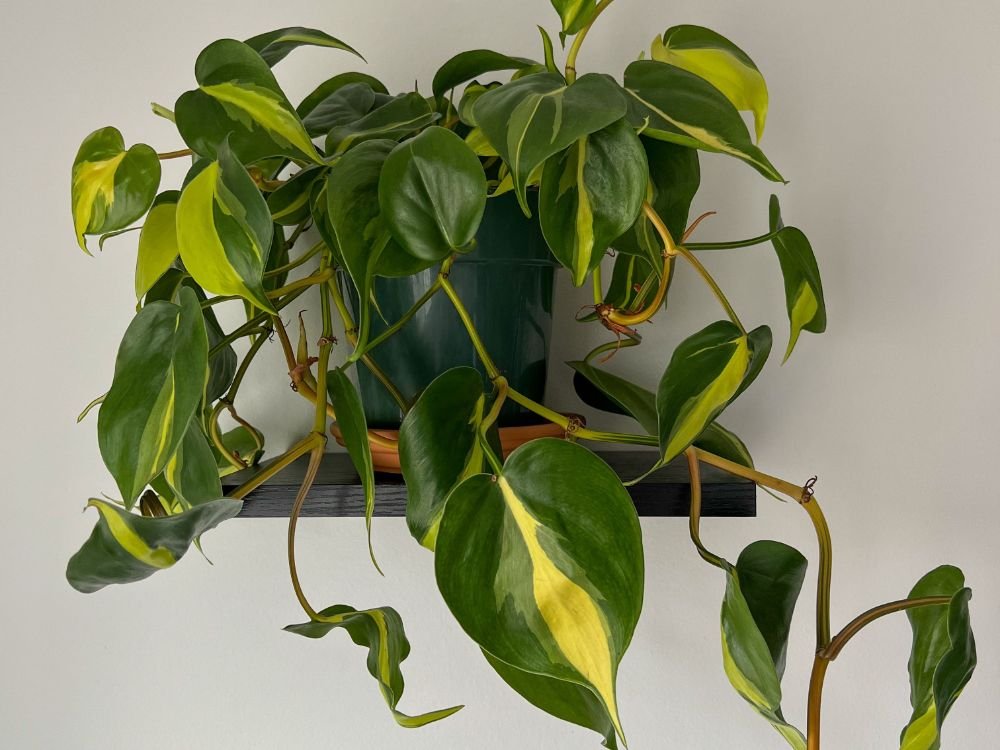
Philodendrons are among the most beloved houseplants in the world. Plant parents cherish them for their lush leaves, resilient nature, and adaptable growth habits.
If you own one of these tropical beauties, you might wonder whether your plant can grow upward like a vine. While many philodendrons are natural climbers, not every variety shares this habit. Learning how your specific plant grows is the first step toward helping it thrive.
Do All Philodendron Plants Climb
Not all philodendrons are climbers. In the wild, philodendrons generally fall into two distinct growth categories: climbing varieties and non-climbing varieties.
Climbing philodendrons are hemiepiphytes. They start their lives either on the forest floor or high in the tree canopy, sending out adventitious aerial roots to latch onto tree trunks and climb toward sunlight.
Non-climbing philodendrons, often called self-heading varieties, grow outward from a central base rather than upward on vines. These plants develop stiff, short stems with closely spaced leaf nodes that form a bushy rosette shape.
Climbing Versus Non Climbing Types
Understanding the structural differences between climbing and self-heading philodendrons helps you choose the right care routine for your plant.
Climbing philodendrons produce long, flexible vines with noticeable space between each leaf node. These nodes produce small aerial roots that seek moisture and support.
Self-heading philodendrons produce a thick, trunk-like central stem. They do not send out long runner vines, and their aerial roots primarily serve to anchor the heavy base into the soil rather than scale tall vertical surfaces.
- Climbing (Vining) Types: Develop long stems, require vertical support to size up, and produce aerial roots along the vine.
- Self-Heading (Non-Climbing) Types: Grow in a wide rosette, stay compact or tree-like, and do not produce trailing vines.
Does Philodendron Birkin Climb
Philodendron Birkin is not a climbing plant. It is a self-heading cultivar with a compact, upright growth habit.
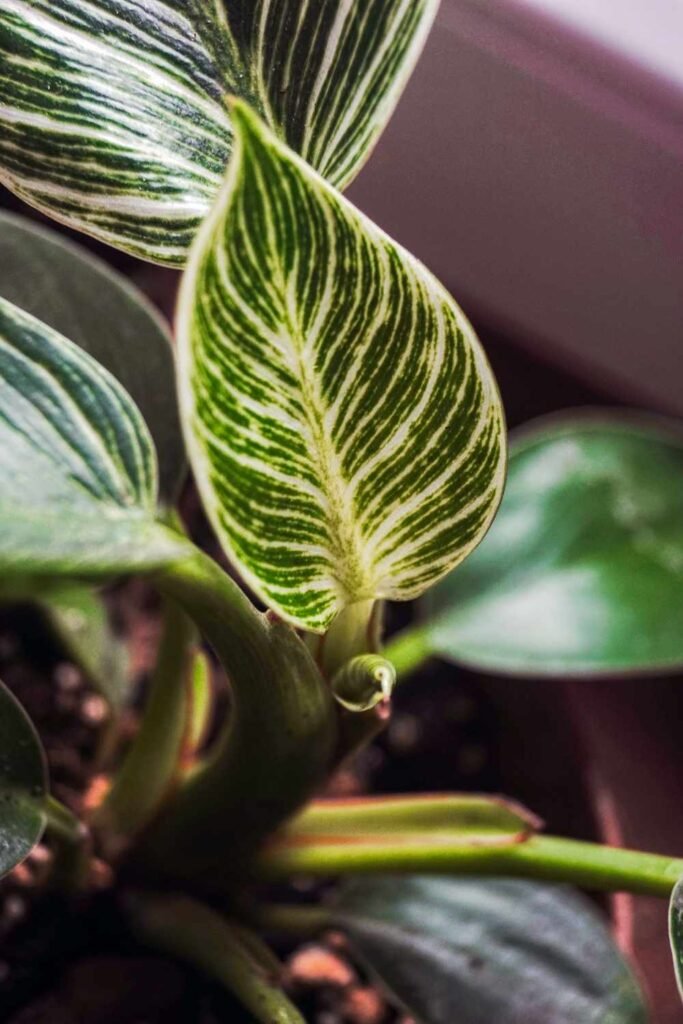
Birkin is a spontaneous mutation of Philodendron Congo Rojo. It produces tightly packed, striped leaves on sturdy stems that radiate outward from a central crown.
When grown indoors, a Birkin typically reaches a height of two to three feet and roughly the same width. Because it does not vine, staking it with a moss pole will not cause it to climb or produce longer stems.
Popular Climbing Philodendron Varieties
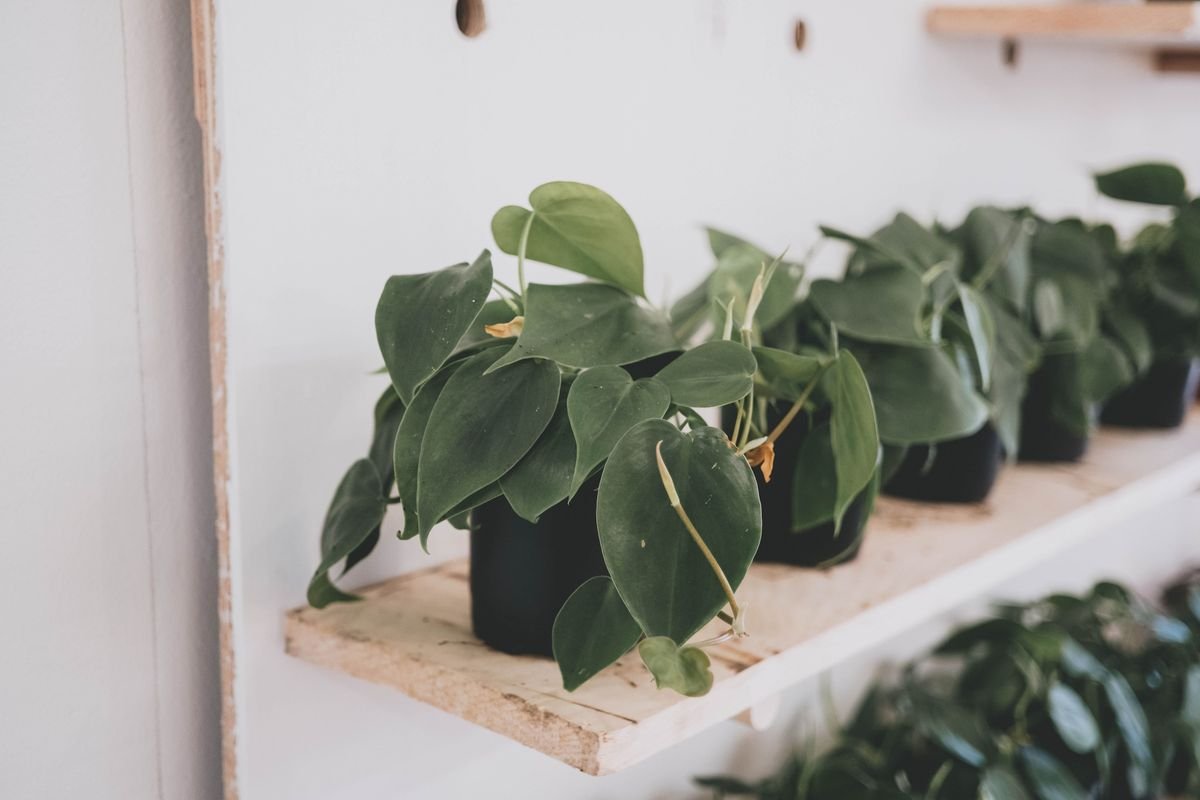
If you want a plant that scales a trellis or moss pole, you have dozens of stunning cultivars to pick from. Many common nursery varieties are natural climbers.
- Heartleaf Philodendron (Philodendron hederaceum): The classic trailing and climbing favorite, featuring dark green, heart-shaped foliage.
- Philodendron Brasil: A popular variegation of the heartleaf plant with lime and cream splashes down the center.
- Philodendron Micans: Famous for its velvety texture and iridescent bronze-green leaves.
- Philodendron Pink Princess: A sought-after climber with dark burgundy leaves splashed with bright bubblegum pink.
- Philodendron Painted Lady: Features bright chartreuse leaves with yellow mottling and vibrant pink petioles.
- Philodendron Hastatum (Silver Sword): Produces metallic, silvery-blue leaves that narrow into arrowhead shapes as they climb.
- Philodendron Mayoi: Boasts deeply lobed leaves resembling palm fronds and climbs quickly when given support.
- Philodendron Brandtianum: Features heart-shaped leaves overlaid with dense silvery patterns.
Non Climbing Philodendron Varieties to Know
Knowing which philodendrons stay bushy helps you design your indoor plant displays effectively without expecting trailing or climbing growth.
Self-heading varieties make wonderful floor plants or tabletop centerpieces because they maintain a full, compact shape.
- Philodendron Prince of Orange: Displays radiant copper and gold foliage that unfurls from a tight central stem.
- Philodendron Moonlight: Known for glowing neon-yellow new leaves that mature into bright green.
- Philodendron Imperial Red: Produces glossy, deep burgundy leaves that grow in a wide, upright rosette.
- Philodendron Congo Rojo: A massive self-heading variety with dark red petioles and large leathery leaves.
- Philodendron Ring of Fire: A slow-growing, serrated-leaf variety that stays relatively compact.
Why Climbing Philodendrons Need Support
While you can let climbing philodendrons trail from hanging baskets, giving them vertical support unlocks their full botanical potential.
In nature, a climbing vine interprets upward movement as a sign that it is reaching brighter canopy light. This triggers a biological process where subsequent leaves grow significantly larger.
Plants that climb up moist supports also develop stronger root systems. The aerial roots burrow into the support, absorbing extra moisture and nutrients directly into the upper stems.
Choosing the Right Support Structure
Different climbing supports suit different plant sizes and aesthetic preferences. Choosing the best support depends on your home setup and how large you want your plant to grow.
Sphagnum moss poles are the gold standard for aroid collectors. Because sphagnum moss holds moisture, aerial roots easily penetrate the pole and accelerate leaf sizing.
Coco coir poles provide sturdy mechanical support. While coco coir does not hold moisture as long as sphagnum moss, it offers a clean, low-maintenance texture for aerial roots to grip.
Wood planks made of untreated cedar or redwood mimic natural tree bark. They last for years and look organic in modern indoor spaces.
Bamboo trellises and wire grids work well for lighter vining philodendrons like Heartleaf, Brasil, and Micans, allowing you to weave stems back and forth.
Step by Step Guide to Training Your Plant
Training your philodendron to climb takes only a few minutes and yields rewarding results within a few months of active growth.
- Select the right pot and support: Choose a pot with good drainage that has enough room to anchor your pole deep at the bottom.
- Insert the support during repotting: Place your moss pole or trellis into the empty pot first, then position your plant roots around it. This prevents damaging established root systems later.
- Position the plant stems: Face the back of the stem (the side where aerial roots emerge) directly against the support material.
- Secure the stems gently: Use soft plant velcro, garden tape, or soft cotton twine to fasten the stem directly below a leaf node. Never tie over new growth tips.
- Keep the support damp: If using a moss pole, mist or water the pole regularly to encourage aerial roots to dig into the moss.
Ideal Light and Watering for Climbers
To fuel rapid climbing growth, your philodendron needs the right balance of ambient light, moisture, and humidity.
Provide medium to bright indirect sunlight. Placing your plant near an east-facing or north-facing window allows it to produce lush foliage without the risk of leaf scorch.
Water your plant thoroughly when the top two inches of potting medium feel dry to the touch. Always ensure excess water drains freely from the pot holes.
When watering a plant on a moss pole, pour water slowly down the top of the pole so moisture trickles down through the moss core into the soil below.
Best Soil and Potting Setup
Climbing aroids require an airy, chunky soil mixture that replicates the loose debris of the rainforest floor.
Standard potting soil tends to pack down too densely, which can choke aerial roots and lead to root rot. A specialized aroid blend allows plenty of oxygen flow around root systems.
- One part quality potting soil or coco coir: Provides a base for moisture retention.
- One part coarse perlite or pumice: Keeps the mixture light and prevents soil compaction.
- One part orchid bark (fir bark): Creates large air pockets for healthy root expansion.
- A handful of horticultural charcoal: Helps sweeten the soil and filter excess impurities.
Common Mistakes When Staking Plants
Even experienced plant owners sometimes run into issues when encouraging their philodendrons to climb.
One common error is tying stems too tightly. Tight ties can cut into tender plant tissue as the stem thickens, interrupting the flow of water and nutrients.
Another frequent mistake is attaching the plant by its petioles (the leaf stalks) rather than the main stem. Petioles need freedom of movement so the leaf can adjust its angle toward the light source.
Letting moss poles stay bone dry is also counterproductive. Aerial roots will not dig into dry, brittle moss, causing the plant to treat the pole merely as a physical prop rather than a growing medium.
Safety and Toxicity Precautions
Before adding climbing philodendrons to your space, consider the safety of curious pets and small children.
All philodendrons contain microscopic, needle-sharp calcium oxalate crystals. If chewed or swallowed, these crystals cause intense burning in the mouth, tongue swelling, drooling, and digestive distress.
The plant sap can also cause mild skin irritation or contact dermatitis in sensitive individuals. Wearing gardening gloves while pruning, repotting, or staking your plants is a wise precaution.
Place climbing varieties on elevated plant stands, tall shelves, or secure walls where pets and small children cannot reach trailing vines.
Final Thoughts on Climbing Philodendrons
Adding a climbing philodendron to your indoor garden brings dynamic vertical beauty into your living space. With so many climbing cultivars available, finding one that matches your personal taste is easy.
Whether you select a classic Heartleaf philodendron or an exotic Pink Princess, providing sturdy support and consistent moisture will reward you with larger, healthier foliage.
Take the time to assess your plant type, set up a solid pole or trellis, and enjoy watching your tropical vine reach new heights.
Is Your Philodendron Ready for a Climbing Pole?
Answer 4 quick questions to see your result