Stepping into a local plant nursery often presents you with a stunning sea of tropical foliage. Two of the most popular groups you will encounter are philodendrons and alocasias.
At first glance, their lush green canopies and heart-shaped foliage might look remarkably similar. However, once you examine their root structures, growth patterns, and care demands, you will find two entirely distinct plant families. This comprehensive guide breaks down everything you need to know to tell them apart and choose the best one for your space.
Understanding the Aroid Family
Both philodendrons and alocasias belong to the Araceae family, commonly known as aroids. This botanical connection explains why they share similar aesthetic features, such as distinct leaf patterns and unique spathe flowers.
Despite their shared family tree, they hail from different corners of the globe. Philodendrons are native to the tropical Americas, while alocasias originate from the humid tropical and subtropical forests of Asia and eastern Australia. These distinct geographic backgrounds have shaped their evolutionary adaptations, survival strategies, and everyday care needs.
Leaf Characteristics
Foliage is usually the first detail plant collectors evaluate, and it provides some of the clearest clues for plant identification.
While both plants produce stunning tropical foliage, their texture, structural patterns, and overall durability differ noticeably under close inspection.
Vein Appearance
The leaf veins are often the most reliable way to tell these two genera apart.
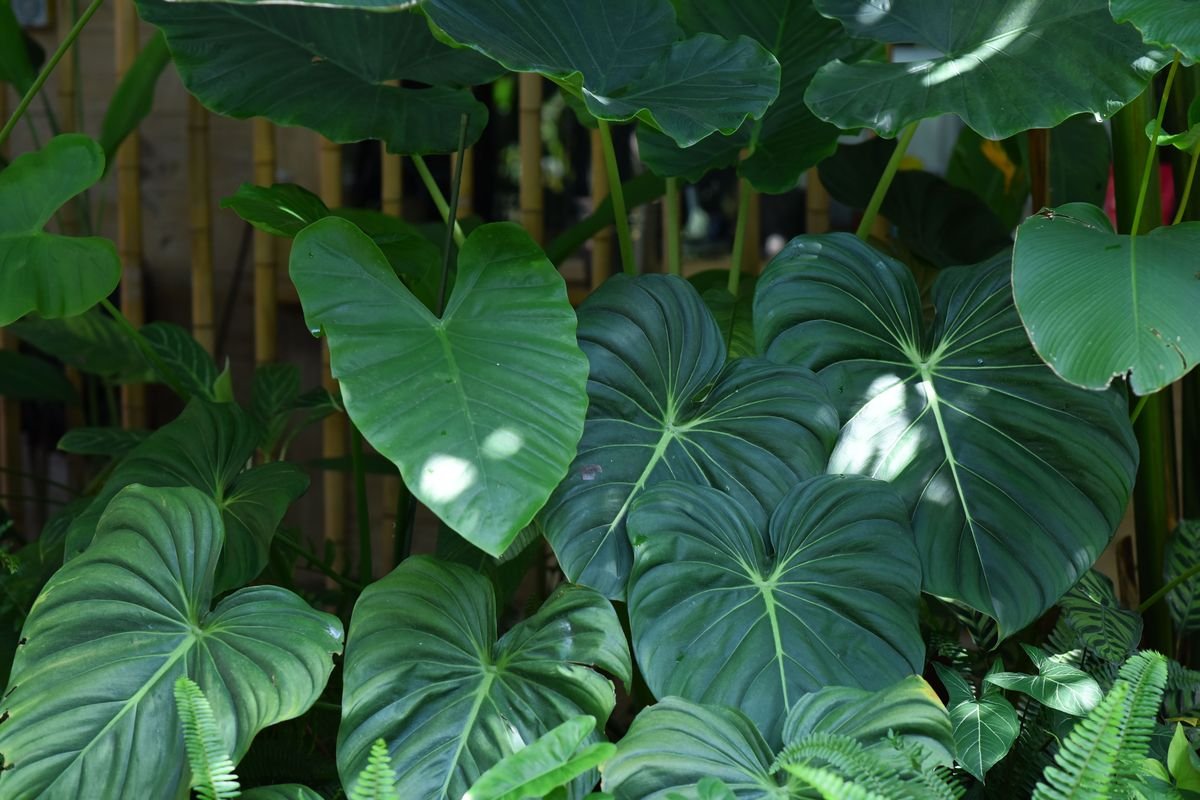
In most philodendron varieties, the leaf veins are subtle and blend seamlessly into the surrounding tissue. They share the same color tone as the leaf surface, creating a smooth and uniform look.
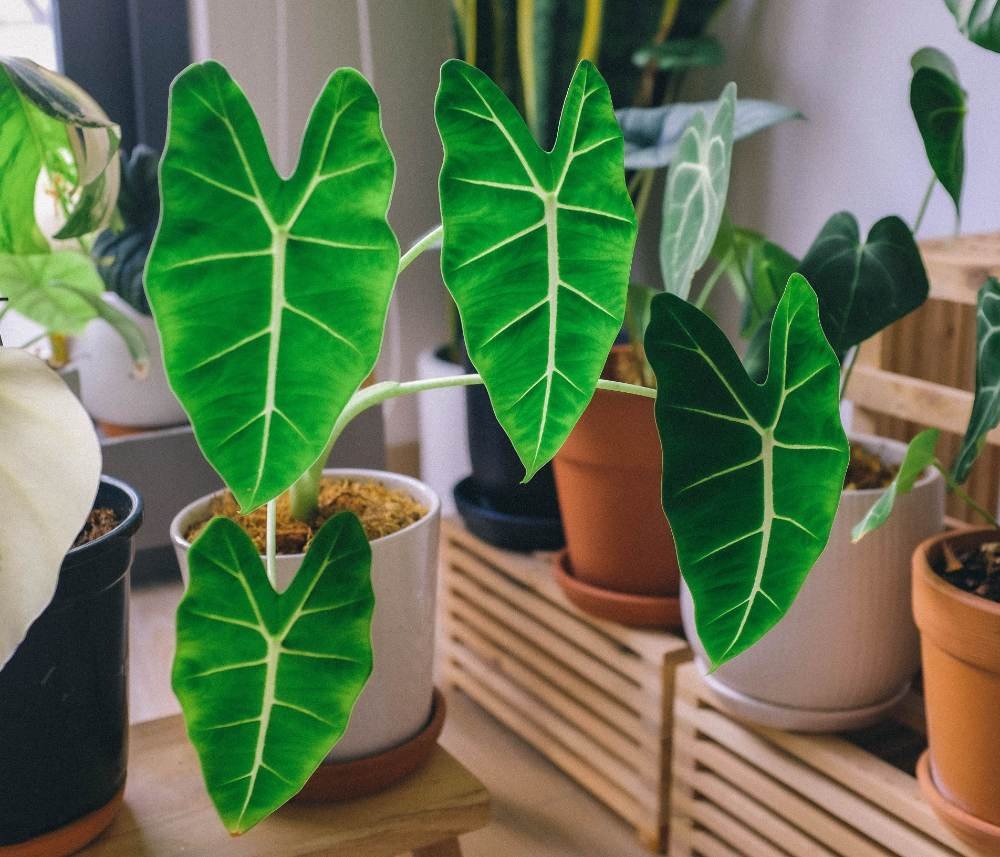
Alocasia leaves, on the other hand, usually feature bold, contrasting veins. Varieties like Alocasia polly or Alocasia frydek showcase thick, bright white or silvery-green primary veins that stand out dramatically against dark, velvety green tissue.
Leaf Color and Texture
Philodendrons display a wide spectrum of colors, ranging from classic emerald green to coppery red, deep burgundy, and bright neon lime. Their leaf surfaces are often glossy, leathery, or softly matte.
Alocasia leaves frequently offer striking, dramatic color contrasts. You will find jewel-toned foliage in shades of gunmetal blue, charcoal purple, and deep forest green.
The leaf texture of an alocasia can be exceptionally thick, cardboard-like, or luxuriously velvety, giving each leaf a sculpted, architectural presence.
Leaf Shapes and Edges
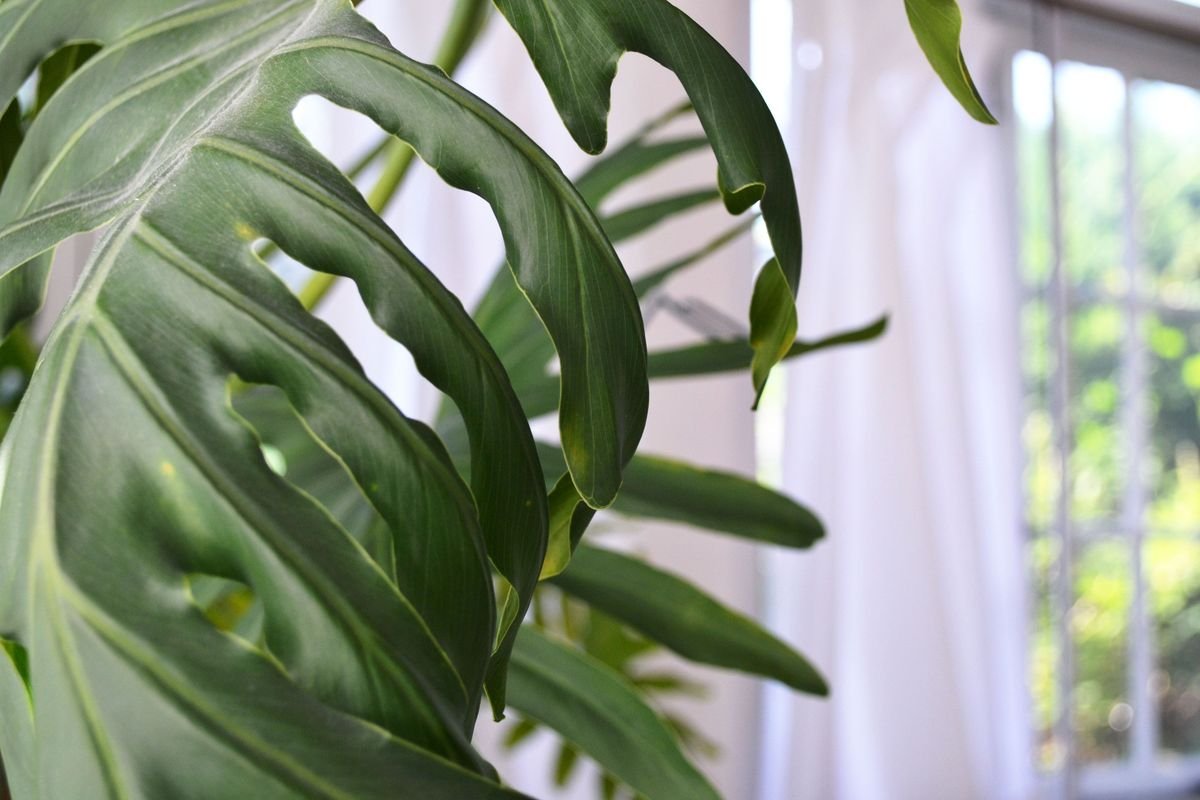
Philodendron leaves come in an incredible variety of shapes, including hearts, narrow spears, spades, and deeply lobed forms. Many philodendron varieties also change their leaf shape drastically as they mature from juvenile climbers into adult plants.
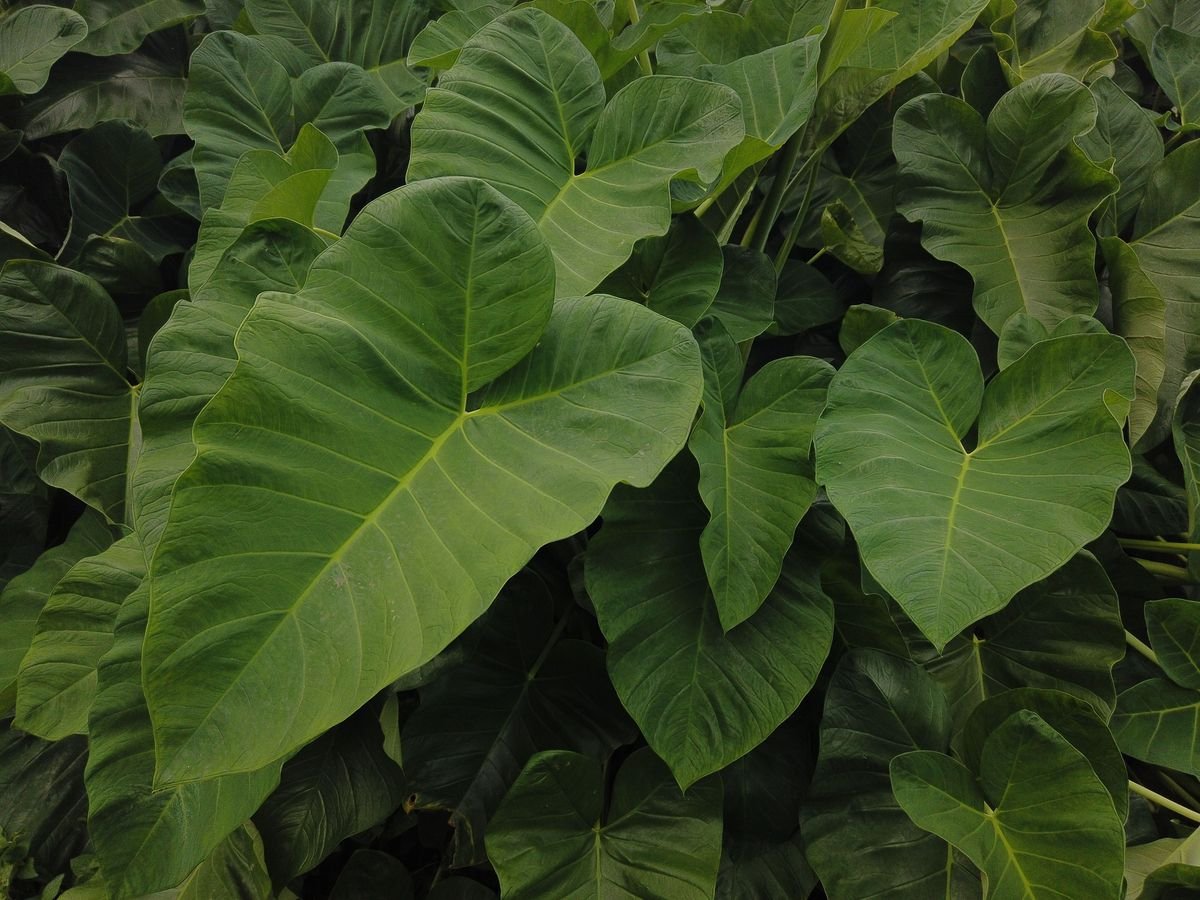
Alocasia foliage is commonly described as elephant ears or shield-shaped. Their leaves tend to be elongated arrowheads, broad shields, or scalloped hearts, often featuring undulating or wavy margins.
Root and Stem Anatomy
Looking beneath the soil line reveals one of the most fundamental structural differences between these two houseplants.
How a plant stores energy and anchors itself determines its resilience, propagation style, and watering requirements.
Presence of Underground Corms
Philodendrons feature a standard fibrous root system. They produce numerous branching roots directly from the main stem and leaf nodes, which spread through the potting medium to absorb water and nutrients.
Alocasias grow from underground storage structures known as corms or rhizomes. A corm is a swollen, bulb-like stem that stores water, starches, and nutrients.
This corm acts as an energy reservoir, allowing the alocasia to survive periods of drought, chill, or seasonal leaf loss by sending up new growth when conditions improve.
Cataphyll Differences
A cataphyll is a specialized, scale-like modified leaf that protects a young leaf while it develops inside the stem.
On philodendrons, cataphylls typically dry up, turn brown, and fall off the stem once the new leaf fully emerges and unfurls.
On alocasia plants, the protective sheaths are integrated directly into the petiole bases, where they remain attached at the base of the plant rather than falling away cleanly.
Growth Patterns and Behavior
Understanding how each plant grows in nature helps you provide the right physical support and spatial layout inside your home.
Their natural growth habits also dictate how quickly they fill out their pots and how they respond to changing seasons.
Climbing Versus Clumping
Philodendrons generally fall into two categories: vining climbers and self-heading upright types. Vining varieties produce aerial roots and climb up tree trunks as epiphytes, reaching toward the forest canopy.
Alocasias do not produce climbing vines. Instead, they grow in upright, clumping arrangements directly from their central corms.
Each new leaf of an alocasia emerges on a long, erect stem, creating a fountain-like architectural silhouette.
Growth Rates and Seasonal Dormancy
Philodendrons are famously fast and steady growers. In warm indoor conditions with proper care, climbing varieties can produce several inches of new vine growth each month throughout the active season.
Alocasias operate on a more distinct seasonal rhythm. They produce rapid leaf flushes during the warm spring and summer months, but they frequently enter a period of semi-dormancy in autumn and winter.
During winter dormancy, an alocasia may stop producing new leaves and might even drop several older leaves. This is normal behavior, provided the underlying corm remains firm and healthy.
Flowering and Fruit Production
While both plants are primarily grown indoors for their foliage, they do possess unique reproductive structures.
Flowering indoors is uncommon, but it offers a fascinating glimpse into their botanical classification.
Inflorescence Structure
Like all aroids, both plants produce an inflorescence consisting of a spathe (a protective modified bract) and a spadix (a fleshy spike covered in tiny flowers).
Philodendron blooms often feature a thick, boat-shaped spathe in shades of cream, pale green, or crimson, housing a dense white spadix.
Alocasia blooms are typically smaller, slender, and less prominent, featuring pale green or creamy hoods that briefly open before fading.
Fruit and Seed Habits
When pollinated in their native habitats, philodendrons develop clusters of fleshy berries along the spadix. These berries range from white to vibrant orange or red, attracting tropical birds and mammals that disperse the seeds.
Alocasias also produce clusters of small, brightly colored berries that turn scarlet or deep orange when mature, each containing a few round seeds.
Indoor Care Requirements
Providing the right environment is the key to keeping both genera thriving in your living room or office.
While their general needs overlap, alocasias require tighter environmental control than tough, forgiving philodendrons.
Lighting Preferences
Philodendrons are celebrated for their adaptability to average indoor environments. They thrive in medium to bright indirect sunlight, but many varieties can comfortably tolerate lower light levels without suffering severe decline.
Alocasias demand bright, consistent indirect light to sustain their large leaves and fuel corm development.
If kept in low light, alocasias quickly drop foliage, produce weak petioles, and become vulnerable to overwatering issues. Direct, harsh sunlight should still be avoided, as it can scorch the foliage of both plants.
Watering and Humidity Needs
Philodendrons appreciate a moderate watering routine. You can safely allow the top two inches of soil to dry out between waterings, and they handle occasional forgetfulness with ease.
Alocasias require a more balanced moisture level. Their soil should remain lightly moist during active growth, but never waterlogged.
Humidity is another critical factor. While philodendrons tolerate standard household humidity levels around 40 to 50 percent, alocasias flourish best when humidity stays consistently above 60 percent. Low humidity often causes crispy leaf tips and attracts spider mites to alocasia leaves.
Popular Varieties to Grow
Both genera offer an exciting range of beginner-friendly cultivars as well as prized collector specimens.
Here are some of the most popular varieties available to indoor gardeners:
Top Philodendron Cultivars
- Heartleaf Philodendron (Philodendron hederaceum): The quintessential beginner trailing houseplant with glossy, heart-shaped leaves.
- Philodendron Brasil: A vibrant sport of the heartleaf variety featuring lime-green and gold variegation down the center of each leaf.
- Philodendron Birkin: A compact, self-heading plant with crisp white pin-stripe variegation across deep green foliage.
- Philodendron Micans: A trailing favorite admired for its iridescent, velvet-textured leaves that shimmer in shades of bronze and rust.
- Philodendron Pink Princess: A highly sought-after cultivar known for its dark burgundy leaves splashed with bright bubblegum-pink patches.
Top Alocasia Cultivars
- Alocasia Amazonica (Polly): The classic shield-leaf variety featuring dark green, scalloped foliage with bright silver-white veins.
- Alocasia Frydek (Green Velvet): A striking variety with soft, velvety matte-green leaves punctuated by stark white central ribs.
- Alocasia Zebrina: Highly recognizable for its bold, zebra-striped petioles topped with shield-shaped green leaves.
- Alocasia Dragon Scale: A jewel alocasia with heavily textured, ribbed leaves resembling reptilian scales.
- Alocasia Silver Dragon: A compact jewel variety offering pale silvery-mint leaves with deep green contrast veining.
Toxicity and Safety
Safety is an essential consideration when introducing any new houseplant into a home shared with children or curious pets.
Both philodendrons and alocasias contain insoluble calcium oxalate crystals throughout their plant tissues.
When chewed or swallowed, these microscopic needle-shaped crystals pierce the sensitive tissues of the mouth, tongue, and digestive tract. Symptoms of ingestion include immediate oral pain, profuse drooling, vomiting, and difficulty swallowing.
Alocasias generally cause stronger localized reactions and can also trigger contact dermatitis or skin irritation from their sap during handling. Always keep both plants out of reach of cats, dogs, and small children, and wear gloves when repotting or pruning.
Choosing the Best Plant for Your Home
Deciding between a philodendron and an alocasia ultimately comes down to your personal experience level, available lighting, and room conditions.
If you want an easygoing, resilient plant that tolerates fluctuating watering schedules and moderate light, a philodendron is the ideal pick. They make wonderful cascading plants for bookshelves, hanging baskets, or moss poles.
If you have a bright spot with high humidity, and you enjoy attentive plant care and dramatic, sculptural foliage, an alocasia will reward you with show-stopping beauty. Both plants bring unique tropical elegance to any indoor collection.
Philodendron or Alocasia: Which Plant Fits Your Space?
Answer 4 quick questions to see your result