Finding houseplants that can tolerate unobstructed, blazing sunshine streaming through south-facing or west-facing windows can feel like a challenge.
Most common interior plants originate from dense tropical forest floors, meaning their delicate leaves will quickly scorch when exposed to unfiltered glass panes.
Fortunately, a diverse group of sun-loving houseplants evolved specifically to handle intense light, heat, and arid conditions.
Whether you want sculptural desert succulents, bold architectural trees, vibrant tropical blooms, or fragrant kitchen herbs, this curated guide covers sixteen options that turn your sunniest windowsills into lush indoor displays.
1. Jade Plant (Crassula ovata)
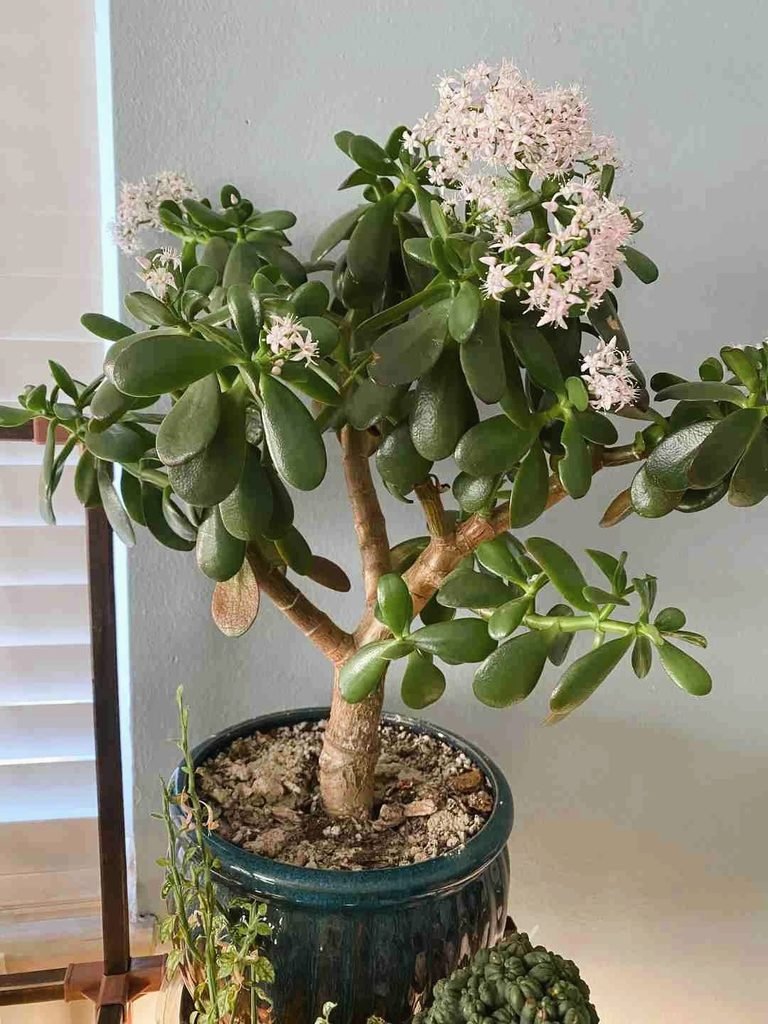
Jade plants are iconic succulents that love spending hours in bright, unfiltered sunshine.
Their thick, fleshy leaves store moisture efficiently, allowing them to handle dry indoor air and warm windowpanes without missing a beat.
With enough direct sunlight, the leaf margins will develop an attractive red tint. Be sure to let the potting soil dry out completely before giving it a thorough soak. This is an ideal low-fuss companion for sunny south-facing spaces.
- Light: 4 to 6 hours of direct sunlight daily
- Water: Allow potting soil to dry out completely between waterings
- Mature Size: 2 to 4 feet tall, 2 to 3 feet wide indoors
2. Aloe Vera (Aloe vera)
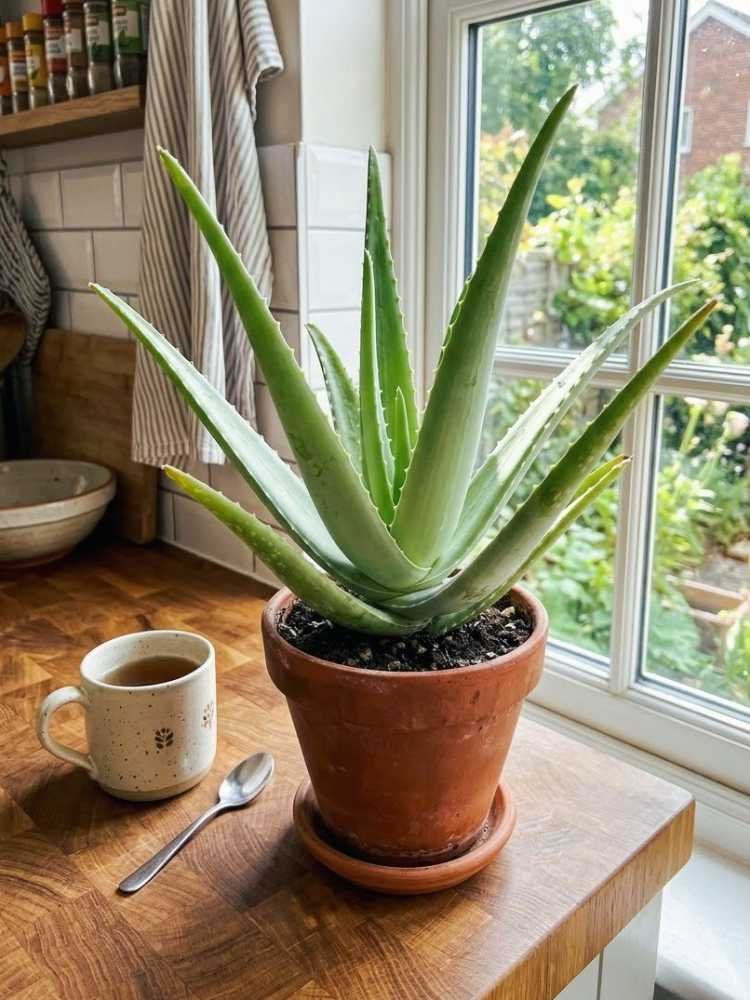
Aloe vera is a classic household succulent that thrives in warm, sun-drenched rooms. Its thick, upright spears contain soothing gel that is famous for treating minor skin burns and cuts.
This desert native uses specialized nocturnal respiration, meaning it loses almost no moisture during hot midday hours.
It handles poor, sandy soils with ease and requires very little watering throughout the month. It makes a fantastic, resilient plant for busy plant parents.
- Light: 6 or more hours of direct sunlight daily
- Water: Water deeply every 2 to 4 weeks, letting the mix dry completely
- Mature Size: 1 to 2 feet tall, 1 to 2 feet wide
3. African Milk Tree (Euphorbia trigona)
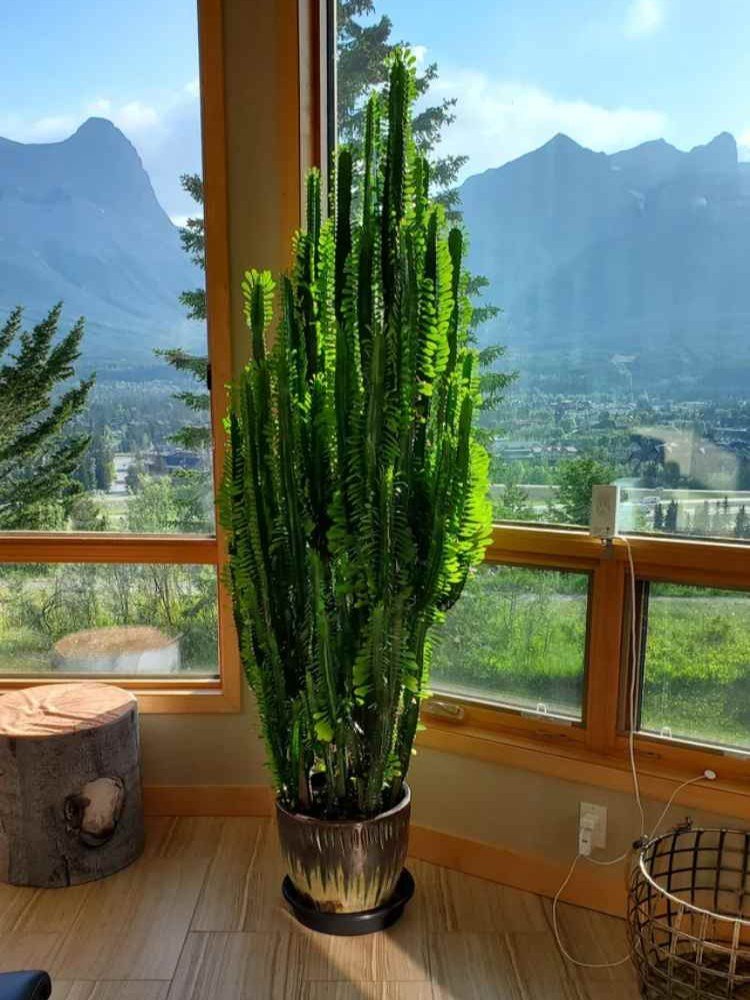
The African milk tree brings dramatic architectural height to hot, sunny rooms. While it looks like a cactus, it is actually a succulent shrub lined with short thorns and small teardrop-shaped leaves.
It thrives under direct rays that would scorch ordinary tropical houseplants. Just be careful when moving it, because its stems contain a toxic milky sap that can irritate the skin and eyes.
- Light: 4 to 6 hours of direct sun daily
- Water: Soak only when the substrate is dry all the way to the bottom
- Mature Size: 4 to 8 feet tall, 1.5 to 2.5 feet wide
4. Burro’s Tail (Sedum morganianum)
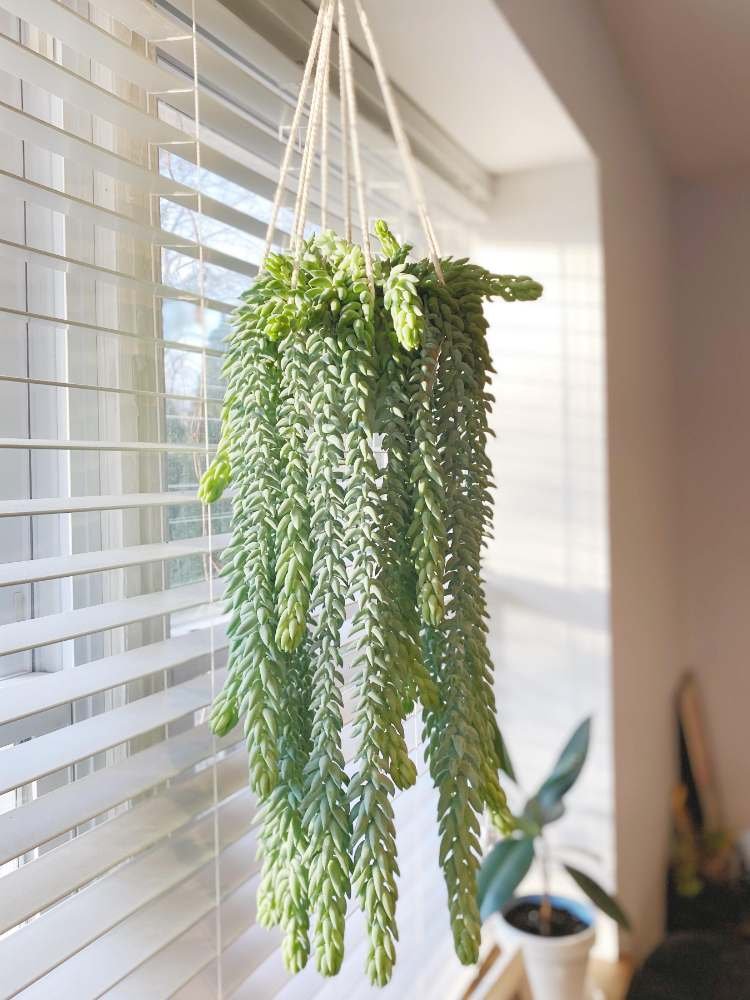
Burro’s tail is a trailing succulent that produces cascading ropes of plump leaves. The foliage is dusted in a powdery protective coating called farina, which acts as a natural sunscreen.
It flourishes when suspended directly in a sunny south or west window. The bead-like leaves fall off easily when bumped, so hang it somewhere out of heavy foot traffic. As a bonus, this charming hanging succulent is non-toxic to cats and dogs.
- Light: 4 to 6 hours of direct sun daily
- Water: Water thoroughly once the leaves feel slightly soft to the touch
- Mature Size: Cascading trailing stems 1 to 3 feet long
5. Desert Rose (Adenium obesum)
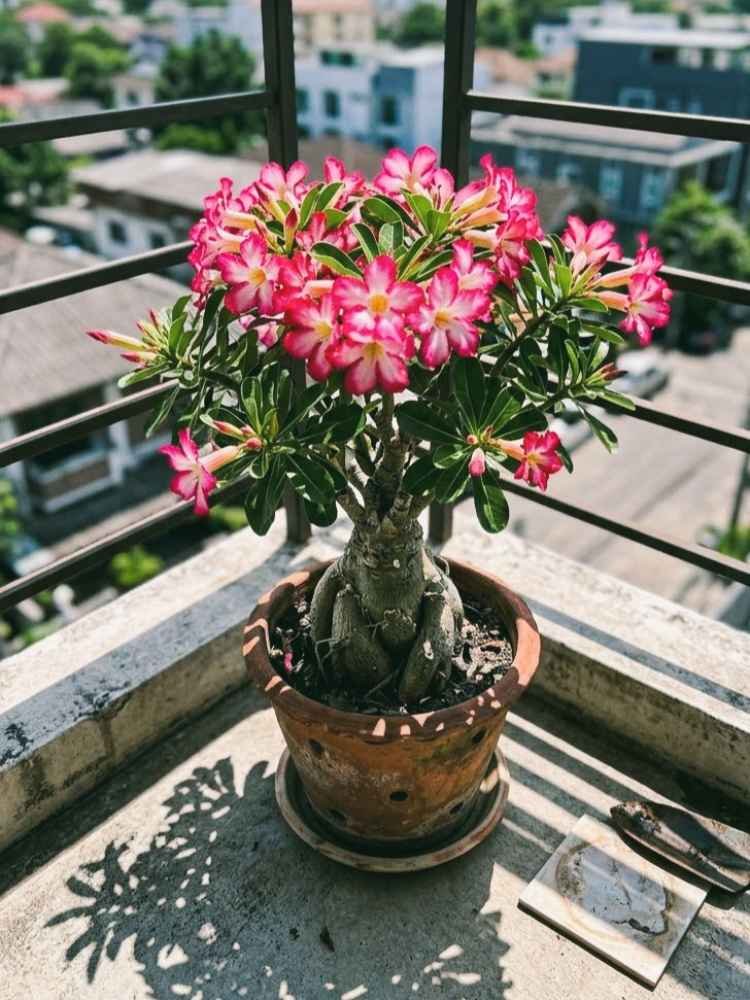
Desert rose is famous for its sculptural, bulbous trunk and showy tropical flowers. This sun worshipper needs intense direct sunlight to fuel its spectacular floral displays.
Its thick base stores copious amounts of water, helping it endure scorching interior heat.
Keep the soil dry during the cold winter months to avoid root rot. Keep this plant away from curious pets because its milky sap contains cardiac toxins.
- Light: 6 or more hours of direct sun daily
- Water: Water weekly during summer, but keep almost dry in winter
- Mature Size: 2 to 4 feet tall, 1.5 to 2 feet wide
6. Bird of Paradise (Strelitzia reginae)
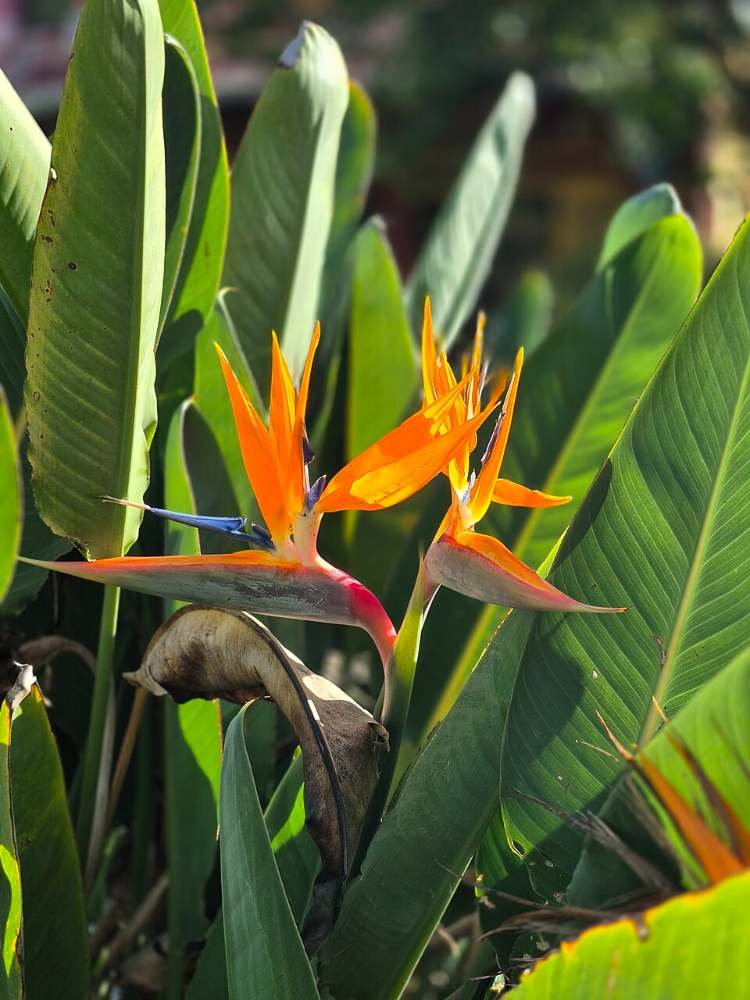
Bird of paradise brings an instant jungle feel to large, sunny rooms. Its thick, paddle-shaped leaves love soaking in hours of bright direct sun near large windows.
Do not panic if you see the leaves splitting naturally along the veins. This evolutionary adaptation allows wind and heat to pass through without tearing the stem. Keep the potting soil evenly moist during the active spring and summer growing season.
- Light: 4 to 6 or more hours of direct sunlight daily
- Water: Keep soil consistently moist in spring and summer, drier in winter
- Mature Size: 4 to 6 feet tall, 3 to 4 feet wide
7. Ponytail Palm (Beaucarnea recurvata)
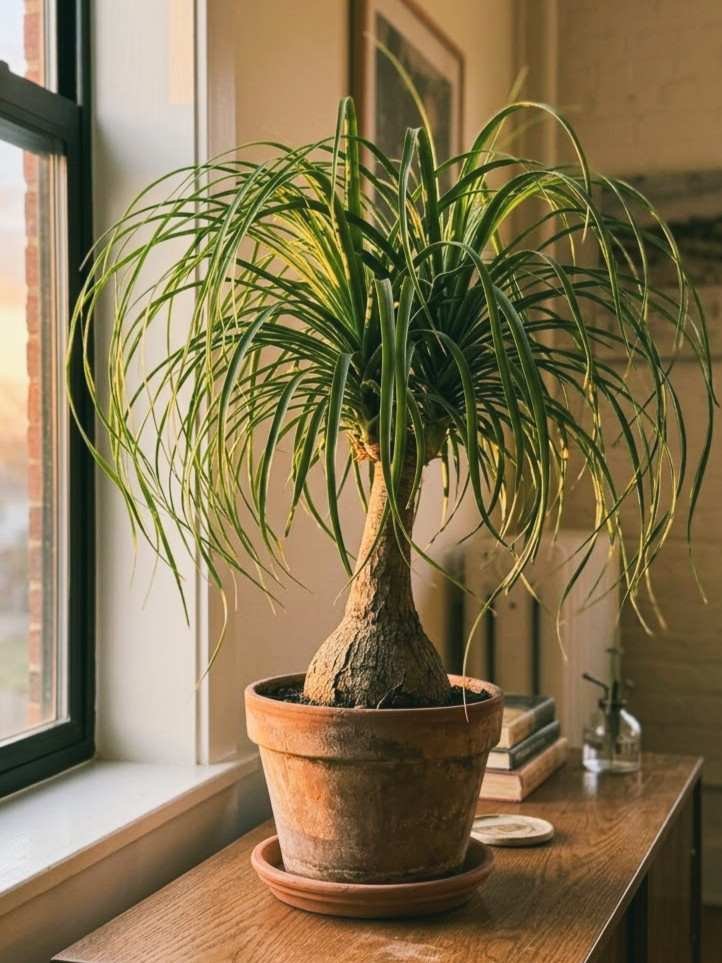
Despite its common name, the ponytail palm is actually a succulent tree closely related to agaves.
It features a swollen base that stores water like a reservoir alongside a fountain of curly, strap-like leaves.
This hardy plant relishes full, direct sunshine and handles dry household air without complaint. It grows slowly and forgives sporadic watering schedules. It is also completely non-toxic to curious cats and dogs.
- Light: 5 to 6 or more hours of direct sun daily
- Water: Soak thoroughly once a month after the soil dries out fully
- Mature Size: 4 to 8 feet tall, 2 to 3 feet wide indoors
8. Dwarf Olive Tree (Olea europaea)
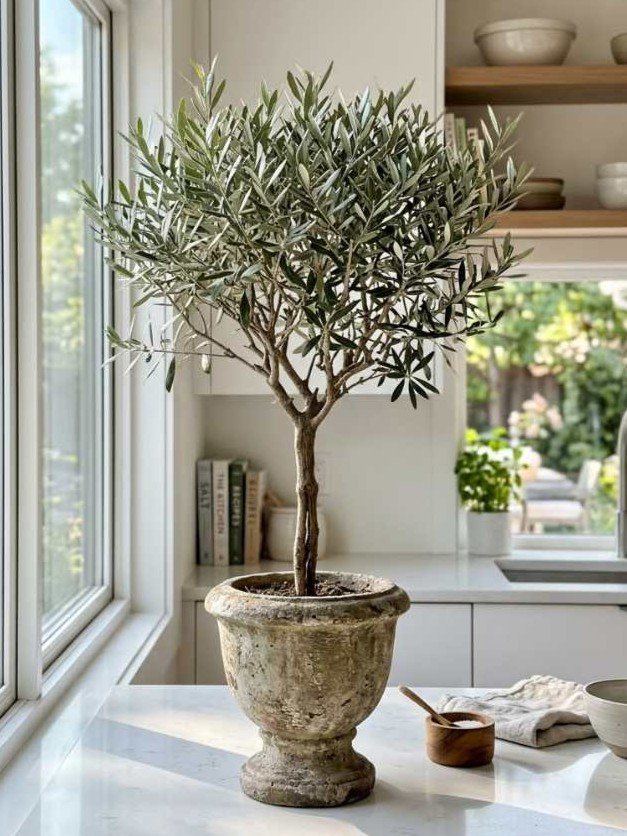
Dwarf olive trees provide a sophisticated Mediterranean aesthetic for sun-filled interior spaces. Their slender leaves have tiny silver trichomes underneath that reflect excess light and conserve water.
They demand as much direct sunlight as you can possibly supply inside your home. Plant them in a gritty, free-draining potting blend and rotate the pot regularly for balanced growth. They are safe for pets and bring an elegant, rustic charm indoors.
- Light: 6 or more hours of direct sunlight daily
- Water: Allow the top half of the soil to dry before soaking thoroughly
- Mature Size: 4 to 6 feet tall, 2 to 3 feet wide
9. Fiddle Leaf Fig (Ficus lyrata)
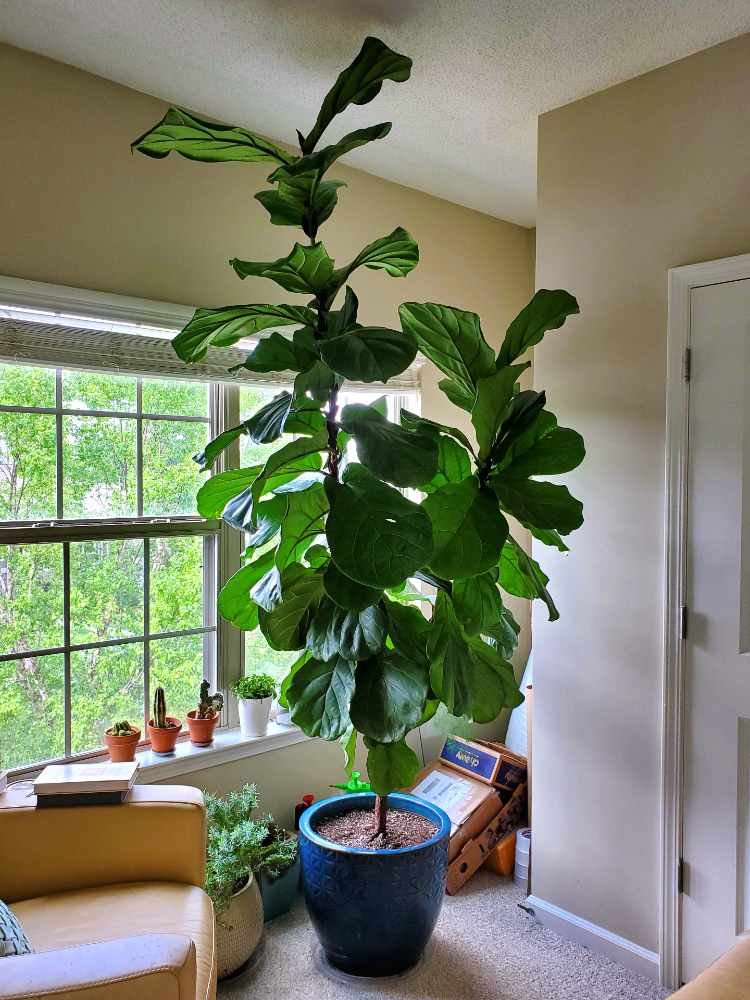
While commonly grown in bright indirect light, a properly acclimated fiddle leaf fig thrives in direct sun. Direct rays promote compact stem nodes and larger, thicker leaves that resist dropping.
Be sure to transition your plant into direct light gradually over two weeks to avoid leaf scorch. Water thoroughly whenever the top few inches of the potting mix feel dry. Keep it away from cold drafty air conditioners or heating vents.
- Light: 4 to 5 hours of direct sunlight (gradually acclimated)
- Water: Water when the top 2 inches of soil become dry
- Mature Size: 6 to 10 feet tall, 3 to 4 feet wide indoors
10. Snake Plant (Dracaena trifasciata)
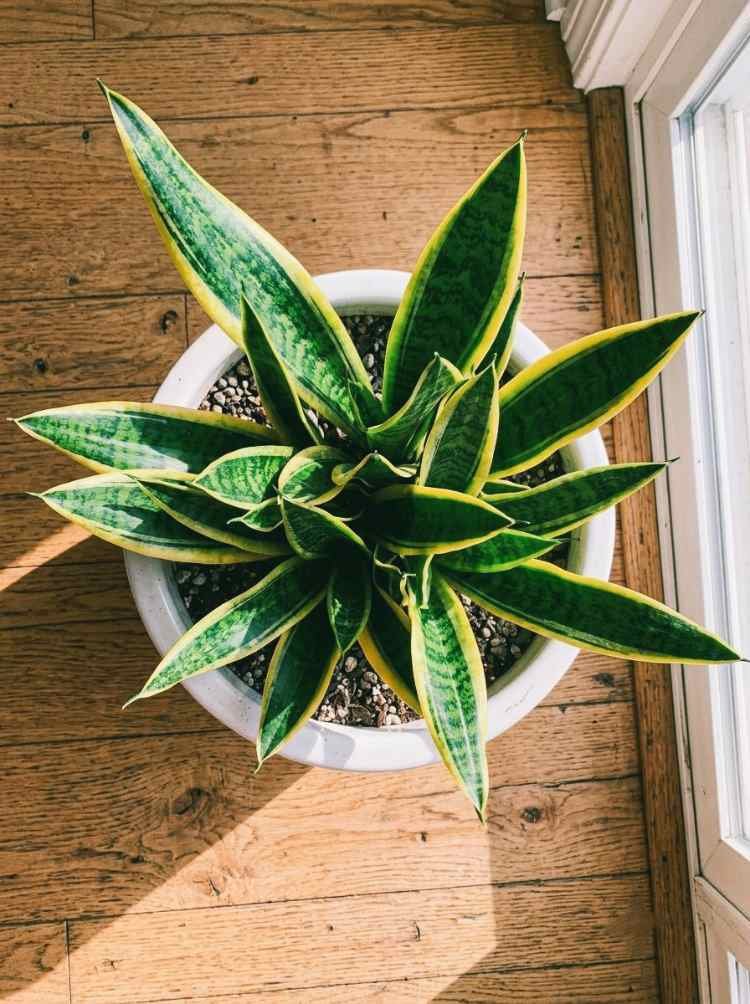
Snake plants are legendary for surviving dim rooms, but they truly flourish under direct sunlight. Full light stimulates faster vertical growth and brings out bright gold margins on the foliage.
In fact, plants kept in direct sun may even surprise you with fragrant floral spikes. Their thick leaves store plenty of moisture, making them nearly indestructible against drought. Be careful not to overwater, especially in cool indoor conditions.
- Light: 4 to 8 hours of direct sunlight daily
- Water: Water every 2 to 4 weeks only after soil dries out completely
- Mature Size: 2 to 4 feet tall, 1 to 2 feet wide
11. Petra Croton (Codiaeum variegatum)
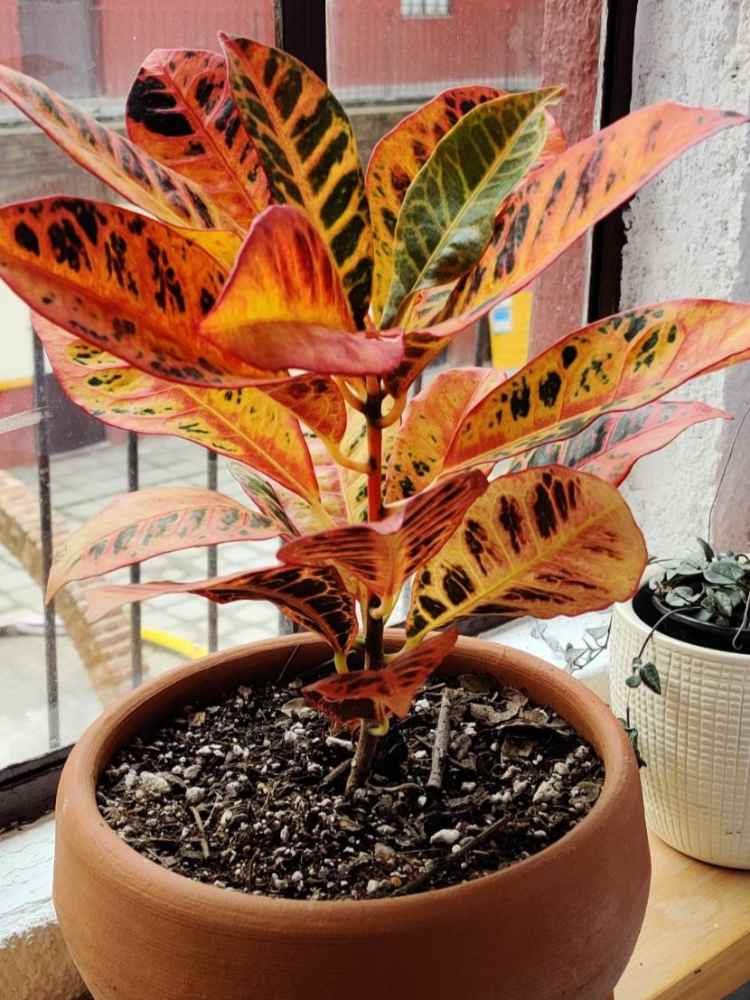
Petra crotons are known for their rainbow foliage that demands strong illumination. Without intense direct sunshine, the foliage loses its crimson and gold tones and turns dull green.
Direct sun stimulates vibrant pigments that protect the plant from harsh rays. Keep the soil evenly damp because dry roots will cause sudden leaf dropping. Boost indoor humidity to keep this colorful tropical beauty looking its best.
- Light: 6 or more hours of direct sunlight daily
- Water: Keep soil consistently moist but never waterlogged
- Mature Size: 3 to 5 feet tall, 2 to 3 feet wide indoors
12. Tropical Hibiscus (Hibiscus rosa-sinensis)
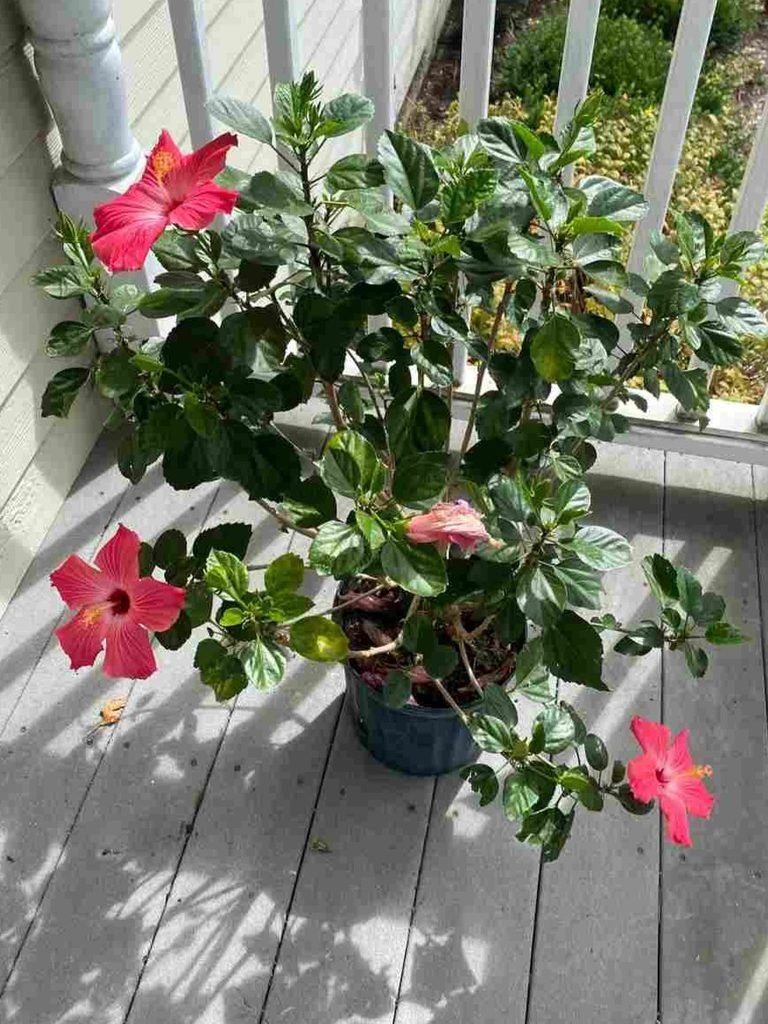
Tropical hibiscus delivers magnificent blooms inside warm, sunny rooms. These heavy bloomers need intense solar energy to initiate continuous flower buds.
Without enough light, the unopened buds will turn yellow and fall off prematurely. Give them rich, well-draining soil and plenty of moisture during the active blooming season. Regular feeding helps maintain vibrant petals and lush foliage throughout the year.
- Light: 6 to 8 hours of direct sunlight daily
- Water: Water frequently to keep soil moist while flowering
- Mature Size: 3 to 6 feet tall, 2 to 3 feet wide
13. Zonal Geranium (Pelargonium spp.)
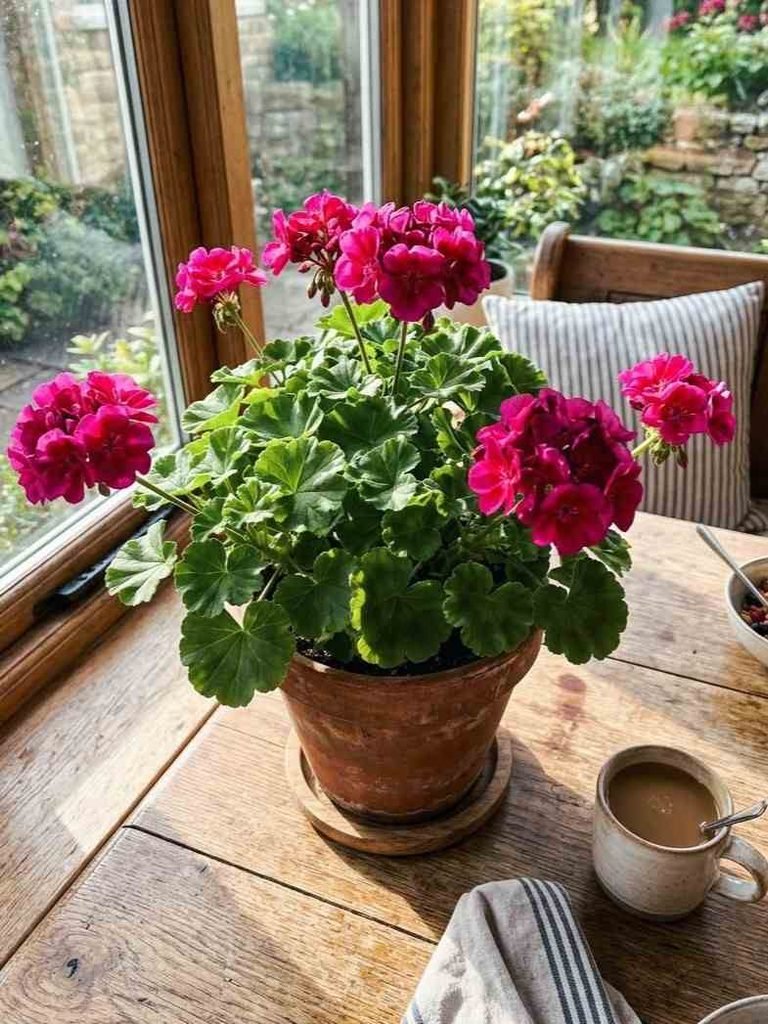
Zonal geraniums are cherished for their ruffled foliage and nonstop clusters of cheerful blooms. They thrive on warm, direct sunlight that keeps their stems bushy and compact.
If grown in dim corners, geraniums become leggy and stop flowering altogether. Allow the top inch of potting compost to dry out before watering again. Pinch off faded flower clusters regularly to stimulate new floral flushes.
- Light: 5 to 6 hours of direct sun daily
- Water: Allow the top inch of soil to dry out between waterings
- Mature Size: 1 to 2 feet tall, 1 to 2 feet wide
14. Ornamental Pineapple (Ananas comosus)
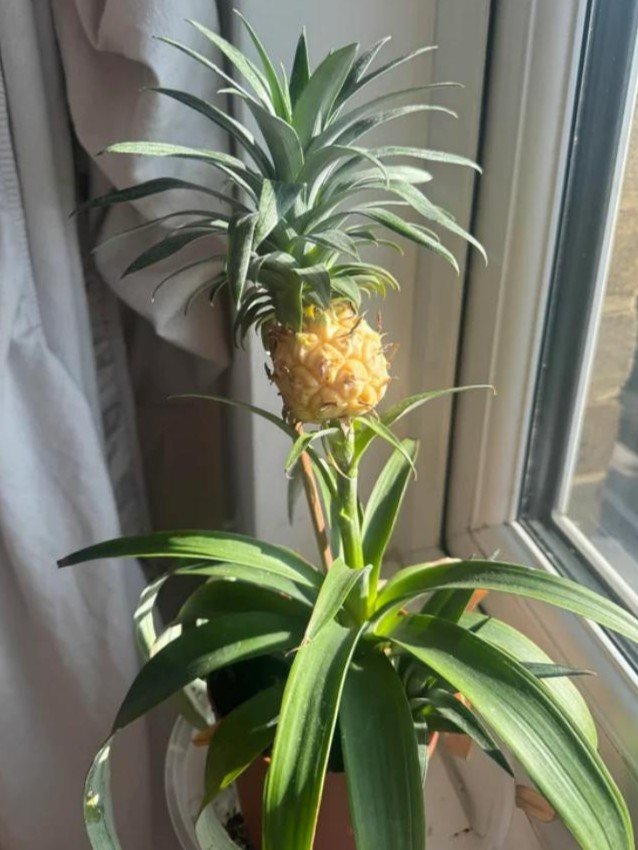
The ornamental pineapple is a unique bromeliad that creates an exotic focal point indoors. It produces a dense rosette of stiff, spiky foliage surrounding a miniature fruit stalk.
This tropical specimen craves intense direct sunlight to develop deep foliar coloration and ripen its ornamental fruit. Keep the central leaf cup filled with fresh water and maintain lightly damp soil. It is completely non-toxic to household pets.
- Light: 6 or more hours of direct sunlight daily
- Water: Keep soil lightly moist and keep the central cup rinsed with clean water
- Mature Size: 1.5 to 3 feet tall, 2 to 3 feet wide
15. Dwarf Meyer Lemon (Citrus x meyeri)
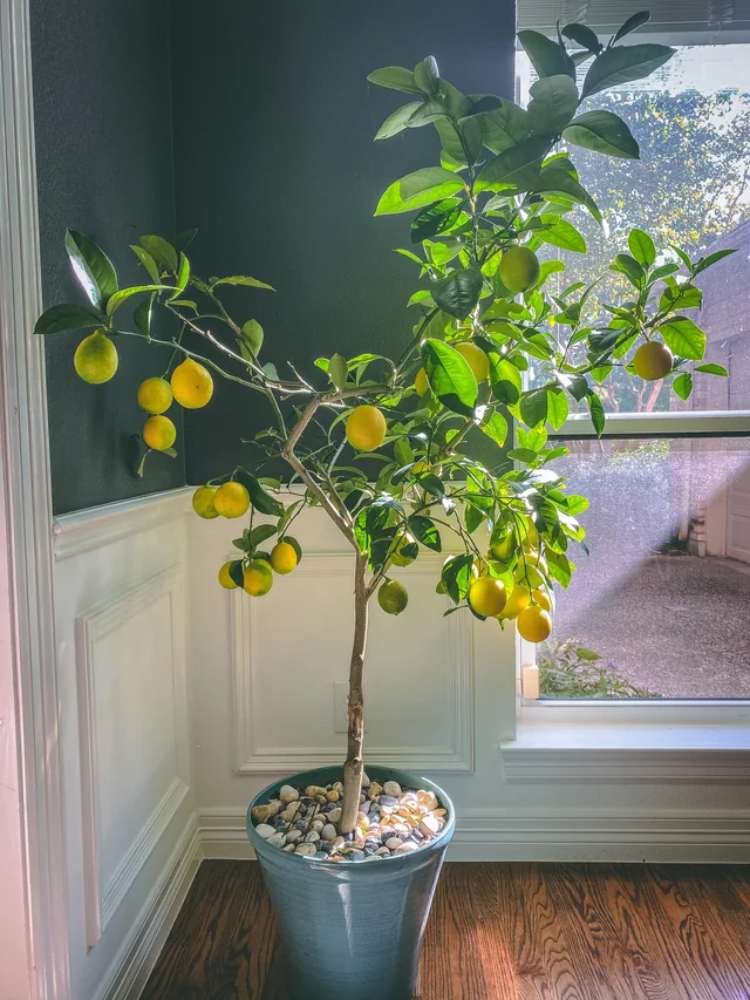
Growing a dwarf Meyer lemon indoors fills your room with the sweet scent of citrus blossoms. These fruiting shrubs demand high energy and require the sunniest south-facing window in the house.
Ample direct sunshine ensures your tree produces enough sugars to set juicy, thin-skinned fruit. Use a small soft brush to gently pollinate the blossoms by hand when growing indoors. Water thoroughly whenever the top two inches of sandy potting mix dry out.
- Light: 6 to 8 or more hours of direct sun daily
- Water: Water deeply when the top 2 inches of soil are dry
- Mature Size: 4 to 6 feet tall, 3 to 4 feet wide indoors
16. Rosemary (Salvia rosmarinus)
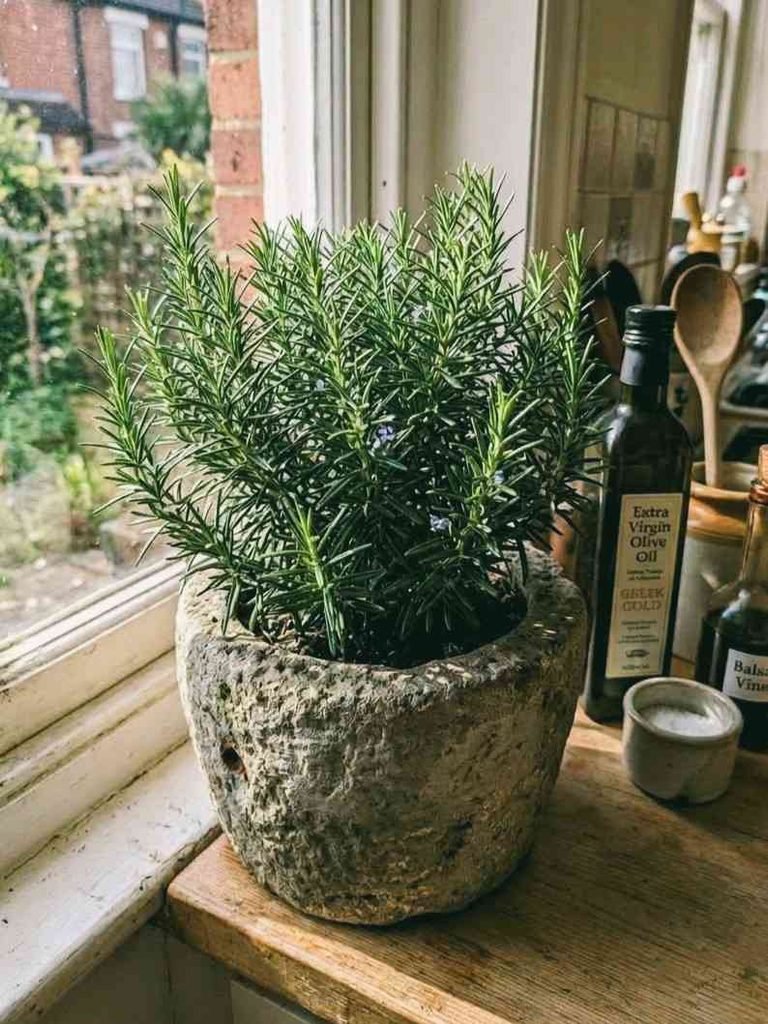
Rosemary is a fragrant Mediterranean herb that loves basking in unfiltered sunbeams. Its woody stems are lined with needle-like aromatic foliage that supplies continuous fresh sprigs for your cooking.
Direct sunlight is essential to keep rosemary stems stout and prevent lower foliage drop.
Plant it in a gritty, fast-draining substrate and let the upper soil dry out before watering. Good indoor air circulation keeps the foliage clean and pest-free.
- Light: 6 to 8 hours of direct sunlight daily
- Water: Allow the top half of the soil to dry out before watering thoroughly
- Mature Size: 1.5 to 3 feet tall, 1.5 to 2 feet wide
Essential Tips for Direct Sun Houseplants
- Acclimate Gradually: Even sun-loving plants can experience sunburn if moved abruptly from low-light nursery conditions into unfiltered window sun. Take ten to fourteen days to ease them in, starting with early-morning sun or filtering the light with a sheer curtain during midday peak hours.
- Buffer Root Heat: Direct sunlight hitting dark nursery pots can heat the root ball beyond 86°F (30°C), damaging fine feeder roots. Nest the plant inside a light-colored decorative cachepot or use breathable terracotta to keep root zones cooler.
- Monitor Moisture Levels: Sunlight accelerates soil evaporation and plant transpiration. Check pots frequently during peak summer months and ensure containers have active drainage holes to prevent root rot.