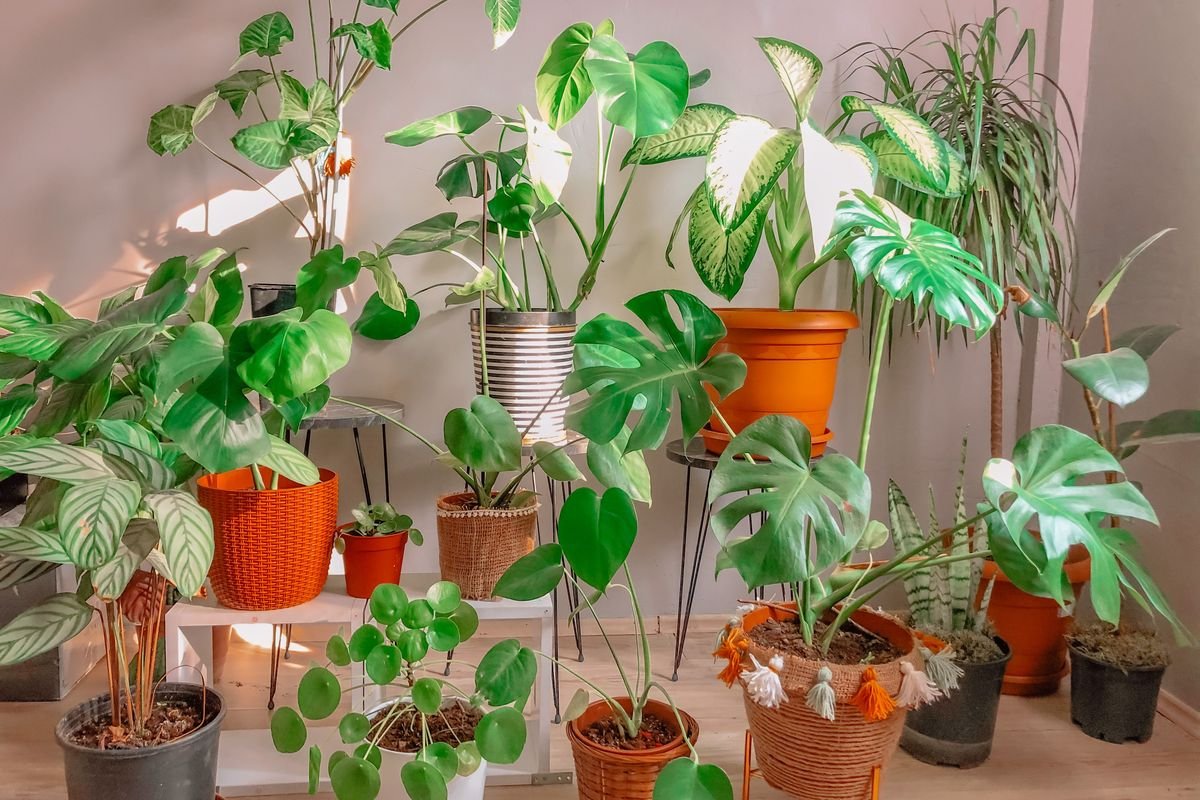
Dieffenbachia, commonly known as dumb cane, is celebrated across the indoor gardening world for its striking, broad foliage and intricate variegation patterns.
Under ideal conditions, this tropical beauty produces a compact, lush canopy that brings vibrant jungle energy into any living space.
However, many plant owners eventually encounter a frustrating sight: long, bare stalks with only a small tuft of foliage left at the very top.
When your dieffenbachia stretches out and loses its fullness, it is telling you that something in its environment needs adjustment.
This comprehensive guide breaks down every reason behind leggy growth, how to correct the problem, and how to prune your plant back into a dense, showstopping specimen.
Understanding Your Dieffenbachia Plant
Dieffenbachia is a tropical perennial genus native to the tropical Americas, spanning regions from Mexico down through Central America and northern South America. In their native rainforest habitats, these plants thrive beneath dense canopies, receiving dappled sunlight while rooted in loose, humid, organically rich soil.
As a houseplant, dieffenbachia has earned a reputation for being relatively forgiving and adaptable. It can survive in spaces with modest lighting where other houseplants might falter.
Despite this adaptability, dumb cane has clear biological boundaries. When placed in conditions that stray too far from its native tropical understory, the plant alters its growth pattern as a survival mechanism.
Recognizing that your dieffenbachia is a forest-floor species helps explain its sensitivity to lighting changes, dry air, and compacted potting soil.
What It Means When a Plant Gets Leggy
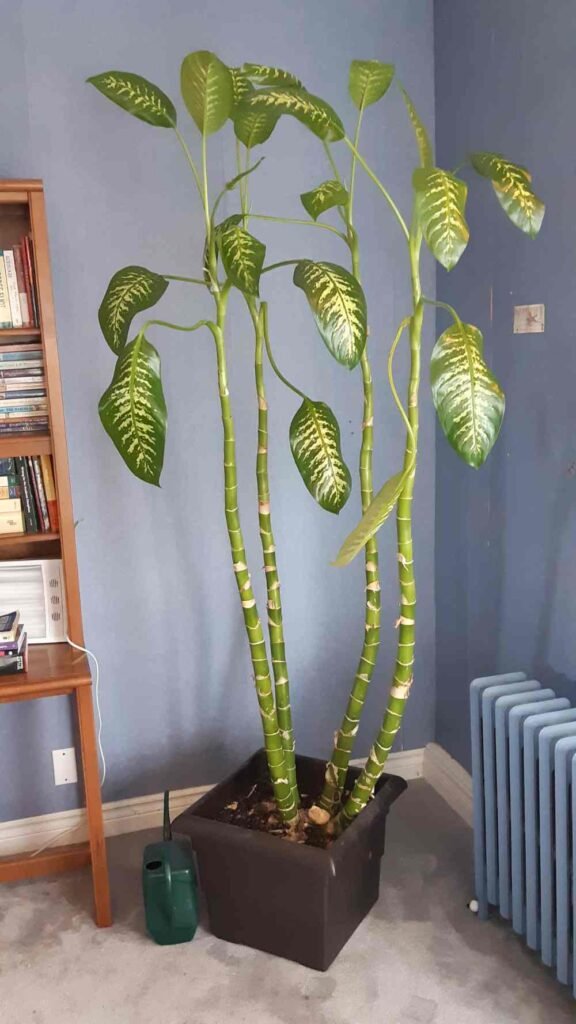
In gardening terminology, leggy describes a plant that has grown unusually tall, thin, and sparse. Instead of producing short, sturdy stems with leaves closely spaced together, a leggy plant develops elongated stems with wide gaps between leaf nodes.
This stretched framework causes the plant to look top-heavy, frail, and poorly balanced.
In severe cases, the slender stems cannot support the weight of the upper leaves, causing the entire cane to bend, lean over the edge of the planter, or snap under its own mass.
Legginess is not just an aesthetic flaw. It is a visible symptom of physiological stress that signals the plant is expending energy abnormally to survive an environmental deficit.
How Etiolation Affects Dumb Cane
The biological process behind leggy growth is known as etiolation. When a plant detects insufficient light levels, its internal hormones, primarily auxins, trigger rapid cell elongation in the stems.
The plant actively stretches its stems upward and outward in an urgent attempt to break through whatever canopy might be blocking sunlight in nature.
During etiolation, the plant redirects all its cellular resources toward vertical growth rather than developing thick cell walls, robust root systems, or wide leaf blades.
As a result, etiolated dieffenbachia stems are soft, weak, pale, and brittle. The newly formed leaves are often dramatically smaller than normal and may lack the bold, variegated coloring characteristic of the cultivar.
Insufficient Sunlight and Low Light Exposure
Although dieffenbachia is frequently marketed as a low-light houseplant, there is a substantial difference between surviving in low light and thriving in it.
When kept in dim corners, windowless hallways, or rooms with shaded north-facing windows, dieffenbachia cannot produce enough energy through photosynthesis to maintain dense foliage.
In response to dim conditions, the plant sheds its lower leaves to conserve energy while stretching its remaining growing tip toward the nearest available light source.
To maintain tight internodal spacing and large, vibrant leaves, dieffenbachia requires generous amounts of bright, indirect light throughout the day. Direct sun will scorch the tender leaves, but medium to bright filtered light keeps the growth habit compact.
Overwatering and Saturated Soil
Overwatering is one of the quickest ways to induce leaf drop and force a dieffenbachia into an unnatural, spindly shape.
When soil remains consistently wet, the microscopic air pockets in the substrate fill with water, suffocating the root system.
Without oxygen, roots cannot absorb moisture or transport essential minerals up through the vascular system. The plant responds as if it is suffering from severe drought, rapidly dropping its oldest, lowest leaves to reduce moisture loss.
Once those bottom leaves fall off, you are left with a bare, naked cane topped by a few struggling leaves, creating an instant leggy appearance.
Dieffenbachia prefers its potting mix to dry out partially between waterings. Keeping the soil soggy prevents healthy root respiration and undermines structural stability.
Root Rot and Underground Damage
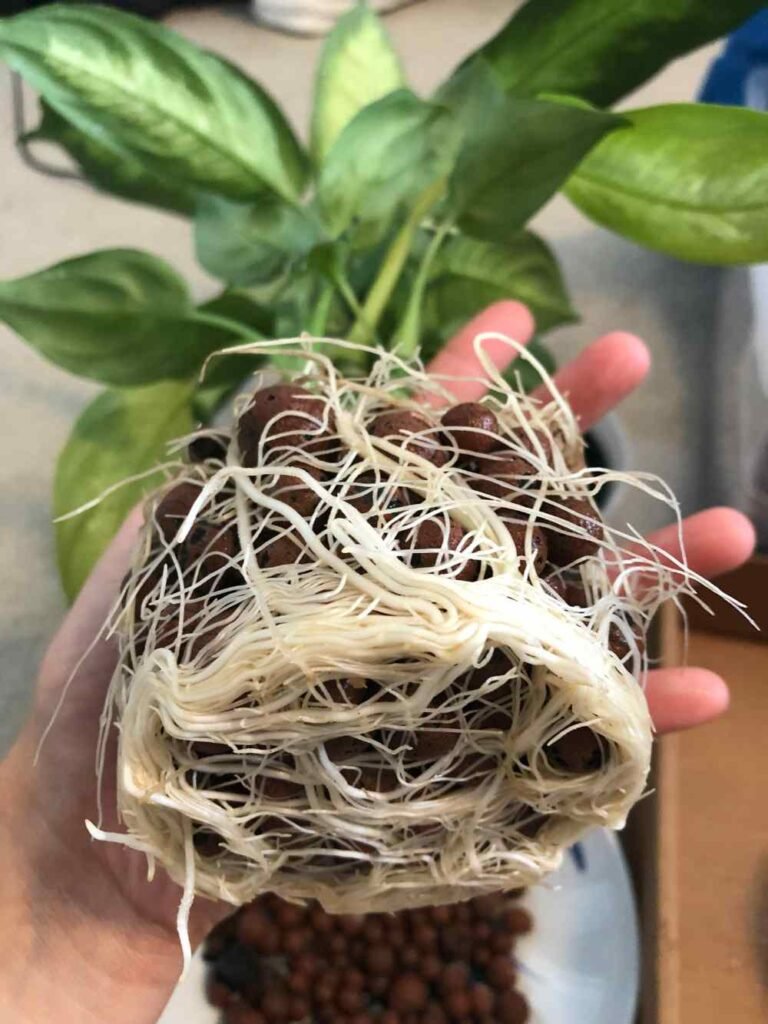
Prolonged overwatering inevitably invites fungal pathogens to attack vulnerable, oxygen-deprived roots, leading directly to root rot.
Pathogens such as Pythium and Phytophthora quickly turn firm, healthy white roots into brown, mushy, foul-smelling decay.
As the root system collapses beneath the surface, the plant loses its anchor and its nutrient supply line.
Above the soil line, this root failure shows up as yellowing foliage, sudden lower leaf loss, droopy canes, and severe stem thinning.
If your dieffenbachia feels loose in its container or wiggles easily when touched, root rot may have already destroyed the foundation supporting the main stems.
Drastic Temperature Swings and Drafts
Tropical species like dieffenbachia are highly sensitive to sudden thermal changes. They perform best in a consistent temperature range between 65 and 85 degrees Fahrenheit (18 to 29 degrees Celsius).
If the ambient room temperature drops below 60 degrees Fahrenheit (15 degrees Celsius), the plant enters a state of physiological shock.
Placing your dieffenbachia in the direct path of air conditioning vents, drafty winter entryways, or unsealed window frames triggers sudden stress responses.
The plant frequently drops multiple leaves in a matter of days following a severe cold draft.
Repeated temperature fluctuations disrupt uniform stem growth, creating uneven, weak, and stretched sections along the cane.
Root Bound Containers and Space Limits
Indoor container plants have a finite volume of soil from which to draw water, physical support, and mineral nutrition.
Over time, as a dieffenbachia grows, its root system fills the container entirely, circling the interior perimeter until the pot contains more roots than soil.
When a plant becomes severely root bound, water runs straight through the pot without being absorbed, and the soil can no longer retain necessary nutrients.
Under severe root restriction, the plant cannot sustain its full canopy of foliage. It sheds older leaves at an accelerated rate while pushing out thin, weak stems at the top.
Checking the root ball every spring helps ensure your plant has adequate room to develop the sturdy root network needed for bushy top growth.
Fertilizer Mistakes and Nutrient Imbalances
Fertilizer plays a critical role in how your dieffenbachia develops its stem structure and foliage volume.
Both excessive feeding and complete nutrient starvation can lead directly to legginess.
Using a fertilizer that is excessively high in nitrogen can stimulate rapid, weak, cellular elongation. The stems shoot upward too quickly without developing structural lignin, creating floppy, stretched canes.
Conversely, providing zero nutrients over many months leaves the plant deficient in essential elements like phosphorus and potassium, which are needed for cellular strength and root health.
A balanced feeding program supports steady, compact vegetative growth rather than weak, explosive stretching.
Natural Aging Versus Unhealthy Stretching
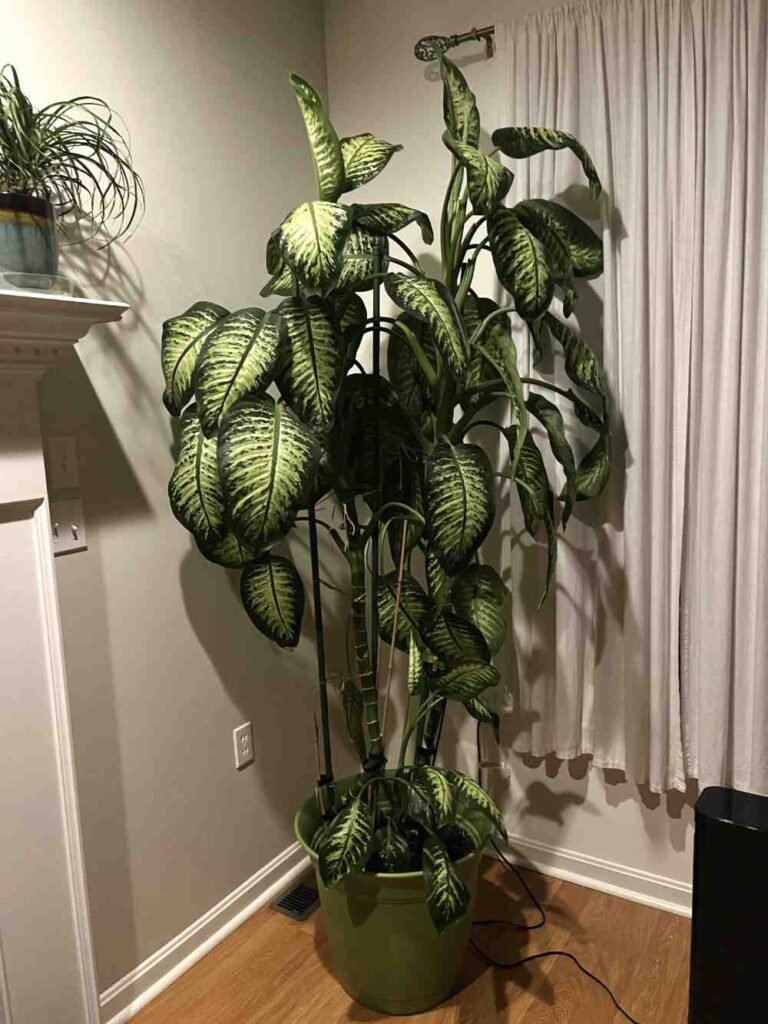
It is important to understand that mature dieffenbachia plants naturally develop an upright, cane-like trunk as they age.
In mature specimens, it is entirely normal for the lowest leaves to turn yellow and drop off one by one over several months, gradually revealing a thick, patterned cane reminiscent of a miniature palm tree or bamboo stalk.
However, there is a clear distinction between natural maturation and problem legginess:
- Natural Aging: The main stem remains thick, rigid, and sturdy. The upper canopy remains dense with large, richly colored leaves, and leaf drop occurs slowly over long periods.
- Unhealthy Legginess: The stem becomes thin, weak, and pale. The plant stretches quickly, loses multiple lower leaves in rapid succession, and produces noticeably smaller, lackluster foliage.
If your plant cannot hold itself upright or looks visibly sparse and frail, it is experiencing environmental stress rather than graceful aging.
How to Evaluate Your Plants Light Levels
Correcting a leggy dieffenbachia begins with an honest assessment of the light it receives throughout the day.
Place your plant in a spot that receives bright, filtered sunlight for at least 6 to 8 hours daily. An east-facing window is ideal because it provides gentle morning sunlight without harsh midday heat.
If your only option is a south-facing or west-facing window, set the plant three to five feet back from the glass, or diffuse the rays using a sheer curtain.
In rooms lacking adequate natural windows, high-quality LED grow lights offer an outstanding solution.
Position a full-spectrum grow light roughly 12 to 18 inches above the canopy, running it on a timer for 12 to 14 hours per day to simulate tropical daylight.
Adjusting Your Watering Routine
To prevent leaf loss from overwatering or underwatering, abandon rigid calendar schedules and learn to read the moisture level in the soil.
Always insert your finger or a wooden moisture meter two inches into the potting mix before adding water.
Only water your dieffenbachia when the top 25 to 30 percent of the soil volume feels dry to the touch.
When watering, pour room-temperature water evenly across the entire soil surface until it flows freely from the container drainage holes.
Allow all excess water to drain out completely into the saucer, and empty the saucer after 15 minutes so the pot never sits in standing water.
Pruning Stems to Encourage Bushy Growth
Once a dieffenbachia stem has grown long and bare, no amount of sunlight or fertilizer will cause new leaves to sprout along the bare lower cane.
The only way to restore a bushy, compact appearance is through strategic pruning.
Pruning removes apical dominance, the hormonal mechanism that forces growth solely to the tip of the stem. By cutting the cane back, you stimulate dormant growth buds (nodes) along the lower stem to awaken and push out new leafy shoots.
Always wear gloves when pruning dieffenbachia, as the plant contains calcium oxalate crystals in its sap, which can cause skin irritation and swelling.
Use clean, sterilized pruning shears to make a clean 45-degree cut about one-fourth inch above a leaf node, leaving at least 4 to 6 inches of stem above the soil line.
How to Propagate Leggy Cuttings
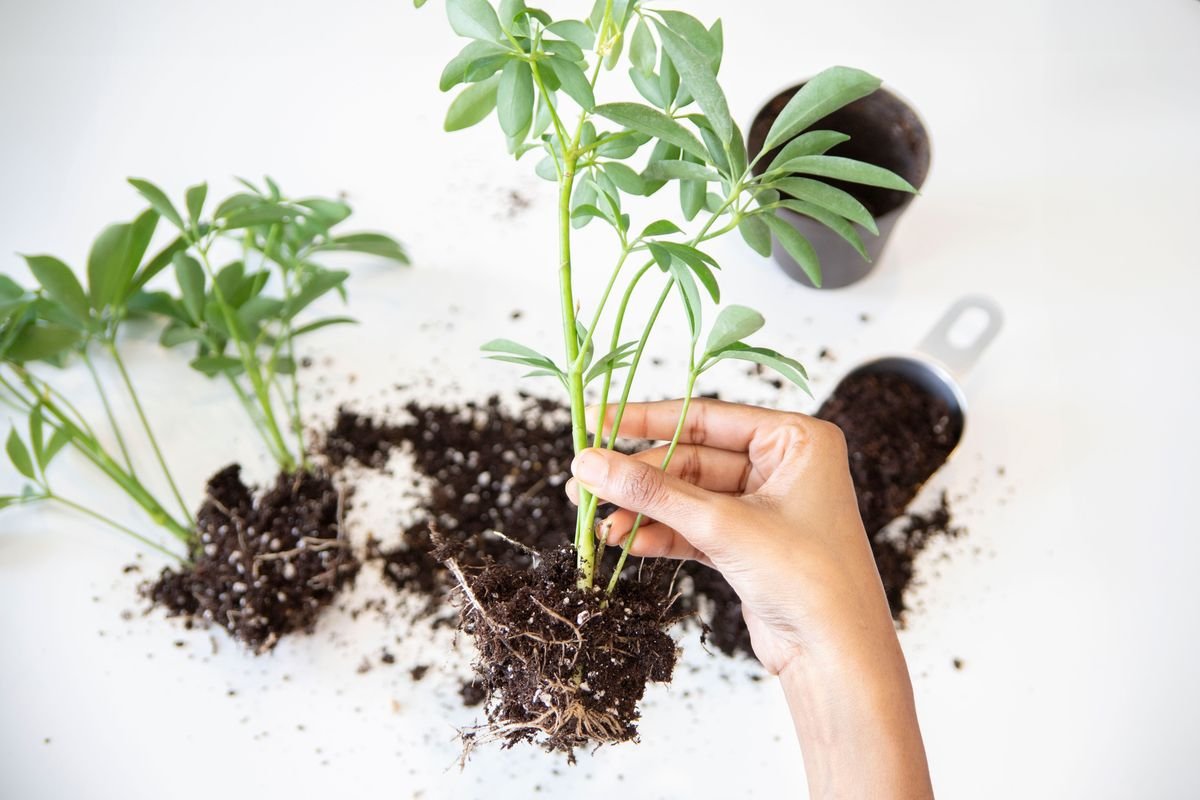
Pruning a leggy plant gives you the perfect opportunity to propagate new plants from the discarded stems rather than throwing them away.
You can propagate dieffenbachia using both tip cuttings and bare cane segments:
- Tip Cuttings: Cut the healthy top foliage cluster, leaving about 4 to 6 inches of stem below the bottom leaves. Place the cutting directly into clean water or moist perlite until roots develop 2 inches long, then pot it up.
- Cane Segments: Take the bare middle section of the stem and cut it into 3-inch to 4-inch pieces, ensuring each piece has at least one visible growth node.
- Rooting Cane Pieces: Lay the cane segments horizontally half-buried in moist potting soil or sphagnum moss. Keep them warm and humid until new shoots and roots emerge from the nodes.
Planting these rooted cuttings back into the base of the original pot is an effortless way to create an exceptionally full, multi-stemmed display.
Repotting and Inspecting the Root Ball
If your dieffenbachia has become root bound or shows signs of root distress, repotting into fresh soil will help restore vigorous, dense growth.
Select a container that is 1 to 2 inches larger in diameter than the current pot, making sure it features functional drainage holes.
Carefully remove the plant from its container and inspect the root system. Snip away any mushy, blackened, or dead roots using sterilized scissors, leaving only firm, healthy tissue.
Gently loosen the root ball with your fingers so the roots can grow outward into the new soil.
Use a loose, well-aerated potting mix consisting of two parts standard potting soil, one part perlite or pumice, and one part orchid bark to ensure excellent moisture retention without waterlogging.
Proper Feeding for Compact Foliage
Feeding your dieffenbachia the right balance of nutrients encourages thick stems, sturdy cell walls, and vibrant leaf variegation.
During the active growing season in spring and summer, apply a balanced, water-soluble houseplant fertilizer (such as a 20-20-20 or 10-10-10 formula) diluted to half the manufacturer recommended strength.
Feed the plant once every four to six weeks immediately after a thorough watering to avoid burning the root tips.
Never fertilize a completely dry plant, as concentrated mineral salts can damage the root hairs.
Cease all fertilization during autumn and winter when the plant naturally slows its metabolic rate and growth slows down.
Creating the Ideal Indoor Climate
Recreating elements of the dieffenbachia native tropical habitat will prevent stress-induced leaf shedding and encourage compact growth.
Maintain indoor temperatures consistently between 68 and 80 degrees Fahrenheit (20 to 27 degrees Celsius), shielding the plant from cold drafts and heating elements.
Humidity is equally crucial. While dumb cane tolerates average household air, it flourishes when ambient relative humidity stays between 50 and 60 percent.
To increase humidity around your plant, group it together with other tropical houseplants, place it on a pebble tray filled with water, or run a cool-mist ultrasonic humidifier nearby.
Adequate humidity keeps leaf margins soft and prevents premature browning and lower leaf loss.
Daily and Weekly Care Routine for Dense Growth
Consistency is the key to maintaining a full, bushy dieffenbachia over the long term. Implementing a straightforward maintenance routine keeps your plant balanced and thriving:
- Rotate the Pot: Give your container a quarter-turn every time you water. This prevents the plant from leaning toward one side and ensures all stems receive equal light exposure.
- Dust the Leaves: Wipe both sides of the large leaf blades with a damp microfiber cloth twice a month. Removing dust layers maximizes photosynthetic efficiency.
- Check Soil Moisture: Test the soil weekly before adding any water to maintain a steady dry-down cycle.
- Pest Checks: Inspect leaf undersides and stem joints weekly for spider mites, mealybugs, and scale, which can drain sap and cause leaf drop.
These simple habits take only minutes a week and prevent structural issues before they start.
Final Thoughts on Restoring Dumb Cane
Seeing your prized dieffenbachia turn into a tall, sparse, leaning stalk can be discouraging, but it is entirely reversible.
By identifying whether low light, moisture issues, root confinement, or temperature stress caused the stretching, you can correct the underlying care routine.
Do not hesitate to prune back leggy canes. Dieffenbachia is a resilient grower with incredible regenerative abilities.
With proper light, measured watering, and regular maintenance, your dumb cane will quickly rebound, producing a magnificent canopy of dense, colorful foliage.
Why Is Your Dieffenbachia Getting Leggy?
Answer 4 quick questions to see your result