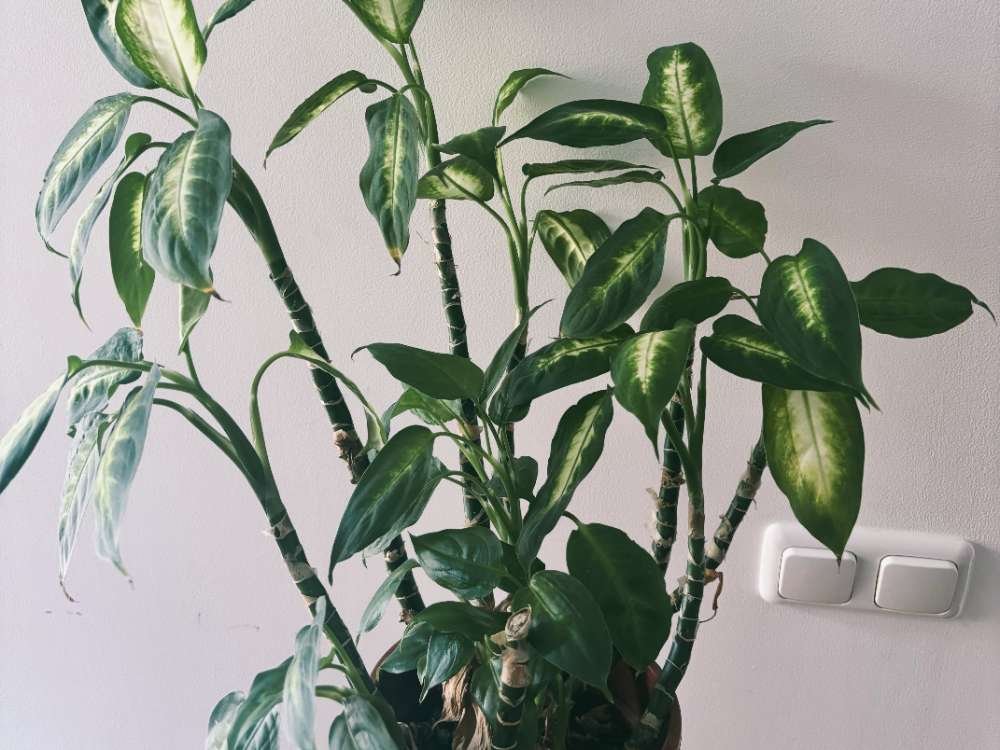
Dieffenbachia plants, widely known as dumb canes, are loved for their broad, dramatic foliage patterned with striking shades of green, cream, and white. When healthy, these tropical favorites produce large, vibrant leaves that instantly brighten up any indoor space.
It can be frustrating when new foliage emerges tiny, weak, or stunted. If your dumb cane is no longer producing the expansive leaves you expect, your plant is signaling that something in its environment needs immediate attention.
Signs Your Dieffenbachia Is Stunted
Stunted growth rarely happens overnight. Recognizing the earliest warnings can help you intervene before your plant suffers long term damage.
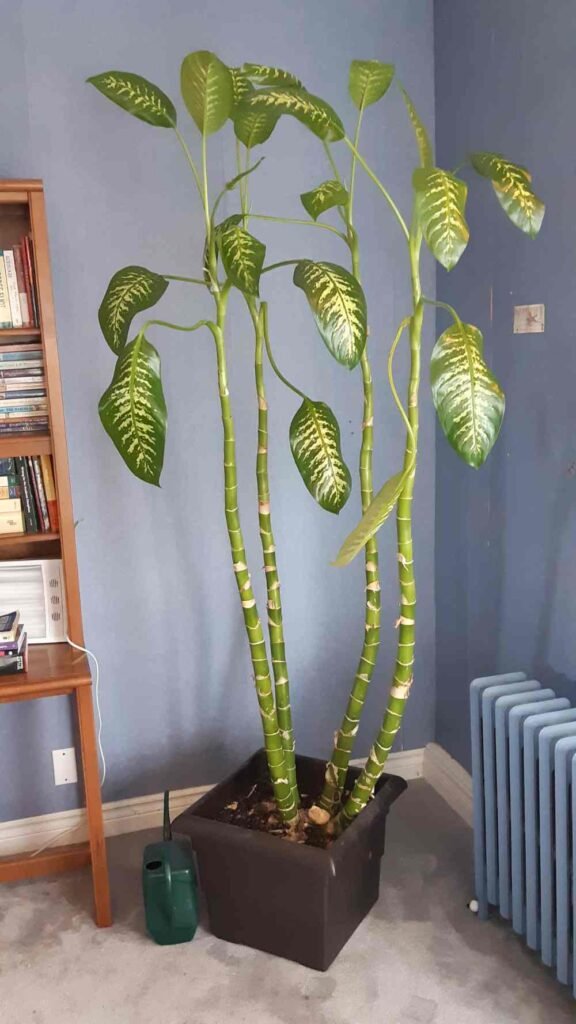
When a Dieffenbachia struggles, new leaves often open at a fraction of their normal size. You may notice long stems with small clusters of foliage at the top, creating a sparse, leggy appearance.
In addition to reduced leaf size, troubled plants may exhibit pale coloration, loss of variegation, yellowing lower leaves, or unusually slow unfurling rates.
Common Causes of Small Leaves
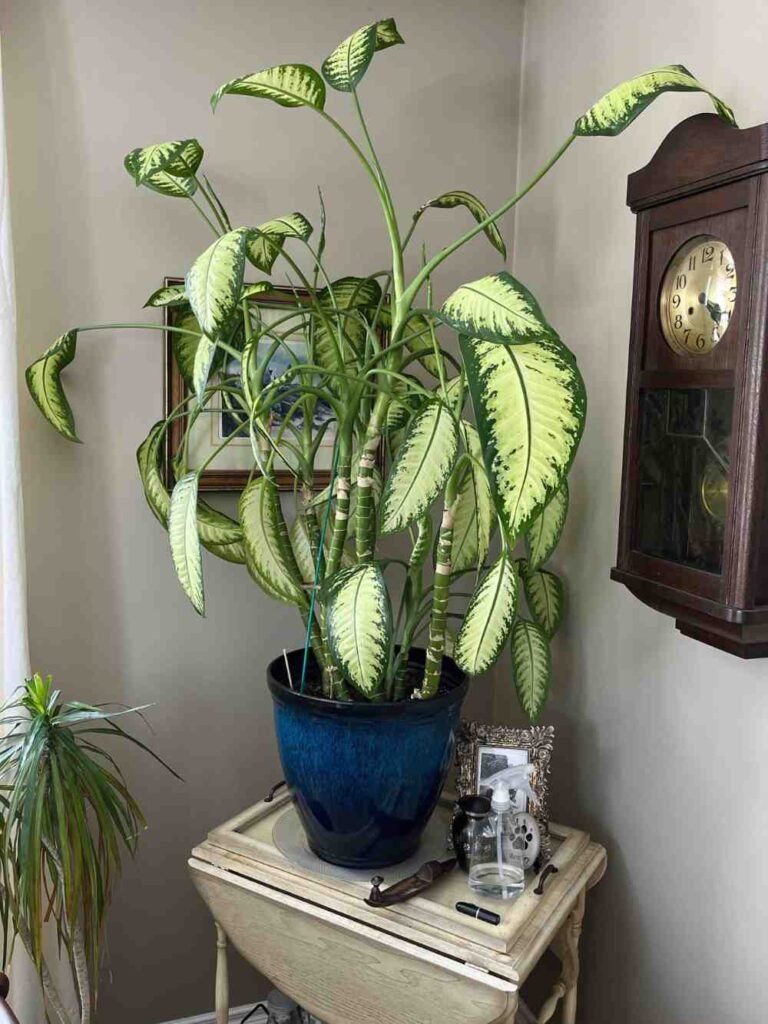
A reduction in leaf size is a defense mechanism. When a plant lacks essential resources or experiences stress, it reduces its leaf surface area to conserve energy and moisture.
Pinpointing the exact cause requires a quick review of your plant’s lighting, watering routine, root environment, and nutrient intake.
Inadequate Sunlight
Light drives photosynthesis, which produces the sugars needed to build expansive leaf tissue. While dumb canes tolerate moderate shade, prolonged low light forces the plant to cut back on energy output.
In dim corners or during dark winter months, new leaves will naturally emerge smaller and spaced farther apart along the stem. The plant simply cannot gather enough solar energy to sustain broad foliage.
For optimal growth, position your dumb cane in bright, indirect light near an east-facing or filtered south-facing window. Protect the leaves from harsh midday sun, which can scorch delicate leaf surfaces.
Overwatering and Root Distress
Soggy soil is one of the quickest ways to damage a Dieffenbachia. When the potting mix stays saturated, air pockets disappear and roots drown.
Damaged roots cannot absorb moisture or transport minerals upward. Deprived of vital support, the top growth begins to dwindle, producing small, pale, or misshapen leaves.
Always allow the top two inches of potting mix to dry before adding water. Ensure the pot has functional drainage holes so excess water escapes freely.
Underwatered Soil Conditions
Chronic underwatering can also stunt your dumb cane. While these plants survive brief dry spells, extended dehydration limits cellular expansion in developing leaves.
If the soil remains bone dry for too long, leaf tips turn crispy and new growth emerges shriveled or miniature.
Establish a consistent routine by checking soil moisture weekly. When you water, soak the soil thoroughly until water drains out the base, ensuring the entire root ball receives hydration.
Excessive Fertilizer and Mineral Build Up
Feeding your houseplant promotes vigorous growth, but more is not always better. Overfertilizing causes synthetic mineral salts to accumulate in the soil.
These concentrated salts draw moisture away from delicate feeder roots, causing root burn. Damaged roots fail to supply the canopy, leading to stunted foliage with browned, crispy edges.
If you see a white crust on top of the soil, flush the potting medium with clean water in a sink or shower to dissolve and rinse away built-up salts.
Nutrient Deficiencies in Old Soil
On the opposite end of the spectrum, completely depleted soil deprives your plant of the building blocks it needs for large leaves.
Potted plants rely entirely on you for nutrients. Over time, frequent watering leaches nitrogen, potassium, and micronutrients out of the pot.
Feed your dumb cane with a balanced, diluted liquid houseplant fertilizer once a month during spring and summer. Pause feeding in late autumn and winter when growth naturally slows down.
Common Houseplant Pests
Sap-sucking pests are notorious for stealing plant vigor. Pests attack tender new buds and unfurling leaves, causing emerging foliage to appear deformed, mottled, and diminutive.
- Spider mites: Tiny red or brown pests that leave fine, dusty webbing underneath leaves.
- Mealybugs: Soft, white, cotton-like masses that nestle in stem crevices and leaf joints.
- Aphids: Small, pear-shaped insects that gather in clusters along fresh shoots.
- Scale: Flat, brown, shell-like bumps that attach firmly along leaf stems.
Wipe down infested foliage with insecticidal soap or neem oil spray. Treat the plant weekly until all signs of pests disappear.
Restricted Roots in Small Pots
Dieffenbachia plants grow quickly under good conditions. Eventually, the root system outgrows the container and forms a dense, tangled mass.
When a plant is root-bound, the pot contains more roots than soil. The root system cannot hold enough water or pull sufficient nutrients to support massive leaves.
Check the bottom of your pot. If thick roots are circling the base or pushing out through drainage holes, your dumb cane needs a slightly roomier home.
Low Humidity and Temperature Stress
Native to tropical rainforests, Dieffenbachias thrive in warm, humid surroundings. Dry indoor air combined with cold drafts can disrupt healthy leaf expansion.
Exposure to air conditioners, heating vents, or drafty winter window frames can shock developing buds, resulting in undersized growth.
Aim to keep indoor temperatures between 65 and 80 degrees Fahrenheit. Boost surrounding humidity with a humidifier, pebble tray, or by grouping tropical plants together.
How to Encourage Larger Leaf Growth
Fixing stunted growth involves optimizing your plant’s environment and giving the root system room to thrive.
Once underlying care issues are resolved, dumb canes bounce back quickly and begin producing broader, healthier foliage.
Pruning Old and Weak Stems
Pruning leggy, unproductive stems directs valuable energy toward fresh, robust shoots.
Use clean, sharp shears to cut back bare or stretched stalks a few inches above the soil line. Always wear gardening gloves when pruning, as Dieffenbachia sap contains calcium oxalate crystals that can irritate sensitive skin.
Within a few weeks, dormant nodes beneath the cut will activate, sending out vigorous new stems with larger leaves.
Repotting Step by Step
Upgrading your plant to a slightly larger container gives roots fresh space and nutrient-rich soil.
- Select a container that is one to two inches wider in diameter than the current pot, ensuring it has drainage holes.
- Prepare a well-draining potting blend using standard potting soil, perlite, and orchid bark.
- Gently slide the Dieffenbachia from its old pot and loosen any tightly coiled root masses.
- Place the plant in the new container, fill around the root ball with fresh potting mix, and lightly pat it down.
- Water thoroughly to settle the soil and place the plant in bright, indirect light.
Long Term Care Tips for Lush Foliage

Maintaining large, vibrant leaves comes down to consistent maintenance and gentle seasonal adjustments.
Wipe leaves regularly with a damp cloth to clear away household dust. Dust layers block sunlight, reducing the plant’s photosynthetic efficiency.
Rotate the pot a quarter turn every time you water. This ensures all sides receive equal light exposure, preventing one-sided, lopsided growth.
With attentive watering, ample filtered light, and occasional repotting, your Dieffenbachia will reward you with the impressive, show-stopping foliage it was meant to grow.
Why Are Your Dieffenbachia Leaves Getting Smaller?
Answer 4 quick questions to see your result