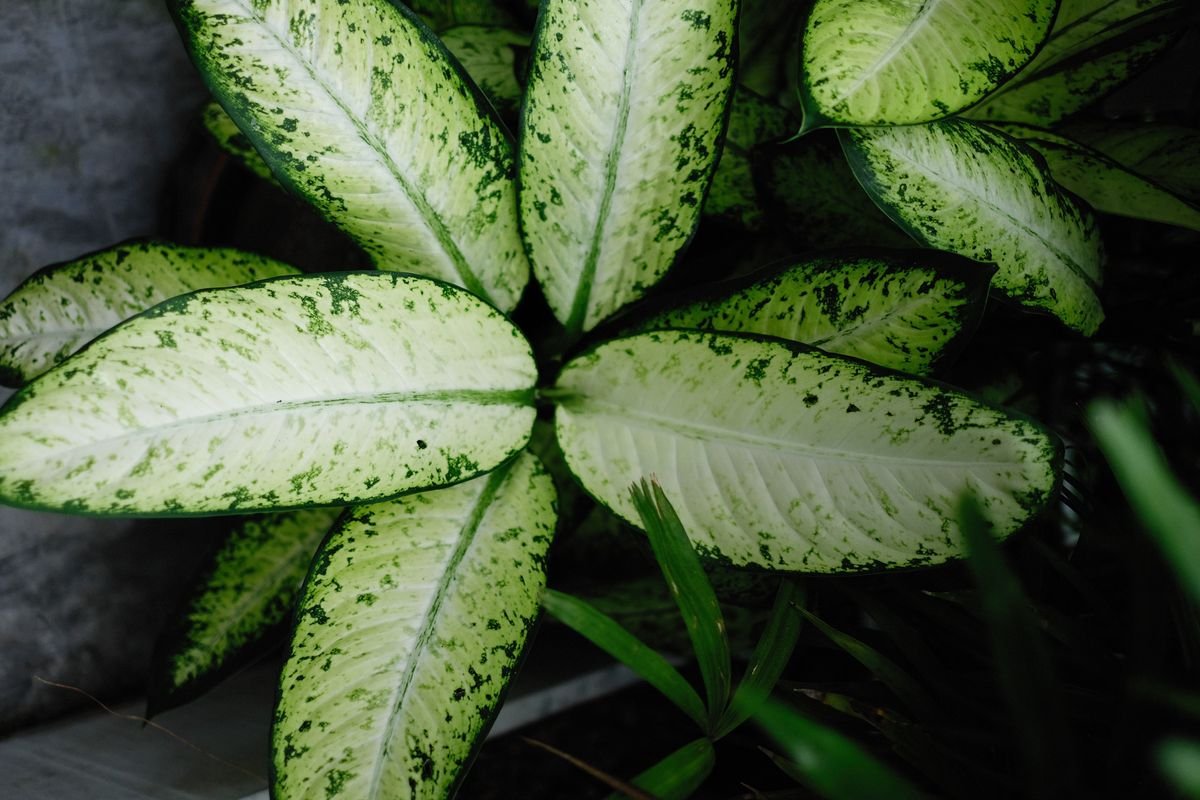
Dumb cane plants, known botanically as Dieffenbachia, are beloved for their broad, striking foliage and lush tropical appearance. When you care for a houseplant diligently, seeing the lush green canopy begin to turn pale, bleached, or chalky white can feel alarming.
Leaf discoloration is one of the clearest signals your plant gives when something in its environment goes wrong.
Whether the whitening comes from fungal infections, moisture stress, cold temperatures, or nutrient deficiencies, identifying the root cause quickly will help you restore your plant before irreversible damage occurs.
Main Reasons Dieffenbachia Leaves Turn White
A healthy Dieffenbachia relies on chlorophyll to produce vibrant green tones and fuel its metabolic processes. When chlorophyll production slows down or stops, leaf tissue can fade to pale yellow, ivory, or stark white.
Several environmental factors and biological stressors can trigger this dramatic loss of color:
- Fungal diseases such as powdery mildew covering the foliage
- Underwatering and severe cellular dehydration
- Lack of essential soil nutrients, especially nitrogen
- Chilling injury from cold indoor drafts or low winter temperatures
- Sun scorch caused by harsh, direct sunlight bleaching the leaf surface
- Natural variegation producing solid white leaves lacking chlorophyll
Understanding which symptom matches your plant’s specific condition is the first step toward getting it back on track.
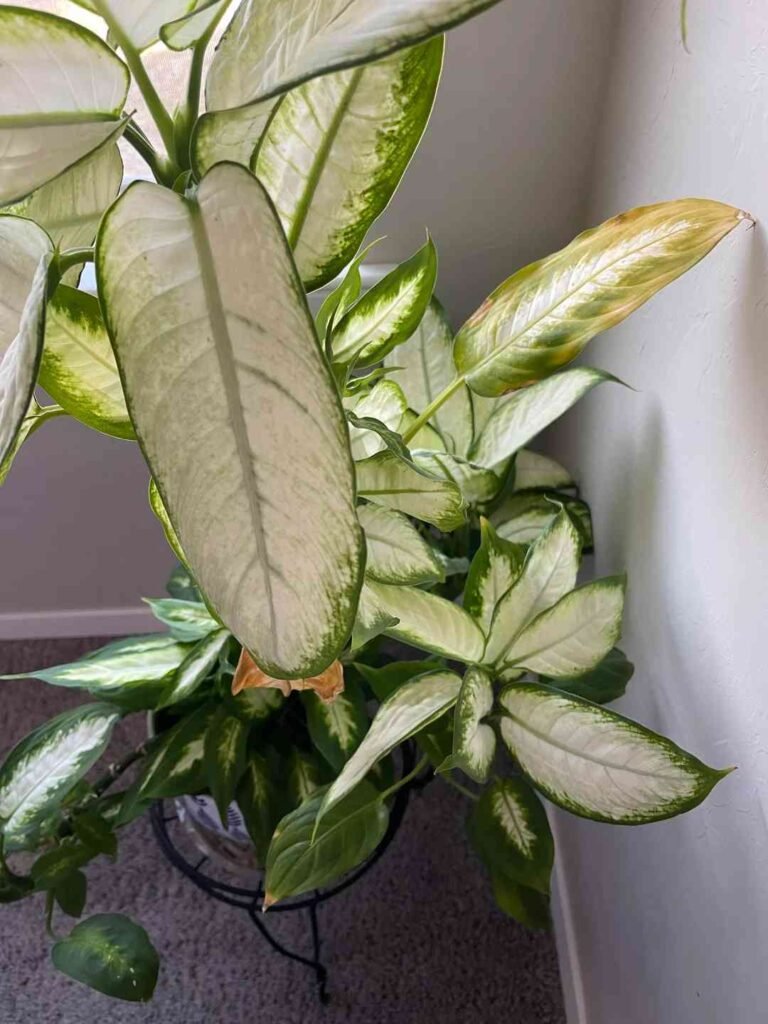
Powdery Mildew and Fungal Invasions
If the white color on your Dieffenbachia looks like a fine dusting of flour or talcum powder, you are likely dealing with a fungal infection called powdery mildew.
This fungus thrives in warm, humid spaces with poor air circulation. While it starts as small circular spots on the tops of leaves, it quickly spreads across the entire surface.
Powdery mildew sits on the outside of the leaf tissue and taps into the plant cells below to draw out vital sugars. Over time, the covered parts of the leaf cannot photosynthesize properly.
If you leave powdery mildew untreated, the fungal carpet will suffocate the leaf tissue underneath, causing it to turn yellow, shrivel, and die.
How to Treat Powdery Mildew
Treating powdery mildew early prevents the spores from spreading to your other houseplants.
Start by isolating your affected Dieffenbachia in a separate room away from other greenery. Wipe down the affected foliage with a soft, damp cloth to remove loose spores before applying treatments.
You can manage mild fungal outbreaks using safe, organic methods:
- Neem oil spray: Mix pure organic neem oil with warm water and a few drops of mild dish soap, then spray thoroughly.
- Potassium bicarbonate solution: Mix one tablespoon per gallon of water to alter leaf surface pH and kill spores.
- Commercial copper fungicide: Ideal for persistent infections that do not respond to gentler sprays.
Ensure that you treat both the upper and lower leaf surfaces, and improve airflow around the pot using an oscillating fan on a low setting.
Severe Nitrogen and Nutrient Shortages
Plants need a balanced supply of essential macro and micronutrients to build cell walls and generate lush green chlorophyll. When soil becomes depleted, leaf discoloration quickly follows.
A severe shortage of nitrogen is the primary nutritional culprit behind bleached foliage. Nitrogen is a mobile nutrient, meaning the plant pulls it from older, lower leaves to support new top growth.
When nitrogen runs out, older leaves lose their rich green pigments, fading to pale yellow and eventually turning almost completely white or translucent before dropping off.
Iron and magnesium deficiencies can also cause chlorosis, where the tissue between the leaf veins turns ivory while the veins stay green.
Balancing Soil pH and Fertilizer
Before adding large amounts of fertilizer, consider testing your potting soil’s pH level. Even if nutrients are present, soil that is overly acidic or alkaline locks out nutrients and prevents the roots from taking them up.
Dieffenbachia plants grow best in soil with a slightly acidic to neutral pH between 6.1 and 6.8.
To replenish depleted soil nutrients, use a balanced, water-soluble indoor plant fertilizer diluted to half strength every four weeks during spring and summer.
Avoid fertilizing during late autumn and winter when growth naturally slows down. Over-fertilizing during dormancy can burn fragile root tips and make nutrient absorption even harder.
Underwatering and Severe Dehydration
Dieffenbachia plants come from tropical rainforest floors where the soil remains consistently moist without ever becoming soggy. If the root system dries out completely, the plant enters an emergency survival mode.
As dehydration sets in, the plant loses turgor pressure, causing leaves to droop, curl, and feel papery to the touch.
Severe, prolonged dehydration causes cellular collapse in the foliage. When the internal cells break down, the green pigment fades away, leaving bleached, washed-out white or crisp tan patches on the leaves.
If you inspect the pot and find the soil pulling away from the container edges or bone dry several inches down, chronic underwatering is likely the problem.
Correct Watering Technique
To revive a dehydrated Dieffenbachia, avoid dumping gallons of cold water on it all at once, which can shock damaged roots. Instead, rehydrate the root ball gradually.
Bottom watering works wonderfully for severely dry soil that has become hydrophobic:
- Place the plant container into a basin or sink filled with three to four inches of room-temperature water.
- Let the pot sit for thirty to forty-five minutes so the soil can pull moisture upward through drainage holes.
- Remove the pot and allow all excess water to drain out completely before returning it to its saucer.
For regular maintenance, only water when the top one to two inches of soil feel dry to the touch.
Cold Drafts and Low Temperatures
As tropical natives, Dieffenbachias have virtually no natural tolerance for cold environments. When exposed to temperatures below 55 degrees Fahrenheit, the plant suffers severe metabolic shock.
Cold exposure causes cellular membranes to rupture, disrupting the transport of water and nutrients throughout the foliage.
Leaves subjected to cold drafts often develop pale, washed-out white or translucent patches. In many cases, the foliage will look wilted even though the soil is wet.
Common problem areas include spots next to drafty single-pane windows, entry doors, or directly in front of air conditioning vents blowing cold air.
Ideal Indoor Temperature Settings
To keep your Dieffenbachia healthy and maintain rich foliage color, maintain daytime room temperatures between 65°F and 80°F. Nighttime temperatures should never drop below 60°F.
During winter months, move your plant away from cold window sills where glass radiates freezing temperatures.
Keep the pot well clear of heat registers, radiators, and space heaters as well. While they provide warmth, the blast of hot, dry air creates severe humidity drops that can scorch and whiten leaf tips.
Sunburn and Excessive Light Exposure
Dieffenbachia plants grow beneath dense forest canopies in nature, receiving bright but dappled, filtered sunlight. Placing them in direct sun easily overwhelms their delicate leaf tissues.
When strong ultraviolet rays hit the broad leaves, they destroy the chlorophyll molecules faster than the plant can rebuild them, an effect known as photobleaching.
Sunburn creates broad, irregular white or paper-like tan blotches on the leaves that face the light source directly.
If you notice that only the leaves closest to the window are losing their color while the shaded side remains healthy green, excessive direct light is your primary culprit. Move the plant a few feet back into bright, indirect lighting.
Natural Variegation and Solid White Leaves
Not all white foliage is a sign of disease or distress. Many popular Dieffenbachia varieties, such as ‘Camille’, ‘Compacta’, and ‘Tropic Snow’, naturally showcase creamy white centers surrounded by deep green margins.
However, a problem arises when a branch or stem produces an entirely white leaf with no green sections at all.
Solid white leaves contain zero chlorophyll, which means they cannot perform photosynthesis. Instead of generating energy, they rely entirely on the rest of the plant for nourishment.
While a completely white leaf looks striking, the plant cannot support it indefinitely. These leaves eventually brown and die on their own because they cannot sustain their own cellular functions.
When to Prune Discolored Foliage
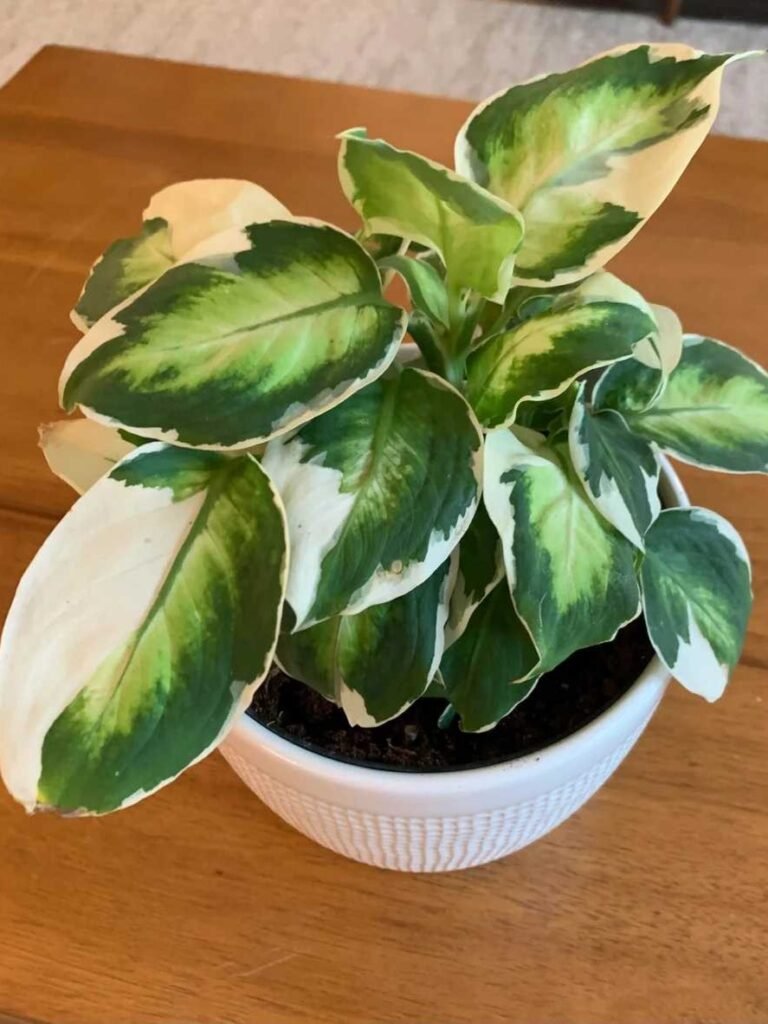
Once a Dieffenbachia leaf turns completely white or dry from sunburn, cold shock, or fungal damage, it will not turn green again. Pruning these damaged leaves helps the plant channel its energy into fresh, healthy growth.
Always wear protective gardening gloves when pruning Dieffenbachia. The plant contains insoluble calcium oxalate crystals that can irritate sensitive skin and cause severe burning if ingested.
Use a sterilized pair of sharp pruning shears or a clean hobby knife. Cut the damaged leaf stem near the base where it joins the central stalk, leaving a clean cut.
Wipe your cutting tools with rubbing alcohol between cuts to prevent spreading pathogens to healthy parts of the plant.
How to Prevent Future Leaf Whitening
Keeping your Dieffenbachia lush and vibrant comes down to providing stable, predictable indoor growing conditions year-round.
Implement these basic care routines to safeguard your plant against discoloration:
- Lighting: Position your plant in bright, indirect light near an east or north-facing window.
- Watering: Check moisture weekly and water only when the top two inches feel dry.
- Humidity: Aim for 50 percent or higher humidity using a pebble tray or room humidifier.
- Air Circulation: Keep gentle air movement in the room to prevent stagnant air without creating cold drafts.
- Inspection: Check the undersides of leaves weekly for early signs of fungal spores or tiny pests.
With attentive care and quick intervention at the first sign of trouble, your Dieffenbachia will produce healthy, broad foliage for years to come.
Dieffenbachia Health and Leaf Discoloration Assessment
Answer 4 quick questions to see your result