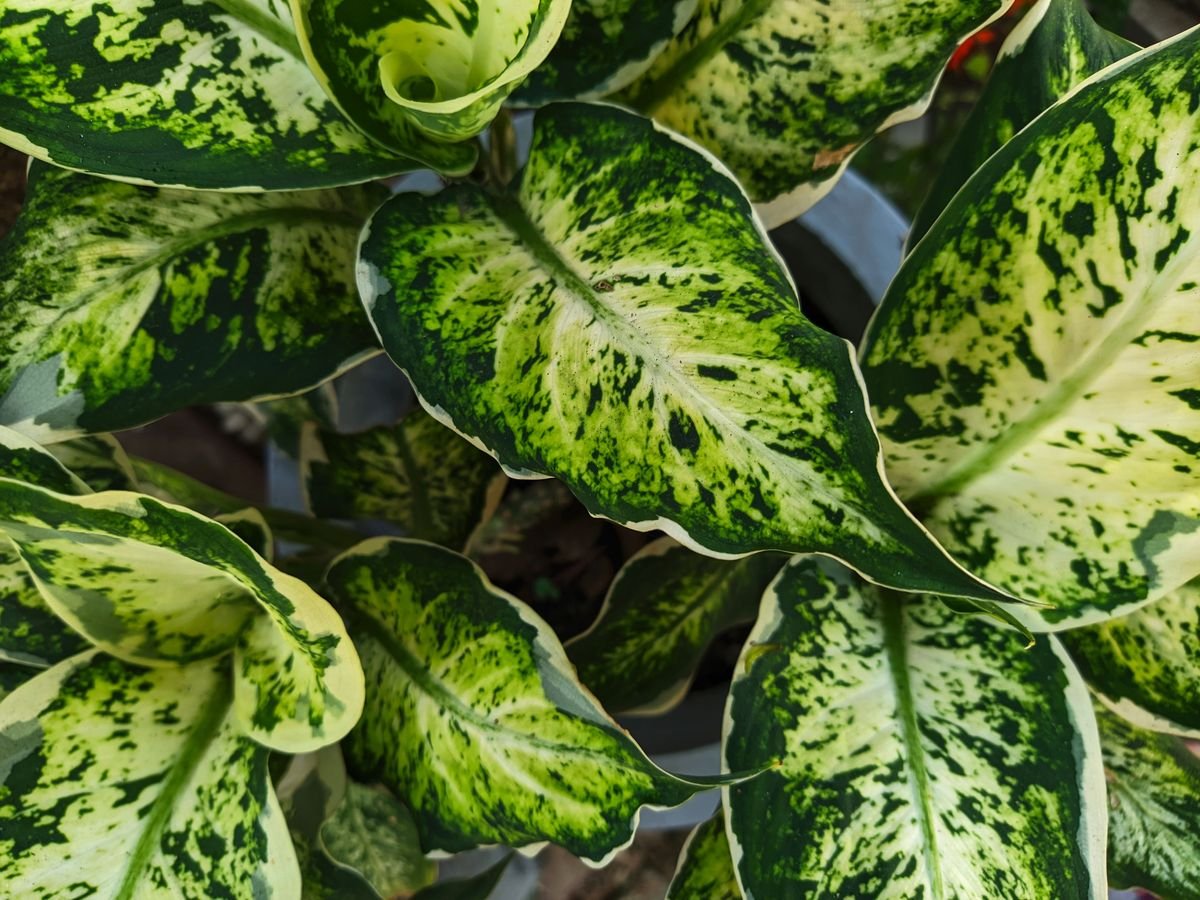
Dieffenbachia, commonly known as dumb cane, is celebrated for its lush, patterned foliage and hardy nature. Under ideal indoor conditions, these tropical beauties develop quickly, often gaining one to two feet of height in a single growing season.
When your plant suddenly halts all new leaf production or remains stagnant for months, it can be frustrating to figure out what went wrong.
Stalled growth is almost always an environmental signal that something in your care routine needs an adjustment.
How Fast Do Dieffenbachias Usually Grow
In their native tropical habitats across Central and South America, dieffenbachias grow rapidly along the warm forest floor.
They receive dappled light, rich organic matter, and consistent ambient humidity that supports non-stop vegetative development.
Indoors during the spring and summer, a healthy dieffenbachia produces a new leaf every few weeks. Many varieties easily add one to two feet of upright height every year when given the right balance of warmth, moisture, and nutrition.
If your plant has produced zero new leaves during the peak warm months, growth has stalled. Recognizing whether your plant is naturally pausing or struggling with environmental stress is the first step toward reviving it.
Seasonal Dormancy and Natural Rest Periods
Before assuming your plant is sick, check the calendar. Dieffenbachias follow natural seasonal rhythms dictated by day length and temperature.
During late autumn and winter, shorter daylight hours trigger a period of semi-dormancy. The plant conserves energy rather than pushing out tender new foliage that cannot be supported by weak winter sun.
Slowed growth or zero leaf production between October and March is completely normal. As long as the existing leaves look turgid and green, you simply need to reduce watering, stop fertilizing, and wait for spring to arrive.
Variety Limitations and Maximum Plant Size
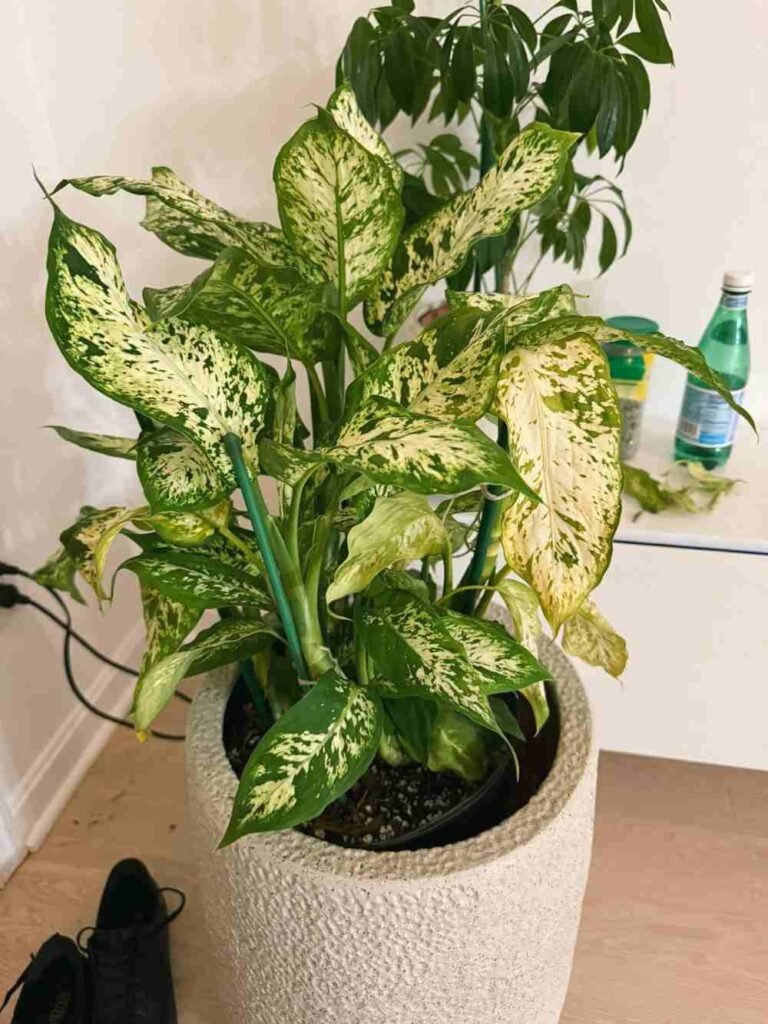
Another common reason a dieffenbachia stops getting taller is that it has reached its genetic limit. Not all dumb cane varieties become towering specimens.
Compact cultivars like ‘Compacta’ or ‘Camille’ typically mature at two to three feet in height. Once they reach their mature size, vertical growth slows down significantly, and the plant focuses its energy on maintaining dense foliage or sprouting side shoots.
Larger cultivars such as ‘Tropic Snow’ or ‘Amoena’ can reach six to ten feet tall indoors. Check the specific variety you own to determine if your plant is simply fully mature.
Inadequate Lighting and Deep Shade
Insufficient light is the single most common reason a dieffenbachia stops producing new growth during the spring and summer.
While dieffenbachias are frequently marketed as low-light houseplants, this is a misconception. They can tolerate low light for survival, but they cannot produce enough energy through photosynthesis to build new leaves and thick stems in dark corners.
Signs that your plant is not getting enough light include:
- Pale or faded leaf variegation
- Leggy, thin stems stretching toward distant windows
- Leaves remaining small and weak
- Zero new leaf spikes appearing in the central cane
To correct this, move your plant to a spot where it receives plenty of bright, indirect sunlight. An east-facing window or a spot a few feet back from an unobstructed south-facing window is ideal.
Watering Mistakes That Halt Growth
Watering issues can halt plant development from two opposite directions. Both underwatering and overwatering stress the root system, preventing the uptake of water and vital minerals.
Underwatering causes the plant to enter self-preservation mode. Without consistent moisture, cell division stops, leaf tips turn crispy brown, and existing leaves droop. The plant cannot afford to push out delicate new growth when it is dehydrated.
Overwatering is even more dangerous. When potting mix remains saturated for extended periods, air pockets collapse, suffocating the roots. This creates an anaerobic environment where fungal pathogens thrive, causing root rot.
Once roots rot away, the plant loses its ability to absorb water and nutrients, resulting in stunted growth, yellowing lower leaves, and soft stems.
Dense Soil and Poor Drainage Problems
The type of soil inside the pot directly influences root health and growth rate. Standard heavy garden soil or dense potting dirt retains excessive water and packs down over time, restricting airflow.
Dieffenbachia roots require a chunky, airy substrate that drains excess moisture quickly while retaining light dampness. If water sits on the surface of the pot for more than a few seconds, the mixture is too dense.
A great potting blend for dieffenbachia includes:
- Two parts quality indoor potting soil
- One part perlite or pumice for aeration
- One part orchid bark chips for structural drainage
- One part coco coir or peat moss for light moisture retention
Nutrient Deficiencies in the Growing Season
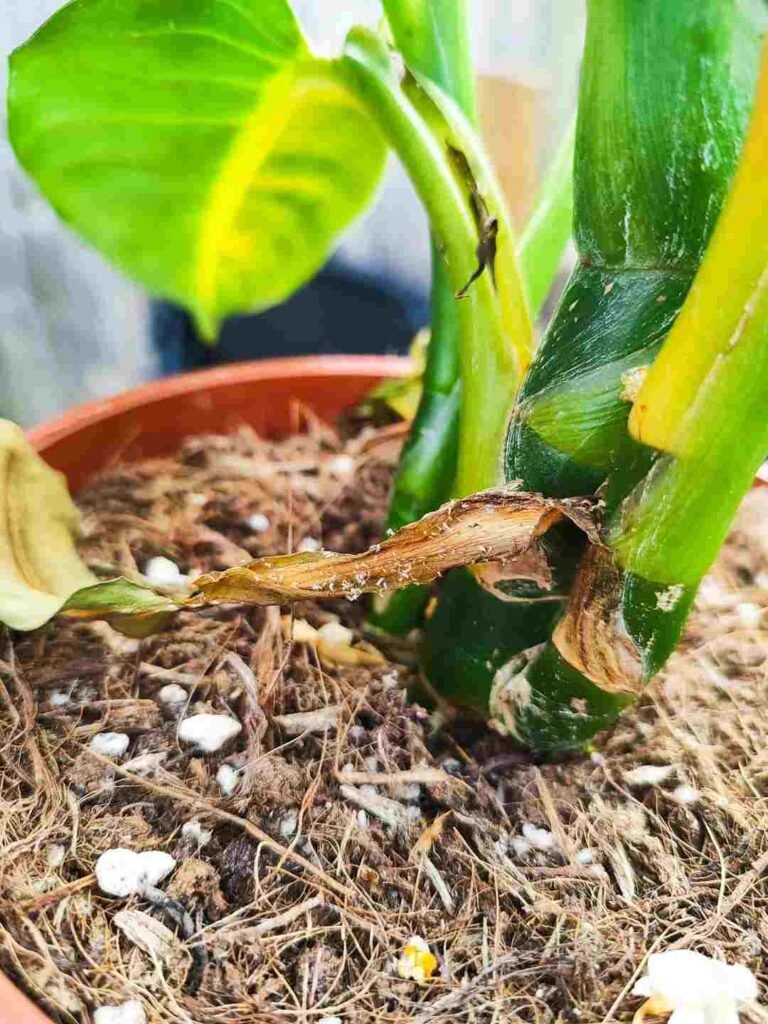
Producing broad, variegated tropical foliage requires a steady supply of essential macro and micronutrients. In a container environment, soil nutrients deplete within a few months of active growth.
Nitrogen is particularly vital for dieffenbachia because it fuels stem elongation and chlorophyll production. Without sufficient nutrients, the plant may stall completely, or new leaves may emerge stunted, pale, and distorted.
Feed your dieffenbachia every two weeks during the spring and summer using a balanced, water-soluble houseplant fertilizer diluted to half strength. Avoid fertilizing completely during the late fall and winter months to prevent salt buildup and root burn.
Root Bound Pots and Restricted Roots
Because healthy dieffenbachias grow so fast, their root systems quickly fill container space. When roots wrap tightly around the inside of the pot, little room remains for water retention or nutrient uptake.
A root-bound dieffenbachia will show clear signs:
- Water runs straight through the bottom drainage holes without soaking in
- Roots poke through drainage holes or coil on the soil surface
- Growth stalls despite bright light and warm temperatures
- The plant dries out unusually fast, requiring water every two days
If you see these symptoms, it is time to upgrade your plant to a slightly larger container.
Temperature Drops and Cold Drafts
Dieffenbachias thrive in temperatures between 65 and 80 degrees Fahrenheit (18 to 27 degrees Celsius). They have very little tolerance for cold air or sudden temperature fluctuations.
When temperatures dip below 60 degrees Fahrenheit, the plant slows down its metabolic activity. Temperatures below 55 degrees can cause cellular damage, yellowing leaves, and sudden dormancy.
Keep your plant safely away from cold drafts near exterior doors, unsealed single-pane windows, and air conditioning vents during the warm season.
Steps to Restart Dieffenbachia Growth
Restarting a stalled plant requires systematically auditing its environment and correcting care oversights.
First, optimize lighting. Place your dieffenbachia in bright, filtered light. If natural light is weak, place a full-spectrum LED grow light 12 to 18 inches above the canopy for 10 to 12 hours a day.
Second, refine your watering routine. Use the soak-and-dry method. Wait until the top two inches of potting mix feel dry to the touch before thoroughly saturating the pot until water drains freely from the base.
Third, boost ambient humidity. Dieffenbachias prefer humidity levels around 50 to 60 percent. Grouping houseplants together or placing an evaporative humidifier nearby prevents dry leaf tips and promotes rapid leaf unfurling.
Safe Repotting and Handling Practices
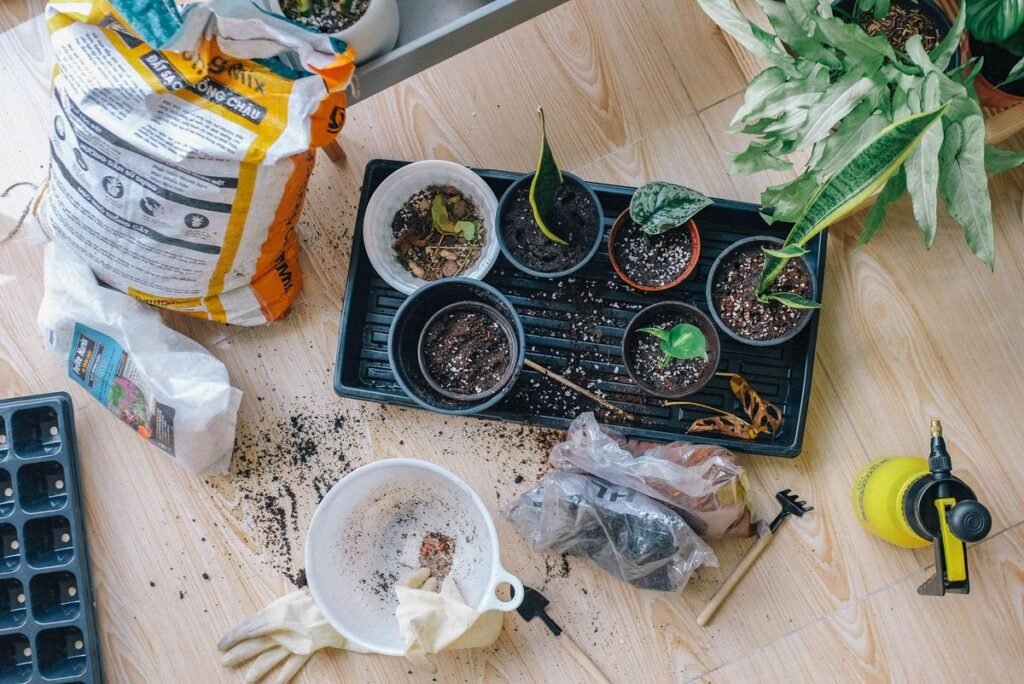
Repotting can give root-bound plants the fresh medium they need to resume vigorous growth, but it must be done carefully.
Choose a new container that is only one to two inches wider in diameter than the existing pot. Pots that are too large hold excess soil and moisture, which dramatically increases the risk of root rot.
Dieffenbachias contain insoluble calcium oxalate crystals in their sap. This substance causes skin irritation and painful swelling of the mouth and throat if ingested, which is why the plant earned the nickname dumb cane.
Always wear protective gardening gloves when pruning, handling, or repotting your dieffenbachia. Wash your hands thoroughly with soap and warm water immediately after working with the plant, and keep pruning shears clean.
Why Is Your Dieffenbachia Not Growing?
Answer 4 quick questions to see your result